

Fake followers are detectable with good confidence when you combine an automated authenticity check with manual sampling of the account's follower list. Run a free checker first, then hand-review 50 to 100 followers for ghost profiles and comment quality before making any hiring decision. No single tool or signal settles the question on its own, so treat the process as a triage: multiple aligned red flags, not one score, is what should change your decision.
TL;DR:
- Engagement rates below 1% on mid-sized accounts or above 10% on large accounts are suspicious signals for fake followers.
- Sudden follower growth spikes without viral content or press attention strongly indicate purchased or bot-driven followers.
- Manually sampling 50 to 100 followers for ghost profiles, generic comments, and demographic mismatches provides a quick, reliable check beyond automated tools.
- Automated checkers often disagree because they weight signals differently, so cross-verifying results with manual sampling improves accuracy.
- Building routine vetting processes before outreach, pre-payment, and after campaigns helps manage audience authenticity and reduces fraud risk.
Table of Contents
- Key Signals That Reveal Fake or Low-Quality Followers
- How Fake-Follower Checker Tools Work, and Where They Fall Short
- How to Run a Manual Fake Follower Audit Without Paid Tools
- Building an Audit Workflow Before and After You Hire
- How Collab Only Fits Into a Vetting Workflow
- Why Engaged Audiences Beat Bigger Ones
- An Alternative to Manual Vetting: Discovery Through Collab Only
- Sources
- FAQ
Key Signals That Reveal Fake or Low-Quality Followers
Fake followers rarely hide behind one obvious tell. They show up as a pattern across several data points, and reading that pattern is the core skill behind any fake follower audit.
Start with the numbers that most reliably separate real audiences from purchased or bot-driven ones:
- Engagement rate outliers: accounts under 1% engagement on a mid-size following, or suspiciously high engagement (above 10%) on a large one, both deserve scrutiny.
- Sudden growth spikes: a jump of several thousand followers in a day or two, with no viral post or press mention behind it, is one of the clearest single signals of a purchased batch.
- Ghost profiles: no profile photo, zero posts, and a username string of random letters and numbers.
- Generic or clustered comments: "Nice pic!" and emoji-only replies repeated across dozens of accounts, often posted within seconds of each other.
- Demographic mismatch: an account built around, say, U.S. fitness content with a follower base concentrated in regions with no plausible connection to the niche.
- Coordinated timing: engagement arriving in tight bursts rather than spread across a normal daily pattern, which suggests pod activity rather than organic interest.
Independent fraud-detection analysis identifies these as the seven most common red flags and recommends stacking them rather than relying on any one alone. Estimates suggest 5% to 15% of accounts on major platforms are fake or bot-generated at baseline, but influencers who purchased followers can show fake-follower rates of 30% to 70%, depending on how the purchase was made.
Pro Tip: Weight comment quality heavily. It's one of the few checks you can do by eye in under five minutes per account, and it catches purchased engagement pods that pass a raw follower-count screen.
How Fake-Follower Checker Tools Work, and Where They Fall Short
Automated checkers fall into two broad categories: browser-based calculators that run entirely client-side, and sampling tools that pull a batch of recent followers and score them against known bot signals.
A tool like FakeFollowerCheck runs its analysis in-browser across ten platforms and returns an authenticity score without sending your data to a server, which is worth knowing if privacy is a concern during vetting. Sampling tools work differently. GetXAPI's checker pulls a recent batch of followers and flags likely fakes based on profile signals, explicitly framing the result as directional rather than a full audit. For a defensible number, you need the complete follower export scored profile by profile, not a sample.
Most tools lean on a mix of the same underlying heuristics:
- Profile completeness checks (photo, bio, post count, account age)
- Engagement anomaly detection against the account's own historical baseline
- Network clustering, which flags followers who all follow the same small set of accounts
- Growth-velocity checks that flag unnatural spikes
Blended scoring is where tools most often disagree. CreatorScore's authenticity agent combines follower pattern analysis, engagement pod detection, growth velocity, and geographic consistency into a single percentage, and how heavily each factor is weighted varies by vendor.
Two checkers can score the same account 15 to 20 points apart because they weight growth velocity and network clustering differently. Neither score is "wrong," but neither is complete on its own.
That gap is exactly why cross-checking a tool's output against a manual sample matters more than picking the "most accurate" checker.
How to Run a Manual Fake Follower Audit Without Paid Tools
You don't need a subscription to spot most fraud patterns. A manual audit takes 20 to 30 minutes per account and catches what automated scores sometimes miss.
- Pull a random sample of 50 to 100 followers. Scroll to different points in the follower list rather than only the top, since bots are sometimes clustered by signup batch.
- Flag ghost profiles as you go. No profile picture, zero or near-zero posts, and a default-style username are the three markers worth tracking; three or more per ten sampled followers is a warning sign.
- Check growth history with a free tracker. Look for flat, steady growth versus sharp cliffs and spikes with no corresponding content event.
- Calculate the real engagement rate. Add likes and comments on the last 6 to 10 posts, divide by follower count, then multiply by 100. Compare that number against tier benchmarks: accounts under 10,000 followers typically see higher engagement (often 3% to 8%), while accounts above 500,000 commonly settle closer to 1% to 3%. A rate far outside the expected band for that tier, in either direction, deserves a closer look.
- Read the comments, not just the count. Open the last three posts and scan for repeated phrasing, emoji-only replies, or the same ten accounts commenting on every single post.
- Sanity-check the audience against the niche. A creator whose content targets one country but whose visible audience skews heavily elsewhere, with no explainable reason, is a mismatch worth asking about directly.
Pro Tip: Screenshot your sample and save the date. If a dispute comes up later, a follower list can change within days, and a dated manual record is often more useful than a live re-check.
Building an Audit Workflow Before and After You Hire
Fake-follower vetting works best as a routine, not a one-time gut check triggered by suspicion. Build it into three checkpoints: before outreach, before payment, and after the campaign runs.
- Pre-outreach: run a quick automated check on any creator entering your shortlist, purely to filter out obvious problem accounts before you invest time.
- Pre-payment: require a recent audience authenticity report, dated within the past 30 days, as a condition of the contract.
- Post-campaign: verify actual performance 30 to 60 days after launch using UTM-tagged links and platform analytics, comparing reported reach against real traffic and conversions.
Contract language should tie financial consequences to authenticity claims directly. A clause requiring a recent audit report before final payment, plus a refund or penalty trigger if the creator's audience later proves substantially misrepresented, gives you real leverage rather than a polite request.
| Audit outcome | Fake follower signal | Recommended action |
|---|---|---|
| Pass | Multiple checks align, engagement matches tier benchmark | Proceed with standard contract terms |
| Review | One or two flags present, no clear pattern | Request full follower export before payment |
| Reject | Multiple red flags plus fake rate above roughly 30% | Decline or renegotiate terms significantly |
Reviewing measurement steps that make influencer ROI defendable before the campaign launches makes the post-hoc verification step far easier, since your tracking is already in place.
How Collab Only Fits Into a Vetting Workflow
Collab Only isn't an authenticity checker. It's a discovery and matching layer that sits upstream of the audit itself, helping you build a shortlist of creators worth checking in the first place rather than starting from a cold list.
- The platform's discovery surfaces creators actively open to brand collaboration, cutting down time spent on outreach to accounts that never respond.
- Instant chat on a match allows verifying audience quality with someone already engaged, reducing time lost chasing a DM that goes cold for two weeks.
- Guides like finding Instagram influencers and finding TikTok influencers walk through platform-specific vetting angles worth applying before you run a formal audit.
Pairing discovery with the manual and tool-based checks above narrows your list faster and keeps the actual authenticity decision in your hands.
Why Engaged Audiences Beat Bigger Ones
The math on this is consistent: a smaller, genuinely engaged audience tends to convert better than an inflated one, because purchased followers never click, comment, or buy anything real. My actual recommendation for hiring: weight comment quality and real engagement rate above raw follower count every time.
— Samuel
An Alternative to Manual Vetting: Discovery Through Collab Only
Everything above is a checklist you run yourself, account by account. Collab Only takes a different route to the same goal: instead of hunting down creators cold and then auditing each one from scratch, you match with creators who are already active, responsive, and building a collaboration history on the platform.
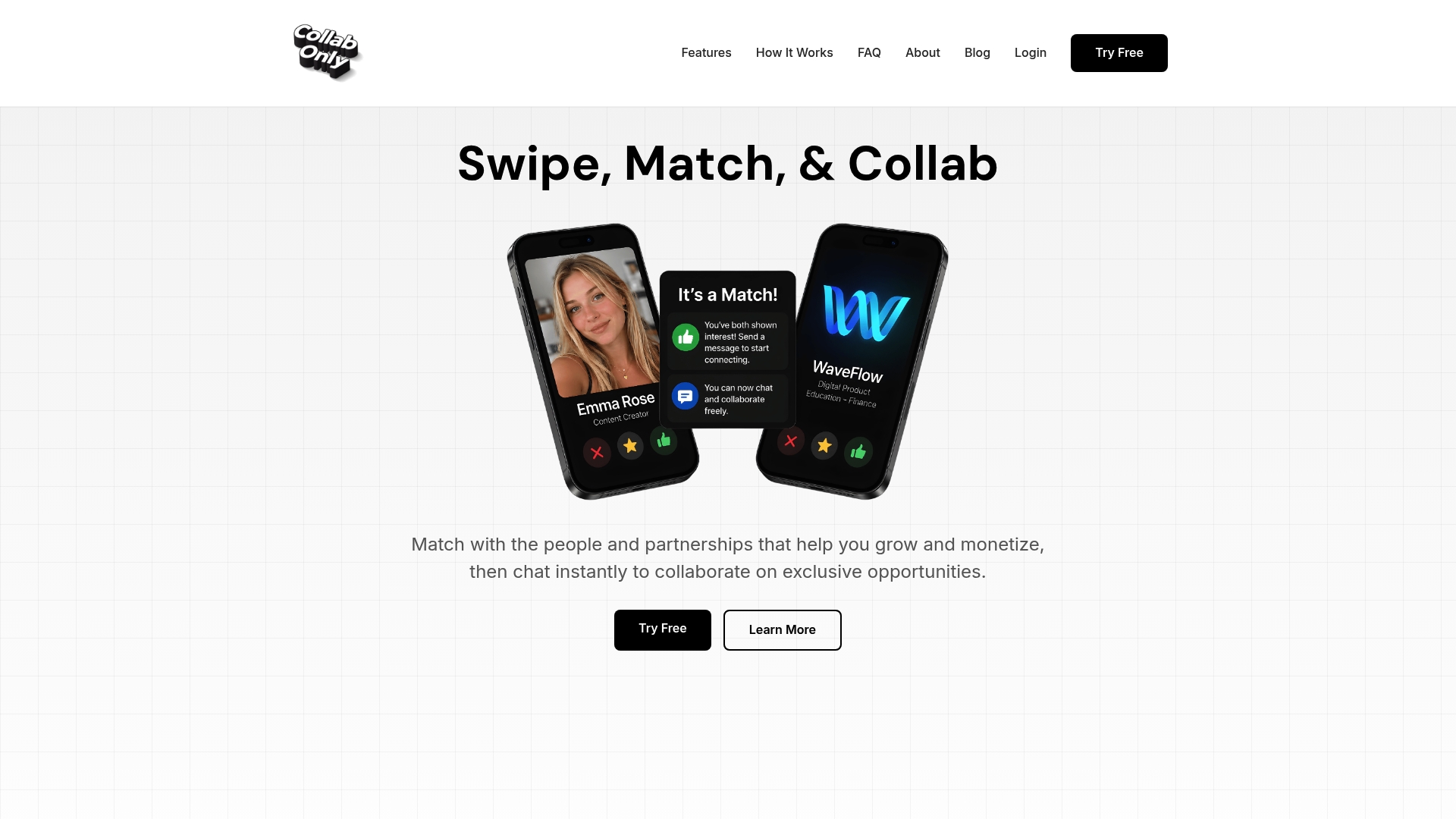
That collaboration history matters. A creator who has completed prior brand matches through Collab Only brings a visible track record into the conversation, which narrows your manual audit work down to confirming what's already partly established rather than starting from zero. The swipe interface and instant chat also remove the slowest part of vetting: waiting days for a DM reply just to ask basic audience questions. Browse the nano-influencer discovery page to see creators actively open to matching, or check Instagram-focused discovery if that's your primary platform. Either page is a faster starting point than a cold outreach list, with the authenticity checks above layered on top once you've matched.
Sources
For further reading and hands-on checks, cross-reference multiple sources rather than trusting one score:
- Influencer Fraud Detection: How to Spot Fake Followers Before They Cost You | Hashmeta
- Fake Follower Check & Checker — Free Tool for 10 Platforms
- Fake Follower Checker for Twitter (X), Free Bot Audit
- Fake Follower Checker — Free Audience Authenticity Audit | CreatorScore
Save a dated copy of whichever report you generate. Follower lists shift within days, and a dated record protects you if a dispute comes up later.
FAQ
How do you check if someone's followers are fake?
Run a free authenticity checker for a quick score, then manually sample 50 to 100 followers for ghost profiles, generic comments, and demographic mismatches to confirm the tool's estimate.
Is it illegal to buy followers?
Buying followers isn't criminal in most jurisdictions, but it can violate platform terms of service and expose a brand to fraud or misrepresentation claims if a creator falsely certifies an authentic audience for payment.
How do you prove an account has fake followers?
Document engagement rate against tier benchmarks, screenshot ghost-profile patterns from a manual sample, and note any unexplained growth spikes. A dated report combining tool output and manual notes holds up best in a contract dispute.
Can a fake Instagram account be traced back to its source?
Individual bot accounts are hard to trace to a specific seller, but clustering patterns, like batches of accounts created the same week with similar naming structures, often reveal that a group came from the same purchased source.
How can you tell the difference between an inactive follower and a fake one?
An inactive follower usually has a real photo, genuine post history, and simply stopped engaging, while a fake or bot follower typically shows no profile photo, no posts, and a randomly generated username.