

Chasing brand deals without a clear strategy is one of the most common frustrations creators face, regardless of platform or posting frequency. Pitches go unanswered, DMs disappear into inbox noise, and the assumption persists that only accounts with hundreds of thousands of followers qualify for paid partnerships. That assumption is wrong. This guide covers every stage of the process, from understanding what brands actually prioritize, to building your media kit, selecting the right outreach channels, negotiating contract terms, and converting one-off campaigns into long-term revenue relationships.
Table of Contents
-
Negotiating your brand deal: Terms, rates, and legal essentials
-
Tracking results and building sustainable brand relationships
Key Takeaways
| Point | Details |
|---|---|
| Niche beats size | Highly engaged, niche audiences are often more valuable to brands than large, passive followings. |
| Be proactive | Proactively pitching, pitching with a strong media kit, and following up set you apart from the majority. |
| Negotiate smart | Clear terms, fair pay, and explicit contracts protect creators and set the table for repeat deals. |
| Track and report | Measuring and sharing results increases your chances of renewals and larger deals. |
| Platforms multiply reach | Marketplaces and targeted outreach open doors to both emerging and established brands. |
What brands look for in collaborators
Now that you know the challenge, let us define what brands are actually searching for in their ideal creators.
The most persistent misconception in creator monetization is that follower count is the primary selection criterion. In practice, brands, particularly direct-to-consumer and startup brands with performance-driven budgets, evaluate engagement rate, audience specificity, and content authenticity far ahead of raw audience size. A creator with 1,000 highly engaged followers in a specific sub-niche routinely outperforms larger passive audiences in terms of conversion and brand recall.
This shift in brand behavior is structural, not temporary. The broader move toward micro and nano influencers reflects a measurable ROI advantage: smaller, niche-focused creators generate higher trust signals within their communities, and brands targeting micro influencers for DTC campaigns consistently report stronger return on ad spend compared to macro-influencer activations.
The following comparison clarifies what brands weigh when evaluating creator fit:
| Criterion | Niche/small creator | Large/broad creator |
|---|---|---|
| Engagement rate | Typically 5-15% | Typically 1-3% |
| Audience trust | High peer-credibility | Lower, more passive |
| Content specificity | Deep sub-niche focus | Broad topic coverage |
| Cost per activation | Lower | Higher |
| Brand fit alignment | Easier to verify | Harder to assess |
| Conversion potential | Higher per follower | Lower per follower |
Key qualities brands consistently prioritize include:
-
Consistent posting cadence and content quality within a defined niche
-
Audience demographics that align with the brand’s target customer profile
-
Transparent engagement (real comments, saves, shares, not just likes)
-
Prior brand collaboration experience, even informal or gifted partnerships
-
Platform-specific expertise, whether TikTok short-form, Instagram Reels, or long-form YouTube content
Pro Tip: Rewrite your platform bio to lead with your niche, your audience’s primary characteristic (e.g., “for first-time homebuyers” or “plant-based fitness”), and one measurable result you have delivered for a brand or product. This signals immediate fit to brand managers scanning profiles.
Understanding these criteria is the foundation for every pitch, platform choice, and negotiation tactic that follows. Creators who align their positioning to these brand priorities before reaching out consistently report higher response rates and better initial offer terms.
Preparing your media kit and pitch
With an understanding of what brands seek, equip yourself with the right materials for pitching.
A media kit is not optional. It is the professional equivalent of a resume, and submitting a pitch without one signals inexperience to brand managers who review dozens of outreach requests weekly. The document should be concise (one to two pages), visually clean, and updated at least quarterly to reflect current metrics.

Core media kit components:
| Component | What to include |
|---|---|
| Audience demographics | Age range, gender split, top geographic locations |
| Platform metrics | Follower count, average engagement rate, monthly reach |
| Content categories | Primary niche, content formats (video, photo, carousel) |
| Past collaborations | Brand names, campaign type, results achieved |
| Testimonials | Direct quotes from previous brand partners |
| Rate card | Base rates per deliverable type (post, story, video) |
Creators who take a proactive outbound approach and develop spec content (sample posts created for a brand without being asked) consistently secure higher rates and more favorable terms than those waiting for inbound offers. Spec work demonstrates creative capability and reduces perceived risk for the brand.
The pitch itself should follow a structured sequence:
-
Open with a specific observation about the brand (a recent product launch, a campaign you noticed, a gap in their current creator strategy).
-
State your niche and why your audience is a direct match for their target customer.
-
Present two or three original content ideas tailored to their brand voice and current marketing calendar.
-
Include one or two performance metrics from comparable past campaigns.
-
Close with a clear, low-friction call to action (a 15-minute call or a request to send your full media kit).
Pro Tip: Never send a generic pitch template. Brands receive high volumes of outreach, and a pitch that references a specific product, campaign, or audience insight immediately separates it from mass-sent requests. Personalization at the opening line alone increases response rates significantly.
Finding the right platforms and outreach strategies
Now that you are ready to pitch, discover the best channels and platforms for finding partners.
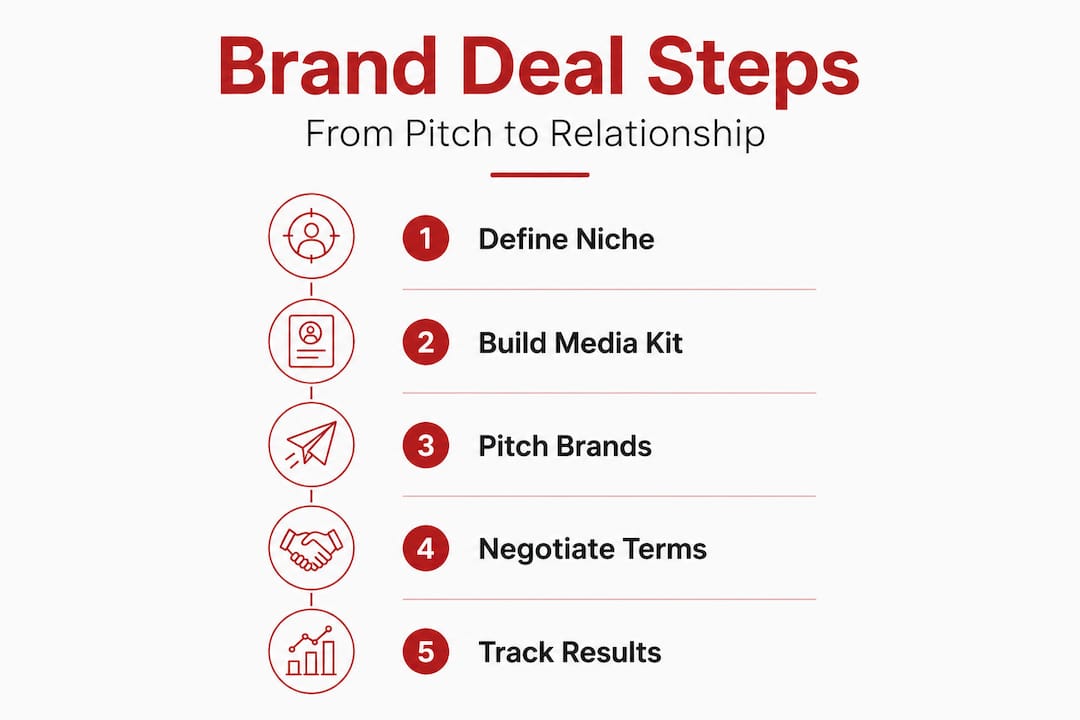
Outreach strategy selection depends on your current follower count, niche specificity, and the volume of deals you are targeting. No single channel works for every creator, and the most effective approach typically combines two or three methods simultaneously.
The primary outreach routes, ranked by suitability for early-stage creators:
-
Influencer marketplaces: Platforms that connect creators and brands through structured matching systems. These are ideal for creators starting out because brands on these platforms are actively seeking partnerships, reducing cold-outreach friction. Joining an influencer marketplace gives creators immediate access to brands with allocated influencer budgets.
-
Direct brand email outreach: Identifying the brand’s marketing or partnerships contact and sending a tailored pitch with your media kit attached. This route requires more research but often yields higher-value deals because you are bypassing competition from marketplace listings.
-
PR package programs: Some brands, particularly CPG brands seeking content creators, run structured gifting programs that serve as entry points to paid partnerships. These are useful for building your portfolio but should not substitute for paid deal pursuit.
-
Talent agencies: Agencies manage deal flow on behalf of creators in exchange for a commission. Agencies provide scale and access to larger brand budgets but typically retain 15-20% of deal value, making them most cost-effective for creators generating consistent deal volume.
-
Social platform discovery: Brands actively monitor hashtags, niche communities, and tagged content on TikTok, Instagram, and YouTube. Consistent use of niche-specific hashtags and tagging relevant brands in organic content increases inbound discovery probability.
Brands consistently favor data-driven selection processes and long-term partnerships over one-off activations, which means creators who demonstrate measurable results and professional communication are prioritized for renewals and expanded campaigns. B2C companies seeking short-form creators in particular are scaling their influencer programs rapidly and represent a high-opportunity segment for creators producing vertical video content.
Outreach channel comparison:
-
Marketplaces: Lower barrier to entry, higher competition, faster deal closure
-
Direct outreach: Higher effort, lower competition, stronger relationship potential
-
Agencies: Passive deal flow, reduced negotiation burden, commission cost
-
PR programs: Portfolio building, low or no payment, brand relationship starting point
Pro Tip: Avoid accepting gifted-only deals unless the brand is a strong strategic fit for your niche and you are specifically building your portfolio in that category. Every gifted deal sets a precedent. Always clarify deliverables, posting timelines, and whether the arrangement could convert to a paid partnership before accepting product.
Negotiating your brand deal: Terms, rates, and legal essentials
Once you find a prospective deal, mastering negotiation and contracts is vital for long-term success.
Negotiation is where creators most frequently leave value on the table. The instinct to accept the first offer, particularly for creators newer to brand partnerships, consistently results in underpayment relative to the value delivered. Structured negotiation, anchored to market rates and supported by a clear understanding of contract terms, is a learnable and repeatable skill.
Core negotiation practices:
-
Anchor high on your initial rate, leaving room to negotiate toward a mutually acceptable figure rather than starting at your minimum acceptable rate
-
Structure offers in tiers: a base deliverable rate plus performance bonuses tied to measurable outcomes (sales conversions, click-through rates, reach milestones)
-
Define deliverables with specificity: number of posts, video length, revision rounds (two to three is standard), posting windows, and approval timelines
-
Negotiate exclusivity terms carefully, requiring a clear definition of which brands qualify as competitors and applying a 30-50% premium for any exclusivity period
-
Limit usage rights to a defined time window, typically three to six months, after which the brand must renegotiate for continued use of your content
-
Require 50% payment upfront before beginning any deliverable, with the remainder due upon final delivery or posting
“Never sign perpetual rights or open-ended exclusivity without a clear premium. Both terms transfer significant long-term value from the creator to the brand, often without adequate compensation.”
Written contracts prevent disputes and establish enforceable expectations for both parties. Relying on DMs, verbal agreements, or loosely worded emails exposes creators to delayed payment, scope creep, and unauthorized content reuse. Even for smaller deals, a one-page written agreement covering deliverables, payment schedule, usage rights, and exclusivity scope is standard professional practice.
Additional contract terms worth including:
-
Kill fee clause: compensation owed if the brand cancels the campaign after work has begun
-
Content approval timeline: a defined window (typically 48-72 hours) for the brand to review and request revisions
-
Late payment penalty: a specified fee or interest rate applied to invoices not paid within the agreed window
-
Morality clause: conditions under which either party may exit the agreement without penalty
Pro Tip: Maintain a simple spreadsheet tracking every active and completed deal, including deliverable scope, usage rights expiration dates, exclusivity end dates, and payment status. This single habit prevents missed renewal opportunities and protects against unauthorized content use after rights windows close.
Tracking results and building sustainable brand relationships
Nailing the deal is just the start. Ensuring value and building ongoing relationships takes it further.
Post-campaign performance reporting is one of the most underutilized tools in a creator’s relationship-building strategy. Brands that receive unsolicited performance recaps are significantly more likely to renew partnerships, increase budgets, and refer the creator to other brand contacts within their network. Tracking performance for renewals is not administrative overhead. It is a direct revenue-generation activity.
Key performance indicators to track for every campaign:
-
Engagement rate on sponsored content versus organic content baseline
-
Link clicks and promo code redemptions (direct conversion attribution)
-
Reach and impressions relative to contracted minimums
-
Audience sentiment in comments and direct messages
-
Story swipe-up rates or link-in-bio traffic for time-limited campaigns
Best practices for post-campaign reporting and relationship maintenance:
-
Send a performance summary within five to seven days of the final posting date
-
Include screenshots of top-performing content alongside platform analytics exports
-
Highlight any metrics that exceeded contracted minimums
-
Propose a follow-up campaign concept based on the results, reducing the brand’s decision-making friction for a renewal
-
Schedule a brief check-in call 30 days post-campaign to discuss results and future opportunities
Strategies for converting one-off campaigns into long-term partnerships:
-
Deliver above the contracted minimum on at least one metric in every campaign
-
Communicate proactively if any deliverable timeline is at risk, rather than missing deadlines without notice
-
Offer first-look opportunities on new content formats or platform features before pitching them to competing brands
-
Reference shared campaign history in renewal pitches to reinforce continuity and reduce onboarding friction
Pro Tip: Store all campaign assets, analytics screenshots, and performance summaries in a dedicated folder organized by brand name and campaign date. When pitching for a renewal or referencing past work in a new pitch, having organized documentation allows you to respond quickly and professionally, a quality brand managers notice and value.
What most creators get wrong about brand deals
After reviewing the mechanics and steps above, an honest assessment of what separates consistently successful creators from those who struggle reveals a clear pattern. The gap is rarely about audience size. It is almost always about positioning, readiness, and relationship strategy.
The most common myth is that brand deals are inbound events. Creators who wait for brands to discover them, particularly those with sub-50,000 followers, will wait indefinitely. The creators generating consistent deal income at modest audience sizes are those who treat outreach as a structured, recurring activity rather than an occasional attempt.
A second persistent misconception is that a higher follower count automatically unlocks better deals. In practice, micro influencer best practices consistently demonstrate that niche authority and data-backed audience trust outperform raw scale in brand ROI calculations. A creator with 8,000 followers in the personal finance sub-niche who can demonstrate a 12% engagement rate and documented audience behavior (saving posts, clicking links, purchasing recommended products) presents a more compelling case to a DTC financial product brand than a lifestyle creator with 200,000 passive followers.
Brands with mature influencer programs are increasingly focused on long-term ROI, not short-term reach metrics. They are building rosters of reliable creators who deliver consistent results, communicate professionally, and require minimal management overhead. Creators who invest in clear negotiation boundaries, organized documentation, and proactive communication are the ones who get renewed, referred, and offered rate increases without having to ask.
The creators who outperform on income relative to audience size share one additional trait: they treat their creator business as a business. That means defined rates, written contracts, organized records, and a pipeline of outreach activity running continuously, not just when they need revenue.
Ready to land your next brand deal?
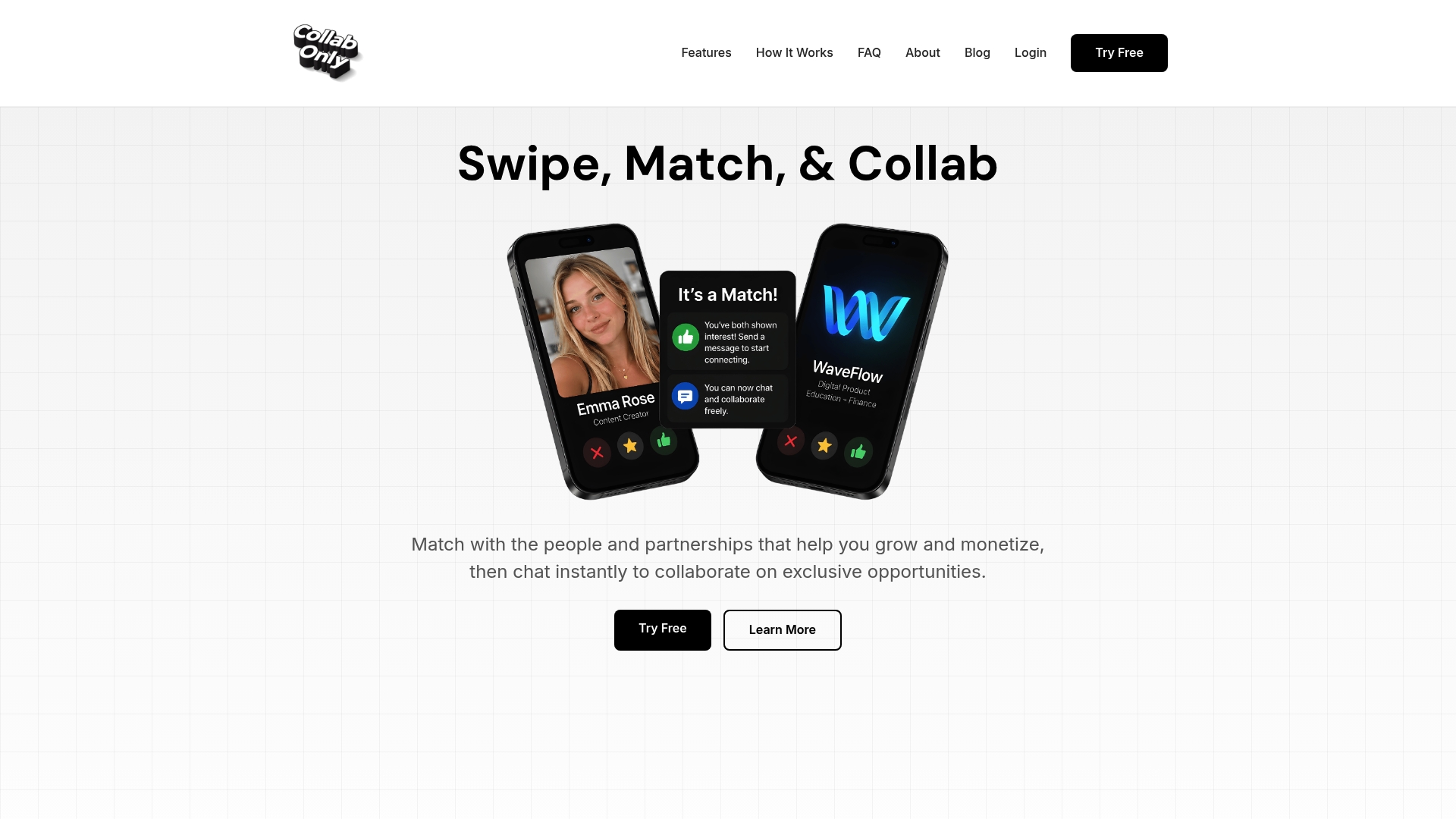
For creators and brands ready to take the next step, Collab Only connects you with today’s most effective opportunities.
Collab Only is built specifically to eliminate the friction that makes brand deal sourcing inefficient: slow email chains, unanswered DMs, and misaligned partnerships. The platform’s swipe-based matching system connects creators with brands that are actively seeking collaborators, enabling instant communication upon match and reducing the time from discovery to deal initiation.
Whether you are a micro influencer seeking your first paid partnership, a niche creator looking to scale your deal volume, or a brand building a roster of performance-driven creators, the influencer marketplace provides a structured environment for goal-aligned collaboration. Specialized resources support micro influencer deals and connect UGC creators with mobile app brands and beyond. Start building the partnerships that match your niche, your audience, and your revenue goals.
Frequently asked questions
What is a fair payment structure for brand deals?
A standard arrangement includes 50% payment upfront, clearly defined usage rights with time limits, performance bonuses tied to measurable outcomes, and no perpetual content rights without a significant premium.
Can small creators really land paid brand deals?
Yes. Brands are actively prioritizing micro and nano influencers for authenticity and conversion performance, and DTC brands shifting budgets to smaller creators report stronger ROI than macro-influencer campaigns.
Do I need a contract for every brand deal?
Yes. A written contract with clearly defined deliverables, payment terms, and usage rights prevents disputes and ensures both parties have enforceable expectations, regardless of deal size.
Is it worth joining an agency as a creator?
Agencies can increase deal volume and provide access to larger brand budgets, but agencies retain 15-20% of deal value, making them most practical for creators who prioritize deal flow volume over maximizing per-deal earnings.