

TL;DR:
- Modern brand partnerships emphasize advocacy and full-funnel measurement over simple awareness and impressions. Selecting creators based on trust, authenticity, and behavioral signals enhances long-term brand impact and genuine advocacy. Scalable, legally sound operations with strong contracts and compliance are essential for sustained high-performance creator programs.
Brand partnerships have matured well beyond the transactional model that once defined influencer marketing. The assumption that a sponsored post, a tagged product, or a paid mention constitutes a genuine partnership has proven costly for brands that conflate visibility with value. Advocacy-driven collaboration, by contrast, produces measurable downstream effects across the full marketing funnel, from initial awareness through purchase intent to long-term brand equity. This guide examines the frameworks, selection criteria, operational structures, and measurement systems that separate high-performance partnerships from campaigns that generate impressions without impact.
Table of Contents
- Why modern brand partnerships demand more than awareness
- Shifting selection criteria: Trust and authenticity over vanity metrics
- Operationalizing partnerships: Contracts, compliance, and scalability
- Building advocacy that lasts: Measuring long-term brand impact
- What most brands get wrong about creator partnerships
- Scale creator partnerships with Collab Only
- Frequently asked questions
Key Takeaways
| Point | Details |
|---|---|
| Advocacy drives impact | Brand partnerships with creators are most valuable when designed for advocacy and long-term brand lift, not just impressions. |
| Prioritize authenticity | Selecting creators for fit and trust, rather than simple reach, counteracts consumer skepticism and builds more robust partnerships. |
| Formal contracts matter | Comprehensive agreements covering compensation, usage rights, and compliance are essential for scaling and protecting modern partnerships. |
| Measure what matters | Track full-funnel outcomes—especially advocacy and brand equity—using brand lift surveys and long-term KPIs. |
Why modern brand partnerships demand more than awareness
The influencer marketing industry spent years optimizing for the wrong outputs. Reach, impressions, and click-through rates became the dominant KPIs because they were easy to collect and straightforward to report. The underlying logic was simple: more eyeballs meant more conversions. That logic no longer holds under scrutiny.
Modern partnerships are now evaluated against a more sophisticated standard. As Digiday documents, full-funnel measurement and advocacy-oriented outcomes now anchor high-performing creator programs, not just awareness or conversions. This shift has practical implications for how campaigns are structured, how creators are briefed, and how success is defined internally.
The full-funnel model accounts for outcomes at every stage of the consumer journey:
- Awareness and discovery (top of funnel)
- Consideration and engagement (mid-funnel)
- Purchase intent and conversion (lower funnel)
- Post-purchase advocacy and loyalty (beyond the funnel)
What distinguishes modern partnerships is explicit attention to that final stage. Advocacy, meaning the degree to which consumers voluntarily recommend and defend a brand, produces a compounding return that a single paid impression cannot replicate. This is sometimes called the "halo" effect: creator content continues to influence brand perception among secondary audiences long after the initial campaign window closes.
Brand lift, a metric measuring shifts in consumer perception attributable to a specific campaign, has emerged as a key indicator of this effect. The methodology compares surveyed groups who were exposed to the campaign against those who were not, isolating the campaign's contribution to changes in brand favorability, recall, and purchase intent. For CPG content partnerships especially, this distinction between superficial reach and measured advocacy has become a strategic differentiator.
"The most valuable creator partnerships are not those that generate the most impressions. They are the ones that create ripple effects in brand perception that persist across audiences and time." This reframing is essential for brands that need to justify partnership investment beyond a single campaign cycle.
Shifting selection criteria: Trust and authenticity over vanity metrics
Once you understand the need to move beyond awareness, the next challenge is identifying which creators can actually build real advocacy. That requires a fundamental shift in how potential partners are evaluated.
The traditional creator selection model prioritized follower count, engagement rate, and demographic alignment. These metrics remain relevant as baseline filters but are no longer sufficient as primary selection criteria. Consumer skepticism around influencer authenticity has intensified significantly. HBR reports an influencer marketing paradox in which industry spend continues to grow while consumer trust simultaneously erodes, with nearly half of consumers believing most influencers are not authentic and over a third suspecting that influencers misrepresent the products they endorse.
This erosion creates a broken ecosystem that rewards brands who solve the trust deficit rather than those who simply outspend competitors. The solution lies in selection methodology.
The following table illustrates the contrast between legacy and modern creator selection frameworks:
| Selection criterion | Legacy model | Modern model |
|---|---|---|
| Primary filter | Follower count | Audience trust and value alignment |
| Engagement metric | Raw engagement rate | Quality of engagement and community depth |
| Content evaluation | Aesthetic and reach | Authenticity, consistency, and narrative fit |
| Audience analysis | Demographics | Psychographics and behavioral signals |
| Partnership history | Volume of past deals | Category exclusivity and brand loyalty signals |
| Vetting process | Platform data only | Combined data plus qualitative content review |
Applying this updated framework involves a series of concrete evaluation steps:
- Review the creator's historical content for tonal and value consistency, not just visual aesthetics
- Analyze comment quality on recent posts to assess genuine community dialogue versus passive consumption
- Assess whether the creator independently speaks about the product category before any commercial relationship
- Look for evidence of sub-niche authority, meaning the creator is recognized as a trusted voice within a specific topical domain rather than a generalist presence
- Evaluate peer-credibility signals, specifically whether the creator's audience perceives their recommendations as those of a trusted peer rather than a paid spokesperson
Pro Tip: For nano influencer selection, the trust-to-reach ratio is often inverted relative to macro influencers. Nano creators frequently demonstrate higher comment-to-like ratios, stronger community dialogue, and lower levels of audience skepticism, making them particularly effective in categories where purchase decisions are trust-dependent, such as health, finance, and parenting.
The most effective brand teams now build internal scoring rubrics that weight trust and category alignment more heavily than reach metrics. This prevents the common error of selecting a creator who looks strong on paper but whose audience does not actually trust or act on their recommendations.
Operationalizing partnerships: Contracts, compliance, and scalability
With the right selection filter in place, it is crucial to ensure your partnerships are both scalable and legally sound. As partnerships evolve from single sponsored posts into longer-term, multi-deliverable arrangements, the operational scaffolding supporting those relationships must scale accordingly.

Formal contracts have become the operational backbone of modern creator programs. As JD Supra details, as creator partnerships move beyond sponsorships into more complex collaborations, the legal and brand-protection elements of contracting become progressively more important. Brands must address content ownership, licensing rights, and compliance requirements explicitly, not as afterthoughts appended to a simple scope of work.
The following table outlines the essential elements of a modern creator partnership contract:
| Contract element | Scope and considerations |
|---|---|
| Compensation structure | Flat fee, performance tiers, usage-based bonuses |
| Content usage rights | Duration, channels, geographic scope, paid amplification rights |
| Exclusivity clauses | Category exclusivity, competitor lockout periods |
| AI content provisions | Whether AI-generated content is permitted or restricted |
| Ownership and licensing | Who retains IP, how content can be repurposed |
| Compliance requirements | FTC disclosure, platform-specific rules, brand guidelines |
| Termination conditions | Performance thresholds, brand-safety violations, exit terms |
Operationalizing scalable partnerships requires a structured process, not a case-by-case negotiation for every creator engagement. The steps below reflect best practice for brands managing programs with multiple concurrent creators:
- Develop a standardized base contract template covering all core elements, then layer campaign-specific addenda for unique scope requirements.
- Establish a tiered compensation structure that accounts for creator size, content format, and usage rights to simplify negotiation while maintaining flexibility.
- Build a compliance checklist aligned with current FTC guidelines and platform-specific disclosure rules to ensure every piece of content meets legal standards before publication.
- Define content ownership terms upfront, particularly for evergreen content that may be repurposed across SaaS collaboration contracts or short form content agreements far beyond the original campaign window.
- Schedule a formal contract review cycle, at minimum annually, to update terms in response to regulatory changes, platform policy updates, and the expansion of AI-generated content considerations.
Pro Tip: Brands that integrate AI content clauses into their standard creator agreements now, even when not immediately relevant to current campaigns, avoid the operational disruption of retroactively renegotiating terms as AI-assisted content production becomes more prevalent across creator workflows.
The compliance dimension deserves particular attention. FTC enforcement around influencer disclosures has intensified, and platform-level rules on paid partnership labeling continue to evolve. Brands that treat compliance as a legal formality rather than a strategic discipline expose themselves to regulatory risk, reputational damage, and the potential invalidation of campaign performance data if disclosure non-compliance distorts engagement metrics.
Building advocacy that lasts: Measuring long-term brand impact
Securing great partners and strong contracts is only valuable if you can also demonstrate and sustain measurable impact throughout the partnership lifecycle. Short-term conversion metrics remain useful but insufficient as the primary proof of partnership value.
The "ripple effect" of effective creator partnerships, as documented by Digiday, reflects the reality that brand lift outcomes persist and compound beyond a campaign's end date. A creator who builds genuine advocacy among their audience produces downstream effects in organic brand mentions, peer-to-peer recommendations, and sustained favorability shifts that outlast any individual content piece.
Practical measurement systems for advocacy-driven partnerships typically incorporate the following components:
- Brand lift surveys distributed to statistically significant matched groups of exposed and unexposed consumers, measuring changes in aided and unaided brand recall, brand favorability, and purchase intent
- Share-of-voice tracking across organic social channels to capture unprompted brand mentions that trace back to creator influence
- Net Promoter Score (NPS) monitoring for audience cohorts exposed to creator content versus control groups
- Longitudinal engagement analysis examining whether creator-driven audience segments continue to interact with brand content weeks and months after initial exposure
- Attribution modeling that accounts for assisted conversions rather than only last-click attribution, which systematically undercounts the contribution of mid-funnel creator content
For brands tracking influencer campaign outcomes over extended periods, one structural mistake to avoid is measuring only at campaign close. Advocacy effects typically take four to eight weeks post-campaign to become fully visible in brand perception data, meaning premature measurement produces misleadingly low results.
Statistic: Brands that implement brand lift measurement as a standard component of creator programs report a clearer picture of partnership ROI and are significantly better positioned to scale investment in high-performing creator relationships.
Another common error is conflating engagement rate with advocacy. A creator post can generate high engagement through controversy or entertainment value without shifting brand perception positively. The distinction between engagement driven by content quality and engagement that translates into brand advocacy requires qualitative analysis of comment sentiment and content context alongside quantitative metrics.
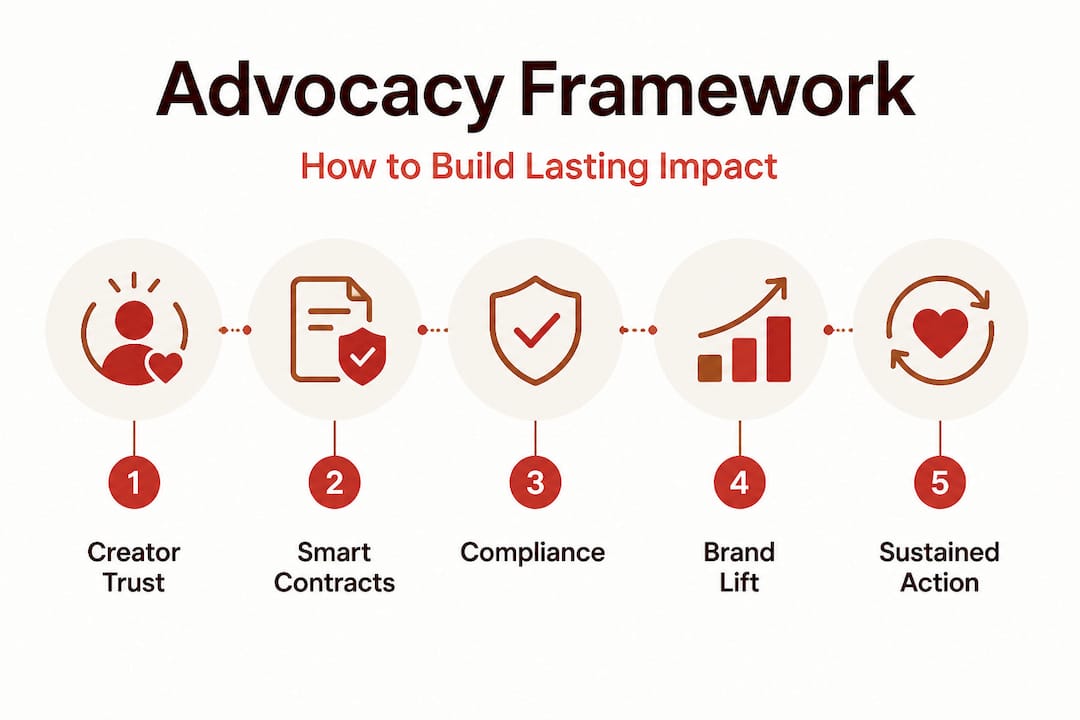
Pro Tip: When evaluating micro influencer brand deals, track the ratio of branded organic mentions in the creator's audience before and after a campaign. An increase in unprompted brand references within the creator's community is one of the strongest behavioral indicators of genuine advocacy formation.
What most brands get wrong about creator partnerships
After reviewing the frameworks, metrics, and contracts that define best-in-class partnerships, it is worth confronting what separates high-performing brand programs from those that cycle through creators without compounding value.
The most pervasive mistake is treating process efficiency as a proxy for genuine partnership quality. Brands invest in streamlining outreach, automating brief delivery, and accelerating contract turnaround, none of which matters if the underlying relationship between brand and creator lacks strategic alignment. Speed to market is a tactical advantage. It is not a substitute for the depth of alignment that makes a creator a credible brand advocate rather than a vendor executing a scope of work.
The second major error is underinvesting in contract depth and legal rigor at the beginning of a partnership, particularly as programs scale from individual campaigns into longer-term arrangements. As JD Supra notes, when creator partnerships grow in scope to include content ownership, licensing, and enhanced compliance scrutiny, the contracting and compliance infrastructure must scale in proportion. Brands that treat contract negotiation as "red tape" rather than brand protection frequently encounter disputes over content repurposing rights, discover compliance gaps under regulatory scrutiny, or lose leverage in ownership disagreements that could have been resolved at the outset.
The third pattern is prioritizing short-term measurable outcomes at the expense of long-term advocacy development. A creator relationship that produces three months of strong conversion data but fails to build durable brand affinity among that creator's audience generates a return that cannot be sustained or scaled. The most valuable partnerships compound value over time. They produce creators who become genuine brand advocates, whose audiences trust the brand by extension, and whose influence persists in organic brand conversations long after the paid campaign concludes.
For brands working with fashion-focused partnerships or other trend-sensitive categories, this long-term perspective is especially critical. Trend cycles accelerate, but trust builds slowly. Brands that invest in deep creator relationships within specific sub-niches accumulate a trust asset that competitors cannot acquire through spend alone.
Scale creator partnerships with Collab Only
Building advocacy-driven creator partnerships at scale requires more than a refined strategy. It requires a platform infrastructure that eliminates friction at every stage of the partnership lifecycle.
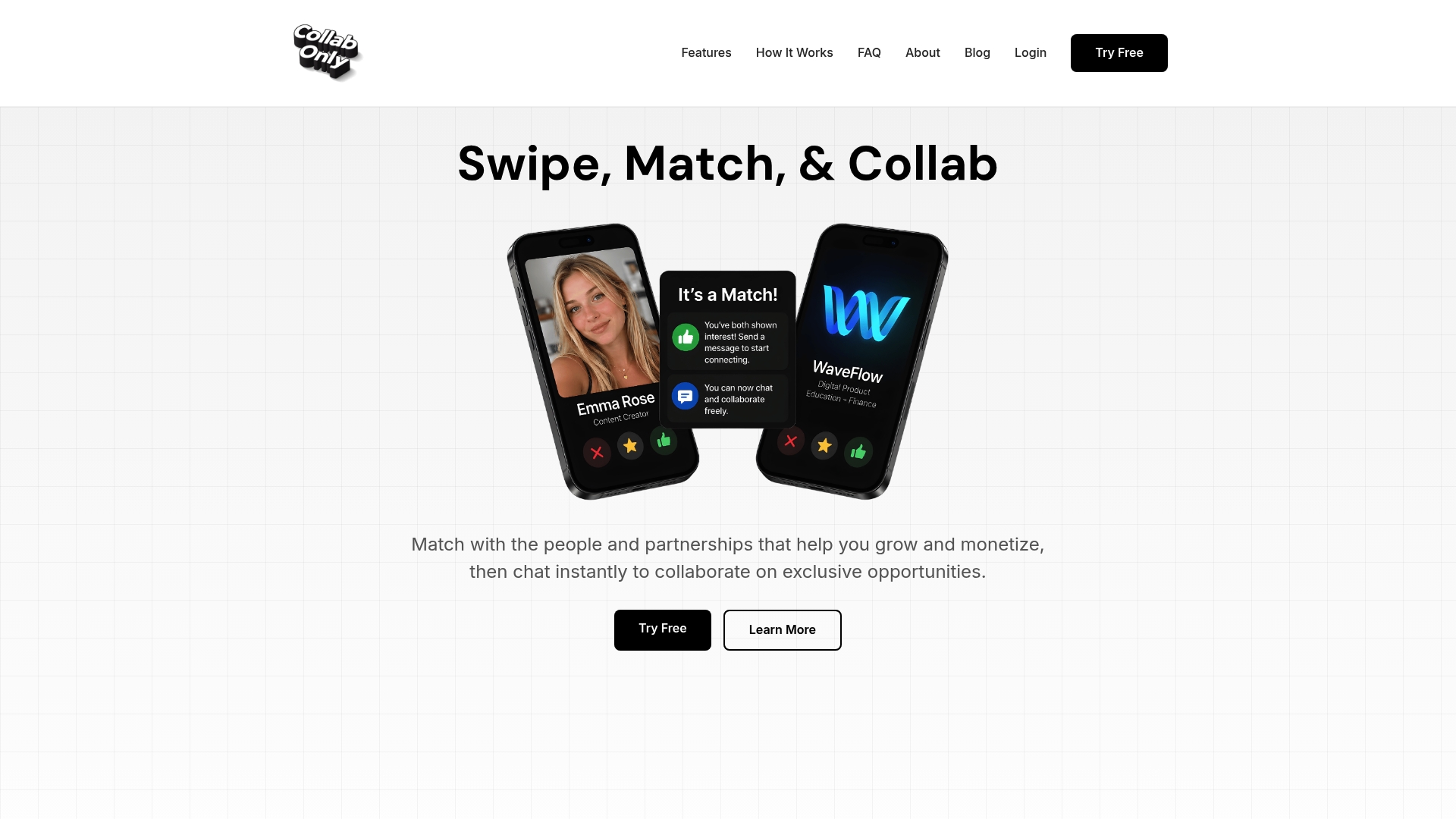
Collab Only provides brand teams with access to a vetted creator marketplace where discovery, matching, and communication happen through a streamlined interface designed to eliminate the bottlenecks of traditional outreach. Whether you are sourcing UGC creators for mobile apps, managing an end-to-end influencer marketplace strategy across TikTok, Instagram, and YouTube, or developing long-term brand ambassador opportunities, Collab Only centralizes the tools needed to execute partnerships that are aligned, compliant, and built for measurable advocacy outcomes. The platform's matching system pairs brands with creators based on goal alignment rather than superficial metrics, making it directly compatible with the modern selection frameworks outlined in this guide.
Frequently asked questions
How do you measure brand lift in creator partnerships?
Brand lift is measured by surveying groups exposed and unexposed to the campaign and comparing changes in brand perception, favorability, or purchase intent between the two groups, as detailed in Digiday's analysis of full-funnel creator campaign KPIs. This methodology isolates the campaign's specific contribution to shifts in consumer sentiment.
What should be included in a creator partnership contract?
Essential contract elements include compensation structure, content usage and licensing rights, exclusivity clauses, compliance requirements, and clear ownership terms, as outlined by JD Supra's review of modern creator partnership agreements. AI content provisions and termination conditions are increasingly standard additions as partnership complexity grows.
Why is authenticity so important in creator partnerships?
Consumer skepticism has reached a point where nearly half of consumers believe most influencers are not authentic, meaning brands that rely on inauthentic partnerships risk accelerating trust erosion rather than building advocacy. Genuine alignment between creator values and brand identity is the primary driver of credible, durable consumer influence.
How can brands protect themselves legally in creator collaborations?
Brands should establish scalable contract frameworks that explicitly address content ownership, usage rights, compliance obligations, and exclusivity terms from the outset of any partnership, and review those terms as partnership scope evolves. As JD Supra documents, brands that treat legal infrastructure as a scaling priority avoid the costly disputes and compliance gaps that arise when contractual protections lag behind partnership complexity.
Recommended
- Brand Ambassador Jobs - Collab Only
- Find YouTube Influencers – Connect with YouTube Creators - Collab Only
- How Micro Influencers Get Brand Deals – Collab Only - Collab Only
- CPG Brands Looking for Content Creators – Collab Only - Collab Only
- Brand Memory: How Logo Projectors Increase Recognition and Sales – The Logo Light Store