

TL;DR:
Effective brand partnerships require audience overlap, mutual value exchange, and complementary assets to generate measurable impact.
Failures often result from cultural misalignment, logistical challenges, or inadequate due diligence, emphasizing the importance of thorough vetting and pilot testing.
Finding a brand partnership that generates verifiable business impact rather than fleeting social buzz is one of the most strategically demanding challenges in modern marketing. The landscape is crowded with co-branded launches, celebrity deals, and influencer tie-ins, yet only a fraction produce measurable lifts in sales, audience reach, or brand equity. This article cuts through the noise by examining proven partnership case studies, dissecting notable failures, and providing a structured framework for evaluating, structuring, and scaling collaborations that align with your growth objectives across TikTok, Instagram, YouTube, and beyond.
Table of Contents
Key Takeaways
| Point | Details |
|---|---|
| Define clear goals | Align on measurable outcomes before entering any partnership. |
| Vet partner compatibility | Consider audience overlap, shared values, and execution capabilities to ensure synergy. |
| Start with small pilots | Test collaborations with limited scope to validate fit before scaling. |
| Learn from failures | Common mistakes like culture mismatches or poor vetting can be avoided by thorough due diligence. |
| Prioritize authentic value | Impactful partnerships are built on authentic exchanges, not just exposure or stunts. |
How to evaluate a successful brand partnership
Before showcasing specific partnership success stories, it is worth breaking down what sets a great collaboration apart from a forgettable one.
Effective partnerships are built on three foundational criteria, all of which must be present before any deal is signed:
-
Audience overlap: Both brands must share a meaningfully similar target demographic, even if they operate in different product categories. Without this, even the most creative campaign will generate reach without relevance.
-
Mutual value exchange: Each party must receive a clearly defined benefit, whether that is new distribution channels, credibility transfer, or direct revenue. Vague “exposure” is not a sufficient value proposition.
-
Complementary assets: The strongest partnerships pair brands whose capabilities fill each other’s gaps. A hardware company partners with a software platform. A food brand partners with a sports entity. The combination creates something neither could build alone.
Beyond these criteria, audience overlap and complementary capabilities should be validated through data before committing resources. Best practice calls for launching pilot campaigns with defined scorecards before scaling, setting SMART goals (Specific, Measurable, Achievable, Relevant, Time-bound), using RACI matrices to assign accountability, and structuring compensation as a hybrid of flat fees plus performance bonuses.
“A partnership without a shared scorecard is just a handshake. Metrics must be agreed upon before the first asset goes live, not after the campaign ends.”
Compatibility in brand values and execution style is equally important. A premium brand partnering with a value-focused retailer faces an inherent positioning conflict that no amount of creative production can resolve. Stakeholder alignment across both organizations, including legal, creative, and finance teams, must be established early to prevent deal-breaking missteps during execution.
Pro Tip: Before finalizing any partnership agreement, map out every internal stakeholder who will touch the campaign and confirm their sign-off timeline. Misaligned internal timelines are among the most common reasons promising deals collapse before launch.
Brands that want to streamline this vetting process can explore an influencer marketplace that surfaces pre-qualified partners with transparent audience data, reducing the due diligence burden significantly.
High-impact brand partnership examples
With criteria in mind, examine real examples that demonstrate how creative approaches translate into measurable impact.
Amazon and Stripe
Amazon integrated Stripe’s payment infrastructure to support transactions across 135 currencies, enabling global merchants to operate without building custom payment rails. The key move was a deeply technical integration that removed friction at the point of purchase. The result was a scalable infrastructure partnership that benefited both brands’ merchant ecosystems simultaneously, with Amazon gaining payment flexibility and Stripe gaining one of the world’s highest-volume transaction environments.
Nike and Apple
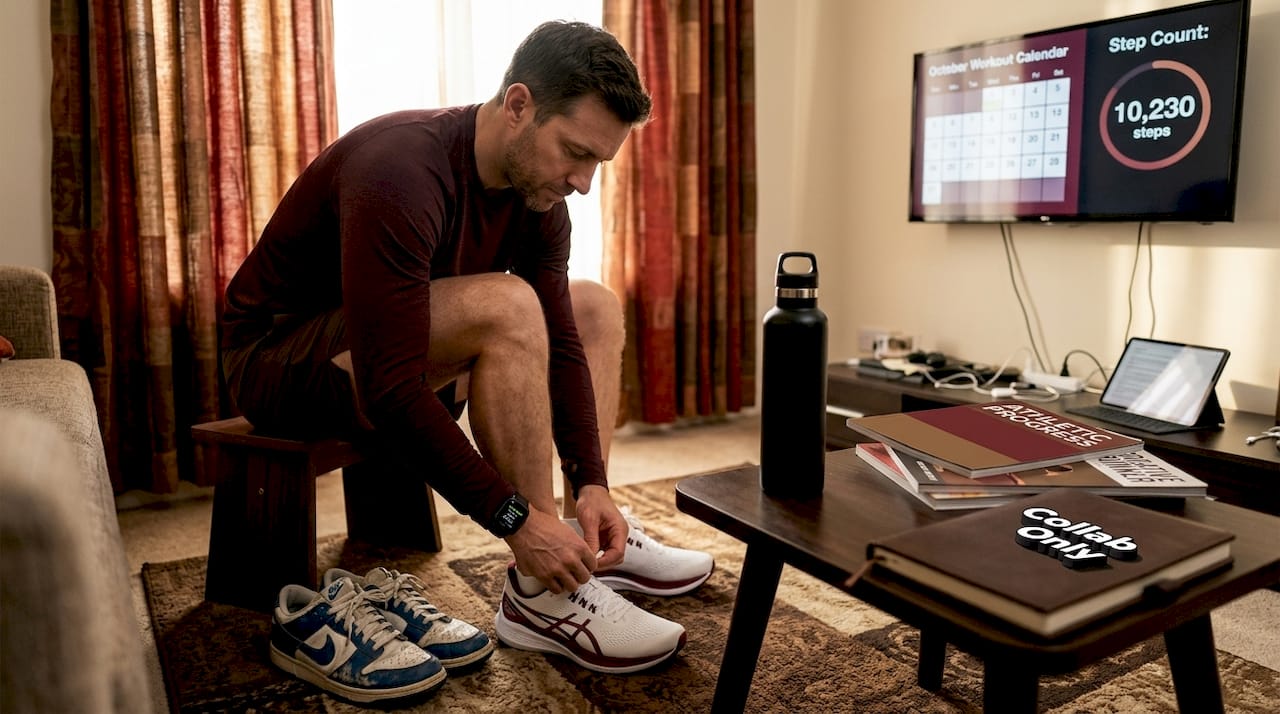
Nike and Apple’s collaboration on fitness tracking merged hardware, software, and lifestyle positioning into a single product experience. Apple Watch Nike editions and the Nike Run Club app integration gave both brands access to the other’s core audience. Runners who were loyal to Nike became Apple Watch users. Apple device owners became Nike app users. This fitness tracking partnership is frequently cited as a textbook example of complementary asset alignment.
McDonald’s Travis Scott Meal
The Travis Scott Meal campaign is one of the most analytically documented influencer partnerships in quick-service restaurant history. The collaboration generated $20M in sales within weeks of launch, drove a 10% overall sales increase, and produced a 30% rise in foot traffic among millennials and Gen Z consumers. The campaign achieved an estimated 10x ROI through a combination of authentic co-creation, limited-time scarcity mechanics, social media virality, and branded merchandise drops. The key move was treating Travis Scott as a genuine creative collaborator rather than a paid endorser, which produced content that felt native to his audience rather than manufactured for McDonald’s.
Ore-Ida and Richie Saunders
Ore-Ida, a Kraft Heinz brand, partnered with BYU basketball player Richie Saunders for the “Heir Richie” campaign during March Madness. Using Vizer’s platform for “Tot Clock” promotional offers, the campaign drove a 9% regional sales boost and a 27% local sales spike, outperforming official tournament sponsors at approximately 0.04% of their spend. This case is particularly instructive for brands exploring micro influencer brand deals, as it demonstrates that geo-concentrated, peer-credibility-driven campaigns can outperform high-spend national activations in targeted markets.
Liquid Death and Yeti
Liquid Death and Yeti co-created the “Casket Cooler,” a limited-edition product stunt that generated significant earned media value without a conventional advertising budget. The partnership worked because both brands share an audience of outdoors-oriented, irreverent consumers who respond to anti-corporate brand positioning. The stunt format amplified organic social sharing, producing co-branded campaign reach far exceeding what either brand’s paid media budget would have achieved independently.
Summary comparison table
| Partnership | Primary mechanic | Key metric | Standout factor |
|---|---|---|---|
| Amazon and Stripe | Technical integration | 135 currencies supported | Infrastructure scalability |
| Nike and Apple | Product co-development | Dual audience crossover | Complementary asset alignment |
| McDonald’s and Travis Scott | Celebrity co-creation | $20M sales, 10x ROI | Authentic cultural relevance |
| Ore-Ida and Richie Saunders | NIL athlete, regional | 27% local sales spike | Hyper-targeted spend efficiency |
| Liquid Death and Yeti | Product stunt | High earned media value | Shared audience identity |
Reviewing YouTube influencer case studies alongside these examples reveals a consistent pattern: the highest-performing partnerships are those where the collaboration feels inevitable to the audience, not engineered for the brand.
Brand partnership failures: Lessons from real missteps
Not all partnerships end in success. Here are lessons from headline-making failures to inform your own playbook.
McDonald’s and Krispy Kreme
McDonald’s decision to distribute Krispy Kreme doughnuts across its locations appeared logical on paper. Two iconic food brands, a massive distribution network, and a loyal customer base on both sides. In practice, the collaboration collapsed due to demand mismatch. Premium doughnuts positioned against a value-driven breakfast menu created a product experience gap that neither brand could bridge. The logistics of maintaining product freshness across 13,500 locations proved prohibitively costly, and Krispy Kreme, as the junior partner, bore a disproportionate share of the operational risk.
Lessons from this failure:
-
Validate product-market fit within the partner’s existing customer context before committing to full distribution.
-
Assess logistics complexity as a primary risk factor, not an afterthought.
-
Ensure risk and resource allocation is symmetrical, particularly when one partner is significantly smaller.
Pepsi and Kendall Jenner
The Pepsi ad featuring Kendall Jenner is one of the most widely analyzed examples of values misalignment in brand marketing. The campaign attempted to associate Pepsi with social activism but was broadly perceived as tone-deaf to social unrest, resulting in immediate public backlash and a full retraction within 24 hours of launch. The partnership failed not because of poor production quality, but because neither Pepsi nor its agency conducted adequate cultural sensitivity review before publishing.
Lessons from this failure:
-
Cultural context review must be a mandatory pre-launch checkpoint, not an optional creative consideration.
-
Celebrity partnerships require alignment between the talent’s public identity and the campaign’s thematic territory.
-
Speed to market should never override values alignment review.
Influencer vetting failures
Influencer partnerships carry a category-specific risk that brand-to-brand deals do not: the creator’s personal history becomes the brand’s reputational exposure. Cases such as Laura Lee’s resurfaced tweets illustrate how inadequate background vetting can trigger brand association with content that directly contradicts the brand’s stated values. Similarly, wellness creators partnering with junk food brands, or fitness influencers promoting sedentary lifestyle products, erode audience trust because the lifestyle misalignment is immediately visible.
Lessons from this failure:
-
Conduct full social media history audits, not just recent content reviews, before signing any creator agreement.
-
Assess lifestyle alignment, not just follower count or engagement rate.
-
Require transparent disclosure practices as a contractual condition to protect authenticity and regulatory compliance.
“Asymmetric partnerships, where one party invests significantly more than the other in resources, risk, or reputation, are structurally predisposed to failure. The junior partner either overextends or underdelivers, and the senior partner absorbs the reputational cost.”
Red flags to monitor before finalizing any partnership:
-
One partner has significantly more to lose than the other.
-
The partnership rationale relies primarily on celebrity association rather than product or audience fit.
-
Cultural or social context review has not been completed by an independent party.
-
Logistics or operational complexity has been underestimated in the planning phase.
-
Compensation is entirely flat-fee with no performance alignment.
Reviewing brand campaign insights from recent cycles reinforces that the most preventable failures share a common root: insufficient pre-launch due diligence.
How to maximize success and minimize risk in partnerships
To close, focus on how to take lessons learned from both successes and failures to design your next partnership for maximum impact.
Start with a pilot, not a full launch
Pilot projects allow both parties to test audience response, operational compatibility, and creative alignment before committing to a scaled campaign. A pilot scorecard should track the following metrics during the test phase:
| Metric | Measurement method | Target threshold |
|---|---|---|
| Audience overlap rate | First-party data comparison | Minimum 30% shared demographic |
| Engagement rate lift | Pre/post campaign comparison | Minimum 15% increase |
| Earned media value | EMV tracking tools | 3x paid media spend |
| Net-new audience reach | Platform analytics | 20% new follower acquisition |
| Sales attribution | Multi-touch attribution model | Positive ROI within 60 days |
Structure compensation for alignment
Symmetry in stakes and resources is a prerequisite for durable partnerships. B2B partnership frameworks consistently emphasize give/get models and Ideal Partner Profiles over vague exposure agreements. Hybrid compensation structures, combining a flat fee for guaranteed deliverables with performance bonuses tied to agreed KPIs, align both parties’ incentives toward the same outcomes.
Measure beyond sales
Distribution-led collaborations unlock channels and shelf space that neither partner could access independently. Credibility transfer from a trusted partner can shift brand perception in ways that paid advertising cannot replicate. Measurement frameworks should therefore include earned media value, net-new audience reach, and brand sentiment shifts alongside direct sales attribution. Focusing exclusively on immediate revenue misses the compounding value of audience expansion and credibility gains.
Build your Ideal Partner Profile
Before initiating outreach, define the specific attributes of a partner that would create genuine mutual value. This profile should include audience demographic parameters, content category alignment, platform presence, and risk tolerance. Due diligence checklists that address cultural fit, logistics capacity, and contractual risk allocation prevent the most common partnership failures before they occur.
Pro Tip: Define your Ideal Partner Profile before beginning any outreach. Brands that start with a clear profile close deals faster, experience fewer execution conflicts, and report higher campaign satisfaction scores than those that evaluate partners reactively.
For brands operating in the consumer packaged goods space, a dedicated CPG collaboration guide provides category-specific frameworks for creator matching and campaign structuring.
Why brand partnerships succeed or fail: The overlooked truth
The most persistent misconception in brand partnership strategy is that scale determines success. Marketers frequently assume that pairing two large brands, or securing a high-profile celebrity, automatically produces a high-impact result. The evidence does not support this assumption.
The Ore-Ida and Richie Saunders campaign outperformed official March Madness sponsors at a fraction of the spend, not because of scale, but because of precision. The Travis Scott and McDonald’s campaign succeeded not because of Travis Scott’s follower count, but because of authentic co-creation that made the collaboration feel native to his audience. Conversely, the Pepsi and Kendall Jenner campaign failed despite massive production investment and a globally recognized talent, because the cultural context was misread.
What actually separates transformational partnerships from forgettable co-branding attempts is mutual investment in the outcome. Both parties must have genuine skin in the game, not just contractual obligations. The best partnerships are structured so that both brands are motivated to make the collaboration succeed, because their respective audiences are watching and their respective reputations are on the line.
“Long-term brand equity is built through partnerships that feel like natural extensions of each brand’s identity, not through viral stunts that generate impressions without trust. The brands that win consistently are those that choose partners they would be proud to be associated with five years from now, not just five days after launch.”
Rushing the vetting process to capitalize on a trending moment is one of the most common and costly errors in partnership strategy. Brands that copy high-profile collaborations without understanding the specific context that made those collaborations work will consistently underperform. The Travis Scott deal worked because McDonald’s invested in understanding his audience before designing the campaign. That level of pre-launch research is not optional for brands seeking comparable results.
For brands operating in the premium or lifestyle space, luxury influencer partnerships require an even more rigorous vetting process, as audience trust in premium categories is harder to build and faster to erode.
Pro Tip: Start small, iterate based on data, and build with partners who demonstrate consistent values alignment over time. A series of well-executed micro-collaborations builds more durable brand equity than a single high-profile campaign that misses its audience.
Ready to create your next great brand partnership?
If you are ready to skip the trial and error and tap into a proven network, here is your next step.
Collab Only provides the infrastructure to move from partnership strategy to execution without the friction of cold outreach, lost DMs, or misaligned proposals. Whether you are looking to hire micro influencers for a geo-targeted campaign or scale a full creator program across TikTok, Instagram, and YouTube, the platform’s swipe-based matching system connects brands with goal-aligned partners instantly.
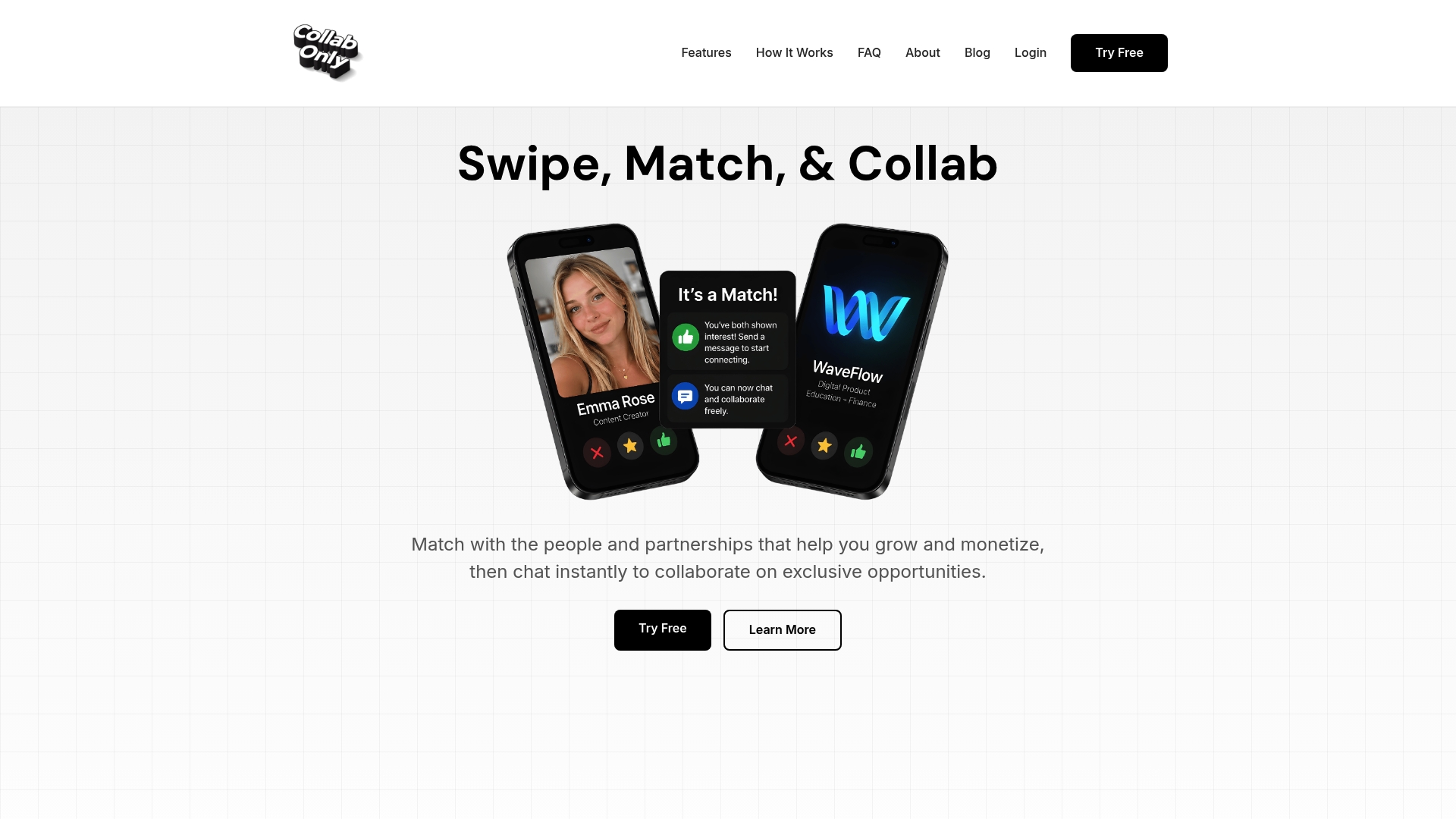
The influencer marketplace surfaces creators with verified audience data, transparent engagement metrics, and clear content category alignment, giving brand managers the due diligence inputs they need before initiating any conversation. From pilot campaign launch to full-scale collaboration, the brand collaboration platform is built to support every stage of the partnership lifecycle with minimal friction and maximum accountability.
Frequently asked questions
What is an example of a successful brand partnership?
Nike and Apple’s collaboration on fitness tracking is a widely cited example, merging hardware, software, and lifestyle positioning to create compounding value for both brands and their shared audience.
Why do some brand partnerships fail?
Most failures stem from mismatched audience needs, poor cultural fit, or logistics mismatches, as seen in cases where cultural insensitivity and operational gaps caused campaigns to collapse before generating returns.
How can brands measure partnership success?
Brands should track EMV and net-new reach alongside sales attribution, brand sentiment shifts, and audience growth to capture the full value of a collaboration beyond direct revenue.
What makes a good partner for a co-branded campaign?
A strong partner demonstrates audience overlap, complementary capabilities, and symmetry in stakes and resources, ensuring both parties are equally invested in the campaign’s success.
How do you avoid influencer partnership disasters?
Conduct full social media history audits and verify lifestyle alignment before signing any agreement, as vetting history and authenticity are the primary defenses against reputational exposure from creator partnerships.