

TL;DR:
- User-generated content significantly outperforms polished brand advertising in building trust and driving conversions. It includes authentic consumer-created reviews, photos, videos, and social posts, which are more credible and cost-effective than traditional marketing methods. Developing a scalable, rights-compliant UGC program across multiple channels enhances authenticity, engagement, and customer lifetime value.
User-generated content converts skeptics into buyers at a rate that polished brand advertising rarely achieves. Understanding what is UGC in marketing is no longer optional for brand managers who want to build measurable trust and drive real conversions. According to recent data, product pages featuring UGC see conversion rates increase by 4.6%, and UGC ads deliver 50% lower cost-per-click compared to standard branded content. That is a performance gap most marketers cannot ignore.
Table of Contents
- Key takeaways
- What is UGC in marketing: definition and content types
- Why UGC drives trust, conversions, and engagement
- UGC creators vs. influencers: a strategic distinction
- Building a scalable and compliant UGC program
- Integrating UGC across marketing channels
- My perspective on UGC and where most brands go wrong
- How Collabonly helps brands scale authentic UGC
- FAQ
Key takeaways
| Point | Details |
|---|---|
| UGC definition marketing | UGC is any brand-related content created by customers or independent creators, not the brand's own team. |
| Trust and conversion gains | UGC is viewed as 2.4x more authentic than brand content and consistently outperforms branded ads on conversion metrics. |
| Creator vs. influencer distinction | UGC creators produce content for brand use without necessarily publishing it to their own audiences, unlike influencers. |
| Legal rights management | Organic UGC rights belong to the creator; explicit documented permission is required before any commercial use. |
| Operational infrastructure | Only 16% of brands have a repeatable UGC collection, moderation, and rights management process in place. |
What is UGC in marketing: definition and content types
User-generated content is any brand-related material including reviews, photos, videos, and social media posts created by customers or independent creators rather than the brand's marketing team. The UGC definition in marketing encompasses everything from an unprompted Instagram photo of a product to a structured video testimonial commissioned directly from a creator. What unifies all these formats is origin: the content is produced outside the brand's internal creative function.
UGC falls into two operational categories that marketers must distinguish clearly.
- Organic UGC: Content created voluntarily by real customers with no payment or formal agreement. Examples include unboxed product photos posted to TikTok, Google reviews, Reddit threads, and tagged Instagram Stories. This content carries the highest authenticity signal.
- Paid UGC: Content created by independent UGC creators under a formal paid brief. The creator produces raw assets for brand use, often without posting to their own channel. This format gives brands more production control while retaining the authentic, non-polished aesthetic.
- Hybrid UGC: Brands that run contests, hashtag campaigns, or reward programs to incentivize customers to produce content at scale. GoPro's year-round content program is a well-documented example of this model generating millions of authentic assets annually.
Common UGC formats span written reviews, star ratings, photo galleries, short-form video unboxings, product demos, and long-form YouTube reviews. The channels vary just as widely: Instagram, TikTok, YouTube, Amazon listings, Google Business profiles, and brand-owned communities all function as active UGC surfaces.
Pro Tip: Before activating any UGC in paid media, verify the content rights in writing. Simply being tagged in a post does not grant commercial usage rights under U.S. copyright law.
Why UGC drives trust, conversions, and engagement
The core case for UGC rests on a well-documented behavioral reality. 92% of consumers trust recommendations from other people over branded content, and shoppers view UGC as 2.4 times more authentic than material created by brands. These figures reflect a sustained shift in how audiences evaluate credibility, not a temporary trend.
"Consumers have increasingly sophisticated ad-detection capabilities. When they see polished brand content, they categorize it as advertising and discount it accordingly. UGC signals a real person, which is precisely what cuts through that skepticism." — Digital Applied
The psychological mechanism at work is social proof combined with peer-credibility. When a prospective buyer sees someone who resembles them using a product in an unscripted way, the persuasive weight is considerably higher than a brand-produced creative asset. This effect is amplified in categories where risk perception is high, such as skincare, supplements, electronics, and apparel, because customers need evidence from peers before committing.
The conversion data reinforces this at every stage of the funnel. Website pages that incorporate UGC receive 4.11x more visits than those without it. UGC-enhanced email campaigns generate 73% higher click-through rates. At the bottom of the funnel, the cost efficiency advantage becomes critical for paid media: UGC ads consistently outperform branded creative on cost-per-click by a margin that directly affects media budgets.
Beyond conversion metrics, authenticity in branding compounds over time. Brands that build active UGC ecosystems report stronger customer retention because buyers who create content develop a deeper personal investment in the brand. The act of posting about a product reinforces the buyer's own purchasing decision and creates a social identity link to the brand, which reduces churn at a structural level.

UGC creators vs. influencers: a strategic distinction
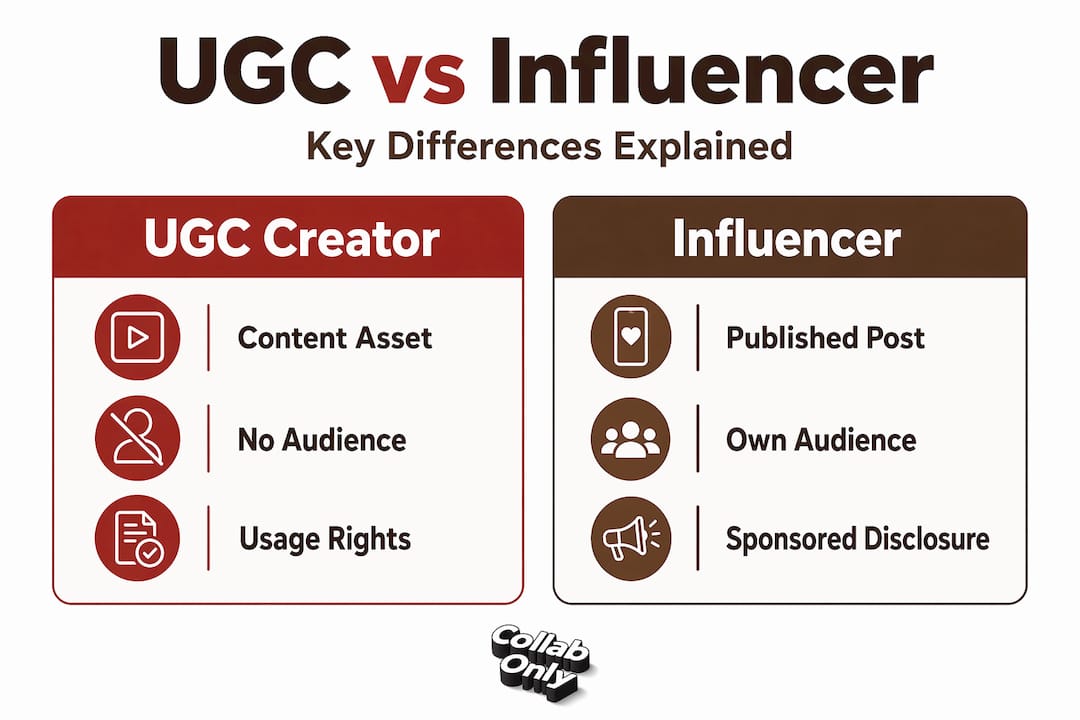
One of the most consequential UGC marketing misconceptions in 2026 is treating UGC creators and influencers as interchangeable. They are not. UGC creators produce authentic raw content assets for brand use, often without posting that content to their own channels. Influencers, by contrast, are engaged for audience access: their value lies in reaching a specific follower base and the trust they have built with that audience.
The practical implications for campaign budgeting and strategy are significant:
- UGC creators are typically compensated for content production only. Rates are lower than influencer fees because no audience distribution is included. A brand might pay a UGC creator $150 to $400 for a product demo video that the brand then uses in paid ads.
- Influencers are compensated for both content production and the act of publishing to their audience. Fees scale with reach, engagement rate, and niche authority.
- The hybrid model engages influencers who also function as UGC creators, producing both publishable posts and raw assets for the brand's own channels. This approach extracts dual value from a single partnership budget.
The legal framework differs between the two as well. When a brand uses content produced by a UGC creator under a paid agreement, the usage rights should be explicitly documented in the contract. When a brand repurposes an influencer's organic post in paid media, a separate usage rights agreement is required and the content must carry advertising disclosure regardless of whether the creator was originally paid.
Pro Tip: When briefing UGC creators, specify the exact platforms and ad formats the content will run on, as this affects both pricing and the creator's disclosure obligations under FTC guidelines.
Building a scalable and compliant UGC program
Only 16% of brands have a dedicated, repeatable UGC strategy in place, despite the majority claiming to incorporate UGC in some capacity. The operational gap between occasional use and a functioning program is the central reason most brands fail to capture the full value of user-generated content.
A scalable UGC program requires infrastructure across four operational areas:
- Content collection: Establish multiple inbound channels including branded hashtags, post-purchase email prompts, review request sequences, and creator brief pipelines. Relying on a single channel creates volume inconsistency.
- Moderation and quality control: Implement a three-tier review process. AI pre-filtering removes policy violations and low-quality submissions at volume. Trained reviewers assess brand alignment and messaging accuracy. Senior brand or legal oversight handles edge cases and high-stakes placements.
- Rights management: Organic UGC rights belong to the creator by default. Tagging or sharing a post does not grant commercial usage rights. Brands must implement documented permission workflows for every piece of organic content they intend to use in paid media, owned channels, or retail placements. Copyright infringement in UGC is an underestimated legal risk.
- Distribution and measurement: Assign each UGC asset to specific campaign roles, then track performance by format, channel, and creator source. Without attribution, scaling decisions become guesswork.
| Program Element | Ad Hoc Approach | Scalable Program |
|---|---|---|
| Content collection | Reactive, manual monitoring | Automated inbound pipelines |
| Rights management | Assumed via tagging | Documented written permission |
| Moderation | Informal review | Three-tier AI and human process |
| Measurement | Vanity metrics | Conversion and CAC attribution |
| Legal compliance | Reactive | Proactive disclosure workflows |
Under FTC guidelines and similar advertising standards, any customer or creator content used in paid advertising must carry appropriate disclosure, regardless of whether the creator received direct payment for that specific content. This is a compliance area where brands consistently underinvest.
Integrating UGC across marketing channels
Deploying UGC effectively requires more than placing a few customer photos on a product page. Strategic cross-channel integration drives meaningfully stronger conversion impact than isolated placements, because consistent peer-credibility signals across the buyer's journey compound at each touchpoint.
High-impact UGC placements by channel include:
- Product pages: Photo galleries and video unboxings from real customers address the specific objections buyers raise before purchasing. A product demo that shows real use removes uncertainty more effectively than a brand-produced spec sheet.
- Paid social ads: UGC-format video ads on TikTok and Instagram Reels outperform polished creative by signaling authenticity. Brands running raw-style creator content in their ad accounts routinely report lower cost-per-acquisition.
- Email campaigns: Embedding customer photos or testimonials in post-purchase and re-engagement emails increases click-through rates substantially. The social proof element activates in low-attention contexts where branded creative underperforms.
- Paid search landing pages: UGC testimonials and review excerpts on landing pages directly support purchase intent by providing third-party validation at the decision point.
Pro Tip: Use a CMS that supports dynamic UGC embedding across owned digital properties. Manually updating UGC placements defeats the scale advantage the format offers.
For brands in high-consideration categories like skincare, brands are finding strong results by matching product pages with creator-produced content tied to specific skin concerns, creating sub-niche relevance that generic brand photography cannot replicate. Collabonly's network includes skincare-focused UGC creators specifically matched for this use case.
My perspective on UGC and where most brands go wrong
I have observed UGC programs across dozens of brands, and the pattern of failure is almost always the same. Brands treat UGC as a cost-saving tactic, not as a trust infrastructure investment. They collect a handful of customer posts, drop them on a product page, and call it a strategy. Then they wonder why the lift is marginal.
The brands that see transformational results are the ones that treat UGC as a continuous operational discipline. They build collection pipelines, manage rights systematically, and deploy content across every meaningful touchpoint in the funnel. They understand that UGC drives customer lifetime value not just by converting new buyers, but by converting buyers into community members who produce more content, refer more peers, and churn at lower rates.
The contrarian view I hold is this: heavy influencer dependency is often a sign that a brand has not done the harder work of building genuine community. Influencers amplify reach. Real UGC builds belief. The two serve different functions, and conflating them is the reason so many brands overspend on reach while underinvesting in the peer-credibility content that actually closes the sale.
What I consistently recommend is to start with branded content strategies that integrate UGC systematically before scaling influencer spend. The ROI sequence matters. Build trust first; amplify second.
— Samuel
How Collabonly helps brands scale authentic UGC
Collabonly connects brands with vetted UGC creators through a matching platform designed to remove the friction from content sourcing and rights management.
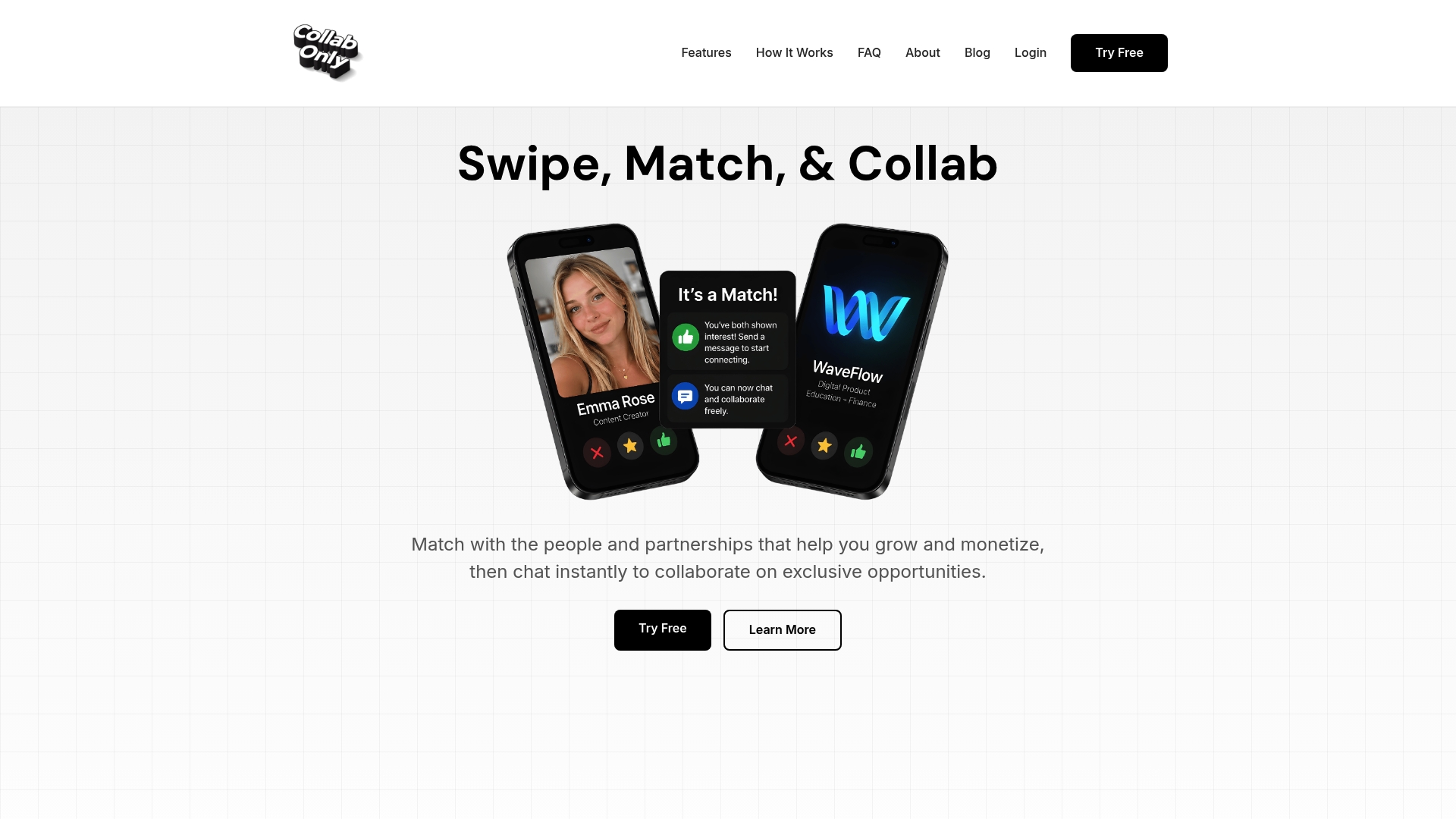
Brands using Collabonly's UGC creator platform gain immediate access to a curated pool of creators matched by niche, platform, and content style, eliminating the manual outreach cycles that slow most UGC programs. The platform's built-in briefing and agreement workflows address the rights documentation gap that creates legal exposure for brands operating without formal processes. For teams looking to scale beyond UGC into broader influencer activation, Collabonly's influencer marketplace provides access to creators across TikTok, Instagram, and YouTube, matched to specific campaign objectives with minimal back-and-forth.
FAQ
What is UGC in marketing?
UGC in marketing refers to any brand-related content, such as reviews, photos, videos, and social posts, created by customers or independent creators rather than the brand itself. It is used to build trust, increase conversions, and reduce content production costs.
What is the difference between UGC creators and influencers?
UGC creators produce raw content assets for brand use without necessarily publishing to their own audiences, while influencers are paid primarily for distributing content to their follower base. The two serve distinct strategic and budgetary roles in a marketing program.
Why does UGC outperform branded content?
Consumers view UGC as 2.4x more authentic than brand-created content and are more likely to trust peer recommendations over advertising, which explains why UGC consistently delivers higher engagement and conversion rates.
Do brands need legal permission to use customer content?
Yes. Organic UGC rights belong to the original creator, and tagging or sharing does not grant commercial usage rights. Brands must obtain explicit documented permission before using any customer content in paid media or owned marketing channels.
What UGC formats drive the most conversions?
Video unboxings, product demos, photo reviews, and social posts showing real-use scenarios consistently perform well across paid ads, product pages, and email campaigns. Cross-channel deployment amplifies the conversion impact of each individual asset.