

The fastest route to reliable creator output is a pre-built onboarding packet delivered promptly after a signed contract, followed by a 7-10 day standard operating procedure that carries a creator from agreement to an approved first deliverable. Success looks like this: clear deliverables, a fixed payment schedule, and a first brief the creator completes without a single clarifying question. Platforms built around this model exist to make that timeline repeatable across dozens of creators at once rather than one relationship at a time.
TL;DR:
- Most onboarding failures occur before a creator signs due to unprepared brands lacking clear objectives, a campaign summary, and a centralized material system.
- Identity verification causes the most delays during application, with a structured flow significantly reducing creator dropout rates by about 40 percent.
- A complete onboarding packet must include a signed contract, brand guide, disclosure examples, assets, instructions, and a revision policy, all delivered swiftly after signing.
- The 7-10 day timeline from contract to approved content relies on clear escalation triggers, daily check-ins, and automated reminders to prevent delays and no-shows.
- Automating delivery, assignment, and escalation processes within a single platform can reduce onboarding time from days to minutes and improve creator retention.
Table of Contents
- Pre-Onboarding: What Brands Must Prepare Before Inviting Creators
- Application And Verification: Fields, Identity Checks, And Payout Setup
- The Onboarding Packet And First Brief: What Goes In, Exactly
- Kickoff, Timeline, And Escalation: The 7-10 Day SOP
- Tools And Automation: What To Automate And What To Leave Manual
- How Collab Only Maps To This SOP
- Three Mistakes That Quietly Wreck Onboarding
- Ready To Run This SOP Without Building It From Scratch
- Sources
- FAQ
Pre-Onboarding: What Brands Must Prepare Before Inviting Creators
Most onboarding failures happen before a creator ever signs anything. The brand simply is not ready. Marketing teams invite creators, then scramble to produce the brief, the contract, and the approval chain while the creator waits, loses momentum, and starts wondering if the deal is real.
Fix that by treating pre-onboarding as its own project phase, completed before a single invitation goes out. Three things need to exist first.
- Campaign objective and KPIs, stated in plain language: awareness, conversion, app installs, or community growth, along with the specific metric that defines success (engagement rate, click-through, promo code redemptions).
- A one-page campaign summary covering audience, deliverable count and format, timeline, and any mandatory mentions or hashtags the creator must include.
- A single source of truth for materials. Whether that is a Notion workspace, a creator management portal, or a dedicated collaboration platform, pick one system and stop emailing attachments back and forth.
Name the internal approver before the first creator applies. Campaigns stall for days when a brief is "waiting on legal" or "waiting on the CMO," and creators read silence as disorganization. Decide who signs off on deliverables and put that name in the packet itself.
Application And Verification: Fields, Identity Checks, And Payout Setup
Most professional application flows follow the same basic pattern: account setup, social account integration, identity verification, and payout configuration, followed by an administrative review. Identity checks are the step most likely to stall a new creator relationship before it produces anything, according to Facebook Business's guidance on identity verification and payouts.
Build the application around these steps in order:
- Basic eligibility. Collect handle, primary email, and confirmation the creator meets the platform's minimum age requirement, generally the minimum age requirement of adulthood.
- Social integration. Link the creator's active accounts directly rather than accepting screenshots. Direct integration on TikTok, Instagram, or YouTube gives a brand real audience and engagement numbers instead of numbers a creator chose to report.
- Media kit or sample content. Ask for two to three recent posts that represent the creator's typical output, not their best-ever viral clip.
- Identity verification. Expect this step to cause the most drop-off and delay. Government ID mismatches, blurry uploads, and name discrepancies between a legal name and a public handle are the most common failure points.
- Payout setup. Third-party integrations like Stripe Connect handle this well for most brands, though PayPal remains common for smaller creators. Warn creators upfront that payout verification can take a few business days, so they are not surprised mid-campaign.
Statistic Callout: Structured, standardized onboarding is associated with roughly a 40% reduction in creator dropout compared with ad hoc, email-based processes. The gap is almost entirely explained by how quickly a creator moves from "interested" to "verified and paid."
The Onboarding Packet And First Brief: What Goes In, Exactly
A creator should never need to ask a clarifying question before producing content. That is the entire test of a good packet. If your onboarding materials cannot pass that test, the packet is not finished.
A complete packet, delivered promptly after a signed contract, includes the following, based on the structure outlined in Convince:
- Signed contract with payment terms and payment schedule stated in dollars, not vague percentages
- A one-page brand guide covering tone, visual do's and don'ts, and off-limits topics or competitors
- Disclosure language examples written for the specific platform (an Instagram caption tag reads differently than a TikTok on-screen disclosure)
- Asset files: logos, product shots, brand fonts, or approved b-roll
- Content submission instructions, including file format and where to upload
- A written revision policy stating how many rounds of feedback are included
The first brief carries more weight than every brief that follows it. Keep it tighter than later assignments: specify exact length and aspect ratio, give two or three mandatory talking points, and attach two reference videos the creator should emulate in tone and pacing, per the brief structure detailed in Convince.pro's compliance guidance. A creator who nails a constrained first brief has proven they can follow direction. That is worth more at this stage than creative flourish.
Pro Tip: Write your disclosure example as copy-paste-ready text, not a rule. "Include #ad within the first line of your caption" gets followed. "Comply with FTC guidelines" gets ignored, because most creators do not know what that means in practice.
Kickoff, Timeline, And Escalation: The 7-10 Day SOP
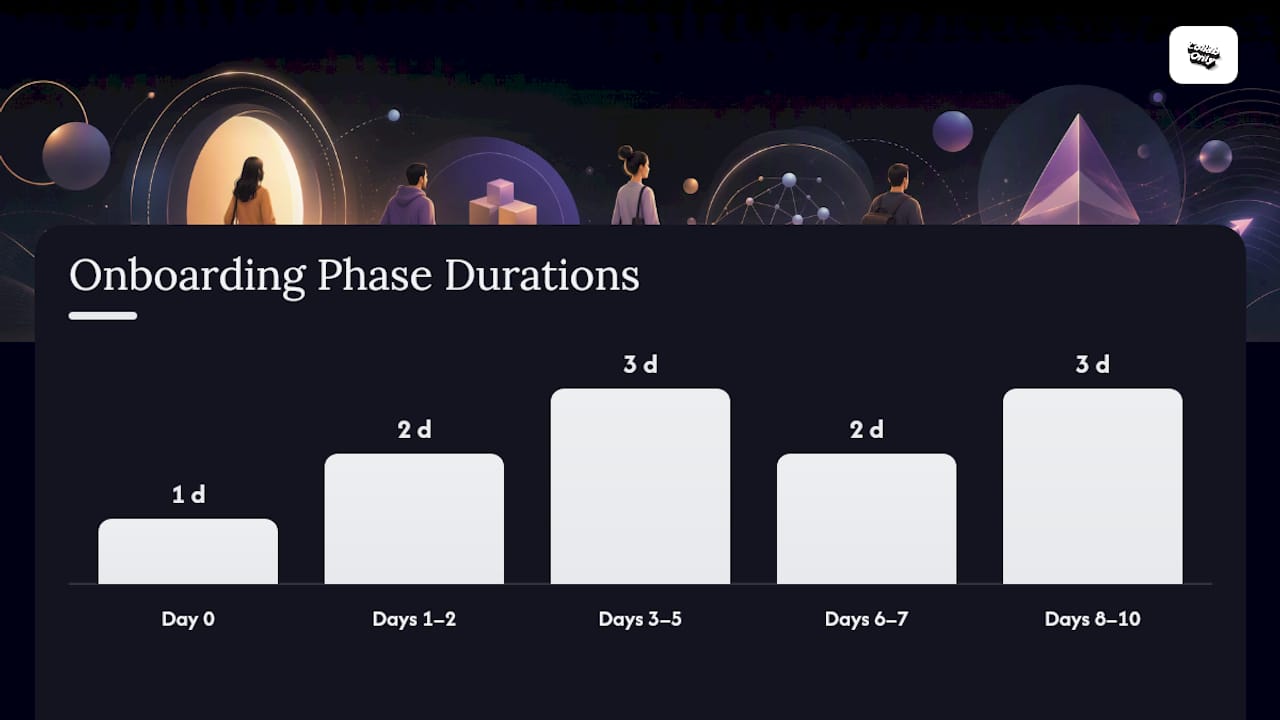
The window between signed contract and approved first video should run 7 to 10 days, a benchmark supported by Conbersa's automated onboarding workflow research. Longer than that, and campaign momentum and creator enthusiasm both start to fade.
A workable day-by-day structure looks like this:
- Day 0. Contract signed. Packet auto-delivered same day. Creator required to acknowledge receipt within 48 hours.
- Days 1 to 2. Payout setup and identity verification completed. First brief assigned.
- Days 3 to 5. Creator produces first draft. Brand contact available for questions within one business day.
- Days 6 to 7. First draft submitted for review. One revision round if needed.
- Days 8 to 10. Final approval and posting, or scheduling if the campaign uses a coordinated launch date.
Build escalation triggers into the calendar, not into someone's memory. A short, direct message at 48 hours ("Just checking you received the packet, any questions before you start filming?") prevents most no-shows. A firmer message at day 6 if no draft has appeared keeps stalled creators from quietly falling off the campaign entirely.
Statistic Callout: Time-to-first-post, approval rate on the first submission, and revision count per creator are the three numbers worth tracking during this window. A creator with a high first-pass approval rate and low revision count is one worth fast-tracking into a longer-term deal.
Tools And Automation: What To Automate And What To Leave Manual
Scaling creator onboarding without adding headcount depends almost entirely on automation, since automated onboarding sequences can cut per-creator setup time from days to minutes compared with manual, email-driven processes.
Five categories of tools cover most of the work: a creator management portal or CMP for centralizing applications, e-signature software for contracts, payout connectors like Stripe Connect, a reminder and workflow engine for the escalation sequence, and a dashboard for spotting creators falling behind.
The highest-value automations are specific:
- Auto-deliver the onboarding packet the moment a contract is signed
- Auto-assign the first brief once payout verification clears
- Trigger reminder messages at acknowledgment reminder within two days, a production check-in shortly after, and escalation reminders before one week
- Flag stalled creators on a dashboard rather than relying on a team member to remember to check
Keep creative feedback and brief approval manual. Automation should remove friction from paperwork and scheduling, not from the judgment calls that determine whether content actually fits the brand. Teams exploring broader automation patterns for marketing workflows can find useful context in AmmarAI's guide to AI for marketing teams.
How Collab Only Maps To This SOP
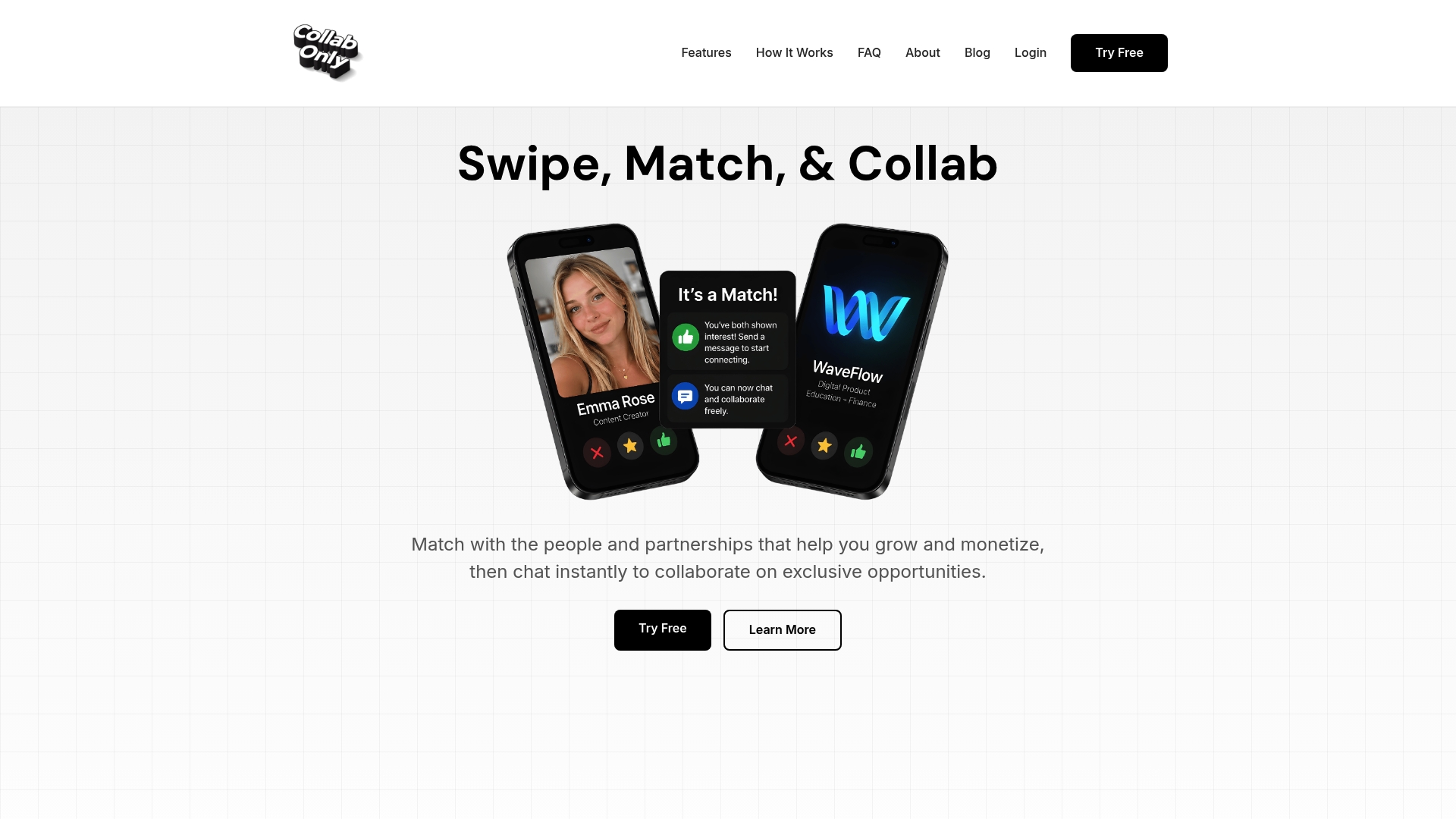
Some platforms are built to address the common friction where brands lose creators due to slow communications before any content is produced, using swipe-based matching to get a brand to a shortlist fast, and instant chat on match to replace the multi-day email back-and-forth that usually delays step one of the SOP above.
The core problem in creator onboarding is never finding creators. It is the seven to ten days after the handshake, where good intentions die in scattered email threads and unanswered DMs.
Mapped against the SOP: some platforms' single portal structures can support packet delivery and template storage; chat functions handle acknowledgments and escalations without separate reminder tools; and campaign templates support consistent briefs across TikTok, Instagram, and YouTube creators from a single dashboard. Brands running multiple campaigns can review broader engagement tactics in Collab Only's guide to engaging creators for brand partnerships.
Three Mistakes That Quietly Wreck Onboarding
Scattered documentation is the most common failure. Brands split the contract, brief, and brand guide across three different tools and wonder why creators miss details. Fix it by consolidating everything into one packet, one link, delivered once.

Vague disclosure guidance is the second. "Follow FTC rules" is not instruction; a copy-paste example is. The third is slow payment. Nothing kills a second collaboration faster than a creator waiting three weeks for a payout that was promised in five days.
Before any kickoff call, confirm three things out loud: the packet has been received and acknowledged, the payment schedule is written down with dates, and the first brief has exactly two or three mandatory talking points, not ten.
— Samuel
Ready To Run This SOP Without Building It From Scratch
Every step in this playbook, from packet delivery to escalation reminders to first-brief templates, can be operationalized within a single matching and chat system. Instead of assembling a CMP, an e-signature tool, and a reminder engine separately, brands can run the whole 7-10 day sequence from one portal, with instant chat replacing the slow email loop that stalls most creator relationships before day 3.
If your brand is running smaller, high-frequency campaigns, start with nano influencer marketing on Collab Only to see how the matching and chat flow apply to a real campaign at a manageable scale. Match with a handful of creators, run the SOP above, and use the first cycle as your template for every campaign after it.
Sources
FAQ
What Is Creator Onboarding?
Creator onboarding is the structured process that moves a creator from application or invitation through identity and payout verification, contract signature, and first-brief completion, ideally within 7 to 10 days.
How Long Should Creator Onboarding Take?
A well-built SOP moves a creator from signed contract to approved first deliverable in 7 to 10 days; longer windows tend to increase dropout.
What Should Be In A Creator Onboarding Packet?
A complete packet includes the signed contract, payment terms, a one-page brand guide, disclosure examples, asset files, submission instructions, and the revision policy, delivered within 24 hours of signature.
Why Do Creators Drop Off During Onboarding?
Identity verification and payout setup cause most delays, and unclear or scattered instructions cause the rest; standardized onboarding is linked to roughly a 40% drop in creator churn.
Can Onboarding Be Automated?
Yes. Automating packet delivery, brief assignment, and reminder escalations can cut per-creator onboarding time from days to minutes, and some platforms build much of that sequence into a single portal with instant chat.