

TL;DR:
- Matching creators and brands involves aligning audience, values, and engagement profiles for authentic, results-driven partnerships.
- Utilizing verified data and structured frameworks ensures selecting the right creators according to campaign goals and brand identity.
Matching creators and brands is defined as the process of aligning a creator's audience, content values, and engagement profile with a brand's campaign goals to form partnerships that produce authentic, measurable results. This practice, formally known as creator-brand alignment in influencer marketing, goes well beyond sorting by follower count. Platforms like Collabonly, tools like Modash and Traackr, and frameworks built around value overlap have made systematic matching both accessible and data-driven. The guide to matching creators and brands below covers every stage of the process: vetting criteria, alignment frameworks, outreach structure, performance measurement, and long-term relationship management.
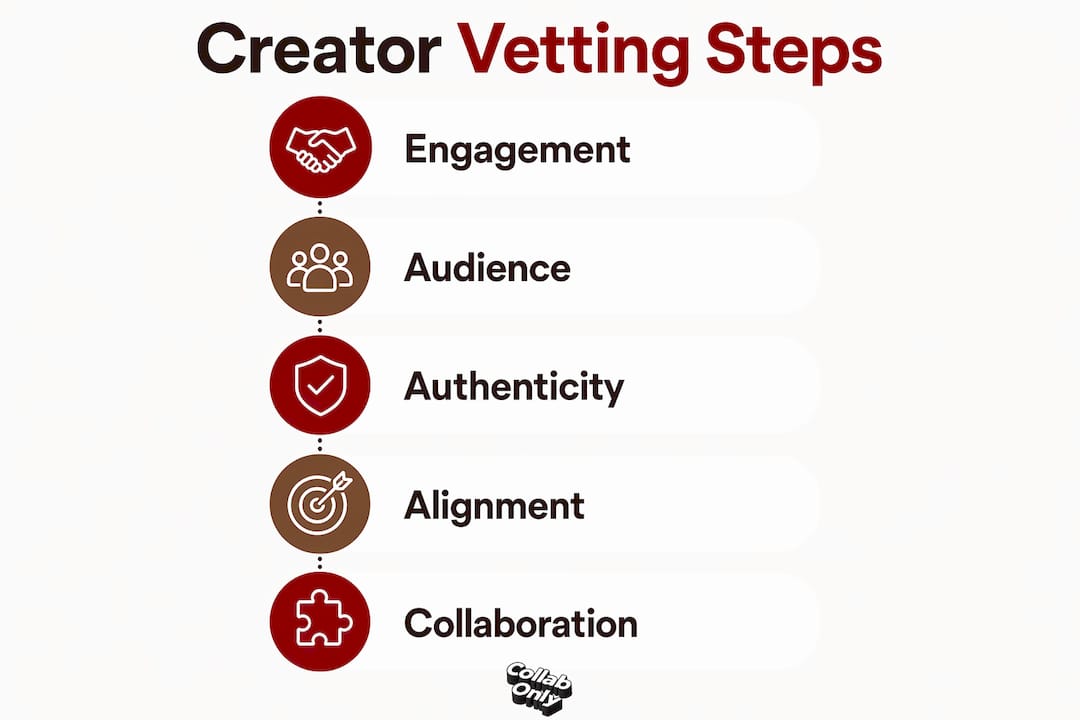
What are the key criteria for vetting and selecting the right creators?
Selecting the right creator starts with verifiable engagement data, not surface-level metrics. Brands in 2026 use benchmarks such as YouTube comment-to-view ratios above 0.5% and Instagram Reels engagement rates above 3% to confirm that an audience is genuinely responsive. On TikTok, completion rate data is a more reliable signal than raw likes or follower counts, because it measures whether viewers stayed through the content rather than simply scrolling past it.

Audience demographic verification is the second layer of evaluation. Platform dashboard data from Instagram Insights, TikTok Analytics, and YouTube Studio provides age, gender, and geographic breakdowns that a creator can share directly. Brands should cross-reference this data against their own customer profiles to confirm that the creator's audience matches the intended buyer. A fitness apparel brand targeting women aged 25 to 34 in the United States gains little from a creator whose audience is predominantly male teenagers in Southeast Asia, regardless of that creator's follower count.
Content consistency and value alignment require qualitative review. Natural language processing tools and sentiment analysis platforms can scan a creator's recent posts to identify recurring themes, tone, and brand safety signals. Reviewing the last 90 days of content manually remains the most reliable method for detecting misalignment between a creator's stated niche and their actual posting behavior.
Red flags to screen for include:
- Engagement pods, where coordinated groups post generic comments to inflate engagement artificially. Engagement pods are identifiable by repetitive, low-specificity comments and creators who follow thousands of accounts indiscriminately.
- Follower quality issues, such as a high ratio of accounts with no profile photo, no posts, or suspiciously sequential usernames.
- Over-scripted sponsored content that reads as advertising copy rather than the creator's natural voice, which signals a history of poor brand collaboration practices.
- Sudden follower spikes not correlated with a viral post or press event, which often indicate purchased followers.
Tools like Modash and Traackr automate much of this audit process, flagging anomalies in follower growth curves and engagement ratios. Collabonly's YouTube creator search applies data-driven benchmarks to surface creators who meet verified engagement thresholds before a brand ever makes contact.
Pro Tip: Request a creator's media kit and platform analytics screenshot before committing to outreach. Authentic creators maintain this documentation and share it without hesitation.
How to apply a systematic framework for matching creators and brands
Matching creators to brands is an alignment exercise across brand values, campaign goals, and audience overlap, not a simple ranking by reach. The Venn diagram framework operationalizes this by scoring each creator candidate across three dimensions: brand value alignment, creator value alignment, and audience demographic overlap. Creators who fall within the intersection of all three circles represent the highest-priority candidates for any campaign type.
Before scoring begins, both the brand and the campaign team must define each dimension explicitly. Brand values should be documented as a short list of non-negotiable attributes, such as sustainability, inclusivity, or technical expertise. Creator values are assessed through content review and, where possible, direct conversation. Audience overlap is quantified using demographic data from platform dashboards.
The table below illustrates how campaign goals shift the priority weighting across alignment dimensions:
| Campaign goal | Primary alignment priority | Secondary priority | Creator profile |
|---|---|---|---|
| Brand awareness | Audience overlap | Creator reach | Mid-tier lifestyle or entertainment creators |
| Direct sales | Brand value alignment | Audience purchase intent | Niche micro or nano creators with high trust |
| Credibility building | Creator value alignment | Content quality | Subject-matter experts or professional creators |
| Content production | Creative style fit | Usage rights flexibility | Skilled content producers in relevant verticals |
When no creator meets all three alignment criteria simultaneously, the framework directs teams to prioritize two-circle fits based on the campaign's primary goal. A sales-focused campaign should favor brand value and audience alignment over creator value alignment if a perfect three-way match is unavailable. Skipping alignment dimensions entirely produces inauthentic campaigns, mismatched messaging, and engagement rates that fail to justify spend.
Pro Tip: Score each creator candidate on a simple 1 to 5 scale across all three Venn dimensions before any outreach. This creates a defensible, repeatable selection record that improves future campaigns.
What are best practices for outreach, negotiation, and collaboration structure?
Structured outreach and clear contract terms are where many brand-creator partnerships fail before they begin. Personalized outreach that names the creator's specific audience overlap and states a clear offer improves response rates significantly compared to generic partnership inquiry templates. The outreach message should reference a specific piece of the creator's content, explain why the brand's product is relevant to that creator's audience, and include a budget range, timeline, and brief deliverable overview in the first contact.
The negotiation phase should address the following in sequence:
- Deliverable format and quantity: specify whether the agreement covers Instagram Reels, TikTok videos, YouTube integrations, or a combination, along with the number of posts and posting schedule.
- Content ownership and usage rights: repurposing creator content adds 20 to 40% to standard fees, and exclusivity periods typically run 30 days, with premium categories requiring up to 90 days. Negotiate these terms before the contract is signed, not after content is delivered.
- Performance kill switches: include contract language that allows the brand to pause or terminate a campaign if content underperforms against agreed benchmarks or if a brand safety incident occurs.
- FTC disclosure requirements: all sponsored content must include clear disclosure language such as "Paid partnership" or "#ad" in compliance with Federal Trade Commission guidelines. Build this requirement into the contract explicitly.
- Compensation structure: hybrid models that combine a flat fee with a performance bonus tied to promo code redemptions or affiliate link conversions align creator incentives with brand outcomes.
Creator tiers require different negotiation approaches. Nano creators (1,000 to 10,000 followers) often accept product gifting or modest flat fees in exchange for authentic reviews. Micro creators (10,000 to 100,000 followers) typically require flat fees plus usage rights fees. Mid-tier and macro creators negotiate full campaign packages that include exclusivity, usage rights, and performance bonuses as standard terms.
Pro Tip: Always negotiate data portability upfront. Brands that fail to secure access to post-level analytics from creator accounts lose the performance data needed to optimize future campaigns.
How to measure, optimize, and maintain long-term creator partnerships
Performance measurement for creator campaigns operates across three levels, each serving a distinct strategic function. Multi-level tracking from reach and impressions through to conversions, using tools like tracking links, promo codes, and pixel attribution, provides the closed-loop data needed to evaluate true campaign ROI. TikTok Shop integration and YouTube product shelves further tighten this measurement loop by connecting content views directly to purchase events.
The three measurement levels and their corresponding metrics are:
- Awareness metrics: reach, impressions, share of voice, and new follower acquisition on brand accounts attributed to creator posts.
- Engagement metrics: click-through rates on linked content, shares, saves, comment sentiment scores, and story reply rates. Engagement measurement techniques on TikTok, Instagram, and YouTube each require platform-specific benchmarks for accurate interpretation.
- Conversion metrics: promo code redemptions, affiliate link clicks, pixel-tracked purchases, and cost per acquisition compared against the creator's total campaign fee.
One-off campaigns produce weak results relative to their cost because audience trust in a creator's recommendation builds through repeated exposure. Planning a minimum of three activations with the same creator over a 90-day period produces measurably stronger recall and conversion rates than three separate single-post campaigns with three different creators. This is the compounding effect of peer-credibility: the creator's audience begins to associate the brand with the creator's identity rather than treating each post as a discrete advertisement.
Micro and nano creators in niche verticals often yield better conversion rates and cost efficiencies than large lifestyle influencers, because focused micro-communities built on trust drive repeat purchases and sustainable engagement. Brands that understand why creators drive sales allocate budget accordingly, concentrating spend on a smaller number of high-fit creators rather than distributing it thinly across a large roster.
Maintaining long-term partnerships requires giving creators genuine creative freedom within defined message guardrails. Over-scripting creator content is a documented failure mode that alienates audiences. Creators who communicate brand messages in their own voice, within agreed parameters, consistently outperform those given scripted copy. Brands that treat creators as strategic partners rather than content vendors retain higher-performing creators and reduce the cost of continuous recruitment.
Key takeaways
Effective creator-brand matching requires a documented alignment framework across values, audience overlap, and campaign goals, executed with verified engagement data and structured contract terms.
| Point | Details |
|---|---|
| Engagement benchmarks matter | Use YouTube comment-to-view ratios above 0.5% and Instagram Reels rates above 3% to verify authentic influence. |
| Venn framework drives selection | Score creators across brand values, creator values, and audience overlap before any outreach begins. |
| Contract terms protect both parties | Negotiate usage rights, exclusivity periods, FTC compliance, and performance kill switches upfront. |
| Multi-level measurement is required | Track awareness, engagement, and conversion metrics separately to evaluate true campaign ROI. |
| Long-term partnerships outperform one-offs | Three or more activations with the same creator over 90 days produce stronger recall and conversion than single-post campaigns. |
The case for treating creator matching as a discipline, not a task
The influencer marketing space in 2026 has matured to the point where treating creator selection as a quick checklist produces predictably poor results. Having reviewed hundreds of brand-creator partnerships across TikTok, Instagram, and YouTube, the pattern is consistent: brands that invest in systematic alignment frameworks before outreach begins outperform those that rely on reach metrics and gut instinct by a significant margin.
The most underestimated variable in this process is audience fatigue. When creators post sponsored content too frequently or without authentic connection to the product, their audience's trust erodes quickly. The brands that suffer most from this are those that over-script their creator partnerships, removing the natural voice that made the creator's audience trust them in the first place.
Data and AI tools have genuinely improved the speed and accuracy of creator vetting. Platforms like Modash and Traackr surface engagement anomalies that would take hours to identify manually. But the judgment call on whether a creator's values and content style genuinely fit a brand's identity still requires human review. No algorithm fully captures the qualitative texture of a creator's relationship with their community.
The professionalization of the creator economy also means that contract and rights management can no longer be treated as an afterthought. Creators with professional representation now arrive at negotiations with standard rate cards, usage rights clauses, and exclusivity terms already defined. Brands that approach these conversations without equivalent preparation consistently leave value on the table or create disputes that damage the relationship before the first post goes live.
The long-term partnership model is not just philosophically preferable. It is economically superior. Recruitment costs for new creators are substantial, and the trust-building period with a new creator's audience takes time. Brands that retain high-fit creators across multiple campaigns amortize those costs and compound the credibility benefit.
— Samuel
Find and match creators faster with Collabonly
Collabonly is built specifically to remove the friction from the creator-brand matching process. The platform's swipe-based matching system connects brands with vetted creators across TikTok, Instagram, and YouTube, with instant chat activated upon a match so outreach begins without the delay of cold email or lost DMs.
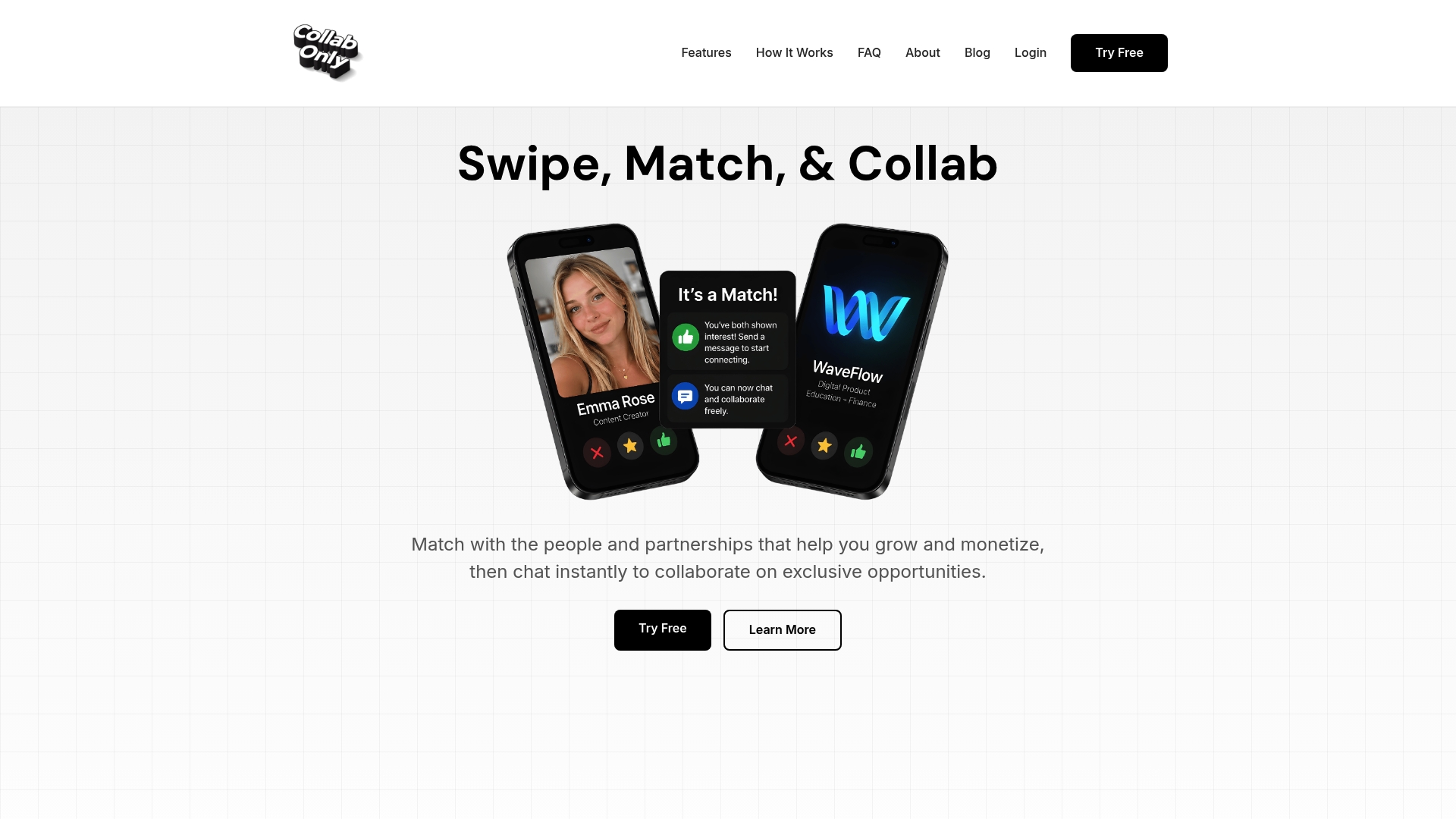
For brands prioritizing cost-efficient, high-trust partnerships, Collabonly's nano influencer marketplace and micro influencer hiring tools provide access to creators in niche verticals who meet verified engagement benchmarks. The platform supports the full collaboration lifecycle, from initial matching and outreach through campaign tracking and content rights management, making it a practical execution layer for the alignment framework described in this guide.
FAQ
What does matching creators and brands actually mean?
Matching creators and brands is the process of aligning a creator's audience demographics, content values, and engagement profile with a brand's campaign goals and brand identity. It is a structured alignment exercise, not a simple ranking by follower count or reach.
How do you verify that a creator's engagement is authentic?
Authentic engagement is verified through platform dashboard data showing comment-to-view ratios, completion rates, and follower growth curves. Authentic creators show diverse, specific comments and consistent organic content alongside sponsored posts, rather than generic comment patterns associated with engagement pods.
What engagement benchmarks should brands use in 2026?
Brands should target YouTube comment-to-view ratios above 0.5%, Instagram Reels engagement rates above 3%, and prioritize TikTok completion rate data over raw likes. These benchmarks reflect genuine audience responsiveness rather than passive exposure.
Why do micro and nano creators often outperform larger influencers?
Micro and nano creators operate within focused sub-niche communities where peer-credibility is high and audience trust is built through consistent, non-commercial content. This trust translates into higher conversion rates and repeat purchase behavior compared to broad lifestyle influencers with larger but less engaged audiences.
What contract terms must be negotiated before a creator campaign launches?
Brands must negotiate deliverable format, posting schedule, content usage rights, exclusivity period, FTC disclosure requirements, and performance kill switch clauses before any content is produced. Usage rights negotiated late add 20 to 40% to fees and create disputes that delay campaign execution.