

TL;DR:
- Trust-based, repeat exposures from creators drive sales more effectively than viral campaigns, emphasizing authenticity over virality. Building long-term creator relationships and transparent disclosures enhances audience trust and achieves measurable, scalable commerce outcomes. Modern attribution models now connect creator influence directly to sales, enabling brands to optimize creator programs confidently.
The conventional assumption is that influencer marketing delivers value only when a post goes viral. That assumption is wrong, and it costs brands real revenue. Understanding why creators drive sales requires examining something far more durable than a spike in views: the trust-based, repeat-exposure relationships that creators build with their audiences over time. In 2026, with 57% of buyers naming influencer ads their top advertising priority, the data is unambiguous. Creator-driven commerce, the industry's more precise term for this model, operates through mechanisms that traditional media simply cannot replicate.
Table of Contents
- Key Takeaways
- Why creators drive sales through trust, not tactics
- Sustained engagement is what actually converts audiences
- Creator content versus brand channels: a performance comparison
- How attribution models now properly credit creators
- Disclosure practices that protect trust and sales performance
- My perspective: what brands consistently get wrong about creator marketing
- Find the right creators with Collabonly
- FAQ
Key Takeaways
| Point | Details |
|---|---|
| Trust is the core conversion driver | Creators build peer-credibility with audiences that brand-owned channels cannot manufacture at scale. |
| Repeat exposure converts buyers | Consumers need 3 to 4 creator exposures before purchasing, making sustained partnerships more effective than one-off campaigns. |
| Creator content outperforms brand channels | Creator content generates 17x more engagement and 12x more impressions than brand-owned content. |
| Attribution models are maturing | Closed-loop tracking now connects creator exposure directly to sales transactions, increasing investment confidence. |
| Disclosure is non-negotiable | Undisclosed sponsorships trigger distrust in 70% of consumers, directly reducing sales effectiveness. |
Why creators drive sales through trust, not tactics
The most precise explanation for the role of creators in marketing comes down to a single mechanism: peer-credibility. Creators are not perceived as advertisers by their audiences. They are perceived as informed peers, subject-matter authorities, or trusted community members whose recommendations carry genuine social weight.
Traditional advertising operates through interruption. A display ad appears between the content a consumer actually wants. A creator, by contrast, embeds product narratives inside content the audience actively seeks out. When a creator explains why they switched their skincare routine or which camera lens they rely on for travel content, the product recommendation arrives inside a personal narrative with established context. That context is what converts.
The data supports this framing. Marketers increasingly report that creators deliver better authenticity and flexibility, enabling product narratives that help audiences visualize real use cases before purchase. This visualization function is significant because it collapses the consideration phase. Consumers watching a creator demonstrate a product are effectively receiving a personalized product review from someone they already trust.
Key trust-building behaviors that distinguish creator content from paid advertising:
- Creators reference their audience's specific pain points, not generic demographic profiles
- Product integrations appear within content formats the audience already engages with regularly
- Long-term creator partnerships signal genuine endorsement rather than transactional one-off promotions
- Creators field questions and comments in real time, extending the trust signal beyond the original post
Pro Tip: Prioritize creators who have discussed your product category organically before any paid partnership begins. Prior organic interest is the strongest predictor of authentic integration and audience receptivity.
As IAB's Zoe Soon notes, creators work because they build trust through ongoing audience relationships, something brands cannot manufacture, and this trust drives cultural power beyond individual posts. That cultural power, accumulated over months and years of content, is the actual asset brands access when they partner with a creator.
Sustained engagement is what actually converts audiences
One of the most misunderstood dynamics in creator-driven commerce is the role of frequency. Brands often design influencer campaigns as single activations: one post, one story, one review. The purchase data tells a different story.

Consumers typically need to see an influencer promote a product 3 to 4 times before purchasing, according to EMARKETER and impact.com's 2026 survey. That finding has direct implications for campaign architecture. A single creator post primes awareness. The second and third exposures, particularly when delivered through different content formats or platforms, move the consumer through consideration toward purchase intent.
Structuring creator programs for repeat exposure requires a deliberate sequencing strategy:
- Establish an initial awareness post that introduces the product within the creator's natural content context
- Follow with a deeper use-case post within two to three weeks, showing the product in a specific scenario
- Introduce social proof through community engagement content, such as comments, Q&A, or response videos
- Close with a conversion-focused post that includes a time-limited offer or affiliate link
This sequencing model explains why many creators now prioritize repeatable conversion systems over viral moments. A creator with a structured content plan around a product generates more predictable purchase behavior than one who posts once and moves on.
The TikTok Shop data is particularly instructive here. 70% of TikTok Shop consumers have purchased a product recommended by a creator, and 58% of consumers who discover a small brand on TikTok Shop make a subsequent purchase, often within days. That conversion speed is a direct product of the platform's closed-loop discovery model and the creator's ability to move an audience from passive viewing to active purchasing within a single session.
Creator content versus brand channels: a performance comparison
Brands that maintain both a creator program and owned social channels often ask the same question: where does content actually perform? The answer is not close.
| Metric | Creator content | Brand-owned content |
|---|---|---|
| Engagement rate | 17x higher | Baseline |
| Impressions | 12x more | Baseline |
| ROI vs. traditional ads | 94% of orgs report higher | Standard benchmark |
| Audience trust | Peer-credibility model | Corporate broadcast model |
| Content personalization | Sub-niche, contextual | Mass market, generic |
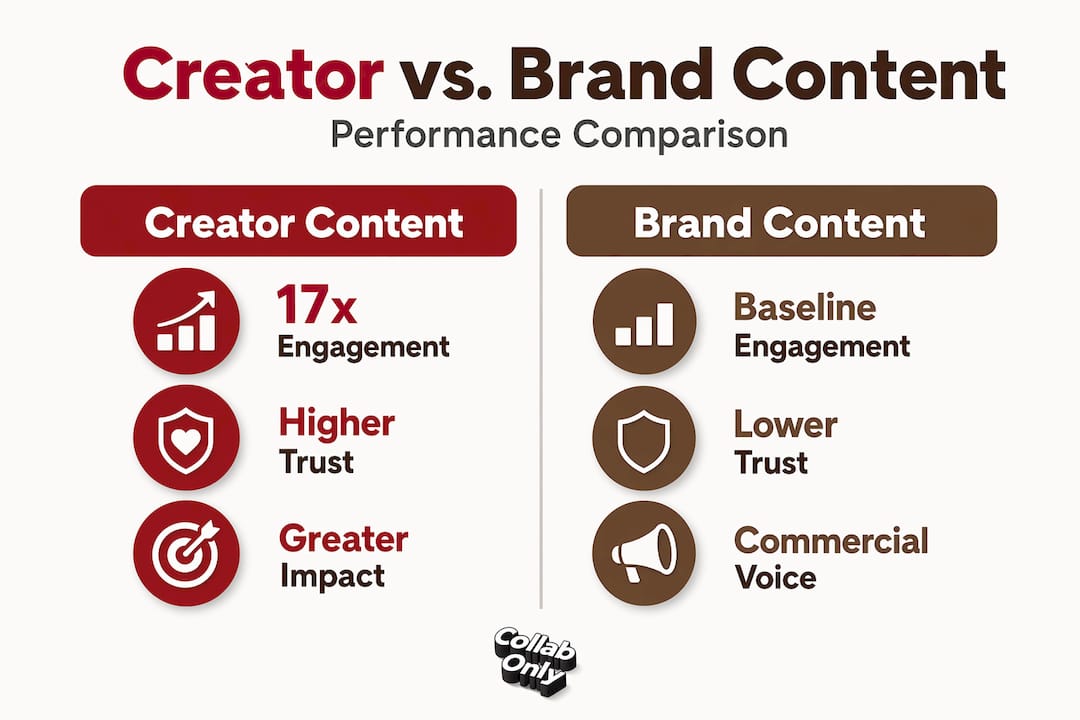
These figures come from Fortune 100 brand data in the 2024 CreatorIQ report, referenced in EMARKETER's 2026 analysis. The 17x engagement differential is not a marginal advantage. It represents a structural difference in how audiences relate to creator content versus brand-broadcast content.
Why does this gap exist? Brand-owned channels, by definition, speak from a position of commercial interest. Every post is understood by the audience as self-promotion. Creator content, even when sponsored, is filtered through a voice the audience has chosen to follow. That opt-in relationship is the variable that brand channels cannot replicate through content quality or production value alone.
For brands evaluating where to allocate content budgets, the question is not whether to invest in content creators. The question is which creator profiles and platforms will generate the highest return for a specific product category and audience segment.
How attribution models now properly credit creators
For years, creator marketing faced a credibility problem that had nothing to do with actual performance. The issue was measurement. Last-click attribution models awarded conversion credit to the final touchpoint before purchase, typically a paid search ad or retargeting unit. Creators who primed that purchase intent across weeks of content received no credit in the data.
That gap is closing. Retailers can now tie creator exposure directly to sales transactions through closed-loop attribution frameworks, and according to IAB's Zoe Soon, this data-driven attribution unlocks significantly greater investment confidence from brands that previously under-resourced creator programs.
The shift from last-click to multi-touch attribution has two practical consequences:
| Attribution shift | Practical impact for brands |
|---|---|
| Creator exposure linked to transaction data | Budget allocation shifts toward sustained creator programs |
| Multi-touch models credit awareness content | Brands identify which creator audiences have highest purchase propensity |
| Closed-loop tracking in platforms like TikTok Shop | Discovery and conversion measured within one ecosystem |
Consumer purchasing journeys via creators increasingly collapse the traditional funnel into a compressed closed-loop, allowing discovery and purchase to occur inside one ecosystem. This means measurement playbooks are no longer debating whether creators are effective. The current focus, as the IAB's State of Creator Economy Advertising confirms, is on building standards that connect creator influence to scalable, repeatable outcomes.
For brand strategists, this shift has immediate budget implications. Creator programs that previously could not demonstrate ROI within standard reporting windows can now surface mid-funnel engagement data, audience overlap with purchasers, and repeat purchase correlation tied to specific creator content.
Disclosure practices that protect trust and sales performance
The trust that makes creator-driven commerce effective is also its most fragile asset. When audiences perceive that a creator has hidden a commercial relationship, the trust damage is both immediate and measurable.
According to the 2025 NAD Influencer Trust Index, 70% of consumers report negative feelings when influencers receive compensation or products without clear disclosure. That figure has a direct conversion consequence: consumers who distrust a creator's sponsorship relationship do not act on the recommendation.
Best practices for managing disclosure across creator programs:
- Require clear, upfront disclosure language in the first line of captions and within the first five seconds of video content
- Avoid euphemisms such as "in partnership" or "collab" when platform-specific terms like "#ad" or "#sponsored" are both clearer and algorithmically recognized
- Brief creators on disclosure requirements during onboarding, not as a legal afterthought but as a performance optimization measure
- Audit creator content within 24 hours of posting to confirm disclosure compliance before any paid promotion amplifies the post
The same research notes that company ads maintain higher reported trust scores (87%) than influencer content (74%), but that gap narrows significantly when creators disclose authentically and consistently. Proper disclosure, done transparently and without apology, does not reduce purchase intent. It reinforces the creator's credibility by signaling that they maintain standards with their audience even within paid relationships.
Pro Tip: When briefing creators, frame disclosure as a community standard rather than a legal requirement. Creators who internalize this framing produce disclosures that read as natural rather than defensive, which audiences consistently receive more positively.
The risk of neglecting disclosure extends beyond individual campaign performance. Brands associated with undisclosed influencer content face regulatory scrutiny from the FTC and reputational damage that outlasts any single campaign cycle.
My perspective: what brands consistently get wrong about creator marketing
I have seen brands allocate significant budgets toward creator programs and then measure the results through a lens that guarantees disappointment. The fixation on virality, on finding the one post that reaches a million people, misses what actually builds the trust required for purchase decisions.
The creators who consistently deliver sales results are not the ones with the highest follower counts. They are the ones with the deepest community relationships, the smallest trust deficits, and the most consistent content behavior. From where I sit, the measurement revolution underway in 2026, the closed-loop attribution, the multi-touch models, the platform-level transaction data, is not creating a new truth about creator effectiveness. It is finally making an existing truth legible to finance teams and brand executives who need numbers to act.
The harder lesson is that creator relationships require the same patience and investment as any high-value business relationship. Brands that treat creators as interchangeable content vendors will always see mediocre results. Brands that build creator communities with genuine long-term intent get access to something no ad platform can sell: sustained, authentic audience trust that compounds over time.
Disclosure is the one non-negotiable. Any brand that allows creators to obscure commercial relationships in the name of "authenticity" is undermining the very asset it is paying to access.
— Samuel
Find the right creators with Collabonly
Knowing why influencers sell is one thing. Executing a creator program at scale, with the right partners, measurement infrastructure, and disclosure controls in place, requires a platform built for exactly that purpose.
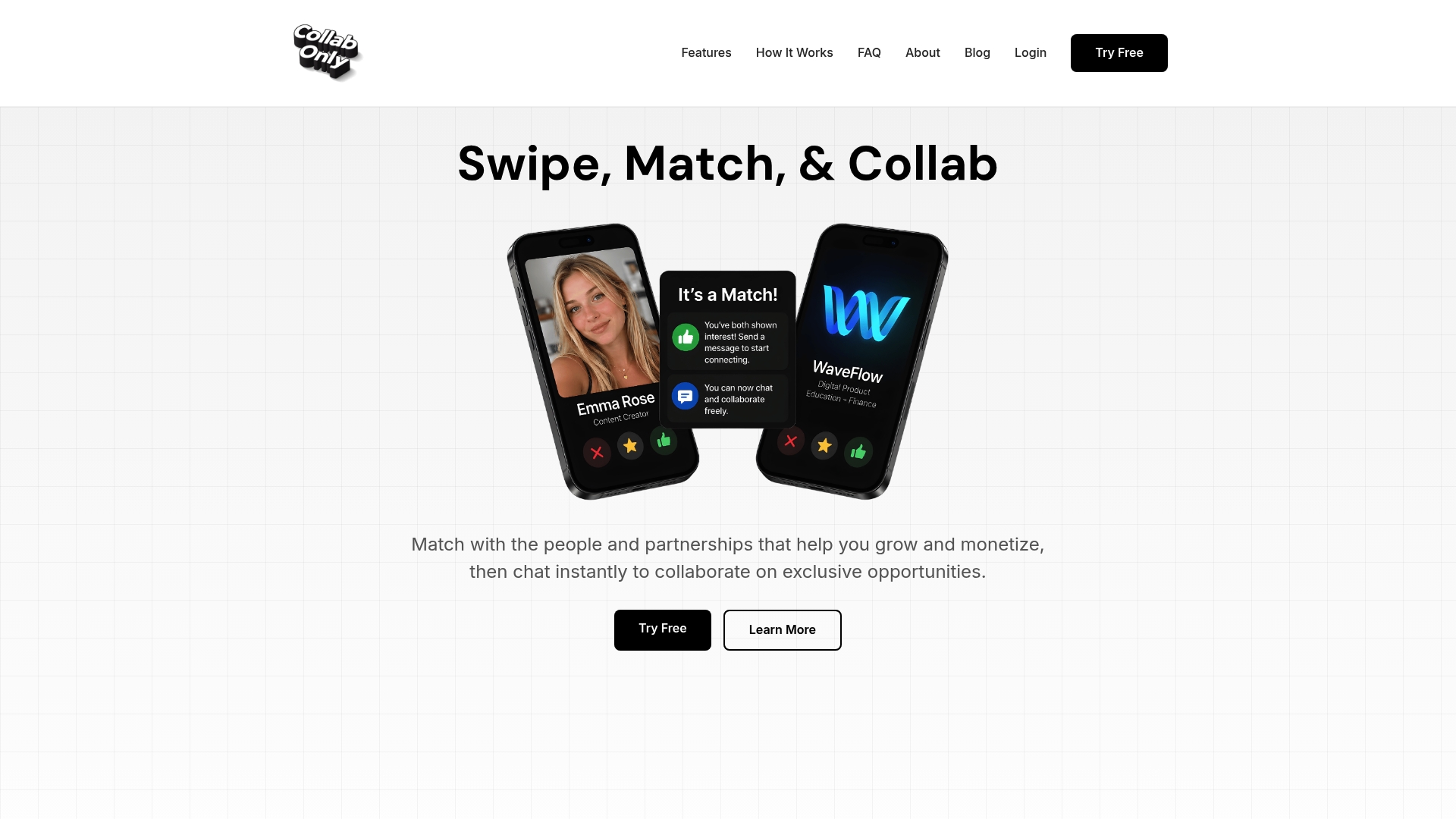
Collabonly connects brands directly with nano and micro influencers whose audience profiles align with specific product categories and purchase behaviors. The platform's matching system eliminates the slow email cycles and unanswered DMs that erode campaign timelines, replacing them with instant communication upon match. For brands prioritizing nano influencer partnerships or scaling through micro influencer networks, Collabonly provides the infrastructure to build the kind of sustained, trust-based creator relationships that the data consistently shows drive real purchase behavior. Explore the full influencer marketplace to identify creators across TikTok, Instagram, and YouTube who fit your campaign objectives.
FAQ
Why do creators drive sales better than traditional ads?
Creators build peer-credibility through ongoing audience relationships that brand advertising cannot replicate. Their product integrations arrive inside content audiences actively choose to consume, which produces higher trust and higher conversion rates.
How many creator exposures does a consumer need before purchasing?
Research from EMARKETER and impact.com shows consumers typically need to see a creator promote a product 3 to 4 times before making a purchase, which is why sustained creator partnerships outperform single-activation campaigns.
What is creator-driven commerce?
Creator-driven commerce refers to the model in which content creators, rather than brand-owned channels or traditional media, serve as the primary driver of product discovery, consideration, and purchase conversion, often within closed-loop platform ecosystems like TikTok Shop.
Does disclosure hurt a creator's ability to drive sales?
No. The NAD Influencer Trust Index shows that hidden compensation, not disclosed compensation, causes negative consumer reactions. Transparent disclosure, when delivered authentically, maintains audience trust and protects conversion performance.
How can brands measure the actual sales impact of creators?
Multi-touch attribution frameworks and closed-loop tracking tools now allow brands to tie creator exposure directly to sales transactions, solving the measurement gap that previously under-credited creators for priming purchase intent.