

TL;DR:
- Investing in content creators delivers significantly higher engagement, authenticity, and conversion support than traditional advertising.
- Measuring creator ROI requires brand lift and incrementality models, as last-click attribution undercounts their full impact.
Brands that still treat creator partnerships as an experimental line item are operating with an outdated model. Understanding why invest in content creators matters requires moving past the reach narrative entirely. The real case for creator investment sits in three areas that traditional advertising consistently underdelivers: measurable engagement uplift, consumer-grade authenticity, and decision-support content that accelerates purchase confidence. The data increasingly confirms this shift, and buyer priorities are moving accordingly at a pace most marketing teams have not yet matched.
Table of Contents
- Key takeaways
- Why invest in content creators: the engagement and ROI data
- How authenticity builds trust and willingness to pay
- What makes creators uniquely effective as brand partners
- Creators as decision-support assets and long-term brand investments
- Creator investment in an AI-driven media environment
- Samuel's perspective: what the data still misses about creator value
- Find and scale creator partnerships with Collabonly
- FAQ
Key takeaways
| Point | Details |
|---|---|
| Engagement outperforms brand channels | Creator content generates 17x more engagement than brand-owned content, making it a superior performance channel. |
| Authenticity drives willingness to pay | 85% of consumers pay more for brands they perceive as authentic, and creators are the most direct path to that perception. |
| Creators support purchase decisions | 74% of consumers say creator content provides helpful context that enables confident buying decisions. |
| Repeat collaborations compound ROI | Conversions double by the sixth creator integration, meaning consistency compounds content creators ROI over time. |
| Measurement frameworks are evolving | Last-click attribution undercounts creator impact; brand lift and incrementality models are now the standard for accurate ROI tracking. |
Why invest in content creators: the engagement and ROI data
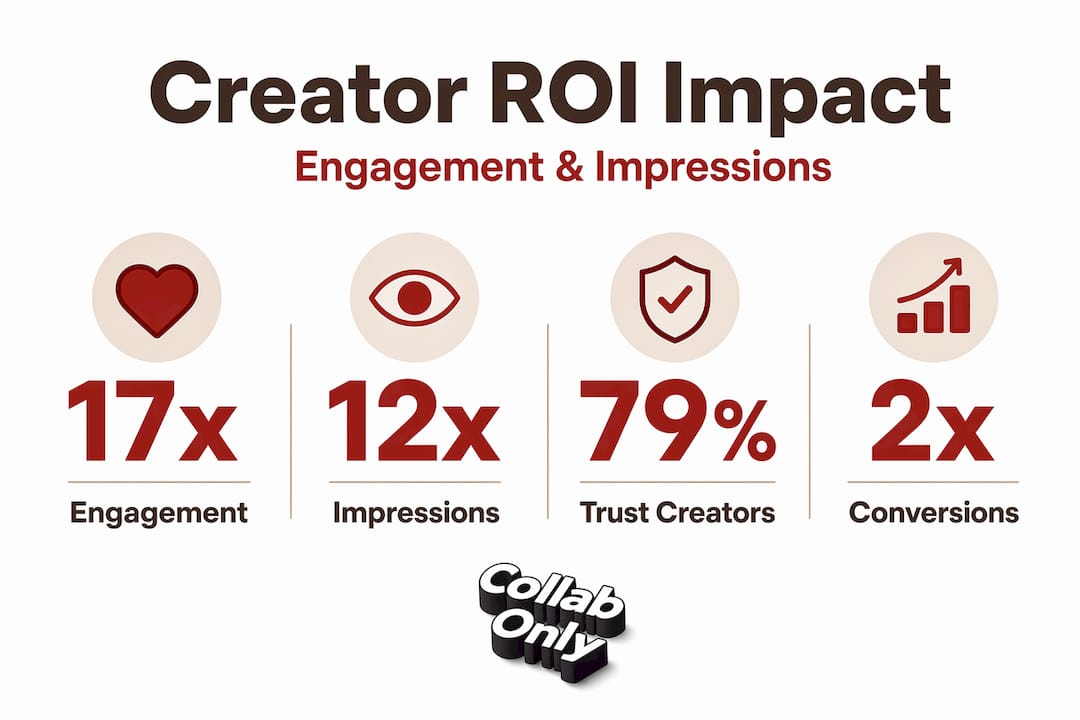
The most common misconception in this conversation is that investing in influencers is primarily a brand awareness play. The performance data does not support that framing. Creator content drives 17x more engagement and 12x more impressions than content published on brand-owned channels. These are not marginal improvements. They represent a structural difference in how audiences receive and respond to content depending on its source.
The ROI picture is equally direct. 94% of organizations using influencer marketing report higher ROI compared to traditional digital advertising. That figure spans organizations of different sizes, verticals, and campaign objectives, which makes it a signal rather than an outlier.
The shift in buyer priorities reinforces this further:
- Influencer ads rose from 48% to 57% as the top ad priority among buyers between 2025 and 2026
- Human storytelling in an AI-first media environment is driving demand for creator voices over automated content
- Brands view creator partnerships as performance marketing tools, not just broad awareness vehicles
- The value of content marketing delivered through creators scales beyond the initial campaign window due to long-tail content views
| Metric | Creator content | Brand-owned content |
|---|---|---|
| Engagement rate | 17x higher | Baseline |
| Impressions | 12x higher | Baseline |
| Organizations reporting higher ROI | 94% | N/A |
| Buyer priority rank (2026) | No. 1 at 57% | Not ranked |
The data table above reflects a consistent pattern: creator content does not just perform better on individual metrics. It outperforms across the full performance funnel when measured correctly.
How authenticity builds trust and willingness to pay
Reach and engagement explain part of the case for creator investment. Authenticity explains the rest. Consumer behavior data is unambiguous on this point. 93% of consumers say authentic brand engagement builds trust, and 85% are willing to pay more for brands they perceive as authentic. The financial implication of that second number alone justifies creator investment at scale.
The downside risk is equally measurable. More than 50% of consumers will stop purchasing from a brand following an inauthentic experience. Some will also leave negative public reviews, which compounds the reputational cost. Authenticity is not a soft metric. It connects directly to retention, pricing power, and word-of-mouth behavior.
"Authenticity requires transparency and creative integrity. Brands that over-script creator content eliminate the very quality consumers are responding to."
Creators deliver authenticity through mechanisms that brand-produced content cannot easily replicate:
- Personal testimonials grounded in real product use, not scripted endorsements
- Transparent disclosure that audiences have come to recognize and respect as honest
- Contextual storytelling that places a product within a creator's actual life or workflow
- Community-level conversations in comments and replies that create social proof in real time
Pro Tip: Brief creators on your product's core truth and the problem it solves. Then step back. The most effective creator content reads as a genuine recommendation, not a polished advertisement, and that distinction is visible to the audiences that matter.
For a more detailed breakdown of how authenticity in branding converts to measurable trust and revenue, the mechanisms closely mirror what the best creator partnerships consistently produce.
What makes creators uniquely effective as brand partners
Not all creator content produces the same outcomes. Academic research published in 2026 analyzing survey data from 400 active social media users identified four influencer attributes that drive consumer engagement, which in turn strongly predicts brand trust. Understanding these attributes helps brands make better selection decisions and brief creators more effectively.
- Credibility: This encompasses subject-matter expertise and perceived trustworthiness. A fitness creator discussing a protein supplement carries different credibility weight than a lifestyle creator doing the same. Credibility must match the product category to generate authentic engagement.
- Brand alignment: Of all four attributes studied, brand alignment emerged as the strongest engagement driver. When a creator's values, aesthetic, and audience profile align naturally with the brand, the content reads as organic rather than transactional. Misaligned partnerships produce lower engagement and can generate skepticism from the creator's audience.
- Interactivity: Creators who respond to comments, ask questions, and create two-way conversations with their audiences generate measurably higher engagement. That interactivity functions as a psychological signal that the creator relationship with their community is real, which extends trust to the brands they feature.
- Authenticity: Distinct from credibility, authenticity reflects whether audiences perceive the creator as genuine in their endorsement. Audiences are increasingly skilled at identifying paid content that does not align with the creator's genuine preferences.
The comparative framework below illustrates the difference between well-aligned and misaligned creator partnerships:
| Factor | Well-aligned partnership | Misaligned partnership |
|---|---|---|
| Audience response | High engagement, positive sentiment | Lower engagement, skepticism |
| Content quality | Natural integration | Forced or scripted feel |
| Trust transfer to brand | Strong | Weak or negative |
| Long-term value | Compounding ROI over repeat collaborations | Diminishing returns |
Pro Tip: When evaluating creator fit, analyze comment sentiment on their existing brand collaborations before reaching out. Comment tone is a more reliable signal of audience trust than follower count.
Creators as decision-support assets and long-term brand investments
The benefits of content creators extend well beyond campaign periods. 79% of Gen Z viewers trust creator recommendations on YouTube, and 74% say creators provide helpful context that enables more confident purchase decisions. This positions creator content not just as awareness media but as consideration and conversion-stage content that works across the full purchase funnel.

The decision-support function is specific and practical. When a creator explains how a product integrates into a real workflow, addresses common objections, or compares it to alternatives they have actually used, that content gives prospective buyers the confidence to commit. No display ad or programmatic creative delivers that function.
Key advantages of treating creators as long-term brand assets include:
- Creator content accumulates views and clicks well beyond the initial publication date, generating return on investment over an extended timeline
- Repeat partnerships compound performance: data from Agentio shows conversions double by the sixth creator integration on YouTube
- Long-tail discoverability through search and algorithm recommendation means a well-produced creator video can drive traffic for 12 to 18 months after posting
- Brands can amplify high-performing creator content via paid tools such as Demand Gen campaigns to extend reach with proven creative
The creator economy increasingly favors brands that treat creators as strategic media partners rather than one-time contracted vendors. The compounding returns from consistent relationships reflect that strategic orientation clearly in the performance data.
Creator investment in an AI-driven media environment
The question of how to invest in influencers is evolving as AI reshapes content discovery and production. Creators are not competing with AI. They are generating the training data, real-time feedback signals, and contextual content that AI systems depend on to surface relevant brand information. That positions creator content as infrastructure, not just media.
Brands that understand this distinction are redesigning their content strategies with two objectives in mind: producing creator content that performs for human audiences and structuring that content so it is discoverable within AI-mediated search and recommendation environments.
Practical implications for brand investment strategy:
- Structure creator briefs to include specific product facts, use cases, and comparative context that AI systems can index and surface accurately
- More ad budget now flows into paid amplification of creator content than into creator partnership fees alone, reflecting a shift from production to distribution investment
- Platform measurement tools now enable brands to track creator content ROI with greater granularity, including brand lift, share of voice, and incremental conversion attribution
- Brands combining organic creator content with paid amplification consistently outperform those relying on either channel alone
Pro Tip: When briefing creators for AI-optimized content, request that they use specific product names, category terms, and use-case language in their scripts. That structured language improves indexability across both search engines and AI-powered discovery surfaces.
Samuel's perspective: what the data still misses about creator value
I have worked with enough brand teams to know that the measurement conversation is where creator investment either gains or loses internal support. Most of those conversations center on last-click attribution, and that model consistently undercounts what creators actually contribute. Last-click models fail to capture the awareness and consideration influence that happens weeks before a conversion event. A consumer who watched a creator review in January and purchased in March will show up as an organic or direct conversion in most dashboards. The creator's role disappears entirely.
The brands I see getting the most from creator investment have shifted to brand lift measurement and incrementality testing. They are asking a different question: not "did this creator drive the last click?" but "did audiences exposed to this creator convert at a higher rate than those who were not?" That question produces a more honest and typically more favorable picture of creator ROI.
My other strong conviction here concerns creative briefing. Brands that brief creators purely on product claims get advertising. Brands that brief creators on the problem their product solves and the context in which it matters get decision-support content. The second type converts at a fundamentally different rate because it serves the consumer's actual information need rather than the brand's communication objective.
The brands navigating this well are those that treat creator relationships like media partnerships: long-term, briefed for context, measured with appropriate frameworks, and amplified with paid support. One-off activations measured on last-click attribution will consistently disappoint. That is not a creator problem. It is a strategy problem.
— Samuel
Find and scale creator partnerships with Collabonly
Realizing the full value of content creator investment requires more than identifying the right creators. It requires a system for matching, communicating, and scaling those partnerships without the friction that kills momentum in traditional outreach processes.
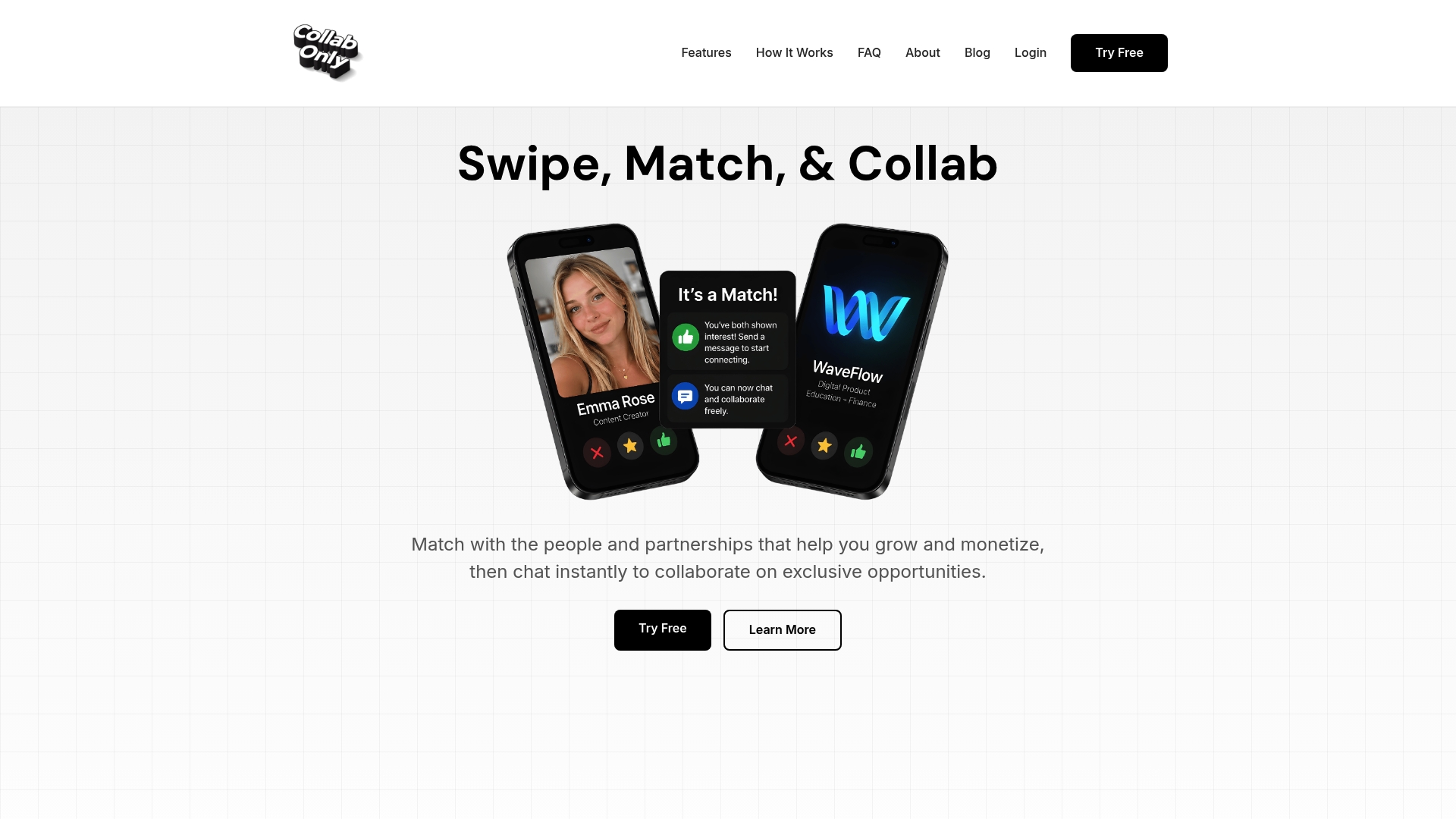
Collabonly is built specifically for this challenge. Brands access a diverse creator pool spanning micro influencers, luxury lifestyle creators, pet content specialists, and UGC-focused partners, all through a swipe-based matching interface that eliminates cold outreach delays. Once matched, instant chat opens immediately, so campaigns move faster and creator relationships start on the right footing. Whether you are building a creator partnership program from the ground up or scaling an existing one, the platform provides the infrastructure to do it efficiently. Explore the UGC creator platform to connect with creators who specialize in authentic, performance-focused branded content.
FAQ
Why invest in content creators instead of traditional ads?
Creator content generates 17x more engagement and 12x more impressions than brand-owned channels, while 94% of organizations report higher ROI from influencer marketing than traditional digital advertising.
What is the ROI of investing in content creators?
Content creators ROI compounds over time, particularly through repeat collaborations where conversions double by the sixth integration, plus long-tail content views that extend campaign value well beyond the initial publication period.
Should I invest in creators for small or niche audiences?
Yes. Micro-influencer and niche creator partnerships often produce higher engagement rates and stronger brand alignment than broad-reach alternatives, since audiences tend to have deeper trust in creators who specialize in their specific interest area.
How does authenticity affect the benefits of content creators?
Authentic brand engagement builds trust with 93% of consumers, and 85% are willing to pay more for brands they perceive as authentic. Creators are the most direct channel for delivering that authenticity at scale.
How do I measure content creator ROI accurately?
Standard last-click attribution undercounts creator impact by ignoring awareness and consideration-stage influence. Brand lift studies and incrementality testing provide a more complete and accurate measure of creator-driven performance.