

TL;DR:
- The creator economy is a $250 billion industry projected to reach $480 billion by 2027, transforming brand marketing strategies. Brands now favor long-term, relationship-based partnerships with micro and mid-tier creators, leveraging authentic content and community engagement. Managing risks like fraud, legal compliance, and creator burnout is crucial for sustainable growth and ROI.
The creator economy is no longer a niche side hustle market. It is a global $250 billion ecosystem projected to reach $480 billion by 2027, reshaping how brands reach audiences and how individuals build sustainable careers from content. Yet for many brand strategists and emerging creators, the mechanics of how money flows, how partnerships are structured, and what actually produces measurable ROI remain opaque. This article cuts through that confusion with precise benchmarks, structural frameworks, and actionable strategies that both brands and creators can apply immediately.
Table of Contents
- What is the content creator economy?
- How creators and brands earn: Money flows and benchmarks
- Brand-creator partnerships: Models and what works
- Risks and challenges in the creator economy
- The future of the creator economy: Opportunities and smart strategies
- Our take: Why real collaboration, not quick deals, wins the creator economy
- Connect with top creators and brands today
- Frequently asked questions
Key Takeaways
| Point | Details |
|---|---|
| Huge growth sector | The creator economy is a rapidly expanding $250B+ market that directly connects brands and audiences. |
| Brand deals dominate | Most creators depend on brand partnerships, which account for around 70% of creator revenue. |
| Trust and fit matter | Long-term, values-aligned creator collaborations outperform short, transactional campaigns. |
| Risks require strategy | Both brands and creators must address fraud, burnout, and legal compliance issues for sustainable growth. |
| Future is co-creation | Success will favor brands and creators who build transparent, authentic partnerships around shared goals. |
What is the content creator economy?
The content creator economy encompasses every individual who earns income by producing and distributing digital content, typically across social platforms, and every entity that pays for or benefits from that distribution. The key players are distinct but deeply interdependent: individual creators, platforms such as YouTube, Instagram, and TikTok, brand advertisers, and the audiences whose attention makes the whole system function.
The revenue model is not monolithic. Creators monetize through brand sponsorships, affiliate marketing, merchandise, platform ad revenue shares, fan memberships, and licensing. Brands, in turn, pay for access to highly targeted, trust-rich audiences that traditional advertising channels cannot replicate. The creator economy's global value reflects how fundamentally consumer attention has migrated away from broadcast media toward creator-led content environments.
"The creator economy has crossed a threshold where it is no longer supplementary to brand marketing strategy. For categories ranging from beauty to B2B software, creator-led content now functions as primary demand generation."
The scale of investment confirms this trajectory. A useful reference point is the market growth forecast across segments:
| Segment | 2024 Estimate | 2027 Projection |
|---|---|---|
| Global creator economy | $250B | $480B |
| U.S. influencer ad spend | $32B | $43.9B+ |
| Social commerce (creator-influenced) | $67B | $100B+ |
Understanding the depth of brand partnership examples that are already driving revenue at scale clarifies why brands across every vertical are accelerating their creator investment. Platform algorithms now actively reward creator-style content even in paid formats, making the line between organic creator content and branded content increasingly strategic. Additionally, evidence from the field on creator community ROI consistently shows that audiences built around trusted creators exhibit higher purchase intent and lower churn than audiences acquired through traditional programmatic advertising.
Reviewing the creator earnings report 2025 further illustrates how creator compensation has professionalized, with structured contracts, performance tiers, and licensing fees becoming standard practice rather than exceptions.
How creators and brands earn: Money flows and benchmarks
Once you understand who the key players are, the next logical step is to see how money actually moves, who pays, who earns, and what typical rates look like.

Brand deals account for 70% of total creator revenue. U.S. creator-directed ad spend reached $37 billion in 2025 and is projected to climb to $43.9 billion in 2026. Globally, influencer marketing spend hit $32.55 billion in 2025, a figure that reflects both growing platform sophistication and the measurable performance creators deliver versus traditional media.
The primary revenue streams for creators, ranked by prevalence, include:
- Brand sponsorships and integration deals
- Affiliate marketing commissions (typically 5% to 20% per conversion)
- Platform ad revenue shares (YouTube Partner Program, TikTok Creator Fund)
- Digital products, courses, and downloadable assets
- Fan memberships and subscription tiers (Patreon, Instagram Subscriptions)
- Physical merchandise and co-branded product lines
- Licensing and syndication of content assets
For brands, the budget allocation has shifted decisively toward micro and mid-tier creators. Brands now average between $2.9 million and $8.1 million annually on influencer programs, with 80% of brands maintaining or increasing budgets in 2025. The preference for micro and mid-tier creators over mega-influencers is driven by engagement rate differentials: a creator with 50,000 highly targeted followers frequently outperforms a celebrity with 5 million passive ones.
Rate benchmarks by platform give creators and brands a practical starting point for negotiation:
| Platform and format | Follower range | Typical rate per post |
|---|---|---|
| Instagram Reel | 10K to 100K | $250 to $1,250 |
| TikTok Video | 10K to 100K | $200 to $1,000 |
| YouTube Integration | 50K to 500K | $1,000 to $5,000 |
| Podcast sponsorship | 10K to 50K listeners | $500 to $2,500 |
The rate benchmarks across platforms also reveal an income distribution that is heavily skewed: median full-time creator income sits at approximately $76,000 annually, while the top 1% of creators earn more than $1.2 million per year. The critical monetization barrier, the threshold at which creator income becomes a viable primary income, typically requires an engaged audience of at least 10,000 to 30,000 followers combined with consistent posting cadence and clear niche authority.
Pro Tip: Creators who are seeking their first brand deals should focus on building a one-page media kit that includes audience demographics, engagement rate, niche positioning, and two to three content samples. Brands make faster decisions when the data is structured and accessible. Resources like how to find brand deals provide step-by-step guidance for creators crossing that monetization threshold. Similarly, how micro influencers get deals outlines the outreach and positioning strategies that consistently work at the sub-100K follower tier.
Brand-creator partnerships: Models and what works
You have seen how budgets flow, but the structure of brand-creator collaborations is often misunderstood. Here is how the most effective partnerships are actually built.
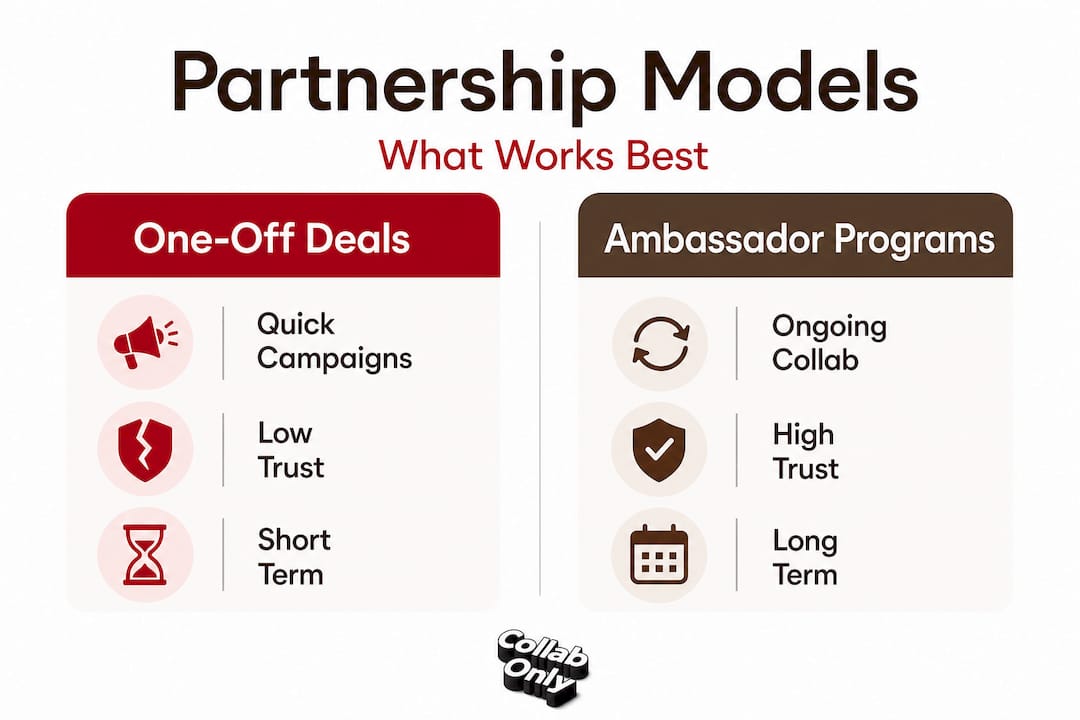
The field has moved decisively away from the one-off sponsored post model toward relationship-based collaborations. Research from Salesforce confirms that the highest-performing brand-creator arrangements now involve co-created content, equity or product access for creators, and multi-phase engagement structures rather than isolated campaign blasts.
The ideal partnership lifecycle follows three distinct phases:
- Pilot phase: A single campaign or limited content series to establish fit, measure audience response, and identify alignment gaps before committing to longer engagements.
- Co-creation phase: The brand and creator jointly develop content concepts, campaign narratives, and product integrations. The creator's voice remains dominant to preserve authenticity.
- Ambassador phase: A longer-term arrangement, typically 6 to 12 months, in which the creator becomes a recognizable face of the brand across multiple content formats and platforms.
"Treating influencer partnerships as media inventory to purchase and rotate rather than as relationships to build is the single most common mistake brands make. The brands that compound influence over time are those that invest in creators as genuine partners." — From LinkedIn analysis on creator economy partnership dynamics
The data reinforces this view. Long-term ambassador programs consistently outperform one-off activations on every measurable dimension: brand recall, conversion rate, audience trust, and content production efficiency. One practical reason is that creators who develop genuine familiarity with a brand produce more convincing integrations, which audiences recognize and respond to more favorably.
Pro Tip: When evaluating potential creator partners, brands should prioritize value alignment and audience-product fit over raw follower count. A creator whose content naturally intersects with your product category will produce integrations that feel contextually earned rather than transactionally inserted. Reviewing brand advocacy partnership case studies provides concrete examples of this dynamic at work. Additionally, the frameworks outlined in resources on how to collaborate with brands offer both creators and brand managers a structured approach to partnership development.
Risks and challenges in the creator economy
As partnerships evolve, brands and creators face growing challenges, from trust issues to legal compliance. Here is what to watch out for and the best practices to avoid costly missteps.
The biggest risks in influencer marketing entering 2026 are well-documented and, importantly, preventable with proper due diligence:
- Follower fraud and bot engagement: Purchased followers and automated engagement artificially inflate metrics, causing brands to overpay for reach that does not translate to real audiences. Third-party audience audit tools are now essential for pre-campaign vetting.
- Measurement gaps and dark funnel attribution: A significant portion of creator-influenced purchases occur through channels that are difficult to track directly, including word-of-mouth referrals, screenshot-driven searches, and delayed conversions. Relying on last-click attribution alone systematically undervalues creator impact.
- Brand safety and scandal exposure: When a creator's off-platform behavior conflicts with brand values, the brand absorbs reputational risk. Contracts with explicit conduct clauses and ongoing monitoring are standard risk management tools.
- Legal non-compliance and disclosure failures: Regulatory bodies including the FTC in the U.S. require clear and conspicuous disclosure of paid partnerships. Non-compliant posts expose both creators and brands to enforcement action and audience trust erosion.
- Creator burnout: More than 50% of active creators report experiencing burnout, which directly impacts content quality, posting consistency, and campaign deliverables. Brands that demand unsustainable output from creator partners often trigger the very performance degradation they sought to avoid.
- AI-generated content and trust erosion: Synthetic or heavily AI-augmented content is increasingly detectable by audiences, and in trust-sensitive categories such as health, finance, or parenting, it carries significant credibility risk.
Pro Tip: Before activating any creator partnership, brands should run a two-part audit: first, an audience quality check using engagement-to-follower ratio analysis and geographic breakdown; second, a content history review covering at least 90 days of posts for brand safety signals. Structured influencer ROI strategies address both the measurement gap problem and the contractual frameworks that protect both parties.
The future of the creator economy: Opportunities and smart strategies
With risks clearly defined, the path forward depends on understanding where creator marketing is heading. The evolving landscape rewards brands and creators who build now for sustainable, compounding advantage.
Social commerce is the most immediate structural shift. Creator-influenced social commerce already accounts for $84 billion in driven sales globally, with projections pointing toward continued double-digit growth as platforms integrate native checkout and live-commerce functionality at scale.
Key future-proof strategies for both creators and brands include:
- For brands: Shift from campaign-based thinking to always-on creator programs. Maintain relationships with a curated roster of creators across tiers rather than activating new partners for every campaign.
- For creators: Diversify revenue streams to reduce dependency on any single brand relationship or platform. Co-created product lines and fan membership programs provide income stability that ad-dependent models cannot.
- For both: Invest in authentic, transparent content that complies proactively with emerging disclosure regulations, particularly as the FTC and international equivalents tighten requirements in 2026 and beyond.
- Leverage AI tools strategically: AI-assisted ideation, analytics, and content optimization are becoming competitive necessities. However, the human voice and creative judgment of the creator must remain central to retain audience trust.
- Prioritize community over audience: Brands and creators who build active, participatory communities rather than passive broadcast audiences demonstrate significantly higher creator community ROI across retention and advocacy metrics.
The consolidation trend is also accelerating. Smaller creator platforms and agencies are being absorbed into larger ecosystems, which means both brands and creators benefit from establishing platform-agnostic partnership infrastructure now, before the landscape narrows further.
Our take: Why real collaboration, not quick deals, wins the creator economy
The prevailing discourse around influencer marketing still centers heavily on metrics: follower counts, CPM benchmarks, engagement rates. These are useful inputs, but they are not the drivers of the outcomes that matter most to brands, namely sustained brand affinity, repeat purchase behavior, and long-term audience trust.
The evidence is consistent. Brands that treat creator partnerships as transactional media buys, activated for a campaign cycle and then rotated out, generate short-term impression volume with minimal compounding effect. The brands achieving disproportionate returns are those that identify creators whose audiences authentically intersect with their product category and invest in those relationships across multiple content cycles.
This is not simply a philosophical preference. It is a structural observation about how trust compounds. When a creator integrates a brand authentically across six months of content, their audience's repeated exposure within a contextually earned environment produces a different cognitive response than a single sponsored post, no matter how polished. The cumulative effect builds brand familiarity that behaves more like peer-credibility than advertising.
The corollary for creators is equally direct. Building a track record of brand partnerships that align tightly with your niche and your audience's values produces a portfolio that commands premium rates and long-term deals. The creators who chase volume, accepting any deal regardless of fit, erode the audience trust that makes them valuable in the first place.
The practical recommendation is straightforward: pick partners you want to build with, not just borrow reach from. For brands, this means investing in discovery processes that identify value alignment before rate negotiation. For creators, it means developing a clear positioning thesis and declining partnerships that fall outside it, even when the short-term revenue is attractive. The brand partnership wins that produce measurable, lasting ROI share one consistent characteristic: they were built on shared audiences and genuine alignment, not transactional convenience.
Connect with top creators and brands today
The creator economy rewards speed, precision, and genuine alignment. Finding the right partner through cold DMs and fragmented email threads is not just inefficient; it costs brands and creators the momentum that makes early-stage partnerships succeed.
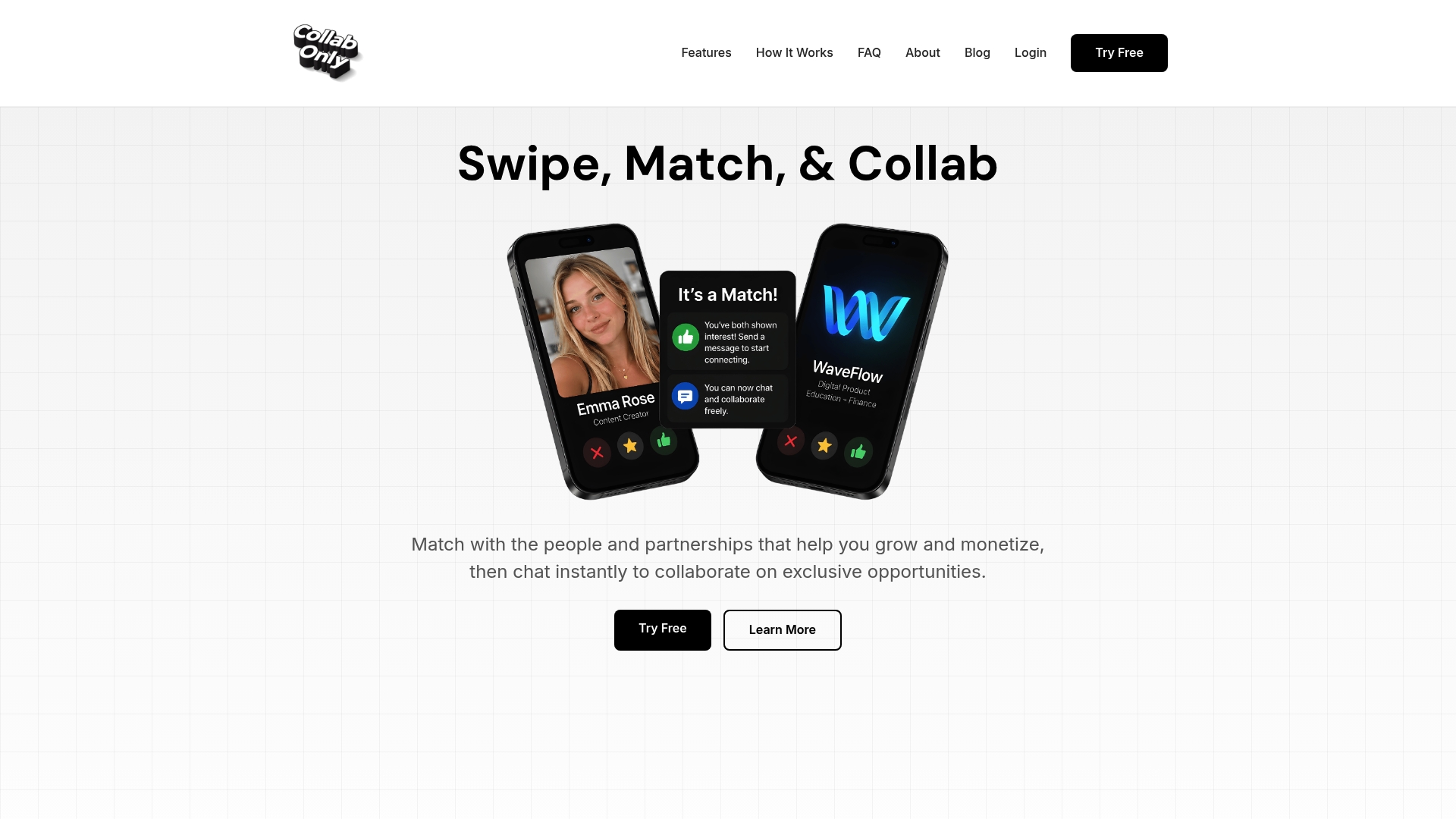
Collab Only is purpose-built to eliminate that friction. The platform's swipe-based matching system connects brands with vetted creators and creators with qualified brand partners across TikTok, Instagram, and YouTube, with instant chat activated upon matching. Whether you are a brand seeking a creator with a geo-concentrated, high-engagement audience, or a creator ready to convert your niche authority into structured brand deals, the influencer marketplace at Collab Only provides the discovery infrastructure that traditional outreach cannot match. The UGC creator platform further supports brands seeking user-generated content at scale, making it a complete solution for every stage of the creator partnership lifecycle.
Frequently asked questions
What exactly is the content creator economy?
It is a multi-billion dollar ecosystem where individuals earn money by creating and sharing content online, primarily through brand collaborations and platform features across YouTube, Instagram, and TikTok.
How do content creators make money?
Most creators earn primarily through brand deals, but 70% of creator revenue flows from brand partnerships, with supplemental income from ads, merchandise, affiliate links, and fan membership programs.
What are the top risks in the creator economy for brands?
Fake followers, measurement gaps in dark-funnel attribution, legal disclosure failures, and creator burnout above 50% represent the primary operational and compliance risks brands face in influencer programs.
Why do brands prefer working with micro or mid-tier creators?
Micro and mid-tier creators generate higher engagement rates per follower, and 80% of brands in 2025 maintained or increased budgets while actively shifting spend toward these tiers for better ROI per dollar allocated.
How is the creator economy changing for 2026 and beyond?
The market is moving toward long-term co-creation models, stricter disclosure regulations, and social commerce scale at $84 billion in creator-influenced sales, with AI tools playing a supporting but not central role in authentic creator content.