

TL;DR:
- Brand-creator collaborations have become essential budget lines, but many fail due to treating them as one-off transactions rather than strategic partnerships. To succeed, brands must prioritize authenticity, legal compliance, clear objectives, and ongoing communication, with structured vetting and measurement processes. Building long-term relationships rooted in trust and iterative learning maximizes ROI and audience engagement.
Brand-creator partnerships are no longer an experimental marketing tactic — they are a core budget line. Yet most collaborations still fail to deliver their potential because both sides treat them as one-time transactions rather than strategic, ongoing relationships. Influencer marketing ROI runs 11 times higher than traditional digital advertising, yet wasted spend persists when fit, structure, and accountability are missing. This guide covers the full arc from preparation through measurement, giving both brands and creators a replicable framework to build partnerships that generate measurable, lasting value.
Table of Contents
- What you need to know before collaborating
- Set your objectives and partnership criteria
- Step-by-step process for successful collaboration
- Common mistakes and how to avoid them
- How to verify results and grow the partnership
- What most guides get wrong about brand collaboration
- Take your next step: find the perfect brand collaboration
- Frequently asked questions
Key Takeaways
| Point | Details |
|---|---|
| Genuine partnerships win | Long-term value comes from treating creators as true collaborators, not just paid content engines. |
| Clear objectives drive success | Defining mutual goals before you start ensures both parties benefit and projects stay on track. |
| Legal and ethical compliance | Always use contracts and required disclosures to protect both the brand and creator. |
| Test before scaling | Start small with trial campaigns or PR packages and scale only if fit and ROI are proved. |
| Track and optimize | Ongoing measurement is crucial for improving results and sustaining great brand collaborations. |
What you need to know before collaborating
The influencer marketing landscape has shifted materially in the past two years. Budgets are growing, but so is scrutiny. Brands are moving away from one-off sponsored posts toward ambassador-style arrangements, content licensing agreements, and co-created product lines. Understanding these structural changes before you make a single outreach move is the difference between a productive partnership and a costly mismatch.
Two forces are reshaping the space simultaneously. First, legal compliance is now non-negotiable. The FTC requires clear paid partnership disclosures such as the #ad tag or Instagram's native "Paid Partnership" label on every piece of sponsored content. Contracts must explicitly address content usage rights, exclusivity windows, and posting schedules, because creators today negotiate these terms the way traditional talent agencies once did on behalf of celebrities. Failing to address these points in writing creates liability for both parties.
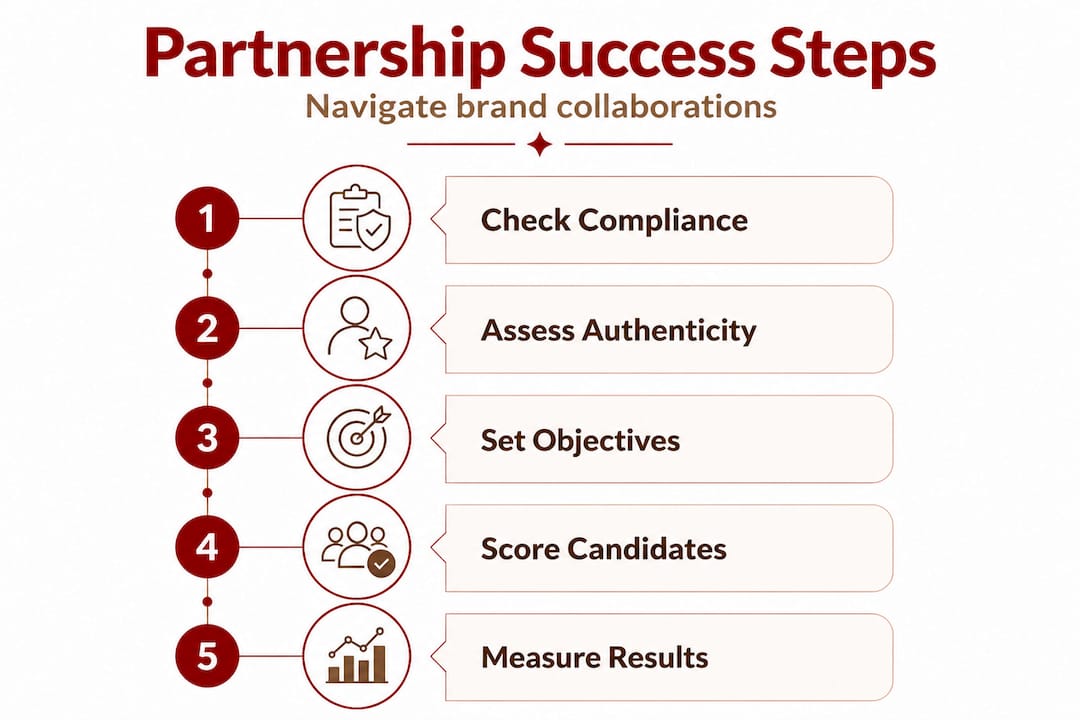
Second, authenticity is now a quantifiable performance variable, not a soft concept. Treating creators as collaborators rather than ad placements produces measurably higher engagement and purchase intent, because audiences detect inauthenticity quickly and disengage. AI-powered discovery tools can surface candidate creators efficiently, but the final fit assessment still demands human judgment about voice, values, and community tone. For concrete examples of what aligned partnerships look like in practice, review brand partnership examples that have driven documented results.
| Factor | Transactional model | Collaborative model |
|---|---|---|
| Primary goal | Single campaign impression | Long-term audience trust |
| Contract scope | One post or set of posts | Multi-month or ambassador deal |
| Creator input | None; brand scripts content | Co-creation and shared creative direction |
| Legal safeguards | Often informal | Formal FTC-compliant contracts |
| Measurable outcome | Reach and impressions | Engagement rate, conversions, brand lift |
Key preparation checklist before any outreach:
- Confirm FTC disclosure requirements for each platform you plan to use
- Draft a contract template covering deliverables, approval rights, exclusivity, and usage licensing
- Audit your shortlisted creators for audience authenticity (low bot percentages, consistent engagement rate)
- Define whether you need a one-time activation or a sustained partnership model
Pro Tip: Request a creator's media kit before making any compensation offer. A well-prepared media kit signals professional standards, and the audience demographic data it contains will either confirm or disqualify the fit before you commit budget.
"Stop treating influencer marketing as a media buy. The brands winning right now are the ones investing in creative co-ownership." — Forbes, 2025
Set your objectives and partnership criteria
Vague goals produce vague results. Before identifying specific creators or brands to approach, both sides need a documented articulation of what success looks like. For brands, that typically means choosing between brand awareness (impressions, reach), audience education (content views, time-on-content), and direct conversions (affiliate click-throughs, promo code redemptions). For creators, the priority is often revenue stability, portfolio diversity, and audience value alignment.
The 3 Rs framework provides a reliable filter for evaluating partnership candidates:
- Relevance: Does the creator's content category, tone, and audience demographics match the brand's target customer profile? A fitness supplement brand partnering with a culinary creator may generate reach but will produce negligible conversion because the audience intent does not align.
- Reach: What is the creator's actual addressable audience for this type of content? Reach is not simply follower count — it is the estimated number of engaged followers who will see and interact with sponsored content based on platform algorithm behavior and historical post performance.
- Resonance: How deeply does the creator's community trust their recommendations? Resonance is measured through engagement rate, comment sentiment analysis, and the creator's history of driving audience action (product sell-outs, event attendance, petition signatures).
When pitching brands, video pitches generate five times the response rate of email-only outreach, and personalization is the single largest determinant of whether a pitch gets a reply. Generic templates are disqualified immediately by brand partnership managers who receive dozens of inquiries daily. Creators looking for structured guidance on approaching potential partners should review finding brand deals before making first contact.
| Criteria | High-priority signal | Disqualifying signal |
|---|---|---|
| Audience overlap | 70%+ match on target demographics | Broad, untargeted following |
| Engagement rate | 3%+ on core content type | Under 1% with high follower count |
| Brand alignment | Shared values and aesthetic | Conflicting past partnerships |
| Content quality | Consistent production standards | Irregular posting or low-quality assets |
| Track record | Previous brand results documented | No prior collaboration experience |
For brands exploring creator matching at scale, platforms such as YouTube influencer matches allow filtering by sub-niche, audience location, and platform-specific performance metrics, significantly reducing the manual vetting workload.
Pro Tip: Score every candidate creator against the 3 Rs before moving to outreach. A structured scoring matrix prevents confirmation bias and helps marketing teams prioritize budget allocation with defensible logic.
Step-by-step process for successful collaboration
With clear objectives and a vetted partner list, the execution phase begins. The following sequence is designed to minimize friction, reduce renegotiation, and maximize output quality for both brands and creators.
-
Make first contact with context. Reference a specific piece of the creator's content that aligns with your brand, state your campaign objective concisely, and communicate the compensation range upfront. Ambiguity about pay in first contact messages wastes both parties' time.
-
Negotiate compensation structure. The three primary compensation models are flat fees (fixed payment per deliverable), performance or affiliate commissions (percentage of sales or clicks attributed to the creator), and product gifting or PR packages (non-cash compensation for lower-risk trial activations). Hybrid models that combine a flat base rate with a performance bonus are increasingly common because they align incentives without requiring either party to absorb full financial risk.
-
Formalize the agreement in writing. Every collaboration, regardless of size or compensation level, requires a signed contract. The minimum contract elements are: deliverable specifications (format, length, posting date), approval and revision cycles (who reviews, how many rounds, turnaround time), FTC disclosure requirements, exclusivity terms (category and duration), and content usage rights (organic only, paid amplification, licensed for ads).
-
Execute with a structured timeline. Build in a content brief delivery date, a first draft submission date, a revision window, and a scheduled publishing date with sufficient lead time for legal or brand review. Late publication often cascades into performance data gaps that undermine post-campaign analysis.
-
Track performance against predetermined KPIs. Influencer marketing in 2025 data shows brands prioritize performance metrics while creators prioritize revenue stability, and hybrid compensation structures bridge that tension by tying a portion of creator earnings to measurable results.
Brands working with smaller creator tiers can follow a structured approach through resources covering micro influencer deal steps and nano influencer approaches for high-authenticity, lower-cost activations. For teams managing multiple partnerships simultaneously, using influencer marketplaces consolidates discovery, contracting, and reporting into a single workflow.
Key deliverables to specify in every contract:
- Platform(s) and content format (Reel, Story, YouTube integration, TikTok video)
- Minimum content duration or word count
- Required disclosure language and placement
- Performance reporting window (typically 30 days post-publication)
- Ownership of content after the campaign period expires
Common mistakes and how to avoid them
Even well-resourced partnerships fail when execution details are neglected. The following are the most consistently observed failure patterns, along with corrective practices for each.

Overindexing on follower count is the most persistent error in creator selection. A creator with 2 million followers and a 0.4% engagement rate will typically underperform against a creator with 80,000 followers and a 6% engagement rate for conversion-oriented campaigns. Audience size creates reach potential, but engagement rate and comment sentiment determine whether that audience is primed to act.
Ambiguous contracts generate disputes that cost more in time and relationship capital than any initial savings from skipping legal review. Unclear approval cycles, undefined content ownership, and missing exclusivity language are the three most common contract gaps that derail partnerships mid-execution.
Failing to use low-risk trial mechanisms before committing to paid campaigns represents a significant and underutilized risk management strategy. PR packages function as a content engine that tests fit between creator and product before either party commits to a paid arrangement. If the creator produces authentic, high-quality organic content from a gifted product, that is the clearest possible signal that a paid partnership will yield genuine audience response.
Pro Tip: Before any paid campaign, run a gifting phase with two to three candidate creators. Evaluate not only the content quality but also how responsive and professional each creator is during the coordination process — that behavior predicts how smoothly the paid collaboration will run.
Rushing into paid campaigns also carries reputational risk. Audiences on TikTok and Instagram recognize when sponsored content feels forced, and community backlash or comment section skepticism can neutralize the ROI of an otherwise well-structured campaign.
"The brands with the highest creator retention rates are those who treat the gifting phase as an audition, not a transaction." — Influencer Marketing Hub
Content performance strategies that account for both organic and paid amplification phases consistently outperform those that rely exclusively on creator-native reach.
How to verify results and grow the partnership
Post-campaign analysis is where most brands under-invest, and it is precisely where the highest-value decisions are made. The data generated from a single collaboration informs every subsequent partnership investment, including budget allocation, creator tier selection, and platform prioritization.
Key metrics to track within the 30-day post-publication window:
| Metric | What it measures | Target benchmark |
|---|---|---|
| Engagement rate | Audience interaction relative to reach | 3%+ for Reels and TikTok |
| Click-through rate | Traffic driven to brand destination | 1.5%+ for swipe-up or link-in-bio |
| Promo code redemptions | Direct attribution to creator | Campaign-specific baseline |
| Follower growth spike | Brand account growth during campaign | Measurable lift vs. baseline |
| Brand lift survey scores | Unaided and aided brand recall | 5%+ lift vs. control group |
Short-term metrics reveal immediate campaign performance, while long-term indicators — repeat purchase rates from creator-referred customers, sustained engagement on brand accounts, and sentiment shifts in social listening data — measure the deeper audience relationship value that separates transactional placements from genuine brand-building.
The decision to extend, expand, or end a partnership should follow a structured review process:
- Compare KPI performance against pre-campaign benchmarks and industry averages.
- Evaluate the qualitative feedback from the creator about audience response and content reception.
- Assess whether the brand's product messaging was accurately represented in the final content.
- Determine whether the creator's audience demonstrated intent (saves, shares, direct messages to the creator about the brand).
- Propose a renewed scope with refined deliverables based on what performed strongest.
Influencer marketing budgets now average $2.9 million annually, up 171% year-over-year, and 80% of brands maintain or increase these budgets annually, which signals that the category is proving its return. Brands that build standardized post-campaign review processes compound that ROI over time by continuously refining creator selection and content strategy. Tracking influencer ROI metrics with precision is what separates teams that scale effectively from those that repeat the same allocation mistakes cycle after cycle.
What most guides get wrong about brand collaboration
Most published advice on brand-creator partnerships focuses on two narrow topics: how to find creators and how to structure payments. Both matter, but they represent a fraction of what determines whether a partnership actually delivers value over time. The guidance that is consistently missing from standard frameworks addresses human fit and iterative process design.
The uncomfortable reality is that many partnerships fail not because the creator lacked reach or the compensation was misaligned, but because neither party invested in honest communication during the execution phase. A creator who does not understand the brand's actual positioning will produce technically compliant content that misrepresents the product in subtle but damaging ways. A brand that provides only a brief and a deadline without creative dialogue will receive output that feels transactional to audiences, regardless of how much was paid.
The brands and creators generating the highest long-term collaboration value share one behavioral trait: they treat the first campaign as a calibration exercise rather than a performance. They expect to learn, they build in structured feedback moments, and they share performance data openly with their partner so both sides can iterate. This transparency builds the trust that allows partnerships to extend into genuinely co-created work, which consistently outperforms single-brand-directed campaigns in audience response.
The guides that focus on scale — reach, impressions, cost per view — are solving for the wrong problem when the goal is sustained brand equity. The harder and more valuable work is identifying the creator whose community genuinely wants what your brand offers, and then building a relationship rigorous enough to survive creative disagreements, performance shortfalls, and scope renegotiations. Reviewing real brand collaboration stories that have navigated these dynamics reveals a consistent pattern: patience and process discipline at the outset produce the partnerships that become case studies.
Take your next step: find the perfect brand collaboration
Executing on the strategies outlined above requires access to a vetted, searchable creator and brand network that reduces the friction of discovery, outreach, and contracting. Collab Only is built specifically to solve that problem, connecting brands and creators through a match-based interface that filters for genuine fit rather than surface metrics.
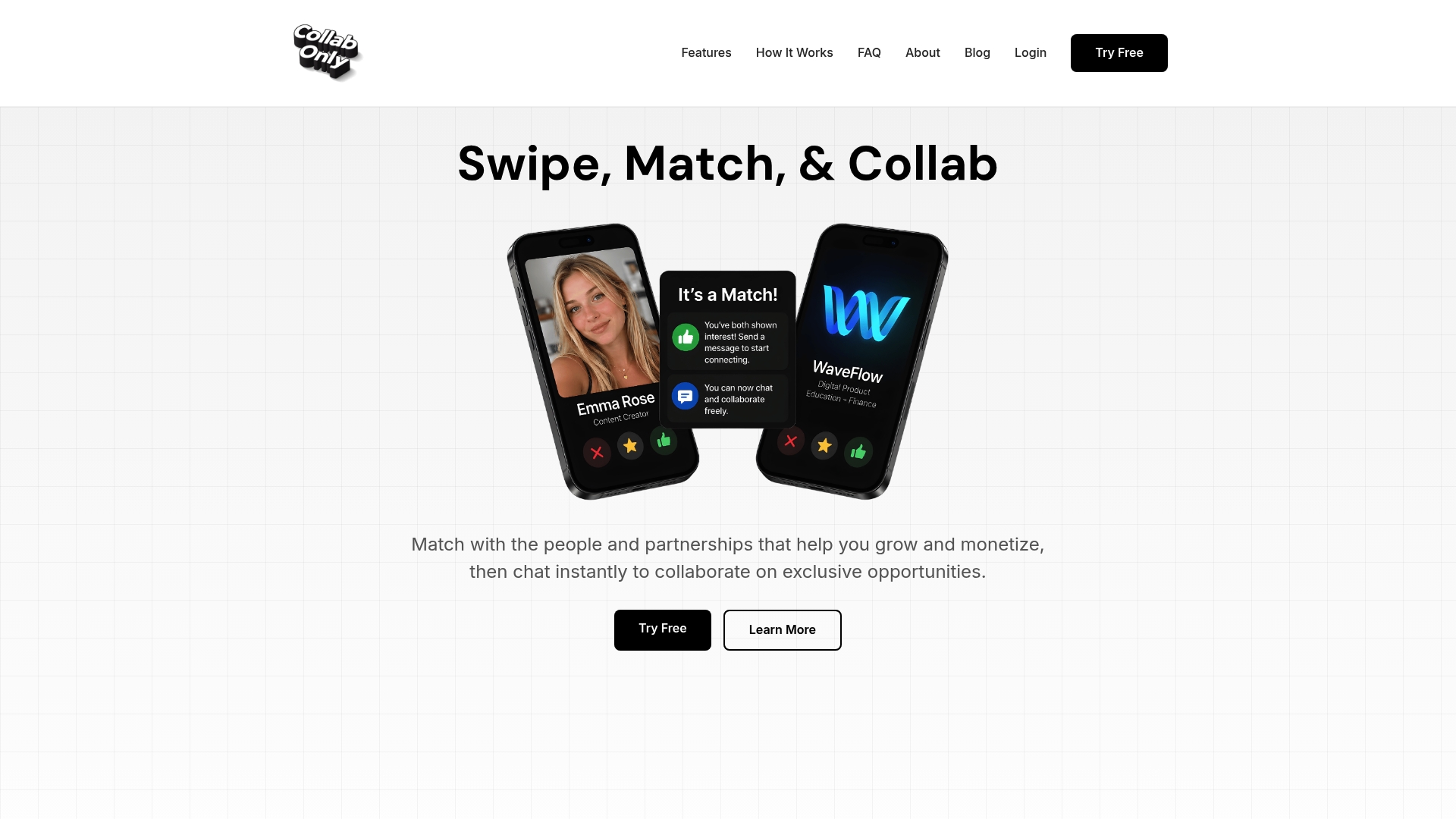
Whether you are a brand looking to hire micro influencers for high-authenticity campaigns, a creator seeking structured brand deals, or a marketing team managing multi-platform activations, Collab Only centralizes the process from discovery through execution. Use the influencer marketplace to access vetted creator profiles filtered by platform, audience size, and niche, or launch a targeted Instagram influencer search to identify candidates whose audience demographics match your campaign requirements. The platform's instant match-and-chat system eliminates the outreach delays and lost DM threads that sabotage traditional partnership workflows.
Frequently asked questions
What kind of compensation should creators expect when working with brands?
Compensation varies widely depending on audience size, platform, and deliverable scope — expect flat fees, affiliate commissions, product gifting, or hybrid models that combine a base rate with performance bonuses. Hybrid structures are increasingly preferred because they align incentives for both parties without requiring full financial risk on either side.
Do brand collaborations really deliver high ROI?
Yes — when structured for authentic fit and measured rigorously, influencer marketing delivers an ROI 11 times higher than traditional digital advertising. Performance degrades significantly when partnerships are transactional rather than collaborative and goal-aligned.
What legal requirements apply to influencer-brand collaborations?
The FTC mandates clear disclosure of paid partnerships using tags such as #ad or the platform's native paid partnership label on every piece of sponsored content. Contracts must also address exclusivity windows, content usage rights, and approval processes to protect both parties legally.
How can a creator or brand tell if a partnership is a good fit?
Strong fit is characterized by clear audience demographic overlap, aligned brand values, and measurable resonance between the creator's community and the brand's product category. Audience sentiment analysis and historical engagement patterns are more reliable fit indicators than follower count alone.
What is the biggest mistake brands make when collaborating with creators?
Prioritizing follower scale over authentic fit and bypassing a gifting or trial phase before committing to paid campaign spend are the most consistently damaging errors. Testing with a PR package before scaling to a paid arrangement reduces both financial and reputational risk substantially.
Recommended
- How to find brand deals: a step-by-step guide for creators
- Branded content strategies that drive real influencer ROI
- Top brand partnership examples that drive real results
- Find YouTube Influencers – Connect with YouTube Creators - Collab Only
- Οδηγός συνεργασιών με influencers για απόλυτη online ανάπτυξη - maverix.gr