

TL;DR:
- User-generated content (UGC) drives higher trust, engagement, and conversions by offering peer-credibility that branded content cannot replicate. Most brands treat UGC as a campaign tactic rather than a sustainable content system, missing significant growth opportunities. Building operational infrastructure and verification processes enhances UGC authenticity and maximizes its performance benefits across all marketing channels.
User-generated content (UGC) is defined as any brand-relevant content created by customers, fans, or creators rather than the brand itself, and the role of UGC in campaigns is now a primary driver of trust, engagement, and conversion across digital channels. Unlike polished brand assets, UGC carries peer-credibility that no production budget can replicate. Platforms like TikTok, Instagram, and YouTube have made authentic customer content the default expectation for modern consumers. Tools from Yotpo, Adobe Experience Manager, and JoinBrands have built entire product categories around collecting, managing, and amplifying this content at scale.
How does UGC drive higher engagement and conversion than branded content?
UGC outperforms branded content with up to 4x higher click-through rates and conversion lifts ranging from 29% to 74%. That range is not incidental. It reflects the degree to which a brand has integrated UGC at the right funnel stage rather than dropped it in randomly. Engagement rates reach up to 6.9x higher than equivalent branded posts, and 79% of shoppers report that UGC directly influences their purchase decisions.
The mechanism behind these numbers is peer-credibility. Consumers process UGC as an unsponsored endorsement from someone with no financial incentive to deceive them, which is why it registers as 2.4x more authentic than brand-created content. That authenticity premium translates directly into lower buyer resistance at conversion points. The beauty industry demonstrates this most sharply, with some brands recording up to a 161% conversion lift when UGC replaces or supplements branded imagery on product pages.
Vertical differences matter significantly when projecting UGC impact. Activewear brands see approximately 47% higher conversion rates with UGC on product pages, while home goods brands record around 19% lower return rates when customers can view real-use imagery before purchasing. These are not marginal gains. They represent the difference between a campaign that breaks even and one that compounds brand equity over time.
| Dimension | UGC | Branded content |
|---|---|---|
| Perceived authenticity | 2.4x higher | Baseline |
| Click-through rate | Up to 4x higher | Baseline |
| Conversion lift | 29%–74% | Baseline |
| Content production cost | Low to zero | High |
| Consumer trust signal | Peer-credibility | Brand-credibility |
Pro Tip: Place UGC at the highest-friction conversion points first: product pages and email campaigns. Email campaigns with UGC see 78% higher click-through rates, making them the fastest channel to validate UGC performance before scaling to paid media.
What distinguishes a one-off UGC campaign from a continuous UGC strategy?
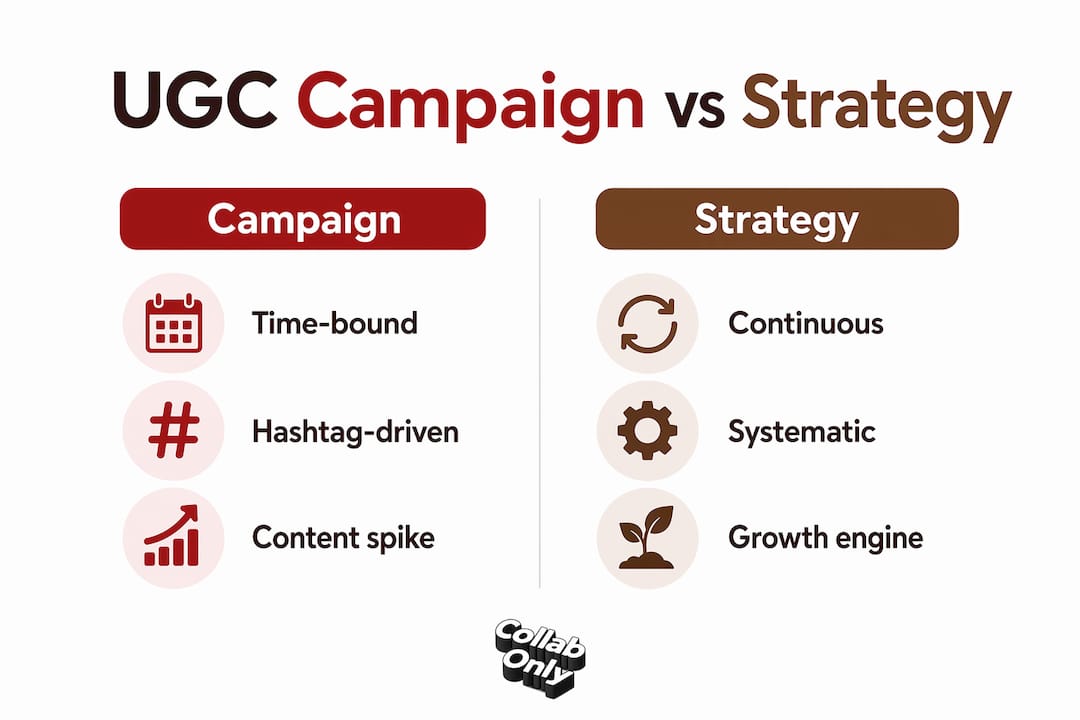
A UGC campaign is a time-bound activation, typically built around a hashtag, contest, or product launch, that generates a burst of customer content and then stalls. A UGC strategy, by contrast, is a permanent operational system that collects, moderates, rights-clears, and distributes customer content continuously across every relevant channel. The distinction is not semantic. It determines whether UGC produces a short engagement spike or a compounding content asset that reduces buyer doubt at every funnel stage.
The gap between these two approaches is wider than most marketing teams acknowledge. Only 16% of brands maintain a dedicated, systematic UGC strategy, while 87% use UGC in some form. That 71-point gap represents the majority of brands leaving sustained performance gains unrealized because they treat UGC as a campaign tactic rather than a content infrastructure decision. Brands with mature UGC systems drive compounding engagement and sustainable brand advocacy rather than short spikes tied to individual activations.
Three brands illustrate what a strategic UGC program looks like in practice:
- GoPro built its entire content engine on UGC, running the GoPro Awards program that pays up to $5,000 for edited video submissions and generates over 35,000 annual entries. The result: GoPro saves an estimated $30 million annually by replacing traditional content production with creator-sourced assets.
- Apple's Shot on iPhone campaign transformed every iPhone owner into a potential brand contributor, feeding a perpetual content pipeline across billboards, social media, and digital advertising without a fixed campaign end date.
- Starbucks' Red Cup Contest runs annually but feeds into a year-round UGC collection system that populates seasonal campaigns, email sequences, and in-store digital displays.
Pro Tip: Build automated collection and rights-clearance workflows integrated with your digital asset management (DAM) system and CMS. Automated rights workflows reduce legal exposure and allow marketing teams to reuse approved UGC within hours rather than weeks, which is the operational prerequisite for a true content engine.
What are the best practices to integrate UGC into marketing channels?
Effective UGC integration begins with structured collection, not content curation after the fact. Brands that wait for organic UGC to appear and then scramble to repurpose it operate reactively. The brands generating the highest UGC volume and quality build deliberate incentive structures that make content creation the natural next step after a purchase or brand interaction.
Proven collection methods include:
- Branded hashtag campaigns with clear submission guidelines (Coca-Cola's Share a Coke campaign generated millions of social posts by making the product itself a personalization prompt)
- Incentivized ambassador programs and creator contests with defined reward tiers (cash, product, recognition)
- Post-purchase email sequences that request photo or video reviews with explicit usage rights consent embedded in the submission flow
- Platform-native tools on TikTok, Instagram, and YouTube that allow brands to request content directly from engaged followers
Rights management is the operational step most brands underinvest in, and it is also the one that creates the most legal exposure. Explicit written consent, obtained at the point of submission, is the minimum standard. Platforms like Yotpo and JoinBrands automate this process, attaching rights permissions to each asset in the content library so marketing teams can deploy UGC without legal review delays.
Placement strategy determines whether collected UGC converts or simply decorates. The following channel-specific data points define where UGC investment pays off most directly:

| Channel | UGC application | Performance impact |
|---|---|---|
| Product pages | Customer photos, video reviews | Up to 74% conversion lift, 33% bounce reduction |
| Email campaigns | Social proof imagery, testimonials | 78% higher click-through rate |
| Paid social (TikTok, Instagram) | Spark Ads, whitelisted creator content | 30–50% lower cost per acquisition |
| Social organic | Hashtag reposts, story features | Engagement rate up to 6.9x branded content |
Paid amplification of top-performing UGC via Spark Ads and Instagram whitelisting substantially increases reach while retaining the authenticity signal that makes UGC effective in the first place. Running ads from a creator's own account rather than the brand handle is the mechanism behind the 30 to 50% cost-per-acquisition reduction that whitelisting delivers. This is one of the highest-leverage tactics available in paid social today, and it remains underused by brands that have not yet built systematic creator relationships.
Technical integration requires CMS tools capable of surfacing approved UGC dynamically on product pages without developer intervention. Integrated CMS tools allow marketers to refresh UGC displays in real time, which is critical for maintaining content recency on high-traffic pages. A/B testing UGC asset variants against branded imagery on product pages and in email subject lines provides the performance data needed to prioritize which content types to collect more of.
How does UGC authenticity affect campaign success amid AI-generated content?
The proliferation of AI-generated content has created a provenance problem for UGC marketing. When consumers cannot distinguish between a genuine customer review and a synthetic testimonial, the trust premium that makes UGC valuable begins to erode. Verified customer-paid UGC models that tie content to confirmed purchase transactions are the primary defense against this erosion, and they are becoming a competitive differentiator rather than a best practice.
"The future of UGC marketing relies heavily on provenance and verification as AI-generated lookalike content rises, making authentic, verified UGC more valuable than ever before." — Oshi.tech, The Role of Authenticity and Provenance in UGC Campaigns
The distinction between paid UGC creators and verified customer content is operationally significant. Paid UGC creators produce high-quality, on-brief content efficiently, and they represent the majority of high-volume UGC contributors in mature brand programs. However, content tied to a verified purchase carries a higher authenticity premium in consumer perception because it signals genuine product experience rather than compensated production. Brands that blend both models, using paid creators for volume and format consistency while surfacing verified buyer content at checkout and on product pages, capture the benefits of each without sacrificing either quality or credibility.
Strategies to maintain authenticity at scale include requiring creators to disclose brand relationships clearly, using platform-native verification signals where available, and building contributor profiles that display purchase history or verified ownership. The authenticity in branding principle that drives consumer trust is not abstract. It is operationalized through the provenance signals attached to each piece of content in the distribution pipeline.
Key takeaways
The role of UGC in campaigns is defined by its ability to convert peer-credibility into measurable performance gains across engagement, conversion, and cost efficiency when deployed as a systematic content strategy rather than a reactive tactic.
| Point | Details |
|---|---|
| UGC outperforms branded content | UGC delivers up to 4x higher CTR and 29%–74% conversion lifts versus standard branded assets. |
| Strategy beats campaigns | Only 16% of brands run dedicated UGC systems, yet those systems generate compounding ROI over time. |
| Placement drives performance | Product pages and email campaigns yield the highest measurable returns from UGC integration. |
| Provenance is a competitive advantage | Verified, purchase-linked UGC commands higher consumer trust as AI-generated content proliferates. |
| Paid amplification multiplies reach | Whitelisting and Spark Ads reduce cost per acquisition by 30–50% while preserving authenticity signals. |
Why most brands are still treating UGC as a campaign asset, not a growth system
Having worked across UGC strategies for brands at various stages of maturity, the pattern that stands out most is not a lack of UGC content. Most brands have more customer content than they know what to do with. The failure point is operational: no rights clearance workflow, no DAM integration, no funnel-stage mapping, and no measurement framework tied to conversion rather than impressions.
The brands that extract the most value from UGC are not necessarily the ones with the largest audiences or the most creative campaigns. They are the ones that have built the infrastructure to collect, clear, and deploy customer content within 48 hours of it being created. GoPro is the canonical example, but the same logic applies to a mid-market DTC brand running a post-purchase email sequence that auto-collects photo reviews and surfaces them on product pages within a week.
The measurement problem is equally important. Too many marketing teams report UGC performance through engagement metrics, likes, shares, and reach, without connecting those signals to add-to-cart rates, checkout completion, or return rates. Until UGC is measured at the conversion layer, it will always be treated as a brand awareness tool rather than a revenue driver. That framing is what keeps it in the campaign budget rather than the infrastructure budget, which is exactly where it belongs for brands serious about content creator investment.
The operational complexity of a mature UGC system is real, and underestimating it is the most common reason brands revert to ad-hoc usage. Rights management, moderation, creator relationship management, and distribution workflows each require dedicated ownership. Brands that assign UGC strategy to a single junior social media manager and expect enterprise-level results will be disappointed. The solution is not more budget. It is clearer ownership, better tooling, and a measurement framework that connects UGC directly to revenue.
— Samuel
Build a scalable UGC content engine with Collabonly
Collabonly connects brands directly with vetted UGC creators through a swipe-and-match interface that eliminates the slow email chains and lost DMs that stall most creator sourcing processes. The platform supports continuous UGC strategy by giving marketing teams a structured pipeline for finding, briefing, and managing creators across TikTok, Instagram, and YouTube from a single workspace.
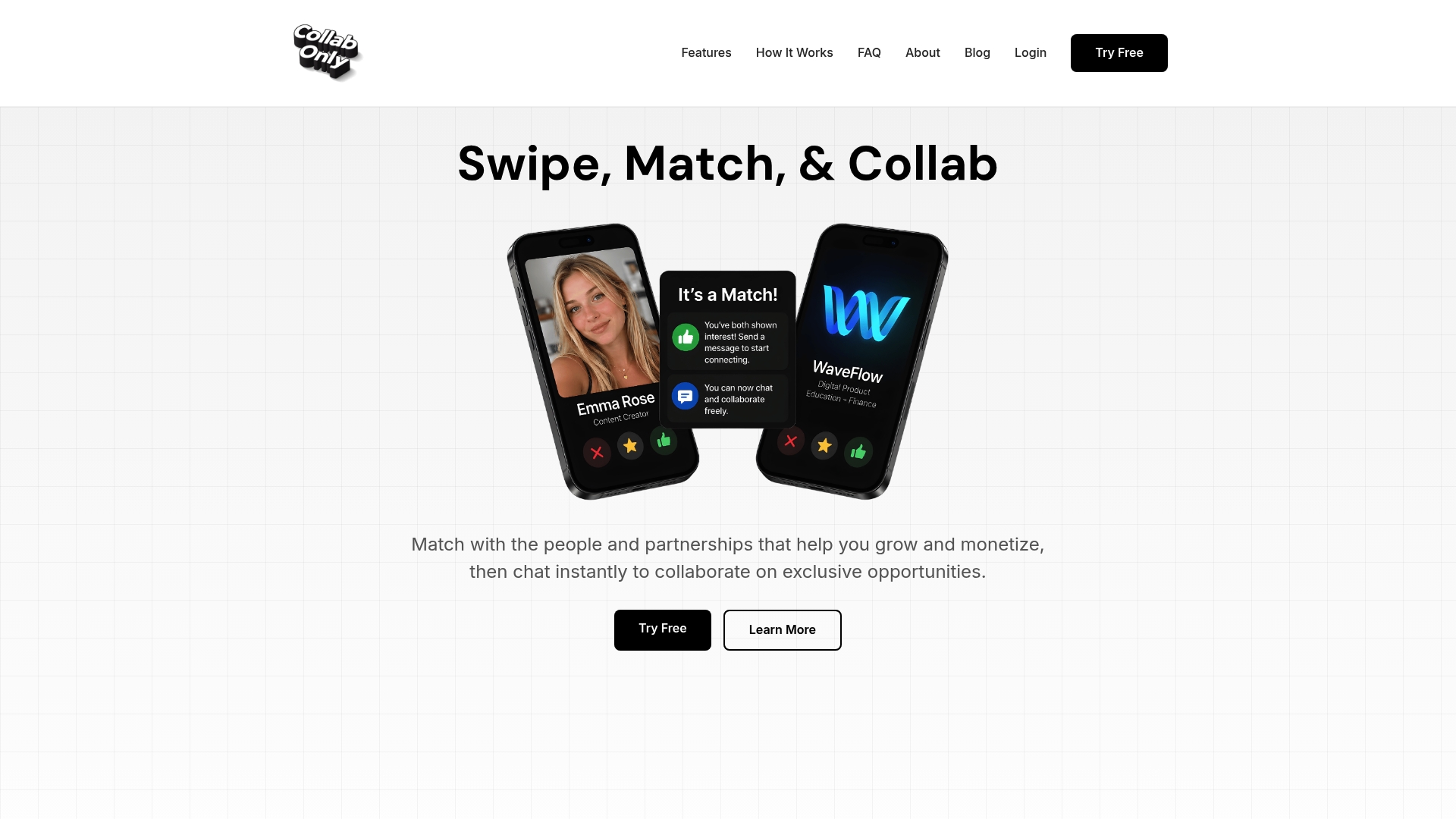
For brands moving beyond one-off activations, Collabonly's UGC creator platform provides the matching infrastructure needed to build a consistent content engine rather than a series of disconnected campaigns. Rights management, creator communication, and campaign tracking are centralized, which reduces the operational friction that causes most UGC programs to stall at scale. Start building your pipeline and connect with creators aligned to your campaign goals today.
FAQ
What is the role of UGC in marketing campaigns?
UGC functions as peer-credibility content that reduces buyer skepticism and increases conversion rates at key funnel stages. It outperforms branded content with up to 4x higher click-through rates and conversion lifts between 29% and 74%.
How does UGC boost engagement compared to branded content?
UGC generates engagement rates up to 6.9x higher than branded content because consumers perceive it as authentic and unsponsored. The trust signal it carries is the primary driver of both higher interaction and lower cost per acquisition in paid amplification.
What is the difference between a UGC campaign and a UGC strategy?
A UGC campaign is a time-bound activation that produces a short content spike, while a UGC strategy is a permanent system for collecting, rights-clearing, and distributing customer content continuously. Only 16% of brands currently operate at the strategy level.
How should brands handle UGC rights and legal permissions?
Brands need explicit written consent from content creators at the point of submission, ideally automated through platforms like Yotpo or JoinBrands. Automated rights workflows reduce legal exposure and allow approved UGC to be reused within hours rather than weeks.
Why does UGC authenticity matter more in 2026?
AI-generated content has made provenance verification a consumer trust signal. Verified, purchase-linked UGC commands a higher authenticity premium than synthetic or unverified content, and whitelisting ads tied to real creator accounts deliver 30 to 50% lower cost per acquisition than brand-handle ads.