

TL;DR:
- Platform-based collaboration fundamentally transforms how businesses and creators organize work by fostering interconnected ecosystems rather than relying solely on software tools. It centralizes communication, workflows, and data sharing across internal teams and external partners, enabling measurable productivity gains and network effects. Successful implementation depends on aligning technology with organizational culture, clear governance, and adaptive workflows to realize its full strategic potential.
Platform-based collaboration is not simply a technology upgrade. It represents a fundamental shift in how businesses, creators, and marketing teams organize their work, build partnerships, and generate value. Understanding what is platform-based collaboration goes well beyond knowing which software your team uses. It means recognizing that modern digital marketing operates through interconnected ecosystems where multiple participants co-create, communicate, and coordinate within a shared infrastructure. This article breaks down the core mechanics, real-world applications, and strategic considerations that marketing professionals need to make informed decisions about platform-based teamwork.
Table of Contents
- Key takeaways
- What is platform-based collaboration?
- Benefits for digital marketing teams
- How platform collaboration tools work in practice
- Challenges and best practices for implementation
- Choosing the right collaboration platform
- My perspective on platform-based collaboration
- Take your collaborations further with Collabonly
- FAQ
Key takeaways
| Point | Details |
|---|---|
| More than software | Platform-based collaboration is an ecosystem model, not just a toolset, requiring cultural and structural alignment. |
| Productivity gains are measurable | Integrated platforms reduce redundant processes and cut coordination costs significantly across marketing teams. |
| Culture determines adoption | Technology alone does not fix broken workflows; communication norms and accountability structures define success. |
| Ecosystem thinking unlocks growth | Platforms that enable network effects create compounding value beyond any single team or campaign. |
| AI is reshaping workflows | Autonomous agents embedded in collaboration platforms are automating complex, multi-source marketing tasks in 2026. |
What is platform-based collaboration?
Platform-based collaboration is the practice of coordinating work, sharing knowledge, and building partnerships through a shared digital infrastructure that connects multiple participants, including teams, partners, creators, clients, and even audiences, within a single ecosystem. Unlike traditional collaboration models that rely on email chains, one-off meetings, or siloed project folders, platform-based teamwork centralizes communication, documentation, and workflows into an integrated environment.
The distinction matters because businesses are becoming ecosystems by default, shifting from linear supply chains toward network models where platform owners mediate participation and capture value through growing engagement. A marketing agency that uses disconnected tools for messaging, file storage, and campaign tracking is not practicing platform-based collaboration. An agency operating through a unified environment where every stakeholder accesses the same real-time data, communicates in context, and contributes to shared workflows is.
Core characteristics of platform-based collaboration include:
- Centralized communication combining real-time messaging, video, and document editing
- Shared dashboards that provide transparency across teams and partner organizations
- Integration with external systems such as CRM platforms, content management systems, and analytics tools
- Participation structures that allow multiple roles (brands, creators, managers, clients) to engage within defined permissions
- Network effects, where the platform becomes more valuable as more participants join and contribute
| Feature | Traditional collaboration | Platform-based collaboration |
|---|---|---|
| Communication | Email and separate meetings | Integrated messaging, video, and async tools |
| Information storage | Siloed folders per team | Centralized, searchable knowledge base |
| Workflow visibility | Limited to individual teams | Shared dashboards across all stakeholders |
| Partner coordination | Manual outreach and follow-ups | Structured participation with defined roles |
| Scalability | Decreases with complexity | Increases through network effects |
Benefits for digital marketing teams
The benefits of platform collaboration are most visible when marketing teams move from running individual campaigns to managing ongoing, multi-partner content ecosystems. The operational advantages compound over time.
Unified communication platforms reduce article writing time by over 65% and save hundreds of hours in business processes through centralized transparency dashboards. For content creation teams coordinating across writers, designers, influencers, and brand managers, that efficiency shift is not incremental. It is structural.
Specific benefits that marketing professionals consistently report include:
- Faster campaign cycles due to real-time coordination between creative and strategy teams
- Reduced duplication of work when all assets, briefs, and approvals live in one place
- Better partner alignment because external collaborators access the same project context without lengthy onboarding
- Improved accountability through task assignment, deadline tracking, and visible progress updates
- Cost reduction by replacing expensive in-person coordination with virtual, asynchronous workflows
- Network effects that grow the platform's value as more creators, brands, and partners participate
The network effect dimension deserves particular attention. Businesses succeed in platform ecosystems by enabling partners and consumers to co-create value beyond direct company outputs. A marketing team that builds its workflows on a platform others want to join creates compounding returns on every new participant. This is why major content operations, influencer networks, and brand agencies are investing in platform infrastructure rather than individual tools.
Pro Tip: Before selecting a collaboration platform, map every external partner who needs access to your workflows. Platforms that accommodate external participants (agencies, creators, client stakeholders) without expensive seat licenses deliver significantly better ROI than enterprise tools built only for internal teams.
How platform collaboration tools work in practice
Understanding how platform collaboration tools work requires looking at specific workflow scenarios rather than abstract feature lists. A mid-size marketing team managing an influencer campaign provides a clear example.
- Campaign brief creation: The strategy lead publishes the campaign brief inside the platform, tagging the relevant creator contacts, legal reviewer, and budget approver. All feedback happens in-thread with version history preserved automatically.
- Creator coordination: Influencers or content partners receive access to a dedicated workspace where they upload drafts, reference brand guidelines, and communicate directly with the campaign manager. No email chains or separate file-sharing links required.
- Approval workflows: Content moves through defined approval stages with automated notifications. Stakeholders review and sign off without leaving the platform, and timestamps create an auditable record.
- Performance tracking: Once content goes live, analytics integrations pull data from TikTok, Instagram, and YouTube directly into the platform dashboard. The entire team monitors results against campaign KPIs in real time.
- Post-campaign documentation: All assets, communications, and results are stored in the platform and searchable for future campaigns, eliminating the institutional knowledge loss that plagues teams relying on personal inboxes.
Modern platforms integrate autonomous AI agents that automate complex workflows across multiple data sources, using unified knowledge graphs to maintain context across all channels. In 2026, this means a campaign manager can set conditional triggers, such as automatically escalating an approval when a deadline is missed, without manual intervention.
Collaboration platforms connect communication, project management, and information sharing to transform teamwork from fragmented efforts to coordinated execution. That integration is the functional core of how platform collaboration works. For marketing professionals working with top collaboration platforms built for influencer campaigns, this integration directly affects campaign speed and creator satisfaction.

Pro Tip: Treat your platform's notification settings as a governance decision, not a personal preference. Teams that let every member configure alerts independently create information asymmetry. Establish shared notification standards during onboarding to preserve the transparency advantage platforms are designed to deliver.
Challenges and best practices for implementation
The most consistent finding across platform-based collaboration research is that technology alone does not determine outcomes. Without clear communication norms, accountability, and security, organizations merely digitize broken workflows. The platform changes the medium; the culture determines the result.
Common challenges in implementation include:
- Fragmented information across departments that undermines coordination even when a shared platform exists
- Tool overload, where teams adopt multiple overlapping platforms without integrating them, recreating silos in digital form
- Resistance to workflow changes from team members accustomed to email-based or informal coordination
- Inconsistent participation from external partners who lack the training or incentive to engage fully within the platform
- Governance gaps where no clear owner is responsible for maintaining platform structure, permissions, or documentation standards
Platform-based collaboration requires distributed governance models, where employees share knowledge openly and contribute as ecosystem participants rather than passive users. This is a cultural shift, not a configuration task.
Practical best practices that improve adoption and long-term success:
- Define explicit communication norms before launch: which channels carry which types of information, expected response times, and how decisions get documented
- Integrate the platform into existing daily rituals such as stand-ups, content reviews, and campaign debriefs, rather than running it parallel to current workflows
- Assign clear platform owners per team or function who maintain structural integrity and onboard new participants
- Audit tool overlap quarterly and consolidate platforms that serve redundant purposes
- Build accountability into the platform structure by linking tasks, deadlines, and deliverables to named individuals with visible status
The guidance on collaborating with brands effectively reinforces that communication norms and accountability frameworks, not just shared tools, determine whether partnerships produce results.
Choosing the right collaboration platform
Selecting among available platform collaboration tools requires matching features to the specific demands of your team structure, partner network, and campaign complexity. Generic advice to "pick what your team likes" consistently leads to underperformance, because platform choice directly affects adoption rates and workflow quality.
Key selection criteria for marketing and content creation teams:
| Criterion | What to evaluate |
|---|---|
| Integration depth | Does it connect natively with your CRM, CMS, and analytics stack? |
| External access | Can creators, clients, and partners participate without full-seat licenses? |
| Scalability | Does performance degrade as more participants and projects are added? |
| Security and governance | Are permission structures granular enough for brand-sensitive content? |
| AI and automation | Does it support conditional workflows and AI-assisted task management? |
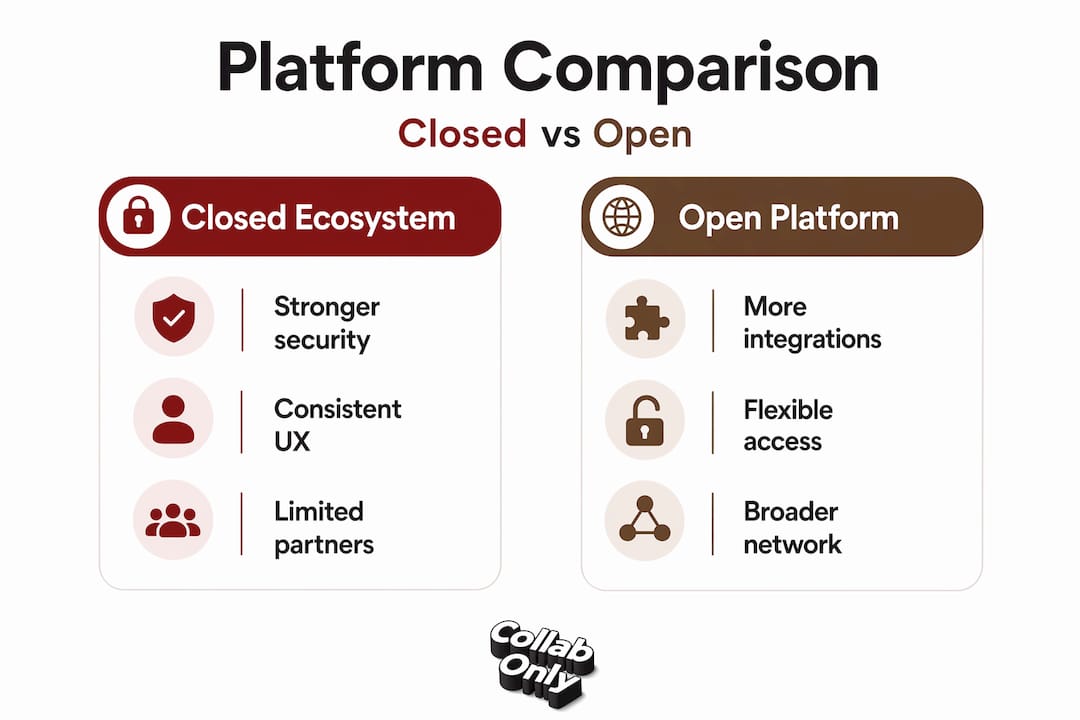
Closed ecosystems offer tighter security and consistent user experience but limit partner participation. Open or API-connected platforms offer flexibility and broader integration but require more governance investment to prevent fragmentation. Marketing teams working with large, variable creator networks typically benefit from platforms with flexible external access models, while internal creative teams managing complex approvals benefit more from structured, permission-heavy environments.
For agency contexts, tools that consolidate project management for agencies with campaign-specific collaboration features reduce the switching cost between planning and execution phases. The impact of platform collaboration on campaign outcomes correlates more strongly with workflow integration than with any individual feature.
My perspective on platform-based collaboration
I have watched marketing teams invest heavily in collaboration platforms and still struggle with the exact problems those platforms were meant to solve. Missed deadlines, lost context, and disconnected partners. The pattern is always the same: the technology gets deployed but the organizational model does not change.
What I have found is that the teams who genuinely benefit from platform-based collaboration are the ones who treat the platform as a structural decision, not a software purchase. They redesign their workflows around the platform's capabilities rather than replicating old email habits in a new interface.
The ecosystem mindset is the part most organizations skip. Platforms connect participants as places rather than just tools. When a marketing team understands that their platform should attract external participants and generate network effects, their entire approach to partner onboarding, creator relationships, and client communication changes.
My take on where this is heading: AI-driven collaboration is not a future feature. It is already present, and teams that integrate autonomous agents into their workflows are compressing campaign cycles in ways that manual coordination cannot match. The risk is not that AI makes collaboration impersonal. The risk is that teams adopt AI features without first having a governance model that makes the outputs reliable.
Platform-based collaboration works when the technology, the organizational structure, and the culture align. Two out of three is not enough.
— Samuel
Take your collaborations further with Collabonly
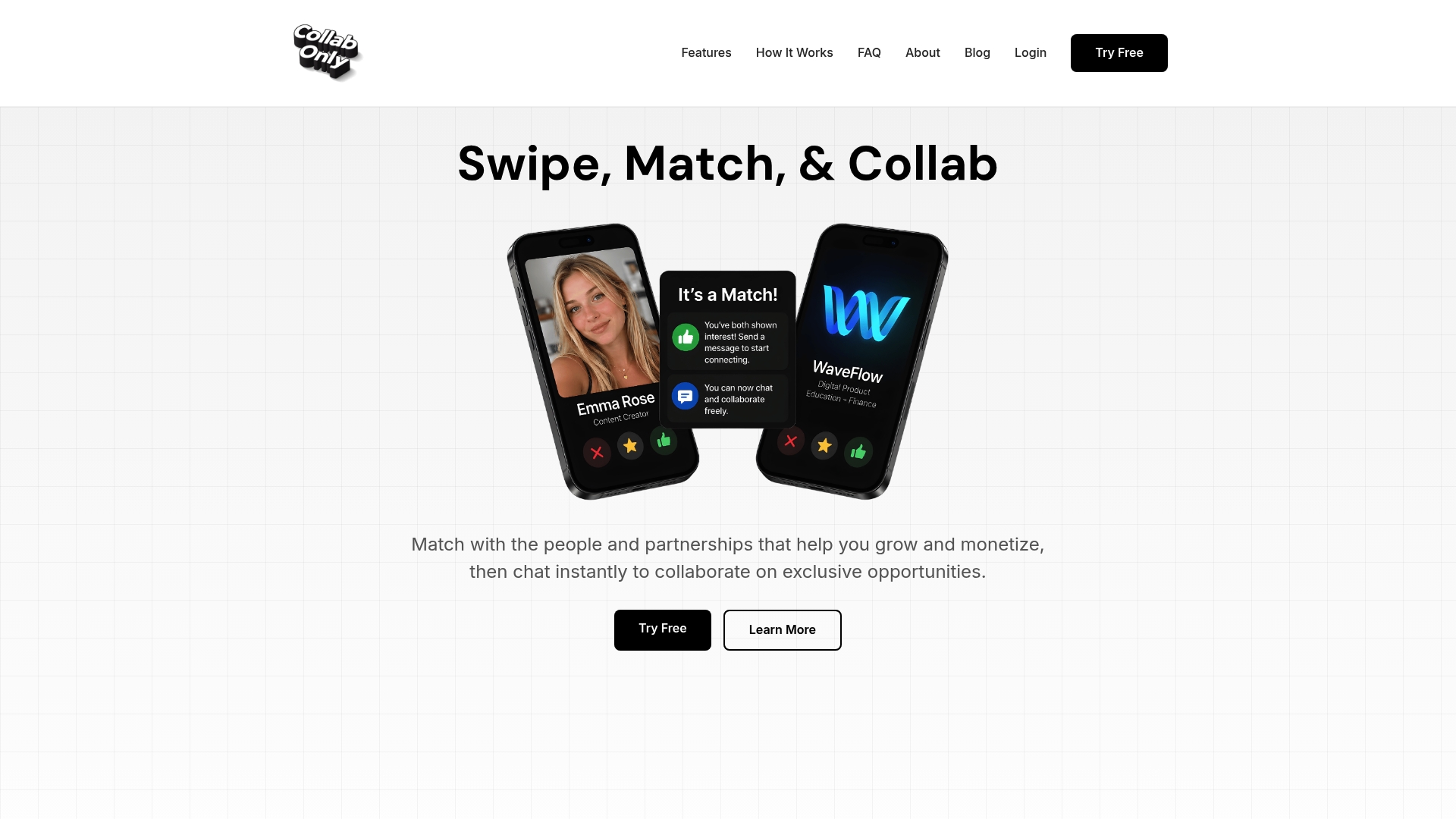
Collabonly was built around the exact principles this article describes: a centralized ecosystem where brands, creators, and audiences connect with minimal friction and maximum transparency. Rather than managing influencer outreach through scattered DMs and unanswered emails, Collabonly's matching system connects brands with the right creators instantly, triggering real-time chat the moment a match is made. For marketing professionals ready to apply platform-based collaboration in their influencer and content strategies, start collaborating on Collabonly to access structured partnerships across TikTok, Instagram, and YouTube. Teams looking to activate nano influencer campaigns or scale with micro influencer partnerships will find purpose-built workflows that replace manual outreach with goal-aligned matches.
FAQ
What is platform-based collaboration, exactly?
Platform-based collaboration is the coordination of work and partnerships through a shared digital ecosystem that connects multiple participants, including teams, creators, and partners, within integrated workflows rather than isolated tools.
How does platform collaboration work for marketing teams?
Marketing teams use platform collaboration tools to centralize briefs, manage approvals, coordinate with external creators, and track campaign performance inside a single environment, reducing the need for separate email, file, and meeting tools.
What are the main benefits of platform collaboration?
The primary benefits of platform collaboration include faster campaign cycles, reduced duplication of work, improved partner transparency, lower coordination costs, and compounding network effects as more participants join the ecosystem.
What are platform-based teams?
Platform-based teams are cross-functional groups that operate within a shared digital infrastructure, often including internal staff, external partners, and creators, where all participants share access to the same workflows, data, and communication channels.
What makes platform collaboration fail?
Platform collaboration fails most often when organizations adopt tools without changing governance structures or communication norms. Fragmented information across departments and undefined accountability undermine coordination even when a shared platform exists.