

User-generated content (UGC) is any text, image, video, or audio that real customers, fans, or community members create about a brand without being directly paid to do so. The formats that matter most for campaign planning are: customer photos and social posts, short-form video (TikTok, Reels), long-form YouTube vlogs, product reviews and star ratings, testimonials, branded hashtag entries, contest submissions, product unboxings, community forum posts, and on-site photo galleries. TechTarget's taxonomy adds Q&A forum entries, blog posts, case studies, and surveys to that roster. Apple's #ShotoniPhone campaign is the clearest proof that a single well-structured prompt can generate millions of assets at no production cost. The FTC requires that any material connection between a brand and a creator be clearly disclosed, so that baseline applies to every UGC program you run. For a deeper look at what UGC means for brand strategy, the Collabonly resource library is a practical starting point.
- Customer photos and social posts
- Short-form video (TikTok challenges, Instagram Reels)
- Long-form video (YouTube vlogs, hauls)
- Reviews and star ratings
- Testimonials and case studies
- Branded hashtag entries and contest submissions
- Product unboxings
- Community and forum posts
- Fan art and creative mods
- On-site UGC galleries and review widgets
Key Takeaways
UGC converts passive consumers into co-creators, and the brands that treat it as a structured content channel with defined briefs, distribution plans, and measurement frameworks consistently outperform those that treat it as an organic bonus.
| Point | Details |
|---|---|
| Visual UGC is the highest-ROI format | Photos and short-form video are the easiest to repurpose across paid social, email, and product pages. |
| Prompts drive participation | Branded hashtags and clear contest mechanics reliably increase contributor volume, per HubSpot's research. |
| Permission is non-negotiable | Obtain explicit written consent with a defined usage window and territory before deploying any UGC in paid channels. |
| Measure conversion, not just engagement | Track add-to-cart rate and UGC-sourced ROAS alongside engagement rate to quantify commercial impact. |
| Collabonly accelerates sourcing | The platform's swipe-based matching and built-in release capture reduce time-to-launch for UGC campaigns. |
Table of Contents
- 1. What are the best examples of user-generated content by format?
- 2. How to collect UGC ethically and at scale
- 3. How to repurpose UGC across channels without losing authenticity
- 4. How to measure UGC impact: KPIs and a simple A/B template
- 5. Rights, permissions, and FTC disclosure: the U.S. legal checklist
- 6. Platform-specific quick tips for TikTok, Instagram, YouTube, and product pages
- 7. How collaboration platforms scale authentic UGC
- 8. Why most UGC programs underperform — and what actually fixes it
- Collabonly connects brands with creators built for UGC campaigns
- Sources
- FAQ
1. What are the best examples of user-generated content by format?
According to Adobe, visual content is the most common form of UGC and the easiest to repurpose across social, email, and product pages. Reviews and ratings are equally versatile, functioning as social proof at every decision point in the funnel. The ten formats below each include a real brand campaign and a one-sentence idea you can adapt.
Social photos and posts
Organic customer photos shared on Instagram, Facebook, or X are the backbone of most UGC programs. ASOS built its #AsSeenOnMe campaign entirely on this format: shoppers tag their outfits, ASOS reposts the best ones to its grid, and the brand's product pages gain a steady stream of real-world styling shots. The replication idea: add a hashtag prompt to your post-purchase email and offer a small discount on the next order for tagged posts.
Short-form video (TikTok and Reels)
Short-form video drives the highest organic reach of any UGC format on TikTok and Instagram. Aerie's #AerieREAL challenge asked users to post unretouched photos and videos celebrating body positivity, generating hundreds of thousands of entries and measurable brand-sentiment lift. Calvin Klein's #MyCalvins campaign applied the same mechanic to video, turning a simple wardrobe prompt into a global content engine. The replication idea: write a 10-word challenge brief, pin it to your TikTok profile, and seed it with three to five creator posts before the public launch.

Long-form video (YouTube vlogs and hauls)
YouTube haul videos and product deep-dives carry strong purchase intent signals because viewers actively seek them out before buying. Glossier built its early community by encouraging customers to post honest "Get Ready With Me" and skincare-routine videos, which drove peer-credibility at a scale no paid media budget could replicate. The replication idea: send a product seeding kit to 20 micro-creators with a one-page brief that specifies the review angle but leaves the format open.
Reviews and star ratings
Star ratings and written reviews are the most portable UGC format: they work on product detail pages, in Google Shopping ads, in email subject lines, and in paid social copy. Combining review snippets with customer photos in an on-site gallery creates a high-trust shopping experience, as Shopify practitioners report, because shoppers see the product used in real contexts and by diverse body types. The replication idea: trigger a review request SMS 14 days after delivery and include a direct link to the review form.
Testimonials and case studies
Testimonials differ from reviews in specificity: a testimonial names a problem, describes the solution, and quantifies the outcome. B2B brands use this format in case-study PDFs, landing-page pull quotes, and sales decks.
Branded hashtags and contests
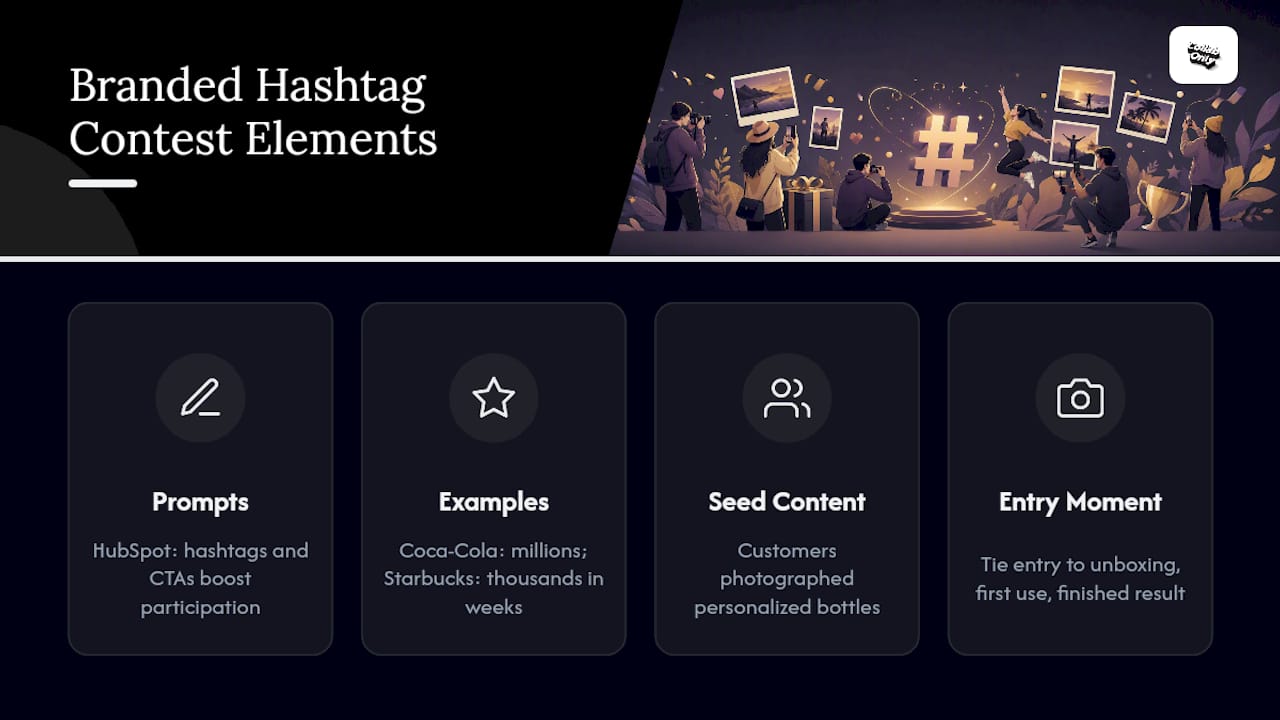
HubSpot documents that prompts, such as hashtags or clear calls-to-action, reliably increase contributor participation by converting passive consumers into active co-creators. Coca-Cola's Share a Coke campaign replaced the brand logo with customer names, generating millions of social posts as people photographed their personalized bottles. Starbucks' White Cup Contest invited customers to doodle on their cups and submit photos, producing thousands of entries in weeks. Both campaigns are repeatedly cited as templates for structuring a branded-hashtag contest. The replication idea: tie the contest entry mechanic to a product moment (the unboxing, the first use, the finished result) so the brief writes itself.
Product unboxings and hauls
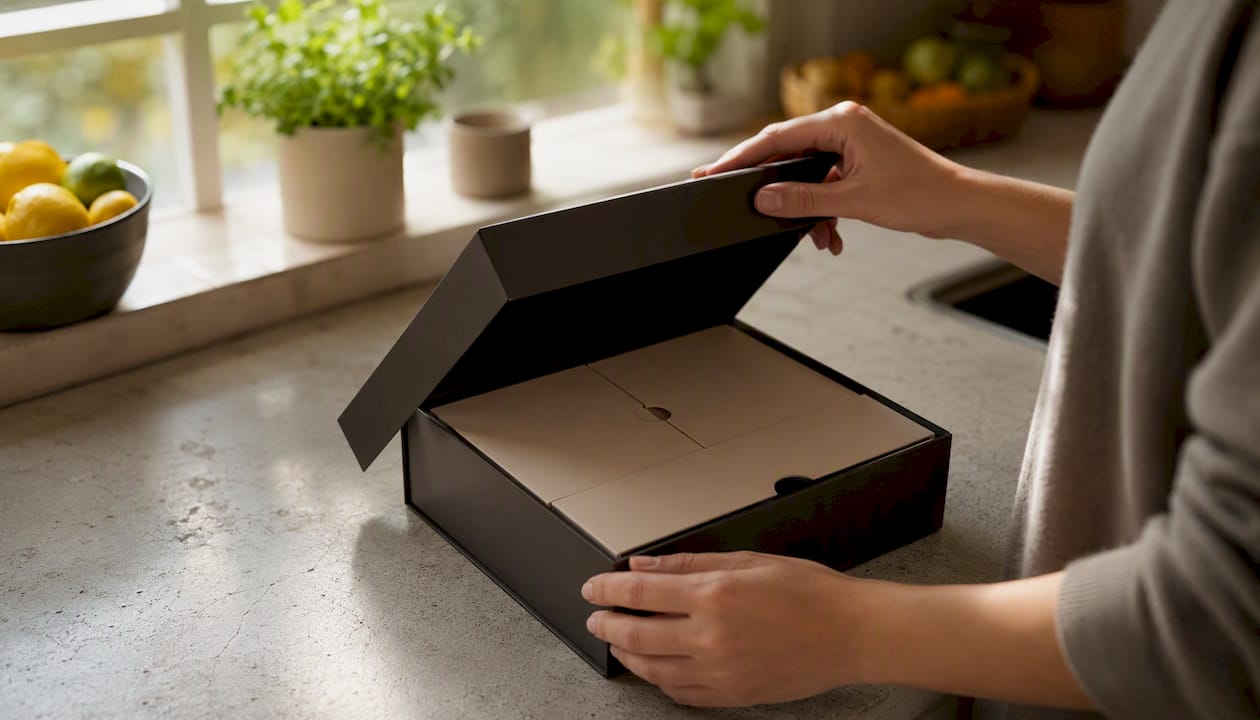
Unboxing videos generate anticipation and function as a pre-purchase surrogate for shoppers who cannot handle the product in person. Stanley's insulated cup became a cultural phenomenon partly because unboxing and durability-test videos spread organically on TikTok, with creators filming the cup surviving car fires and extreme cold. The replication idea: design packaging with a visual reveal moment and include a card inside that prompts the customer to share the unboxing with a specific hashtag.
Community and forum posts
Reddit threads, brand community boards, and Facebook Groups generate long-tail keyword content that ranks in search and answers niche product questions at scale. Doritos has historically leaned on its Legion of the Bold creator community to crowdsource flavor ideas and campaign concepts, turning community engagement into a product-development input. The replication idea: seed a brand subreddit or a dedicated Facebook Group with three to five discussion prompts per week and respond to every thread in the first 48 hours to signal that the brand is listening.
Fan art and creative mods
Fan art, custom colorways, and product mods signal deep brand affinity and generate press coverage without a media budget. Gaming brands have long used this format (modding communities extend product lifecycles by years), but consumer goods brands can apply the same principle by running a design-your-own-label contest. The replication idea: publish a brand asset kit (logo files, color codes, product templates) and invite submissions through a dedicated landing page.
On-site UGC galleries and product-page integration
Embedding customer photos and review snippets directly on product detail pages reduces purchase hesitation. Bazaarvoice research shows that combining visual UGC with review data creates a high-trust shopping experience engineered to show diverse, real-world use cases. Apple's #ShotoniPhone campaign feeds directly into this format: the best community photos appear on Apple.com and in retail stores, closing the loop between social UGC and on-site conversion. The replication idea: use a UGC aggregation tool (Bazaarvoice, Yotpo, or Okendo) to pull tagged social posts onto your product pages automatically.
Pro Tip: When briefing creators for any format, give them a single constraint rather than a full script. "Show us the moment you realized this product changed your routine" produces more authentic content than a five-point brief, and authenticity is what drives peer-credibility.
2. How to collect UGC ethically and at scale
Scaling UGC collection requires a repeatable system, not a one-off campaign. The following checklist covers timing, incentives, prompts, and channel selection.
- Define the asset type and minimum quality bar before launching (resolution floor, video length, required hashtag or tag).
- Identify the highest-intent moment in the customer journey (post-purchase, post-first-use, post-renewal) and trigger your ask at that point.
- Choose your collection channel: a branded hashtag for organic social reach, a submission form for controlled quality, or a creator brief distributed through a matching platform for volume.
- Write a prompt that specifies the subject but not the style. "Show us how you use [product] in your morning routine" outperforms "Post a photo of our product."
- Offer a meaningful incentive: a feature on the brand's social account, a discount code, early product access, or entry into a prize draw.
- Set a response window (7–14 days for contests; ongoing for hashtag programs) and communicate it clearly.
- Triage submissions by relevance tag (product category, use case, demographic), resolution, and brand-safety flag before adding assets to your library.
A hashtag works best when organic discovery and volume matter more than quality control. A submission form gives you metadata, explicit consent, and higher-quality assets but limits reach. Many brands run both in parallel: a hashtag for volume and a form for hero assets.
UGC submission template (copy-ready):
We would love to feature your photo or video on [Brand Name]'s channels. Please share: (1) your asset file or social post link, (2) the product name and how you use it, and (3) your preferred credit handle. By submitting, you confirm you own the rights to this content and grant [Brand Name] a non-exclusive, royalty-free license to use it in marketing materials for [usage window, e.g., 12 months] across [territories]. ☐ I agree to the above terms.
Pro Tip: For volume management, apply a two-filter triage: first filter by minimum resolution (1080p for video, 1200px on the short side for images), then filter by relevance score (does the asset show the product in a recognizable use case?). Everything that passes both filters enters the active library; everything else is archived, not deleted, in case a campaign brief changes.
3. How to repurpose UGC across channels without losing authenticity
A single strong UGC asset can generate value across six or more channels if the repurposing workflow is structured correctly. The key constraint is preserving the creator's voice and credit at every stage.
- Paid social ads: Crop the asset to platform specs (9:16 for TikTok and Reels, 1:1 for Facebook feed), retain the creator's handle in the caption, and add a minimal text overlay. Over-produced UGC ads lose the authenticity signal that makes them outperform brand creative.
- Organic social: Repost the original asset with the creator tagged and a caption that reflects their original language, not brand copy. This signals to followers that the brand listens.
- Product detail pages: Pull the top three to five customer photos per SKU into a gallery widget. Shopify practitioners confirm this reduces purchase anxiety because shoppers see real-world usage and diverse body types.
- Email: Use a customer photo as the hero image in a post-purchase or re-engagement email. A real customer photo in an email header consistently outperforms studio photography in open-to-click rates for lifestyle categories.
- Landing pages: Feature a testimonial pull quote above the fold alongside the product image. Keep the quote verbatim and attribute it by first name, city, and product purchased.
- Out-of-home (OOH) and digital OOH: Apple's #ShotoniPhone campaign has appeared on billboards in over 70 countries, with the photographer's name printed below each image. The credit is not optional: it is the authenticity signal that makes the format work.
- In-store displays: Print customer photos on shelf talkers or end-cap displays with a QR code linking to the full review. This closes the loop between physical retail and digital social proof.
The repurposing path for a short-form video asset typically runs: a 15–30 second TikTok becomes a 6-second paid social cut, then a static frame pulled for a product-page carousel image, then a review quote extracted for an email subject line test.
Pro Tip: When cutting a creator's video for a paid ad, retain the first two seconds of the original audio and the creator's handle in the corner. Those two elements are what signal "this is a real person," and removing them turns a UGC ad into a brand ad with worse production values.
4. How to measure UGC impact: KPIs and a simple A/B template
Measuring UGC performance requires separating engagement metrics (which confirm participation) from conversion metrics (which confirm commercial value). Both matter, but they answer different questions.
- Engagement rate: Likes, comments, shares, and saves on UGC posts divided by impressions. Benchmark against your brand creative baseline to establish the lift.
- View-through rate (VTR): For video UGC in paid placements, VTR indicates whether the content holds attention long enough to deliver the message.
- User-sourced CTR: Click-through rate on ads or emails featuring UGC versus brand creative in the same placement. Tag UGC assets with a UTM parameter (e.g.,
utm_content=ugc_[creator_handle]) to isolate the signal. - Conversion rate on product pages with UGC: Compare the conversion rate of product pages with an active UGC gallery against pages without one, holding traffic source constant.
- UGC-sourced ROAS: Revenue attributed to paid placements using UGC creative divided by spend on those placements.
- Sentiment and NPS lift: Track brand-mention sentiment before and after a UGC campaign using a social listening tool (Brandwatch, Sprout Social, or Mention).
A/B test template:
- Hypothesis: Product pages with a UGC photo gallery will convert at a higher rate than pages without one.
- Test cell A: Product page with studio photography only.
- Test cell B: Same page with a six-photo UGC gallery added below the fold.
- Success metric: Add-to-cart rate.
- Minimum sample size: 1,000 unique sessions per cell before reading results.
- Attribution shortcut: Assign a UGC-specific promo code to contest winners and track redemption separately from organic traffic.
One documented case from HubSpot's UGC research shows a creator tie-in that drove a 57% increase in app downloads for the brand involved. That figure is a single-campaign example, not a universal benchmark, but it illustrates the order of magnitude that creator-led UGC can move when the brief, the creator match, and the distribution channel align.
For understanding how UGC fits into broader campaign strategy, Collabonly's 2026 strategy guide covers attribution frameworks in more detail.
5. Rights, permissions, and FTC disclosure: the U.S. legal checklist
Using UGC without explicit permission is a liability, not a gray area. The following checklist covers the minimum requirements for U.S.-based campaigns.
- Obtain explicit written permission from the creator before using their asset in any paid or owned channel. A public hashtag entry does not constitute consent for commercial use.
- Confirm the creator owns the rights to all elements in the asset (music, third-party logos, other people's likenesses).
- Specify the usage window (e.g., 12 months from the date of consent) and territory (e.g., United States digital channels) in the release.
- Request a moral rights waiver when you plan to crop, color-correct, or otherwise alter the original asset.
- Record consent evidence: store the signed release or the in-form checkbox submission with a timestamp and the creator's contact information.
Sample release snippet (U.S. use):
Recommended in-form consent checkbox copy:
☐ I confirm I own the rights to this content and agree to [Brand Name]'s UGC usage terms (linked).
FTC disclosure: The FTC requires creators to clearly disclose any material connection to a brand, including free products, discounts, or contest prizes. "Material connection" means anything of value. The disclosure must appear before the "more" button on social platforms and use plain language ("I received this product for free from [Brand]" or "#ad"). Brands are responsible for ensuring creators they work with comply; document your disclosure requirement in every creator brief.
Pro Tip: Store permission evidence in a versioned asset management system (Bynder, Canto, or a simple Google Sheet with timestamped rows). When a usage window expires, the system should flag the asset for renewal or retirement — expired permissions are one of the most common and costly UGC compliance failures.
6. Platform-specific quick tips for TikTok, Instagram, YouTube, and product pages
Each platform has distinct algorithmic behaviors and community norms that determine whether UGC performs or disappears.
TikTok
- Launch challenges with a branded sound, not just a hashtag. Sound reuse is TikTok's primary discovery mechanic.
- Use the Duet and Stitch prompts to invite responses to a seed video. This creates a content chain that the algorithm rewards.
- Post the brand's seed video at the same time as the creator seeding wave so the challenge appears active from day one.
- Do not over-produce the brand's seed video. A polished brand video signals "ad" and suppresses organic participation.
- Reels drive reach; Stories drive engagement and direct response. Use UGC Reels for discovery and UGC Stories (with a poll or question sticker) for community interaction.
- Carousel posts featuring three to five customer photos consistently outperform single-image posts for saves and shares in lifestyle categories.
- Tag the original creator in both the post and the caption. Double-tagging increases the probability that the creator reshares to their own audience.
- Avoid cropping out creator watermarks when repurposing UGC from TikTok to Instagram Reels.
YouTube
- Community posts (the YouTube Community tab) are an underused UGC prompt. A question post asking subscribers to share their experience generates comments that function as text-based UGC.
- YouTube Shorts created from customer testimonial clips perform well as mid-funnel content for viewers who have already seen a long-form review.
- Structure creator collaboration briefs to allow the creator to retain editorial control over the video's narrative. Creator-controlled content outperforms brand-scripted content on YouTube because subscribers can detect the difference.
Product pages and e-commerce
- Place the UGC photo gallery below the main product image but above the fold on mobile.
- Filter the gallery to show only photos where the product is clearly visible and in use.
- Link each photo to the corresponding review so shoppers can read the full context.
- Refresh the gallery monthly to signal that the product has an active, current customer base.
7. How collaboration platforms scale authentic UGC
The operational bottleneck in most UGC programs is not content volume — it is the time required to source creators, negotiate terms, capture releases, and organize assets. A structured workflow resolves each of those friction points in sequence.
Sample workflow:
- Brief: Define the asset type, usage rights required, platform, timeline, and incentive structure before outreach begins.
- Match: Use a creator-matching platform (such as Collabonly's swipe-based interface) to identify creators whose audience demographics, content style, and engagement rate align with the campaign brief. This step replaces cold DMs and unanswered emails.
- Agree terms and capture release: Confirm the usage window, territory, and compensation in writing. Capture the release at the point of agreement, not after the asset is delivered.
- Asset collection: Creators submit assets through a centralized channel (a shared folder, a submission form, or a platform inbox). Centralization prevents assets from being lost in email threads.
- Curation and tagging: Tag each asset by product SKU, use case, creator tier, and platform format. A tagged library makes repurposing fast and attribution accurate.
- Repurpose and measure: Deploy assets across channels with UTM parameters attached. Track performance by asset and by creator to inform the next brief.
The workflow benefits are compounding: faster discovery reduces time-to-launch, standardized release capture eliminates compliance gaps, and a centralized tagged library means the same asset can be repurposed across six channels without re-requesting permission. For brands comparing influencer marketing versus UGC as budget priorities, the workflow above applies to both, with the release and attribution steps becoming more critical as spend increases.
Combining this workflow with influencer-led UGC programs can amplify reach significantly. Research on influencer and UGC strategy alignment shows that brands integrating both approaches tend to see stronger brand visibility outcomes than those running either program in isolation.
8. Why most UGC programs underperform — and what actually fixes it
The conventional wisdom on UGC is that authenticity is the goal and volume is the strategy. Both are partially correct, but the framing misses the real failure point: most UGC programs underperform not because the content is inauthentic, but because the brief is too vague and the distribution plan is nonexistent.
A hashtag without a seed video is a prompt with no audience. A contest without a repurposing plan produces assets that expire in a folder. The brands that consistently generate high-performing UGC — Apple, Glossier, Aerie — share one operational trait: they treat UGC as a content channel with its own brief, distribution calendar, and measurement framework, not as a bonus that happens when customers feel inspired.
The second underrated fix is creator selection. Peer-credibility scales with specificity: a nano-creator with 3,000 highly engaged followers in a relevant sub-niche will generate more purchase-intent signal than a macro-creator with 500,000 passive followers in a broad category. The 57% app download increase documented by HubSpot came from a creator tie-in, not from an open hashtag campaign. The creator match was the variable that moved the metric.
Collabonly connects brands with creators built for UGC campaigns
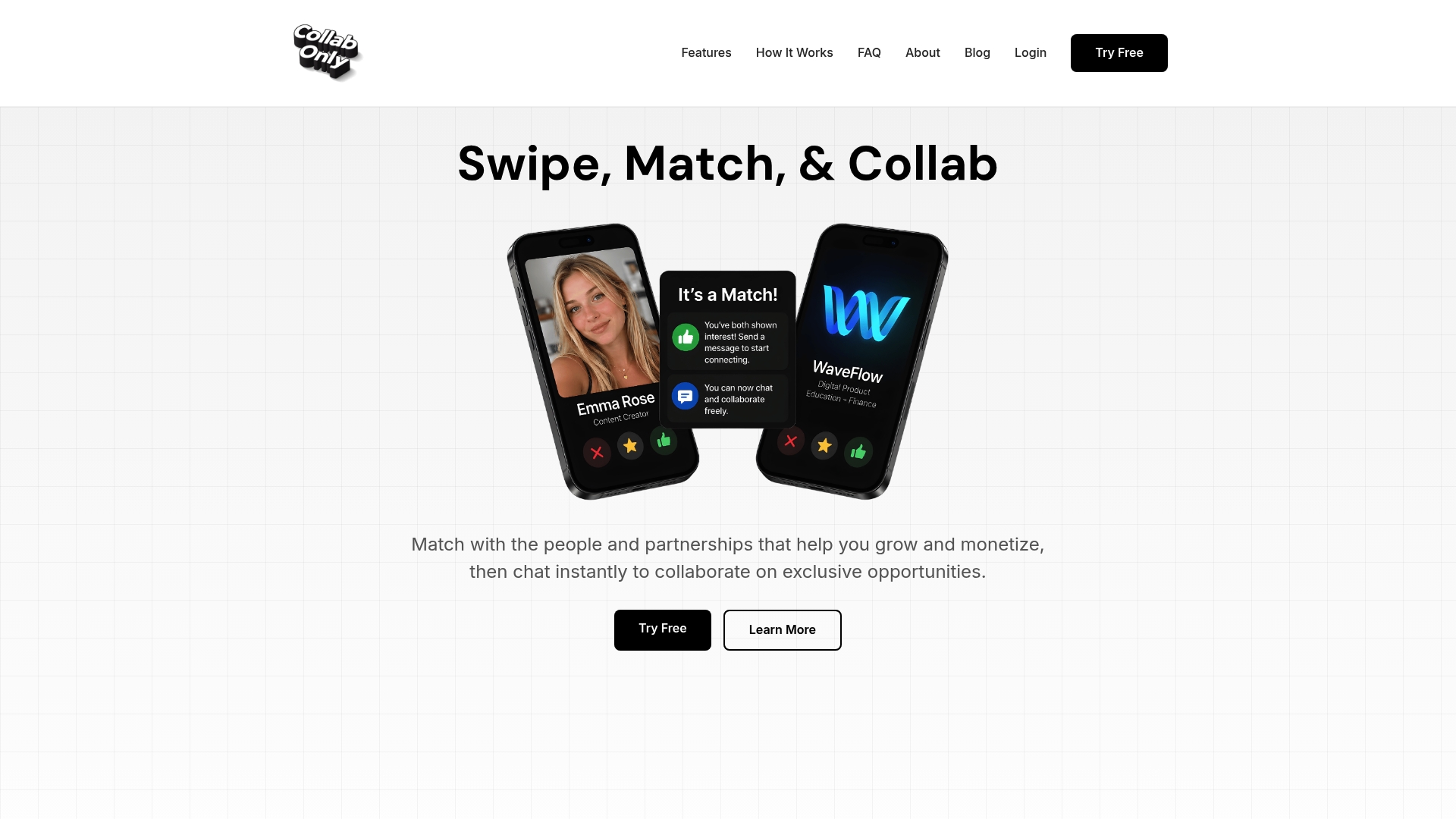
Sourcing, briefing, and licensing UGC creators one by one is the slowest part of any campaign. Collabonly's matching platform replaces that process with a swipe-based interface that connects brands directly with creators across TikTok, Instagram, and YouTube whose content style, audience demographics, and engagement rate align with the campaign brief. Instant chat upon match means terms and releases are agreed in hours, not weeks.
- Built-in release capture at the point of match, so permissions are documented before a single asset is delivered.
- Centralized asset inbox and creator history, making repurposing and attribution straightforward across every channel.
Brands running product launch campaigns can find launch-ready creators on Collabonly and move from brief to first asset in days. For brands that want cost-efficient, high-authenticity content at scale, nano influencer partnerships through Collabonly are a direct route to peer-credibility UGC without the overhead of a traditional agency retainer.
Sources
- User-generated content: Benefits, strategy, and examples
- What is User-generated Content (UGC)? Essentials for a Soaring Strategy
- Integrating UGC on product pages reduces purchase anxiety (practitioner observation)
- User-created content | Britannica
FAQ
What is an example of user-generated content?
A customer photo tagged with a brand's hashtag on Instagram is a classic example of user-generated content. Apple's #ShotoniPhone campaign, where iPhone owners share photos taken with their devices, is one of the most widely cited UGC campaigns in marketing.
What is the most successful UGC campaign?
Apple's #ShotoniPhone is consistently cited as the benchmark UGC campaign because it generated millions of assets globally, appeared on billboards in over 70 countries, and required no production budget beyond the initial prompt. Coca-Cola's Share a Coke and Starbucks' White Cup Contest are also frequently referenced as campaign templates by marketing practitioners.
Is TikTok a UGC platform?
TikTok is primarily a UGC platform: the vast majority of its content is created by users, not brands. For marketers, TikTok's challenge mechanic and sound-reuse features make it one of the most effective channels for soliciting and amplifying branded UGC at scale.
How do you get users to create UGC?
The most reliable methods are a branded hashtag with a clear prompt, a post-purchase review request triggered 14 days after delivery, and a contest with a defined entry mechanic. HubSpot's research confirms that specific prompts and calls-to-action consistently outperform open-ended invitations.