

TL;DR:
- Long-term creator partnerships generate higher trust and sales compared to one-time sponsored posts.
- Focusing on nano- and micro-influencers improves engagement and sub-niche credibility for brands.
Creator marketing strategies are defined as structured approaches brands use to partner with content creators for audience growth, sales, and brand trust. The industry standard in 2026 has shifted decisively toward long-term partnerships and authentic content integration over transactional, one-off sponsored posts. This creator marketing strategies list covers the tactics that consistently produce measurable results, from nano-influencer programs to co-created product lines. Platforms like Collabonly have made it faster to match brands with goal-aligned creators, removing the friction that slows most campaigns before they start.
1. What are the top creator marketing strategies for brands in 2026?
The strategies below represent the most effective approaches in current brand-creator collaboration. Each one addresses a specific growth lever, whether that is reach, conversion, loyalty, or content volume.

2. Long-term brand ambassadorships
Long-term creator partnerships consistently outperform one-off sponsored posts on conversion lift and audience trust. The reason is straightforward: repeated, genuine endorsement builds credibility that a single post cannot. Audiences recognize when a creator has used a product for months versus when they read a script once. Brands that commit to 6-to-12-month ambassador agreements gain compounding content output and deeper audience association.
Structuring an ambassadorship requires clear deliverables, content rights, and performance benchmarks from the start. Monthly check-ins and creative briefs that allow creator input produce better content than rigid scripts.
3. Nano- and micro-influencer programs
Nano- and micro-influencers produce higher engagement rates and stronger trust signals than large-follower accounts in most product categories. Their audiences are smaller but more concentrated around a specific interest or geography, which means a recommendation lands with more weight. A skincare brand targeting Gen Z in the Pacific Northwest gets more qualified attention from a 12,000-follower Portland beauty creator than from a 2-million-follower generalist.
Pro Tip: Run nano-influencer programs in pods of 10–20 creators simultaneously. The combined reach matches a mid-tier influencer, but the engagement quality and cost per result are significantly better.
Brands can find micro-influencers by filtering for sub-niche relevance, audience location, and engagement-to-follower ratio rather than raw reach alone.
4. Interactive livestream shopping
Livestream shopping integrates real-time commerce directly into creator content, turning passive viewers into active buyers within minutes. Brands report growing conversion success when creators demonstrate products live, answer audience questions, and offer time-limited discount codes during the stream. The format works particularly well on TikTok Shop and Instagram Live, where the purchase path is short.
The key differentiator from standard sponsored content is the immediacy. A viewer who watches a creator unbox and test a product live faces far less purchase friction than one who sees a static post and must navigate to a separate site.
5. Co-created product lines
Co-created product lines increase both sales conversions and brand loyalty by giving creators genuine ownership over what they promote. When a creator has shaped the product's color, formula, or packaging, their promotion is inherently authentic. Their audience buys into the creator's taste, not just the brand's marketing.
This strategy requires more lead time and legal groundwork than standard sponsorships. Revenue-sharing agreements, intellectual property terms, and production timelines must be defined before any public announcement. The payoff is a product launch with a built-in, motivated advocate and a ready audience.
6. User-generated content campaigns and challenges
UGC campaigns ask existing customers and fans to create content around a brand prompt, hashtag, or challenge format. The result is a scalable content library that carries authentic peer-credibility no paid post can replicate. Brands that repurpose UGC across paid ads, email, and product pages see stronger performance because the content reads as social proof rather than advertising.
Challenges work best when the participation barrier is low and the creative prompt is specific enough to produce consistent, usable content. A vague "show us how you use our product" generates noise. A specific "show your morning routine in 15 seconds using our cleanser" generates a usable content format.
7. Podcast guest collaborations
Podcast appearances extend a brand's message into a high-attention, long-form format that most social content cannot match. A creator who hosts a podcast with 50,000 loyal listeners delivers a different kind of influence than one with 500,000 Instagram followers who scroll past posts in two seconds. The depth of engagement in audio formats builds brand familiarity over 30 to 60 minutes.
Brands should prioritize podcasts where the host's audience overlaps with their customer profile, not just shows with large download numbers. A guest appearance that includes a genuine product discussion, rather than a pre-roll ad read, performs better on brand recall.
8. Creator-led educational content
Educational content positions a brand as a category authority rather than just a product seller. When a creator teaches their audience something genuinely useful, and the brand's product is part of that solution, the association is positive and durable. A fitness equipment brand that partners with a certified trainer to produce weekly workout tutorials builds trust that a discount code post cannot.
This format also produces reusable assets. A 10-minute tutorial video can be cut into short clips, quoted in email campaigns, and embedded in product pages. Reusable creator-tested assets across multiple channels reduce production costs while maintaining content authenticity.
9. Loyalty programs and creator communities
Creator communities convert one-time collaborators into sustained brand advocates. Brands that build structured loyalty programs for their creator partners, with tiered rewards, early product access, and exclusive briefings, see higher content output and more consistent messaging over time. Authentic creator collaborations build enduring brand loyalty and improve customer lifetime value.
The community model also generates peer-to-peer learning among creators. When creators share what content formats perform best for a given brand, the entire program improves without additional brand investment.
How to measure and optimize creator marketing effectiveness
Tracking real business impact separates effective creator programs from expensive experiments. Measuring sales lift and audience engagement quality produces more useful data than follower counts or impression totals.
- Use unique promo codes and UTM parameters for every creator. This creates a direct attribution path from content to purchase, even across platforms.
- Track engagement quality metrics: comments, saves, and watch time completion rates matter more than likes. A post with 200 detailed comments outperforms one with 10,000 passive likes.
- Run holdout tests by withholding creator content from a matched audience segment for 4–6 weeks. The sales difference between the exposed and holdout groups measures incremental lift.
- Measure brand affinity shifts through periodic audience surveys. Ask whether respondents recognize the brand, trust it, and would recommend it. Creator campaigns that move these numbers justify continued investment.
- Audit disclosure compliance on every post. The FTC requires clear, conspicuous disclosure of paid partnerships. Non-compliant content creates legal exposure and erodes audience trust when discovered.
The creator partnership process should include a measurement framework before any content goes live. Retroactive attribution is always less accurate than pre-planned tracking.
Which strategies fit specific brand goals?
Different creator strategies align with distinct objectives, and selecting the wrong tactic for a given goal wastes budget regardless of execution quality.
| Brand goal | Best-fit strategies |
|---|---|
| Brand awareness | Nano-influencer pods, branded AR filters, livestream shopping |
| Direct sales | Affiliate programs, co-created product lines, promo code campaigns |
| Community loyalty | Long-term ambassadorships, creator loyalty programs |
| Content library growth | UGC challenges, educational series, behind-the-scenes content |
| Category authority | Podcast collaborations, creator-led tutorials, expert advisory boards |
Pro Tip: Brands with limited budgets should start with a UGC challenge and one long-term nano-influencer ambassador. This combination builds a content library and a credible advocate simultaneously, at a fraction of the cost of a single macro-influencer campaign.
Brands in the awareness phase benefit most from volume and variety, meaning many creators reaching different sub-niches. Brands in the conversion phase need fewer, more targeted creators with proven purchase-intent audiences.
Emerging trends in creator marketing for 2026 and beyond
The following tactics are gaining traction among forward-thinking brand teams and are worth testing now before they become standard practice:
- AI-enhanced creator matching: Platforms now use behavioral and content data to match brands with creators whose audience psychographics align with buyer profiles, not just demographics.
- Creator advisory boards: Brands are bringing 3–5 top-performing creators into quarterly strategy sessions. These creators co-develop campaign concepts, which increases buy-in and content quality.
- Branded AR filters and lenses: Custom filters on Instagram and Snapchat turn creator audiences into active participants. When a creator's followers use a brand's filter, they generate organic impressions at no additional media cost.
- Content flywheel models: Consistent weekly content triggers algorithmic and audience-growth inflection points around months 6–9. Brands that commit to this cadence see compounding returns that sporadic campaigns cannot replicate.
- Platform-native content strategies: Content built specifically for TikTok's vertical format, YouTube's chapter structure, or Instagram's carousel mechanics outperforms repurposed content from other channels. Platform-native briefs should be standard in every creator contract.
Key takeaways
The most effective creator marketing approach in 2026 combines long-term partnerships, authentic content integration, and goal-aligned strategy selection to produce compounding ROI.
| Point | Details |
|---|---|
| Prioritize long-term partnerships | Ambassador programs outperform one-off posts on trust and conversion lift. |
| Match strategy to objective | Awareness, sales, and loyalty goals each require different creator tactics. |
| Measure beyond vanity metrics | Use UTM parameters, promo codes, and holdout tests to track real business impact. |
| Invest in nano- and micro-influencers | Smaller creators deliver higher engagement quality and sub-niche credibility. |
| Build reusable content assets | Creator-produced content repurposed across channels reduces costs and maintains authenticity. |
Why patience is the most underrated creator marketing asset
Most brand teams I have worked with abandon creator programs too early. They run a 6-week campaign, see modest direct attribution, and conclude the channel does not work. That conclusion is almost always wrong, and the timing is the problem.
The content flywheel model is real. Consistent creator output for 6–9 months produces a non-linear growth curve that looks flat for months before it accelerates. Brands that cut programs at month 3 never see the inflection point. The ones that hold through month 7 often find that creator content has become their highest-performing organic acquisition channel.
The second mistake is optimizing for follower counts instead of trust. A creator with 8,000 deeply engaged followers in a specific sub-niche will move product. A creator with 800,000 passive followers often will not. The metric that predicts sales is not reach. It is the degree to which an audience acts on that creator's recommendations.
Creative freedom matters more than most brand managers are comfortable admitting. The brands that see the best results give creators a clear brief, a product, and room to interpret. The ones that send 12-page scripts with mandatory talking points get content that audiences recognize as inauthentic within seconds. Authenticity is not a soft value. It is a measurable performance variable.
— Samuel
How Collabonly connects brands with the right creators
Collabonly gives brand managers direct access to vetted nano- and micro-influencers across TikTok, Instagram, and YouTube through a match-based interface that eliminates cold outreach delays.
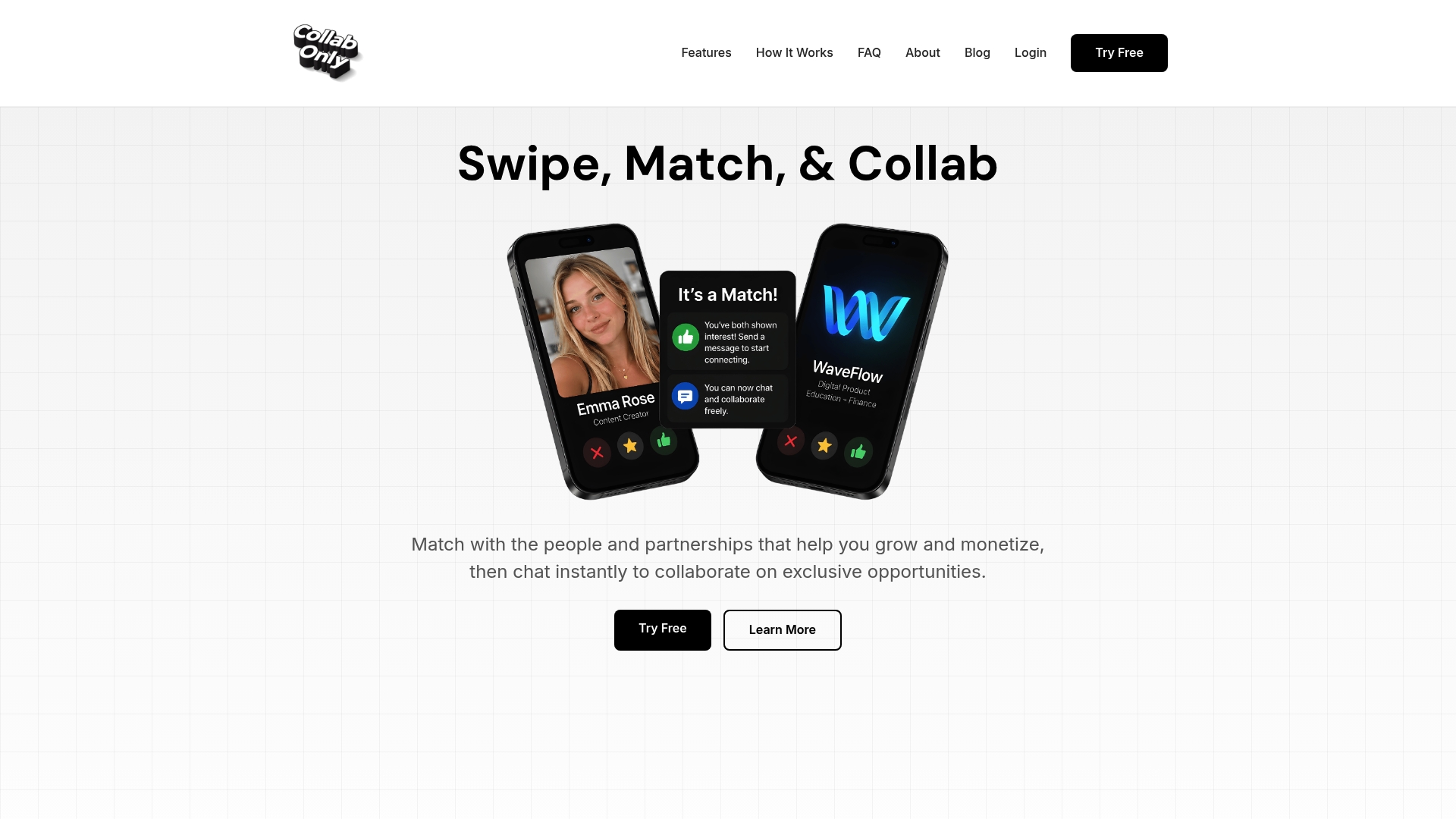
Brands can browse the influencer marketplace to filter creators by platform, niche, and audience size, then connect instantly once a match is confirmed. For brands focused on high-engagement, cost-efficient campaigns, the nano-influencer hiring page and micro-influencer marketplace provide direct access to creators with proven sub-niche credibility. Collabonly also supports Shopify brands through a dedicated UGC creator program, making it straightforward to build a content library from real customers and creator partners.
FAQ
What is a creator marketing strategy?
A creator marketing strategy is a structured plan for partnering with content creators to achieve specific brand goals such as awareness, sales, or loyalty. Effective strategies align creator selection, content format, and measurement frameworks to campaign objectives.
Why do long-term creator partnerships outperform one-off posts?
Long-term partnerships build repeated audience exposure and genuine creator endorsement, which produces higher conversion lift and trust than a single sponsored post. Audiences recognize sustained use as authentic, which increases purchase intent.
How many creators should a brand work with at once?
The right number depends on campaign goals. Awareness campaigns benefit from 10–20 nano-influencers in parallel, while conversion campaigns typically perform better with 3–5 highly targeted creators whose audiences have demonstrated purchase intent.
What metrics actually measure creator marketing ROI?
Sales lift measured through unique promo codes, UTM-tracked conversions, and holdout group comparisons are the most reliable ROI indicators. Engagement quality metrics such as comment depth and save rates predict future performance better than raw impressions.
How long does it take to see results from a creator program?
A content flywheel model typically reaches its compounding growth inflection point between months 6 and 9 of consistent weekly output. Brands that evaluate creator programs before that window often underestimate the channel's long-term value.