

TL;DR:
- Creator collaborations boost audience reach, trust, and long-term ROI through value-aligned partnerships. Long-term relationships enhance content quality, deepen trust, and outperform one-off deals by building familiarity. Successful collaborations require strategic alignment, audience fit, clear metrics, and adaptable contracts to maximize impact.
Creator collaboration is defined as a goal-aligned partnership between two or more creators, or between a creator and a brand, where both parties combine audiences, skills, and content to generate shared growth. The benefits of creator collaborations extend well beyond reach: 78% of viewers trust YouTube creators for product recommendations, and YouTube creator partnerships deliver 86% higher long-term ROAS than paid social. For brands and creators operating in 2026, these partnerships represent one of the most cost-efficient paths to audience growth, authentic engagement, and compounding revenue.
1. Benefits of creator collaborations: reach, trust, and ROI
Audience reach multiplies when two creators or a creator and brand combine their communities. Each partner brings a distinct subscriber base, and the overlap between those bases creates net-new exposure that neither party could generate alone.

Trust is the mechanism that converts that reach into revenue. Consistent branded content from creators builds peer-like credibility that traditional advertising cannot replicate. Audiences treat creator recommendations as they would advice from a knowledgeable friend, not a commercial message.
The ROI data reinforces this dynamic. 40% of YouTube views occur more than a month after upload, meaning a single collaboration continues generating returns long after the campaign ends. That compounding effect is the defining financial advantage of creator partnerships over one-time media buys.
Key reach and trust advantages include:
- Sub-niche audience overlap: Partnering with a creator in an adjacent niche introduces your content to audiences who are already primed for your category.
- Peer-credibility transfer: A creator's established trust transfers to any brand or co-creator they endorse, reducing the audience's skepticism threshold.
- Algorithmic amplification: Platform algorithms on TikTok, Instagram, and YouTube reward content that generates sustained engagement, and collaborative content consistently outperforms solo posts on this metric.
- Long-tail content value: Collaboration videos and posts accumulate views and shares over months, not days, extending the effective campaign window.
2. Creative synergy and content innovation
Creative synergy is the measurable improvement in content quality that results when two creators pool distinct skills and perspectives. Diverse skills from partnered creators elevate content quality beyond what either creator produces independently. This is not a soft benefit. It shows up in watch time, comment volume, and share rates.
Cross-pollination of ideas produces formats that neither creator would have developed alone. A fitness creator partnering with a nutritionist, for example, can produce content that addresses the full health picture, attracting audiences from both niches while offering depth that single-creator content rarely achieves.
Collaborative content also tends to generate higher audience engagement because it introduces novelty. Audiences respond to unfamiliar pairings and unexpected formats. The creative tension between two distinct voices produces content that feels less scripted and more authentic.
- Format innovation: Collaborations introduce debate formats, dual-perspective reviews, and co-hosted series that solo creators cannot execute alone.
- Skill transfer: Creators absorb production techniques, storytelling methods, and audience engagement tactics from their partners, raising the quality floor for all future content.
- Audience interaction: Joint content invites audiences from both sides to interact with each other, creating community effects that extend well beyond the original post.
Pro Tip: Before finalizing a collaboration, map each partner's core content strengths on a simple grid. Identify where skills complement rather than duplicate. Partnerships with the highest creative gap between partners tend to produce the most novel content.
3. Long-term partnerships vs. one-off deals
Long-term creator partnerships outperform one-off campaigns across every measurable dimension: brand recall, conversion rate, audience trust, and content efficiency. The reason is compounding familiarity. Each piece of content a creator produces for a brand builds on the last, deepening the audience's association between the creator's credibility and the brand's identity.
Brands shifting from transactional buys to strategic partnerships see compounded marketing impact because platform algorithms reward consistent, authentic creator-brand relationships. A creator who mentions a brand once is an advertisement. A creator who integrates a brand into their content over six months becomes a trusted endorser.
The financial case for sustained partnerships is equally clear:
- Pricing stability: Long-term contracts lock in rates before creator demand increases, protecting brand budgets from market inflation.
- Content quality improvement: Creators who learn a brand deeply produce more authentic, effective content over time. Early posts are often exploratory; later posts reflect genuine product knowledge.
- Predictable ROI forecasting: Brands with ongoing creator relationships can model expected returns from historical performance data, reducing campaign uncertainty.
- Creator income stability: For creators, long-term deals provide predictable revenue that supports content investment and reduces the pressure to accept misaligned partnerships.
- Portfolio depth: Sustained collaborations give creators a body of branded work that demonstrates reliability and professionalism to future brand partners.
The transition from transactional to relational is the single most impactful shift a brand can make in its creator marketing approach. Algorithms reward sustained relationships, and audiences notice consistency.
4. Strategic alignment and audience matching
Strategic alignment before rate negotiation is the correct sequence for any creator partnership. Aligning on values and audience fit first preserves audience trust and produces compounding ROI. Brands that lead with budget conversations often end up with creators whose audiences are the wrong demographic, regardless of follower count.
Engagement rate is a more reliable partnership signal than follower count. Creators with smaller, engaged audiences often deliver better engagement and ROI than larger but less engaged creators. A creator with 50,000 highly active followers in a specific niche will consistently outperform a creator with 500,000 passive followers on conversion metrics.
| Alignment factor | High-fit signal | Low-fit signal |
|---|---|---|
| Audience demographics | Age, location, and interest overlap with brand's customer profile | Broad or mismatched demographic |
| Engagement rate | Above-average comments and shares relative to follower count | High follower count, low interaction |
| Content tone | Matches brand's communication style | Requires significant creative adjustment |
| Niche relevance | Creator operates in the same or adjacent category | Unrelated content vertical |
| Audience trust indicators | Loyal community with repeat engagement | Follower base with low comment authenticity |
Partnerships that ignore alignment erode audience trust on both sides. When a creator promotes a product that contradicts their established values or content focus, their audience notices. That credibility loss is difficult to recover and affects future collaboration performance.
Pro Tip: Request a creator's engagement rate breakdown by content type, not just overall averages. A creator with strong engagement on educational posts but weak engagement on promotional content signals a mismatch between their audience's expectations and your campaign goals.
5. Challenges and considerations for successful collaborations
Creative control is the most common friction point in creator-brand partnerships. Brands that over-script content strip away the authenticity that makes creator recommendations effective in the first place. The audience can detect when a creator is reading from a brief rather than speaking from experience.
Audience mismatch is the second major risk. A partnership that looks good on paper, based on follower count or category, can still fail if the two audiences have incompatible interests or trust different content formats. Thorough audience analysis before signing any agreement prevents this outcome.
Legal and compliance considerations are non-negotiable. Disclosure requirements under FTC guidelines apply to all paid creator partnerships in the United States, regardless of platform. Non-compliance exposes both the brand and the creator to regulatory risk.
Practical steps to reduce collaboration risk:
- Flexible contracts: Build agreements that specify deliverables and brand guidelines without dictating creative execution. Give creators room to speak in their own voice.
- Shared KPIs: Aligning metrics on engagement quality rather than impressions alone produces better mutual outcomes. Define what success looks like before content goes live.
- Feedback loops: Schedule mid-campaign check-ins to assess performance and adjust creative direction. Feedback-driven content adjustments improve engagement and reduce wasted spend.
- Clear communication protocols: Establish response time expectations, revision limits, and approval workflows at the start of the relationship to prevent delays and misaligned expectations.
Key takeaways
Creator partnerships deliver the highest returns when built on audience alignment, sustained commitment, and shared performance metrics rather than one-off transactional deals.
| Point | Details |
|---|---|
| Trust drives conversion | 78% of viewers trust creator recommendations, making peer-credibility the core ROI driver. |
| Long-term beats one-off | Sustained partnerships compound brand recall, content quality, and audience trust over time. |
| Engagement over follower count | Smaller, highly engaged audiences consistently outperform large passive followings on conversion. |
| Alignment before negotiation | Matching audience demographics and content values before discussing rates protects ROI. |
| Shared KPIs reduce risk | Defining engagement-quality metrics upfront aligns both parties and reduces campaign failure. |
Why I think most brands still underestimate creator partnerships
After years of watching brands allocate creator budgets, the pattern is consistent: most treat creator partnerships as a distribution channel, not a strategic asset. They measure impressions, book a creator for one post, and move on. The compounding value never materializes because they never stay long enough to see it.
The brands that get this right treat creators as stakeholders. Creators integrated into product feedback and content strategy contribute far beyond content production. They surface audience insights that no survey captures. They identify product gaps before launch. They build the kind of loyalty that paid media cannot buy.
The creator economy in 2026 has matured past the point where follower counts are a credible proxy for impact. Engagement quality, niche depth, and audience trust are the metrics that predict real outcomes. I have seen brands with modest creator budgets outperform competitors spending ten times more, simply because they chose alignment over scale.
My advice is direct: grow your creator brand through fewer, deeper partnerships rather than a high volume of shallow ones. One creator who genuinely believes in your product and has the audience to match your customer profile will outperform ten creators who are simply filling a content calendar slot.
The uncomfortable truth is that most collaboration failures are not the creator's fault. They result from brands that prioritize control over authenticity, or that select partners based on vanity metrics rather than audience fit. Fix the selection and contracting process first. The content quality follows.
— Samuel
How Collabonly connects brands and creators for real results
Collabonly is built for brands and creators who want to move past slow email outreach and unanswered DMs. The platform's swipe-based matching system connects brands with creators whose audience demographics, content style, and niche align with campaign goals before any conversation begins.
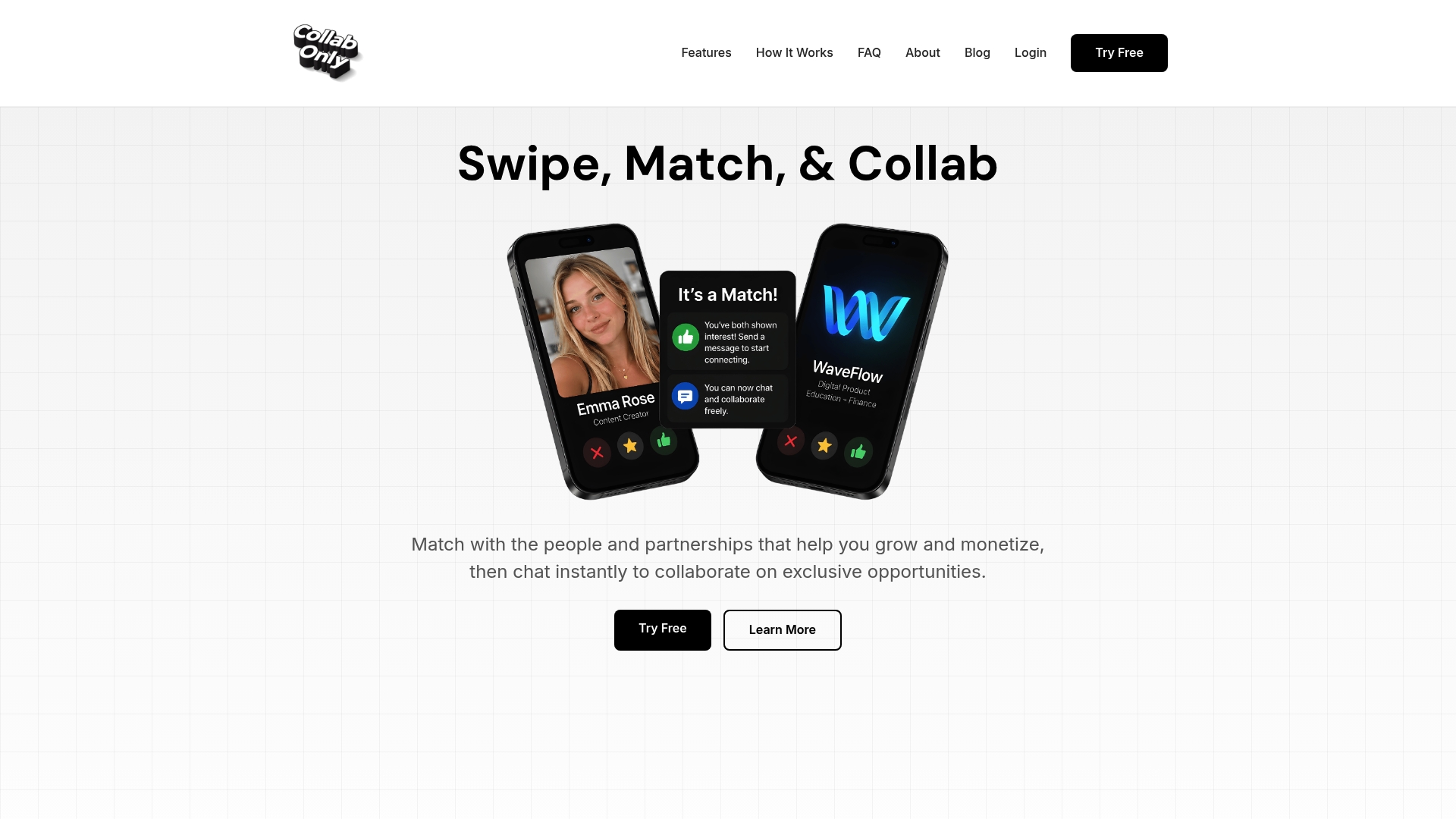
Brands use Collabonly to find creators across TikTok, Instagram, and YouTube with verified engagement data, not just follower counts. Creators use it to surface brand deals that match their content focus and audience expectations. The instant chat feature activates the moment a match is confirmed, cutting the time from discovery to agreement. For teams that want to build creator partnerships that compound over time rather than burn out after one post, Collabonly provides the infrastructure to make that happen at scale. Visit Collabonly to start matching with aligned partners today.
FAQ
What are the main benefits of creator collaborations?
Creator collaborations expand audience reach, build peer-credibility, and generate higher long-term ROI than traditional paid media. YouTube creator partnerships deliver 86% higher long-term ROAS than paid social, with content continuing to accumulate views months after publication.
Why do long-term creator partnerships outperform one-off deals?
Long-term partnerships compound brand recall and audience trust with each piece of content, while also improving content quality as creators learn the brand more deeply. Platform algorithms also reward consistent creator-brand relationships with greater organic reach.
How do you choose the right creator for a brand partnership?
Prioritize engagement rate and audience demographic alignment over follower count. Creators with smaller, highly engaged audiences in a relevant niche consistently outperform larger creators with passive followings on conversion and ROI metrics.
What legal requirements apply to creator partnerships in the United States?
FTC disclosure guidelines require all paid creator partnerships to be clearly labeled as sponsored content, regardless of platform. Both the brand and the creator share compliance responsibility.
How does Collabonly help brands and creators find aligned partnerships?
Collabonly uses a swipe-based matching system that filters by audience demographics, content niche, and engagement data, connecting brands and creators whose goals align before outreach begins.