

TL;DR:
- Growing a creator brand in 2026 requires strategic brand positioning and authentic, purposeful partnerships beyond simple content volume.
- Effective collaboration, targeted audience analysis, and measurable data-driven metrics are essential for sustainable growth and long-term success.
Posting consistently and still watching your follower count flatline is one of the most frustrating positions a creator can occupy. The content is good. The frequency is right. Yet the brand deals are not coming, the collaborations are not materializing, and the audience feels stuck at a ceiling. Knowing how to grow your creator brand in 2026 requires more than output volume. It requires a structured approach to brand identity, purposeful partnerships, and measurable collaboration strategies that compound over time. This guide breaks down exactly how to build that structure from the ground up.
Table of Contents
- Understanding the problem: Why growing your creator brand is harder than ever
- Preparing to grow: Define your creator brand and collaboration goals
- Executing successful collaborations: Build authentic partnerships that drive growth
- Verifying and optimizing: Measure success and refine your growth strategy
- Why growing your creator brand means mastering collaboration over solo effort
- How Collab Only can help you find and grow with brand partners
- Frequently asked questions
Key Takeaways
| Point | Details |
|---|---|
| Clear brand identity | A sharp and consistent brand identity sets you apart in a crowded creator market. |
| Authentic collaborations | Building genuine partnerships with brands and creators drives sustained growth. |
| Consistent content and engagement | Regular posting and meaningful interaction strengthen trust and recognition. |
| Measure meaningful metrics | Focus on ROI and brand impact rather than vanity metrics like likes or views. |
| Leverage platforms effectively | Use specialist platforms to find and build strategic partnerships efficiently. |
Understanding the problem: Why growing your creator brand is harder than ever
The creator economy has undergone a dramatic expansion in a short window of time. Over 1.5 million Americans now work full-time as digital creators in 2026, compared to just 200,000 in 2020, meaning the competitive density has increased more than sevenfold in under a decade. For any individual creator, that shift fundamentally changes what it takes to be visible, let alone profitable.
Consistency in posting used to act as a differentiator. Today, it is merely the baseline expectation. Brands evaluating creators for partnerships are not simply counting upload frequency. They are assessing brand coherence, audience alignment, and whether the creator's content identity meaningfully connects to their product category. According to Kantar's Marketing Trends 2026 report, 61% of marketers plan to increase investment in creators this year, yet only 27% of creator content strongly ties to the brands being promoted. That gap represents a significant strategic failure for creators who are not treating their personal brand as a deliberate asset.
Understanding the importance of creator partnerships helps contextualize why arbitrary collaboration does not generate results. The creators who secure recurring brand deals and grow their online presence year over year share a common trait: they approach their niche with the precision of a brand strategist, not just a content producer.
Key factors driving the difficulty of standing out in 2026:
- Platform algorithm saturation across TikTok, Instagram, and YouTube rewards novelty over consistency alone
- Audience expectations for sub-niche specificity have increased, rewarding depth over breadth
- Brand procurement teams now use data-driven vetting processes that filter out creators with weak brand-content alignment
- The rise of creator collectives and multi-creator formats has shifted attention away from solo accounts
- Organic reach continues to decline, making paid amplification and collaborative reach-sharing increasingly necessary
Building a strategy around these realities, rather than ignoring them, is the foundational step toward sustainable growth. Effective influencer marketing strategies consistently prioritize identity clarity before outreach volume.
Preparing to grow: Define your creator brand and collaboration goals
Preparation is where most creators lose before they ever pitch a partnership. They reach out to brands without a coherent brand statement, without documented audience data, and without a clear narrative explaining why the collaboration makes sense for both parties. Brands notice this immediately.
Creators must define who they are, who they serve, and what they stand for before any external collaboration can succeed. That clarity starts with a niche statement: a single sentence that identifies your content category, your audience segment, and the transformation or value your content delivers. For example, "I create fitness content for working mothers over 35 who want sustainable routines without gym memberships" is far more actionable than "I make fitness content."
From there, creators should analyze their audience demographics and realign their content to attract brand partnerships that reflect shared values. Knowing that 68% of your audience is female, between 28 and 40 years old, and interested in health and wellness is not just useful data. It is a negotiating asset when approaching brands in those verticals.
Developing a personal brand also requires establishing visual and tonal consistency. Color palettes, typography choices, caption tone, and even the cadence of storytelling within videos all contribute to brand recall. Audiences and brand partners alike recognize creators with strong visual identities faster and trust them sooner.
Use the following checklist to assess your preparation status before initiating any collaboration outreach:
- Written niche statement that specifies content type, target audience, and core value proposition
- Documented audience demographics (age, gender, location, interests) from platform analytics
- Defined content themes (2 to 3 primary topics) that consistently appear across all posts
- Visual identity guidelines including consistent color palette, font choices, and image style
- Partnership goal statement outlining what types of brands align with your values and audience
- Portfolio of high-performing content demonstrating proven audience engagement
Pro Tip: Before approaching any brand, audit your last 30 posts and calculate what percentage of them clearly reflect your niche. If that number is below 70%, brands will perceive your identity as inconsistent, which significantly reduces your negotiating position.
For deeper guidance on how to approach this process, reviewing established collaboration strategies and understanding finding brand deals will help inform your outreach approach. Authentic branding is not a soft concept. It is a measurable variable in how brands evaluate creator proposals.
Executing successful collaborations: Build authentic partnerships that drive growth
Execution is where preparation converts into results. The most common mistake creators make at this stage is moving too fast. Pitching a brand or creator before establishing any relational context produces low response rates and weaker negotiating terms.

Creators should engage target collaborators authentically for 2 to 4 weeks before sending any pitch. This means commenting substantively on their content, sharing their posts when genuinely relevant, and demonstrating familiarity with their brand voice. By the time the pitch arrives, it lands in a context of mutual awareness rather than cold outreach.
Follow this sequence when initiating a new collaboration:
- Identify collaborators whose audience overlaps with yours but is 2 to 10 times larger.
- Engage consistently with their content for at least two to four weeks before pitching.
- Draft a pitch that names a specific campaign idea rather than a generic partnership request.
- Start with a performance-based affiliate structure if the brand is hesitant about upfront payment.
- Deliver on time, communicate clearly throughout the campaign, and document all performance data.
- Present post-campaign results proactively as leverage for a long-term relationship proposal.
Performance-based affiliate deals are particularly effective for smaller creators who have not yet accumulated the case study history needed to command flat-rate fees. By accepting initial risk-share structures, creators demonstrate confidence in their ability to deliver results, which accelerates the transition to paid partnerships.
The data on relationship duration is compelling. Long-term brand partnerships generate approximately 70% higher engagement compared to one-off campaign placements, and the ROI compounds as audiences grow familiar with the brand association. This is not coincidental. Repeated exposure within the same trusted creator context builds the kind of brand recall that a single sponsored post cannot replicate.
Pro Tip: When pitching a collaboration, avoid leading with your follower count. Lead with your audience's specific demographics and a recent example of audience action (purchases made, links clicked, products mentioned organically in comments). Brands increasingly evaluate audience quality over raw size.
For creators managing multiple partnerships simultaneously, understanding the mechanics of social media collaboration across platforms is essential. Each platform has distinct cultural norms. A TikTok campaign that requires raw, spontaneous presentation will fail if replicated with the same format on LinkedIn. Adapting tone and format per platform, while maintaining brand voice consistency, is a skill that differentiates high-value creator partners. Studying modern brand partnerships helps creators understand what brands currently expect from these arrangements.
| Partnership type | Typical engagement lift | ROI timeline | Best for |
|---|---|---|---|
| One-off sponsored post | 10 to 20% | Immediate, short-lived | Brand awareness only |
| Affiliate deal | 25 to 40% | 30 to 90 days | Proving conversion ability |
| Long-term ambassador | 60 to 70% | 3 to 6 months | Sustained brand recall |
| Co-created content series | 50 to 65% | 2 to 4 months | Audience trust building |
Verifying and optimizing: Measure success and refine your growth strategy
Growth without measurement is guesswork. Creators who build their personal brand over the long term treat every collaboration as a data collection event, not just a revenue transaction.
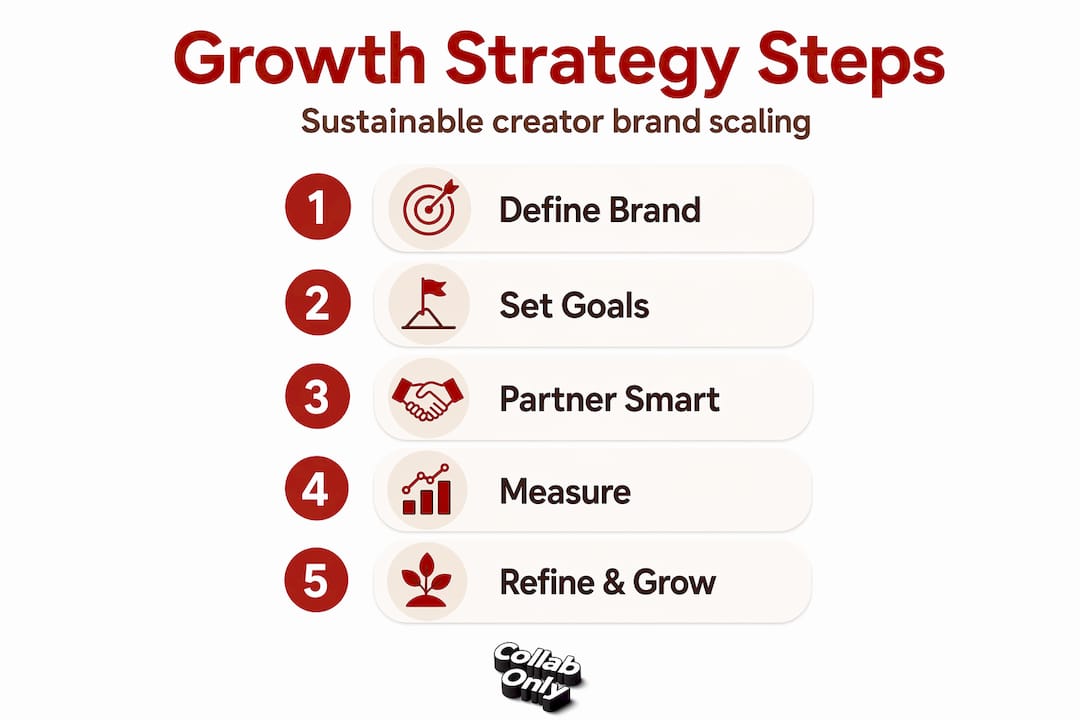
ROI and brand-building metrics are now 2.5 times more important than they were a decade ago when measuring creator marketing effectiveness. This means that vanity metrics like views, likes, and follower spikes are insufficient for both internal evaluation and external reporting to brand partners. Creators who can present conversion data, sales lift, and brand recall survey results occupy a fundamentally stronger negotiating position.
Core metrics to track per collaboration:
- Conversion rate: percentage of audience that completed a desired action (purchase, signup, download)
- Sales lift: measurable increase in brand revenue attributable to the creator's campaign window
- Brand recall: audience recognition of the brand 48 to 72 hours post-campaign (via stories polls or link survey tools)
- Click-through rate on tracked affiliate links or promo codes
- Audience sentiment in comments, specifically mentions of the brand by name
| Metric category | What it measures | Why it matters |
|---|---|---|
| Vanity metrics (views, likes) | Surface-level attention | Low predictive value for ROI |
| Engagement rate | Audience interaction quality | Moderate value for brand proposals |
| Conversion metrics | Audience action completion | High value for paid deal negotiation |
| Brand recall | Audience memory retention | Highest value for long-term partnerships |
A consistent publishing rhythm also supports sustainable growth in ways that sporadic posting cannot replicate. Posting 3 to 5 times per week maintains algorithmic favor on most major platforms, while monthly brand collaborations provide both revenue continuity and audience variety. Understanding sustainable ROI from creator communities reinforces why building an engaged community, rather than just a follower count, produces compounding returns over time.
Why growing your creator brand means mastering collaboration over solo effort
The prevailing assumption in many creator growth guides is that content quality and posting frequency are the primary levers. This framing misses the more significant driver: network position. Creators who grow fastest in 2026 are not necessarily the most talented. They are the most strategically embedded in collaborative networks.
Solo content creation, however polished, reaches a ceiling defined by existing audience size and organic reach limits. Collaborations break that ceiling by introducing the creator to entirely new audience segments through the social proof of a trusted peer. This peer-credibility transfer is something no paid promotion can replicate at the same cost efficiency.
Success increasingly comes from ceding creative control to creators while setting clear guidelines, allowing authentic co-creation that blends brand and creator identities. This insight, drawn from Kantar's research, highlights a structural shift in how effective brand partnerships operate. Brands that micromanage creative output reduce the authenticity signal that makes creator content persuasive in the first place.
The implication for creators is equally significant. When you enter a collaboration, your most valuable contribution is not your follower count or even your production quality. It is your authentic voice within your sub-niche and the trust your audience has placed in your recommendations. Protecting that authenticity while aligning with brand objectives is the core competency that separates creators who build durable brands from those who cycle through one-off deals without compounding effect.
Community involvement amplifies this further. Creators who turn their audiences into active participants, through challenges, co-created content requests, or community-driven decisions, transform passive followers into advocates. Those advocates then function as an organic distribution layer, multiplying the reach of every collaboration. Understanding the broader content creator economy and the structural relationships within it provides the strategic context needed to position your brand within it effectively.
How Collab Only can help you find and grow with brand partners
Now that you know how to grow your creator brand through identity clarity, strategic outreach, and measurable partnerships, the next step is finding the right partners efficiently.
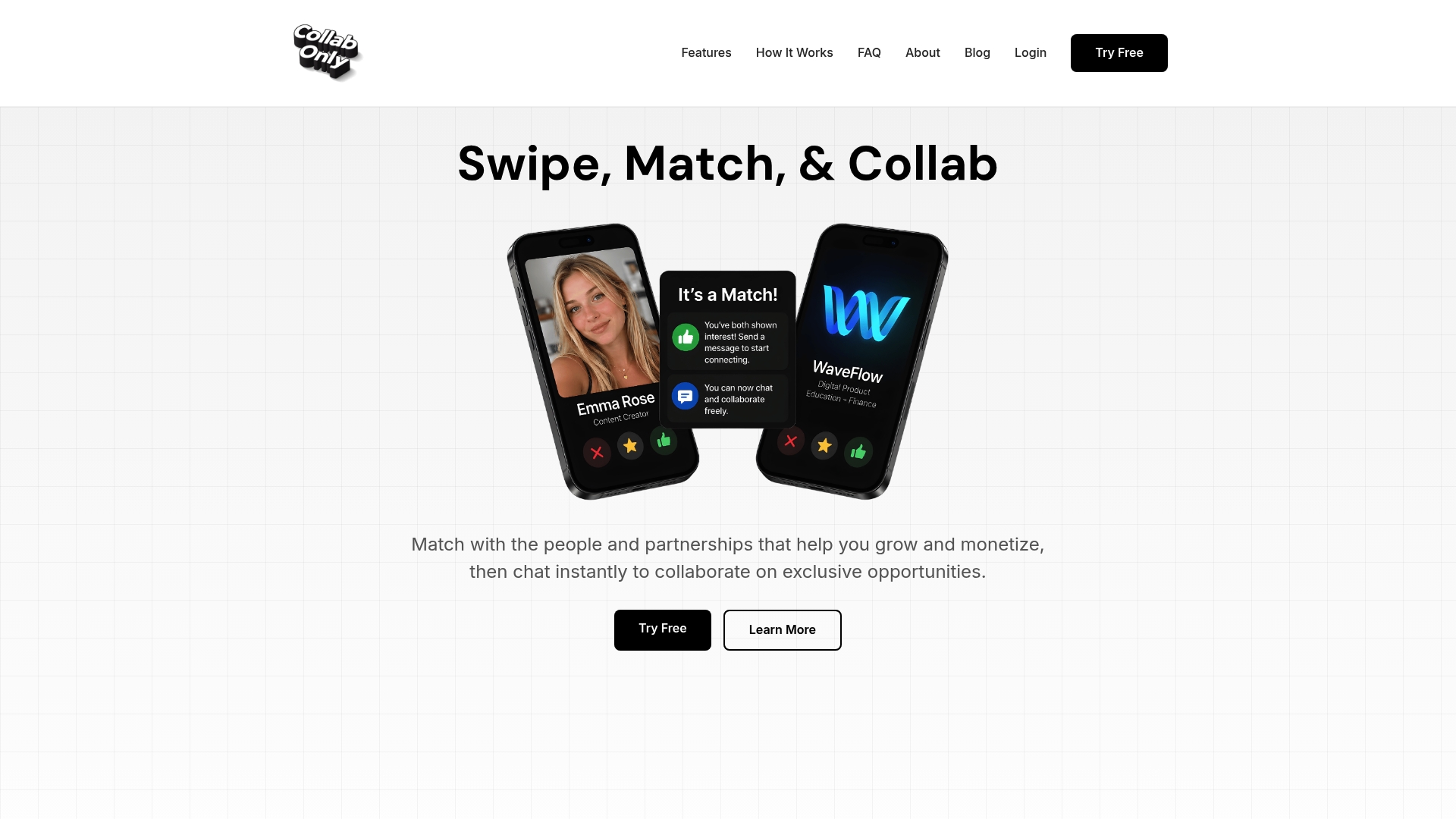
Collab Only connects creators directly with brands seeking authentic, niche-aligned collaborations through a match-based interface that eliminates the cold outreach problem entirely. Rather than sending pitches into inboxes that go unanswered, creators match with brands that have already indicated interest in their content category. Instant chat upon matching removes the delays that kill deal momentum. For creators building toward long-term ambassador relationships or looking to validate their first affiliate deal, the UGC creator platform provides tools designed specifically for that growth stage, connecting you to a community where strategic, goal-aligned partnerships are the shared priority.
Frequently asked questions
What is the most important factor in growing a creator brand in 2026?
Defining a clear brand identity aligned with your audience and consistently collaborating authentically with brands are the most critical factors, as brand identity and authentic partnerships are key differentiators among over 1.5 million competing creators.
How often should I collaborate with other creators or brands to see growth?
Posting consistently 3 to 5 times weekly and collaborating monthly with creators 2 to 10 times your size is the recommended cadence, as consistent posting and monthly collaborations are directly linked to measurable audience growth.
Why is long-term collaboration better than one-off brand deals?
Long-term collaborations generate approximately 70% higher engagement compared to single placements, and they allow creators to demonstrate compounding ROI, which strengthens negotiating leverage for future deals.
How can I measure success beyond likes and views on collaborations?
Focus on conversion rate, sales lift, and brand recall metrics rather than surface engagement, as ROI and brand-building metrics are now 2.5 times more critical than they were a decade ago for evaluating true campaign impact.
What role does authenticity play in creator-brand collaborations?
Authenticity is a functional performance variable, not just a value statement. Audiences detect forced brand alignment quickly, making genuine contributions to brand campaigns essential for maintaining audience trust and maximizing measurable engagement outcomes.