

TL;DR:
- Digital brand promotion focuses on building long-term recognition and trust across digital channels. Effective strategies prioritize consistent branding, targeted channel selection, and full-funnel content to foster customer loyalty. Monitoring share of search, brand sentiment, and direct traffic helps measure success and guide ongoing efforts.
Digital brand promotion is the strategic practice of building and managing a brand's presence, perception, and reputation across digital channels to increase visibility, engagement, and long-term customer loyalty. Unlike a single campaign or ad buy, it is a continuous discipline that spans SEO, paid social, email marketing, content, and every digital touchpoint where a customer encounters your brand. Marketers who treat it as a core business function, rather than a tactical add-on, consistently outperform those who treat it as periodic activity. Consistent visual branding correlates with a 20% potential increase in revenue. That figure alone makes the case for treating digital brand promotion as a financial priority, not just a creative one.
What is digital brand promotion vs. digital marketing?
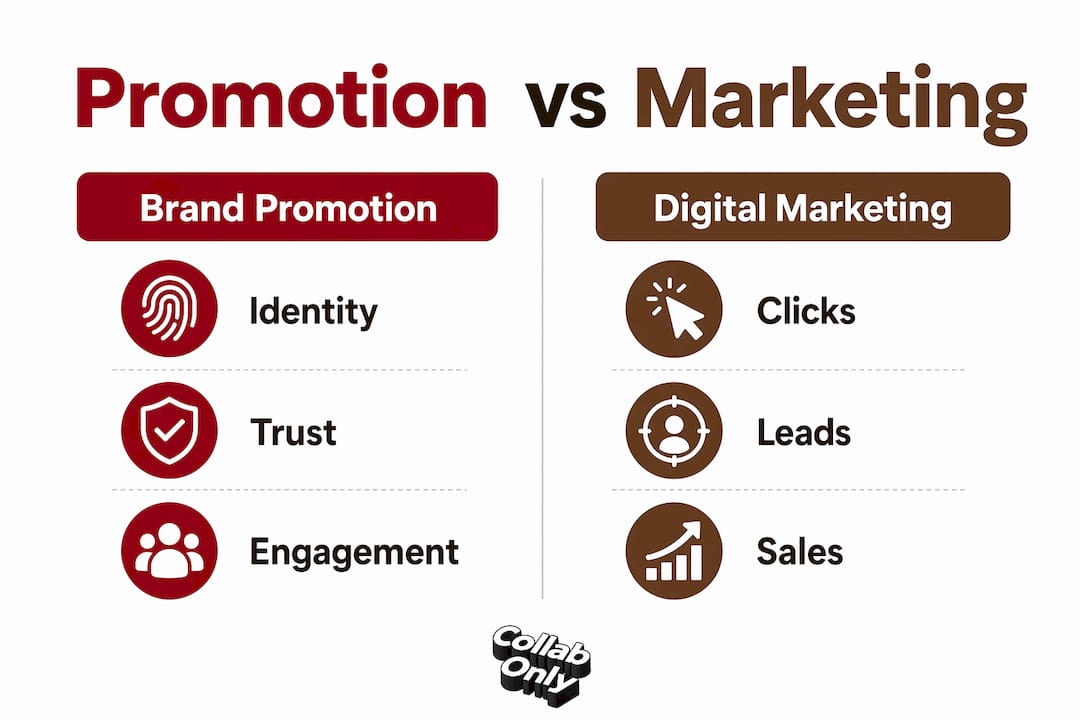
Digital brand promotion and digital marketing are related but distinct disciplines. Confusing them leads to misallocated budgets and fragmented strategies.

Digital marketing is the set of tactics used to drive measurable outcomes: clicks, leads, conversions, and sales. It includes paid search ads, retargeting campaigns, and promotional emails. Its primary measure is return on ad spend or cost per acquisition.
Digital brand promotion, by contrast, focuses on identity, perception, and long-term engagement. It asks: what does a customer think and feel about your brand before, during, and after a transaction? Digital brand management controls and grows a brand across all digital touchpoints, including content, reputation, search presence, and customer experience. That scope extends well beyond any single marketing campaign.
The practical distinction matters most at the execution level. A paid social campaign is digital marketing. The consistent tone, visual identity, and messaging that make that campaign recognizable and trustworthy are digital brand promotion. One funds the other.
| Dimension | Digital brand promotion | Digital marketing |
|---|---|---|
| Primary goal | Build identity, trust, and perception | Drive clicks, leads, and conversions |
| Time horizon | Long-term and continuous | Short-term and campaign-based |
| Key metrics | Brand sentiment, share of search, recall | CPA, ROAS, conversion rate |
| Core channels | Owned media, content, SEO, social presence | Paid search, paid social, email campaigns |
| Success indicator | Recognition and loyalty | Revenue and pipeline |
Which digital channels are most effective for brand promotion in 2026?
Channel selection is the single most consequential decision in any brand promotion plan. Spreading budget across every available platform produces shallow results. Focusing on 2–3 key channels where your audience is most active and mastering those first consistently outperforms a broad, diluted presence.
For 2026, the recommended budget allocation reflects where audiences and algorithms are concentrating attention:
- Search (SEO and paid search): Allocate 30–40% of your digital budget here. Search captures intent at the moment it forms, making it the highest-value channel for brand visibility among buyers who are actively researching.
- Paid social (AI-optimized): Allocate 20–30% to platforms like Instagram, TikTok, and YouTube. AI-driven targeting on these platforms has materially improved cost efficiency for brand awareness campaigns.
- Email marketing: Treat this as a non-negotiable owned asset. Email delivers $36–$42 for every $1 spent. In a cookieless environment, your email list is the most durable audience you own.
- Content marketing: Invest in long-form, authoritative content that supports SEO and builds topical authority. The role of content in brand growth extends beyond traffic generation to trust building across the full customer journey.
- Social media presence: Organic social on two or three platforms reinforces brand identity and creates community. Understand how social platforms drive brand growth before committing resources.
Pro Tip: Audit your channel mix every quarter. If a channel is not producing brand recall or audience growth after 90 days of consistent effort, reallocate that budget to a channel where your audience already spends time.
What are essential strategies to maintain consistent digital brand presence?
Brand consistency is not an aesthetic preference. Inconsistent messaging across platforms confuses and loses customers who research on one platform and purchase on another. Every brand element must reinforce every other element.
The foundation is a defined brand identity system: a fixed logo, a controlled color palette, a set typography system, and a documented tone of voice. These assets must be applied identically across your website, social profiles, email templates, ad creatives, and customer support communications. Deviation at any touchpoint creates friction and erodes recognition.
Maintaining that consistency in practice requires a structured approach:
- Create a brand style guide. Document every visual and verbal standard. Include approved logo variations, hex codes, font stacks, and example copy in brand voice. Distribute it to every team and agency that produces content.
- Audit all digital touchpoints quarterly. Review your website, social profiles, email headers, ad creatives, and review responses for alignment. Gaps appear faster than most teams expect.
- Standardize customer support messaging. The tone your support team uses in chat and email is part of your brand experience. Script templates that match your brand voice.
- Apply brand standards to paid media. Ad creative that looks disconnected from your organic content undermines recognition. Treat paid ads as brand assets, not just conversion tools.
- Monitor third-party brand mentions. Review sites, partner pages, and press coverage often display outdated logos or incorrect brand descriptions. Claim and correct these regularly.
Pro Tip: Build a shared digital asset library in a tool like Google Drive or Notion so every team member accesses the current, approved version of every brand asset. Version confusion is the most common source of brand inconsistency.
Brand consistency directly supports purchase decisions by reducing cognitive friction. When a buyer sees the same visual language and tone across your Google ad, your landing page, and your follow-up email, trust accumulates faster.
How do marketers measure the success of digital brand promotion?
Traditional brand equity metrics, such as aided recall surveys and brand tracking studies, were designed for broadcast media cycles. They are too slow and too infrequent to inform digital brand decisions in real time.
Modern digital brand measurement now combines digital brand sentiment and share of search alongside traditional metrics. These newer indicators capture how consumers actually interact with brands online, not just how they respond in a survey conducted weeks after exposure.
Key metrics for digital brand promotion performance include:
- Share of search: The percentage of branded search volume your brand captures relative to competitors. Rising share of search predicts market share growth before it shows up in sales data.
- Brand sentiment score: Aggregated sentiment from social mentions, reviews, and forum discussions. Track directional trends, not just absolute scores.
- Share of voice: Your brand's presence in a category conversation across paid, earned, and owned media combined.
- Direct traffic volume: Customers who type your URL directly are demonstrating unaided recall. Growth in direct traffic is a reliable signal of brand strength.
- Branded search volume: Month-over-month growth in searches for your brand name indicates increasing awareness and intent.
- Net Promoter Score (NPS) trends: Longitudinal NPS data reveals whether brand perception is improving across the customer base.
Measurement across the full customer journey, from first awareness to repeat purchase, gives a more accurate picture than any single metric. Digital brand measurement has evolved to capture complex consumer interactions that traditional brand equity models miss entirely.
What practical steps build an effective digital brand promotion strategy?
Digital brand promotion is a full-funnel system, not a single campaign. Buyers rarely convert on first contact. They need consistent, multi-touchpoint brand engagement before trust reaches the threshold required for a purchase decision.
A structured implementation roadmap prevents the most common failure mode: launching tactics before the strategic foundation is in place.
- Conduct a brand diagnosis. Audit your current digital presence across all channels. Identify where your brand identity is inconsistent, where your content has gaps, and where competitors are outranking you for branded or category terms.
- Define your positioning and messaging architecture. Write a clear brand positioning statement. Derive a messaging hierarchy from it: core value proposition, supporting proof points, and tone guidelines. Every piece of content should trace back to this architecture.
- Select your primary channels. Choose two or three channels based on where your audience is most active, not where you feel most comfortable. Commit to those channels before adding more.
- Build authoritative content across the full funnel. Create content that addresses awareness-stage questions, consideration-stage objections, and decision-stage proof. Content that maximizes reach at each funnel stage compounds brand authority over time.
- Use paid media to reinforce brand identity. Paid search and paid social should amplify your brand voice, not bypass it. Ad creative that contradicts your organic brand identity creates dissonance.
- Build and nurture your owned audience. Grow your email list and retargeting audiences as first-party assets. These channels give you direct access to your audience independent of algorithm changes.
- Review and refine every 90 days. Measure share of search, sentiment, and direct traffic. Adjust channel investment and content focus based on what the data shows, not assumptions.
Key Takeaways
Digital brand promotion requires consistent identity, focused channel selection, and full-funnel content to build lasting visibility, trust, and customer loyalty online.
| Point | Details |
|---|---|
| Brand promotion vs. marketing | Promotion builds identity and perception; marketing drives transactions. Both are necessary but serve different goals. |
| Channel focus over breadth | Master 2–3 channels where your audience is active before expanding to additional platforms. |
| Consistency drives revenue | Consistent visual branding and messaging can increase revenue by up to 20% and reduces customer confusion. |
| Modern measurement matters | Track share of search, brand sentiment, and direct traffic alongside traditional metrics for a complete picture. |
| Full-funnel content is required | Buyers need multiple brand touchpoints before converting; content must address every stage of the decision journey. |
Why most brands get digital brand promotion wrong
The most persistent mistake I see is brands treating digital brand promotion as a visibility problem when it is actually a coherence problem. They add more channels, more content formats, and more ad spend, but the underlying brand identity is fragmented. The result is more noise, not more recognition.
Depth beats breadth at every stage of brand building. A brand that publishes authoritative, consistent content on two platforms for 12 months will outperform a brand that posts inconsistently across six platforms. The compounding effect of consistent brand exposure on a focused audience is measurable in share of search data within two quarters.
The second mistake is treating measurement as a post-campaign activity. Brand sentiment and share of search are leading indicators. Monitoring them monthly gives you the ability to course-correct before a perception problem becomes a revenue problem. Brands that wait for quarterly brand tracking studies are always reacting, never anticipating.
Digital brand promotion is a core business discipline, not a marketing department project. The brands that treat it that way, with dedicated resources, documented standards, and continuous measurement, are the ones building durable competitive advantages online.
— Samuel
How Collabonly supports your brand promotion efforts
Building a consistent digital brand presence requires the right partnerships, not just the right content. Influencer collaborations on Instagram, YouTube, and TikTok extend your brand's reach to audiences that organic and paid channels alone cannot efficiently access.
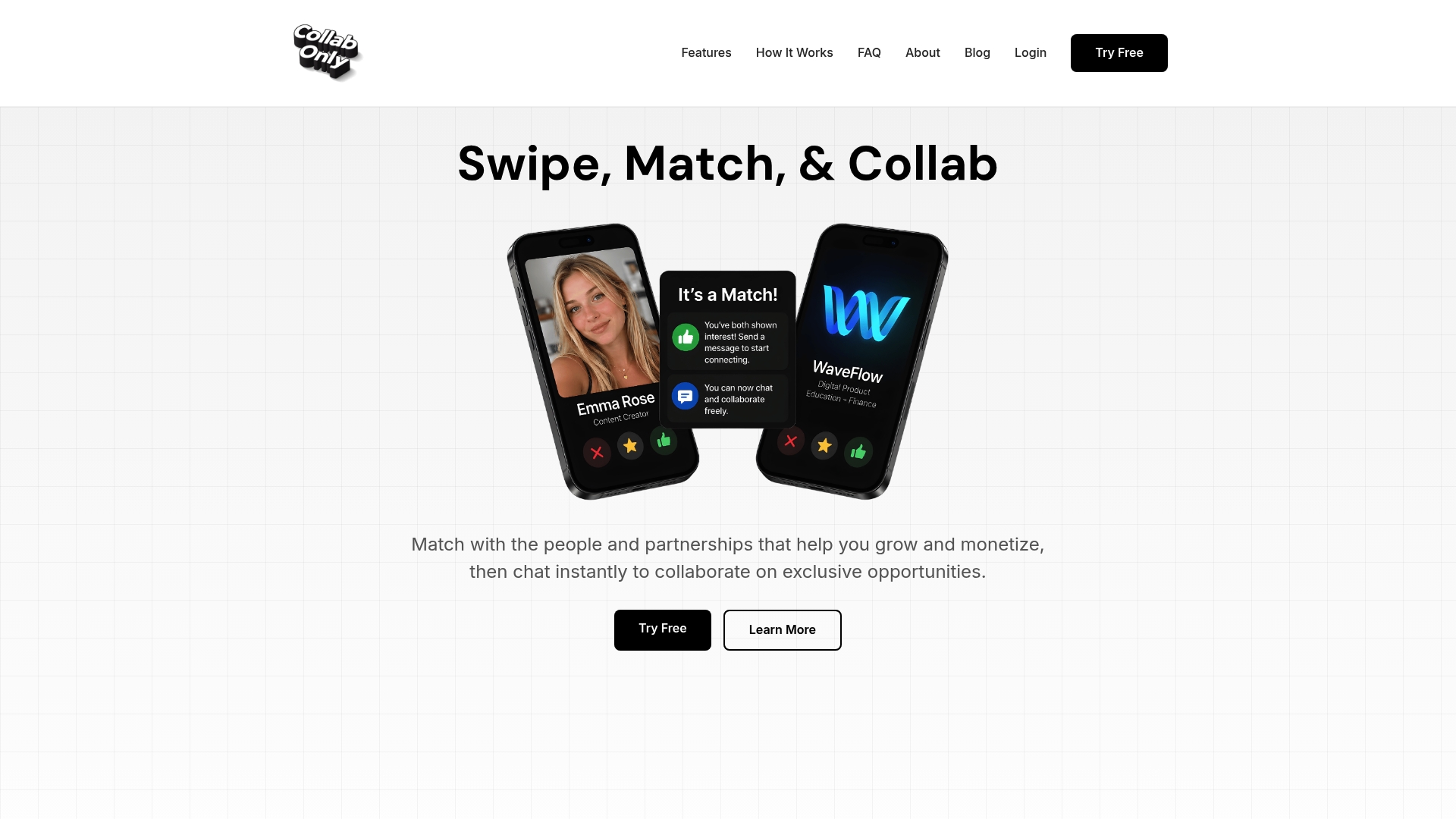
Collabonly connects brands with creators through a swipe-based matching system that eliminates the friction of cold outreach, lost DMs, and slow email threads. Brands can find Instagram influencers and YouTube creators whose audiences align with their brand positioning, then move directly into collaboration without the typical back-and-forth. For brands building authentic presence at scale, the Collabonly influencer marketplace provides access to creators across every platform and audience size, from nano to macro, all in one place.
FAQ
What is digital brand promotion in simple terms?
Digital brand promotion is the ongoing practice of building and managing how your brand is perceived across digital channels, including search, social media, email, and content. It focuses on identity, recognition, and trust rather than direct sales.
How is digital brand promotion different from advertising?
Advertising is a paid tactic used to reach audiences at a specific moment. Digital brand promotion is the broader discipline that defines what those audiences see, feel, and remember about your brand across every digital interaction.
Which metrics best measure online brand awareness?
Share of search, branded search volume, direct traffic growth, and brand sentiment score are the most reliable indicators of online brand awareness. These metrics capture consumer behavior rather than self-reported survey responses.
How much should a business spend on digital brand promotion?
Allocate 30–40% of your digital budget to search (SEO and paid search) and 20–30% to paid social. Email marketing, which delivers $36–$42 per dollar spent, should be treated as a foundational owned-channel investment regardless of total budget size.
Why does brand consistency matter for digital promotion?
Consistent brand identity across digital platforms can increase revenue by up to 20% and prevents customer confusion when buyers move between research and purchase channels. Every visual and verbal element must reinforce the same brand identity to build recognition and trust.