

TL;DR:
- Effective social media growth in 2026 relies on integrating paid and organic efforts, concentrating on one or two platforms, and leveraging whitelisted creator content for faster results. Adopting the five-stage growth loop—Analyze, Plan, Create, Manage, Publish—systematically accelerates audience development and sustainability. Prioritizing consistency, community engagement, and resource-aligned strategies helps brands achieve long-term, compounding growth beyond short-term spikes.
Scattered posting schedules, inconsistent messaging, and gut-feel content decisions are the defining traits of social media accounts that plateau. For marketing professionals and business owners, the difference between stagnant follower counts and compounding audience growth almost always comes down to the quality of your social media growth strategies, not the quantity of your posts. This article breaks down the core criteria for evaluating growth tactics, the most effective frameworks in use today, and a direct comparison of approaches so you can make an informed decision about where to focus your resources.
Table of Contents
- Key takeaways
- 1. Key criteria for evaluating social media growth strategies
- 2. The five-stage growth loop every brand should adopt
- 3. Amplifying organic content with paid promotion
- 4. Creator partnerships and whitelisted content
- 5. Structuring content pillars for sustainable output
- 6. Comparing common social media growth tactics
- 7. Deciding which strategies fit your brand and resources
- 8. Emerging trends shaping social media growth in 2026
- My perspective on what actually moves the needle
- How Collabonly helps you execute these strategies faster
- FAQ
Key takeaways
| Point | Details |
|---|---|
| Integrate paid and organic efforts | Treating organic and paid social as a unified system produces faster, more sustainable growth than running them separately. |
| Prioritize platform concentration | Focusing deeply on one or two platforms outperforms spreading resources across six or more channels. |
| Track predictive engagement metrics | Saves, shares, and watch time forecast growth 60 to 90 days ahead, making them more reliable signals than vanity metrics. |
| Close the five-stage growth loop | Brands that analyze, plan, create, manage, and publish systematically achieve significantly faster audience growth than those who skip the first two stages. |
| Match strategy to available resources | Choosing tactics that align with your team's actual bandwidth prevents inconsistency, which is the primary growth killer. |
1. Key criteria for evaluating social media growth strategies
Before selecting any tactic, you need a clear set of criteria to judge whether it will actually work for your brand at its current stage. Most social media growth tips circulating online skip this step entirely, which is why so many brands end up copying tactics that do not fit their context.
The most reliable evaluation framework centers on five factors:
- Paid and organic integration. Pure organic plateaus quickly, and pure paid builds no brand equity in isolation. Effective strategies treat these as a single system: organic content identifies what resonates, and paid amplification scales those proven assets to new audiences.
- Platform concentration. Focusing on two platforms consistently outperforms dividing attention across six or more. Depth on one platform builds algorithmic authority and audience trust that breadth cannot replicate.
- Predictive engagement metrics. Tracking saves, shares, and watch time gives you forward-looking signals. These metrics forecast growth 60 to 90 days ahead, making them far more useful than likes or impressions when evaluating content performance.
- Cadence sustainability. A posting schedule that burns out your content team within six weeks is not a growth strategy. It is a liability. Sustainable output at moderate frequency outperforms aggressive posting that collapses into sporadic publishing.
- Community engagement speed. Responding within 60 minutes during business hours materially improves organic reach. Algorithms on most major platforms reward accounts that generate rapid, meaningful conversation after posting.
Pro Tip: Before adopting any new growth tactic, score it against these five criteria. If a tactic fails on more than two, it is likely a short-term traffic spike rather than a compounding growth mechanism.
2. The five-stage growth loop every brand should adopt
One of the most underused frameworks in content marketing on social media is the five-stage growth loop: Analyze, Plan, Create, Manage, Publish. Creators who complete all five stages achieve growth approximately 10 times faster than those who default to create-and-publish cycles.
Most brands plateau because they skip the first two stages entirely. They produce content, post it, and move on without analyzing performance patterns or planning content based on what those patterns reveal. The result is a feed full of effort with no compounding momentum.
Here is how each stage functions in practice:
- Analyze: Review performance data from the previous content cycle. Identify which formats, topics, and posting times generated the highest saves, shares, and watch time, not just reach.
- Plan: Use analysis outputs to brief the next content cycle. Assign pillars, formats, and distribution channels before a single piece of content is created.
- Create: Produce content within the guardrails established in the planning stage. This is where most brands start, which is why their output lacks strategic coherence.
- Manage: Schedule, caption, tag, and prepare content for distribution. This includes coordinating with creators or partners involved in the cycle.
- Publish: Distribute content and actively engage with incoming responses. The first hour after posting carries more algorithmic weight than the time spent producing the post itself.
Pro Tip: Run a 30-day audit of your current content workflow. If your team spends less than 20% of its time on analysis and planning combined, your growth ceiling is already visible in your analytics.
3. Amplifying organic content with paid promotion
The most capital-efficient paid social approach does not involve creating new ad-specific content. It identifies the top 10 to 20% of organic posts by engagement rate and promotes them selectively to cold lookalike audiences. This method leverages proven content to optimize budgets rather than guessing what cold audiences will respond to.
When scaling paid campaigns, increasing ad budgets by increments of 15 to 20% prevents the algorithmic reset that occurs when budgets jump dramatically. Scaling in these increments maintains campaign learning-phase stability while steadily expanding reach. Attribution windows should align with actual sales cycles, typically 30 to 90 days for considered purchases, rather than defaulting to a seven-day click window that misattributes conversions.
You can read more about organic and paid integration and why the distinction matters for long-term brand equity.
4. Creator partnerships and whitelisted content
Whitelisted creator content is one of the highest-leverage tactics available to brands running paid social today. Whitelisted content outperforms brand-produced ads by two to four times in click-through rate and cost per acquisition. The reason is peer-credibility: audiences respond differently to content that appears to come from a trusted individual versus a brand handle.
The mechanics matter significantly. Negotiating usage rights and whitelisting permissions upfront for a period of six to twelve months prevents costly renegotiations mid-campaign and allows brands to run the same high-performing creative for extended periods without additional production costs. For brands working with nano or micro influencers, this approach scales authenticity in ways that neither brand content nor macro-influencer placements can replicate.
Explore how to approach influencer collaboration steps to structure these partnerships from the outset rather than retroactively negotiating terms.
5. Structuring content pillars for sustainable output
Content pillars with fixed ratios, such as educate, entertain, inspire, and promote, standardize production planning and eliminate the blank-page problem that derails many content calendars. Four to six pillars with defined output ratios give content teams a repeatable framework that maintains audience relevance without requiring creative reinvention each cycle.

The typical ratio that works across B2B and B2C brand accounts allocates approximately 40% to educational content, 30% to entertaining or culturally relevant content, 20% to inspirational or aspirational content, and 10% to direct promotional content. Brands that invert this ratio, posting promotional content at high frequency, see accelerated audience fatigue and declining organic reach within 60 to 90 days. Consistent posting over 20 weeks produces approximately 450% more engagement per post compared to sporadic publishing. Even moderate consistency over five to nineteen weeks yields 340% more engagement per post, which demonstrates that schedule reliability compounds significantly over time.
Understanding which content types drive engagement at each pillar stage will sharpen your production decisions considerably.
6. Comparing common social media growth tactics
Not all growth approaches carry the same tradeoffs. The table below compares five common tactics across four dimensions to help you prioritize resources effectively.
| Tactic | Scalability | Resource intensity | ROI timeline | Best fit |
|---|---|---|---|---|
| Organic-only growth | Low | Medium | Long (6 to 12 months) | Early-stage brands building authority |
| Paid and organic combined | High | High | Medium (2 to 4 months) | Brands with proven content and budget |
| Broad platform coverage | Low | Very high | Slow and inconsistent | Rarely recommended |
| Focused platform ownership | Medium to high | Medium | Medium | Most brands at any stage |
| Whitelisted creator content | High | Medium | Fast (30 to 60 days) | Brands running paid acquisition campaigns |
Key observations from this comparison:
- Organic-only strategies remain valid for brand authority building but plateau without paid amplification once foundational content is established.
- Broad platform coverage consistently underperforms because it divides analytical attention and prevents deep platform expertise from developing.
- Whitelisted creator content offers the most favorable combination of ROI speed and scalability, particularly for brands that have already identified their top-performing organic content types.
7. Deciding which strategies fit your brand and resources
Choosing among effective social media tactics requires honest assessment of three variables: budget availability, content production capacity, and community management bandwidth.
- Budget availability: If paid promotion is not currently funded, prioritize building organic content quality and community engagement depth. Do not attempt to compensate for zero paid budget by posting at unsustainable frequency.
- Content production capacity: A team of two cannot realistically maintain a six-platform presence with daily posting. Matching platform scope to actual production capacity is not a compromise. It is a strategic decision that prevents the inconsistency that growth struggles often stem from.
- Community management bandwidth: If your team cannot monitor and respond to comments within 60 minutes during business hours, factor this into your platform selection. High-engagement formats on TikTok and Instagram Reels generate comment volume that demands real-time response to capitalize on algorithmic momentum.
Pro Tip: Build your measurement and feedback loop before scaling any tactic. Define which three to five metrics constitute success, establish a 30-day baseline, and set review checkpoints at 60 and 90 days. Changing strategy before the 90-day mark almost always resets the compounding gains already in motion.
For additional guidance on strategic creator partnerships that align with these resource realities, the practical frameworks there are worth reviewing before committing to an influencer program.
8. Emerging trends shaping social media growth in 2026
The most significant shift in social media growth for 2026 is the maturation of the whitelisted creator content model from an advanced tactic into a baseline expectation for brands running paid acquisition campaigns. Brands not yet using this approach are competing at a structural disadvantage.
Several additional trends are reshaping best practices for online presence this year:
- Multi-touch attribution aligned to sales cycles. Platform-reported ROAS figures consistently overstate performance when attribution windows are shorter than the actual purchase consideration period. Aligning windows to 30 to 90-day cycles produces more accurate spend decisions.
- Algorithm timing and format optimization. Each platform now heavily favors native formats. Vertical short-form video on Instagram and TikTok, long-form horizontal content on YouTube, and text-first content on LinkedIn each require format-specific briefs rather than repurposed cross-posts.
- Owned community development. Email lists, Discord servers, and brand-hosted communities reduce dependency on platform algorithms and provide direct-access distribution that no algorithm change can interrupt.
- Continuous testing frameworks. Data-driven A/B testing of creative, captions, posting times, and audience segments, run as a permanent operational practice rather than an occasional exercise, separates the brands compounding their growth from those coasting on prior wins.
"Building an owned audience alongside your platform presence is the only durable hedge against algorithm volatility."
For practical collaboration tactics across TikTok, Instagram, and YouTube, reviewing platform-specific engagement approaches provides format-level detail that complements these strategic priorities.
My perspective on what actually moves the needle
I have watched brands invest heavily in social media for years, and the pattern that separates accounts that genuinely grow from those that flatline is almost never content quality in isolation. It is the discipline to integrate organic learning with paid distribution, and to treat community engagement as a growth mechanism rather than a customer service obligation.
What I find most underestimated is response time. The brands I have seen compound their organic reach most reliably are the ones that treat the 60 minutes after a post goes live as a high-priority operational window. It is not glamorous, but the algorithmic and relational payoff is disproportionate to the effort.
The other pattern worth naming directly: most brands that struggle with maximizing social media reach are chasing volume over consistency. They post daily for three weeks, burn out, go quiet for a month, and then wonder why their reach dropped. Consistency at a sustainable cadence, even three times per week, will outperform burst-and-gap cycles every time.
My honest recommendation is to resist the pull of copying whatever tactic is generating conversation in marketing circles this quarter. Build a strategy anchored in your specific platform concentration, resource constraints, and content pillars. Then close the five-stage growth loop systematically for at least 90 days before evaluating whether to change anything. The brands that win are the ones that optimize the same system repeatedly, not the ones that replace their system every six weeks.
— Samuel
How Collabonly helps you execute these strategies faster
If influencer partnerships and creator content are part of your growth roadmap, the execution gap between strategy and results is where most brands lose time and money. Collabonly addresses that gap directly.
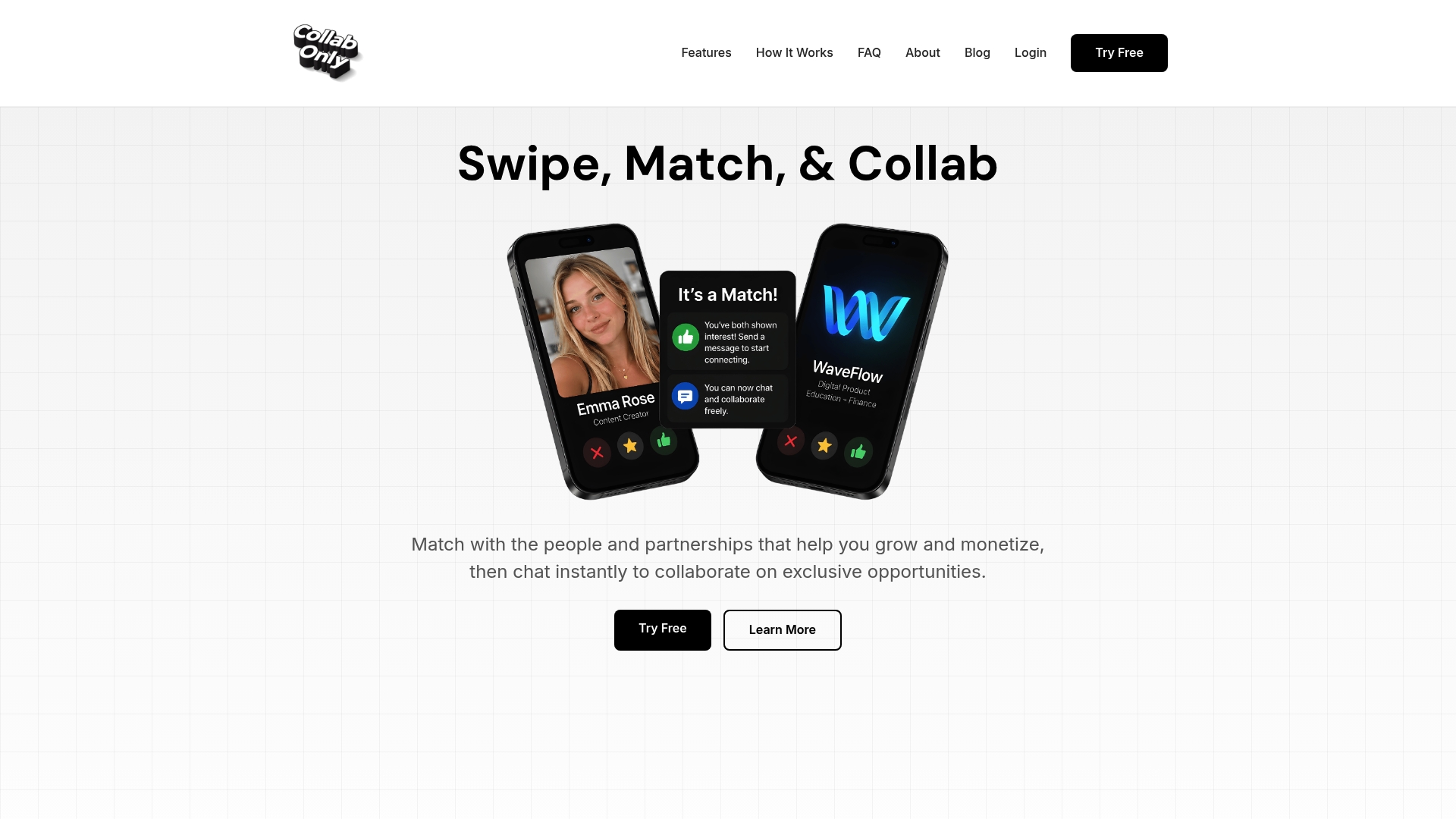
Collabonly's influencer marketplace connects brands with verified creators across TikTok, Instagram, and YouTube through a matching system that eliminates the slow email cycles and lost DMs that stall most outreach. Whether you are looking to hire micro influencers for whitelisted content campaigns or source nano influencers for geo-concentrated or sub-niche activations, the platform matches you based on goal alignment rather than follower count alone. For brands ready to scale creator content as a paid amplification layer, Collabonly's UGC creator platform provides direct access to the content production capacity your growth strategy requires.
FAQ
What are the most effective social media growth strategies in 2026?
The most effective approaches combine organic content quality with paid amplification of top-performing posts, concentrate resources on one to two platforms, and use whitelisted creator content for paid campaigns. Closing the five-stage growth loop (Analyze, Plan, Create, Manage, Publish) is the operational framework that ties these tactics together.
How do I grow my social media following without a large ad budget?
Prioritize platform concentration, post on a consistent schedule, and invest real time in community engagement during the first hour after each post. Consistent posting over 20 weeks produces approximately 450% more engagement per post than sporadic publishing, which compounds organic reach without paid spend.
Why does separating organic and paid social teams hurt growth?
Separating these functions creates a structural plateau: organic teams identify content winners but lack the budget to scale them, while paid teams spend on untested creative. Integration allows organic data to direct paid investment, which produces both faster growth and stronger brand equity.
How often should I post to maximize social media reach?
Frequency matters less than consistency. A sustainable schedule maintained for 20-plus weeks outperforms aggressive posting that collapses into irregular publishing. Three to five posts per week on a primary platform, executed consistently, is more productive than daily posting that degrades in quality or stops entirely.
What is whitelisted creator content and why does it perform better?
Whitelisted creator content is advertising that runs from a creator's account rather than a brand handle, with usage rights granted to the brand. It outperforms brand-produced ads by two to four times in CTR and cost per acquisition because audiences perceive it as peer-credible rather than promotional.