

TL;DR:
- Choosing the right social media content formats significantly impacts engagement, reach, and brand affinity.
- Short-form videos dominate in 2026 due to consumer preference for authentic, quick-value content, making them critical for awareness strategies.
Not all social media content performs equally, and for content creators, marketers, and brands, the difference between a post that converts and one that disappears into the feed often comes down to format selection. The types of social media content you deploy directly determine your reach, engagement depth, and brand affinity. With 66% of consumers favoring short-form video as their preferred format, yet dozens of other viable formats competing for audience attention, selecting the right mix has become one of the most consequential decisions in any content strategy.
Table of Contents
- Key takeaways
- How to evaluate different types of social media content
- Top social media content types explained
- 1. Short-form video
- 2. Images and carousel posts
- 3. Live video
- 4. User-generated content (UGC)
- 5. Text-based posts and thought leadership
- 6. Memes and GIFs
- 7. Episodic content series
- 8. Podcasts and audio snippets
- 9. Infographics and data visualization
- Comparing content types at a glance
- How to integrate content types into a cohesive strategy
- My take on content types that actually matter in 2026
- Expand your content strategy with Collabonly
- FAQ
Key takeaways
| Point | Details |
|---|---|
| Format determines performance | Choosing the right social media post formats directly impacts engagement rates, reach, and conversion outcomes. |
| Short-form video leads in 2026 | Short-form video remains the highest-performing content type, preferred by the majority of consumers across platforms. |
| Mix strategies prevent overreliance | Applying content mix frameworks like the rule of thirds protects against algorithm shifts and audience fatigue. |
| UGC and authenticity build trust | Human-generated content consistently outperforms AI-generated content for brand affinity and community loyalty. |
| Episodic content sustains audiences | Content series create predictable narrative arcs that shift passive viewers into active, returning audiences. |
How to evaluate different types of social media content
Before selecting specific formats, creators and marketers need a clear set of criteria to guide decisions. Choosing based on trend alone produces inconsistent results. The following factors form a practical evaluation framework.
- Engagement potential and audience preference. Analyze how your specific audience interacts with content on each platform. Broad data provides direction, but follower-level analytics reveal what actually performs within your niche.
- Platform compatibility and native formats. Each platform rewards content built specifically for it. Vertical video performs differently on TikTok than it does on LinkedIn. Native format alignment directly affects algorithmic distribution.
- Production demands and resource allocation. A polished episodic series requires significant time and editing capability. Static image posts or text-based content require far less infrastructure. Match production requirements to available resources without sacrificing consistency.
- Brand voice and storytelling fit. Not every format suits every brand. A B2B software company may find thought leadership posts more aligned with its voice than meme-based entertainment content.
- Content mix balance. Frameworks like the 80/20 rule (80% educational or entertaining content, 20% promotional) or the rule of thirds (one third original content, one third curated content, one third promotional) provide practical structure for maintaining content diversity.
Pro Tip: Analyze both follower and non-follower engagement data separately. Expanded analytics tools reveal whether your content is reaching new audiences or only recirculating within your existing base, which directly informs format and distribution decisions.
Top social media content types explained
The following content types represent the primary formats available to creators and marketers in 2026. Each carries distinct strengths, production requirements, and platform affinities.
1. Short-form video
Short-form video, including Instagram Reels, TikTok videos, and YouTube Shorts, currently occupies the top position in content performance. Consumers are drawn to formats that deliver value in under 60 seconds, and short-form video transcends other types by matching modern attention habits. For brands, the critical distinction is authenticity. Native-style Reels ads outperform traditional polished commercial ads by 25 to 40% in engagement. Fast-paced hooks, subtle brand integration, and an unscripted visual style consistently outperform highly produced alternatives.

Pro Tip: Keep key visuals within the center 80% of the frame to avoid platform UI overlays obscuring your text or focal elements, particularly on Reels and TikTok.
2. Images and carousel posts
Static images and carousel posts remain among the most accessible and cost-efficient social media post formats. Carousels, in particular, deliver above-average time-on-post metrics because each swipe represents a micro-interaction. They work well for product showcasing, step-by-step tutorials, before-and-after comparisons, and data storytelling. On Instagram and LinkedIn, carousels consistently generate more saves and shares than single-image posts, making them highly effective for educational content strategies.
3. Live video
Live video introduces real-time interaction that no pre-recorded format can replicate. Q&A sessions, product launches, behind-the-scenes access, and live events carry a sense of immediacy that signals authenticity to audiences. The tradeoff is unpredictability; technical issues and off-script moments are unavoidable. Despite that, live content generates higher comment volumes during broadcast than equivalent pre-recorded videos, and platform algorithms on Facebook, Instagram, and YouTube tend to prioritize live streams in their notification systems.
4. User-generated content (UGC)
User-generated content, meaning content created by customers, community members, or hired UGC creators rather than the brand itself, consistently ranks among the best content for social media when brand trust and purchase intent are the primary goals. It functions as peer-credibility at scale. Brands that incorporate UGC into their feed content and paid ads benefit from social proof without bearing the full production cost of original content. The challenge lies in sourcing quality UGC consistently, which is why platforms designed for creator-brand matching have become central to modern content strategies.
5. Text-based posts and thought leadership
On LinkedIn and X (formerly Twitter), text-based content continues to drive substantial reach, particularly for B2B brands and individual thought leaders. Long-form LinkedIn posts that share professional insights, contrarian opinions, or tactical frameworks routinely outperform image posts within professional communities. The format requires no visual production resources, but it demands a clearly defined point of view and genuine domain expertise. Generic motivational text posts rarely gain traction; specificity and professional credibility are the actual drivers of engagement in this format.
6. Memes and GIFs
Memes and GIFs occupy a specific strategic role. They are entertainment-first and virality-oriented rather than conversion-oriented. When deployed correctly, they reinforce brand personality, generate shares within niche communities, and reduce the perceived distance between a brand and its audience. The risks are real: memes age rapidly, cultural context varies by audience segment, and a poorly timed meme can create reputational friction. Brands with clearly defined, younger audience segments and a conversational brand voice derive the most consistent value from this format.
7. Episodic content series
Episodic content is among the most underutilized formats in brand social media strategies. Brands using episodic content shift audiences from passive consumption to active seeking behavior, with viewers returning for each installment as they would a serialized show. A weekly mini-series built around a consistent theme, a recurring "creator spotlight," or a serialized educational format builds the kind of audience loyalty that one-off posts cannot. The key is structural predictability: same format, consistent cadence, and a narrative arc that rewards ongoing viewership. This approach effectively transforms social presence into an entertainment brand.
8. Podcasts and audio snippets
Audio content has grown as a social media format through podcast clip repurposing. Short audio snippets shared as video audiograms on Instagram, LinkedIn, and TikTok extend podcast reach while fitting native short-form consumption habits. For brands investing in long-form audio content, distributing 30-to-90-second excerpts as standalone posts extracts additional value from existing production without requiring new content creation. This format works particularly well for thought leadership positioning and community building within professional or interest-based niches.
9. Infographics and data visualization
Infographics consolidate complex information into a scannable visual format. They excel for research dissemination, process explanation, and statistical storytelling. For marketers, well-designed infographics also carry strong organic sharing potential, particularly on Pinterest and LinkedIn. The format demands design competency and accurate sourcing but does not require video production skills. Infographics also perform consistently in content repurposing pipelines, where a single data-rich piece can be redistributed across multiple platforms in modified dimensions.
Comparing content types at a glance
The table below summarizes key attributes of the primary types of digital content available to social media marketers, enabling rapid comparison for strategic planning.
| Content type | Engagement effectiveness | Production complexity | Ideal platforms | Primary marketing goal |
|---|---|---|---|---|
| Short-form video | Very high | Medium | TikTok, Instagram, YouTube | Awareness, reach |
| Carousel posts | High | Low to medium | Instagram, LinkedIn | Education, consideration |
| Live video | High (real-time) | Low to medium | Instagram, Facebook, YouTube | Community, trust |
| UGC | Very high | Low (sourced) | Instagram, TikTok | Trust, conversion |
| Text-based posts | Medium to high | Low | LinkedIn, X | Thought leadership |
| Memes and GIFs | Medium | Low | Instagram, X, TikTok | Brand personality |
| Episodic series | High (cumulative) | High | YouTube, Instagram, TikTok | Loyalty, retention |
| Audio snippets | Medium | Low (repurposed) | LinkedIn, Instagram | Authority, community |
| Infographics | Medium to high | Medium | Pinterest, LinkedIn | Education, sharing |
How to integrate content types into a cohesive strategy
Selecting individual formats is only part of the equation. The more critical challenge is structuring a content calendar that combines types purposefully across the marketing funnel.
- Map content types to funnel stages. Short-form video and memes serve awareness. Carousels and infographics support consideration. UGC and live video drive conversion and retention. Each type serves a specific role rather than being used interchangeably.
- Define 3-5 core thematic pillars. Defining core video themes aligned with business objectives prevents scattered content efforts. The same principle applies across all formats: every post should serve one of your pre-defined content pillars.
- Apply the rule of thirds or 80/20 framework. These content mix models prevent any single format or message type from dominating the feed, which protects against both audience fatigue and algorithmic penalties.
- Adjust for platform-specific strengths. A content type that performs on Instagram may require format modification for LinkedIn. Resist the temptation to cross-post identical content without native adaptation.
- Monitor and respond to analytics. Caption hooks within the first 60 to 80 characters directly affect Reels reach and indexing. Performance data at this level of granularity should inform format adjustments on a rolling basis rather than quarterly reviews.
Pro Tip: Avoid overreliance on any single format. Platform algorithm shifts, as seen with organic reach declines on Facebook and reach compression for static posts on Instagram, routinely reduce the performance of formats that previously dominated. A diversified content mix is your structural defense against those shifts.
My take on content types that actually matter in 2026
I have spent years analyzing what actually moves the needle for brands and creators across social platforms, and the pattern is consistent. Short-form video's dominance is not a trend waiting to reverse. It is a structural response to how people consume information. Human creativity remains the driver of brand affinity, and that will not change regardless of how capable AI content tools become.
What I find consistently undervalued is episodic content. Brands chase viral moments and individual high-performing posts, but episodic series are the format that actually builds durable audience relationships. The brands I have seen sustain engagement growth over 12 to 18 months are almost always running some form of serialized content alongside their standard feed mix.
My caution around AI-generated content is not about quality in isolation. It is about authenticity signals. Audiences detect the difference between human-led storytelling and algorithmically assembled content, and that detection directly impacts trust. Use AI for efficiency, but human judgment and genuine perspective need to anchor every format you publish.
The practical lesson from managing diverse content type campaigns is this: the goal is not to be present in every format. It is to be excellent in two or three formats that align with your audience's behavior and your brand's actual communication strengths, then expand from that foundation.
— Samuel
Expand your content strategy with Collabonly
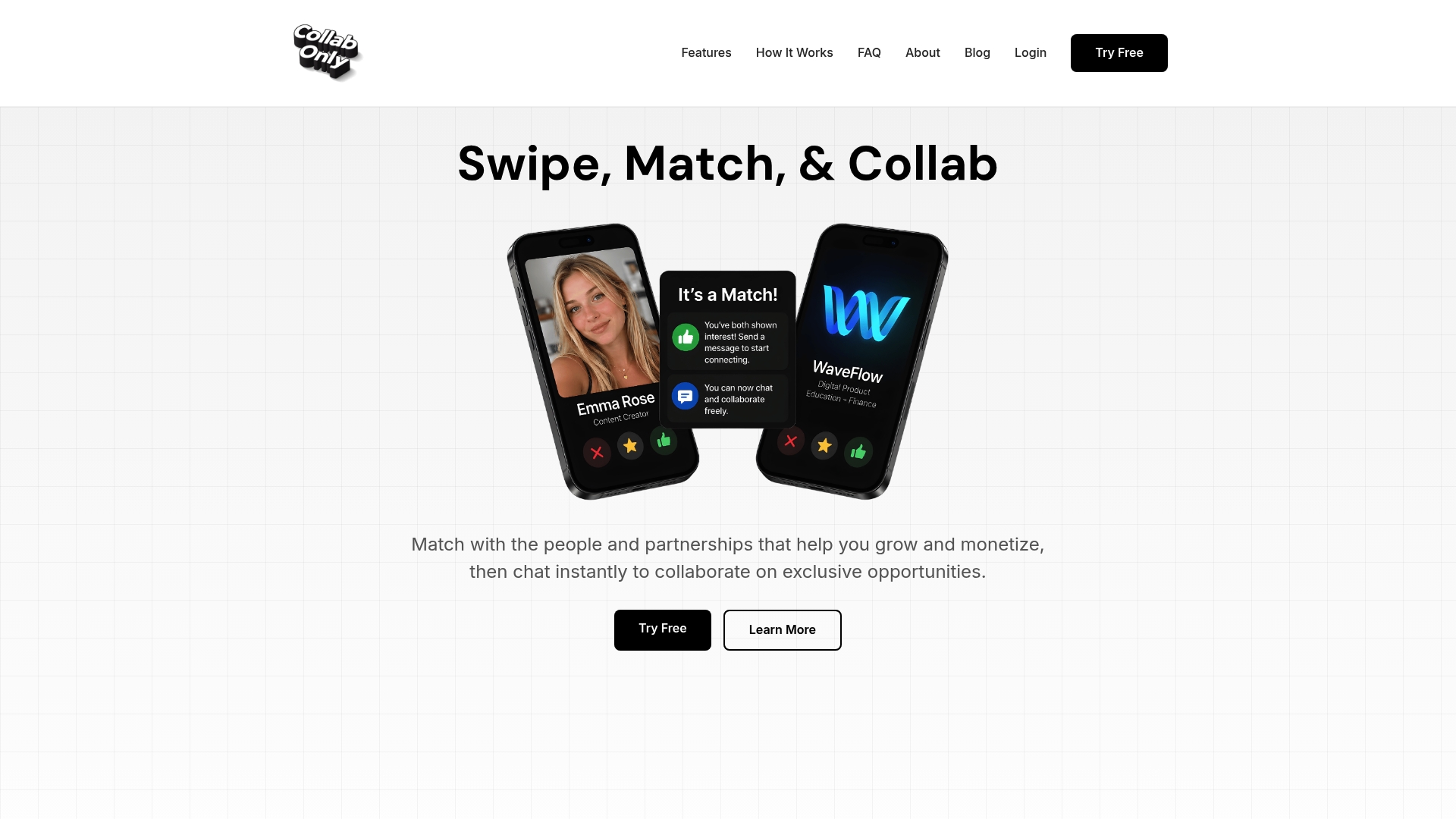
Building a content strategy across multiple formats requires not only creative direction but also the right partnerships. Collabonly connects brands with creators who specialize in the formats that drive real results, from UGC and short-form video to episodic series and influencer-led campaigns. The platform's swipe-to-match system eliminates the friction of cold outreach, giving brands direct access to creators whose content style, audience demographics, and platform strengths align with specific campaign objectives. Whether you are sourcing UGC creator partnerships or building a broader influencer roster through the influencer marketplace, Collabonly provides the infrastructure to execute diverse content strategies at scale. Explore Collabonly to connect with creators built for your next campaign.
FAQ
What are the main types of social media content?
The primary types include short-form video, images, carousels, live video, user-generated content, text-based posts, memes, episodic series, audio snippets, and infographics. Each format serves distinct marketing goals across different platform contexts.
Which content type drives the highest engagement?
Short-form video currently generates the highest engagement, with 66% of consumers identifying it as their preferred content format. UGC also ranks exceptionally high for trust and conversion-stage engagement.
How many content types should a brand use at once?
Most brands perform best by concentrating on two to three primary formats aligned with their audience behavior and resources, then supplementing with two or three secondary formats. Spreading across too many formats simultaneously dilutes production quality and strategic focus.
What is UGC and why does it matter for social media?
UGC, or user-generated content, is content created by customers or community members rather than the brand itself. It builds peer-credibility and social proof at scale, making it one of the most trusted formats for driving purchase consideration.
How do you choose the right content type for your brand?
Evaluate audience preferences through platform analytics, assess your production resources, map formats to specific funnel stages, and apply a content mix framework like the rule of thirds to maintain diversity and prevent overreliance on any single format.