

TL;DR:
- Creator-fan engagement involves building direct, meaningful relationships through owned channels like email and SMS. It emphasizes structured, two-way interactions that enhance loyalty and community, reducing reliance on social media algorithms.
Creator-fan engagement is defined as the strategic, two-way interactive process through which creators build direct, meaningful relationships with their fans by fostering ongoing dialogue and participation across owned digital channels. This practice, also called direct audience interaction in marketing circles, moves well beyond passive content consumption. Platforms like Subtext, Discord, and Beehiiv now give creators the infrastructure to own these relationships without depending on social media algorithms. Effective fan engagement in 2026 relies on owned channels like email, SMS, and private membership platforms, ensuring connection that algorithm changes cannot disrupt. For marketing professionals and content creators, understanding this distinction is the foundation of every sustainable growth strategy.
What is creator-fan engagement and how does it work?
Creator-fan engagement is any interaction that moves a fan from passive viewer to active community participant. Fan engagement spans multiple touchpoints, including websites, apps, social media, merchandise, and live events. Each touchpoint is an opportunity to deepen the relationship rather than simply broadcast content.

The core mechanism is reciprocity. A creator publishes content; the fan responds, votes, submits, or buys. The creator then acknowledges that input and shapes future content around it. This cycle builds trust faster than any one-way broadcast model. Creators who treat their audience as collaborators rather than consumers consistently report stronger retention and word-of-mouth growth.
The industry term for this practice is "audience relationship management," though "creator-fan engagement" has become the dominant phrase in influencer marketing and platform strategy discussions. Both terms describe the same goal: replacing the anonymous follower count with a community of identifiable, invested participants.
How does creator-fan engagement differ from traditional audience interaction?
Traditional audience interaction is one-directional. A television network broadcasts; viewers watch. A blogger publishes; readers scroll. The creator controls the message, and the audience has no visible role in shaping it. Creator-fan engagement reverses that dynamic by making the audience a visible part of the content process.
The practical difference shows up in four specific behaviors:
- Polls and quizzes that let fans influence upcoming content topics or product decisions
- Fan-submitted content that creators feature, credit, and build upon
- Feedback loops where creators publicly respond to audience criticism or suggestions
- Tiered community access where the most active fans receive early releases or direct creator contact
Superfans want to be contributors, not just an audience. Structured, low-friction contribution options, such as a weekly poll or a pinned feedback thread, increase both engagement and loyalty. The key word is "structured." Unstructured participation requests ("tell me what you think in the comments") generate noise. Structured requests generate signal.
A concept called growth engineering formalizes this shift. Growth engineering audits every digital touchpoint a fan encounters and upgrades conversion points into interactive, conversational experiences rather than static pages. A newsletter sign-up becomes a preference quiz. A merchandise checkout becomes a community onboarding flow. Each upgrade turns a transaction into a relationship moment.
Pro Tip: Focus growth engineering on one high-value conversion point at a time. Trying to redesign every touchpoint simultaneously produces inconsistent results and dilutes the fan experience.
Which digital channels and tools are most effective for fan engagement?
Channel selection determines whether a creator owns the relationship or rents it from a platform. The table below compares the primary channel categories by ownership, reach reliability, and engagement depth.
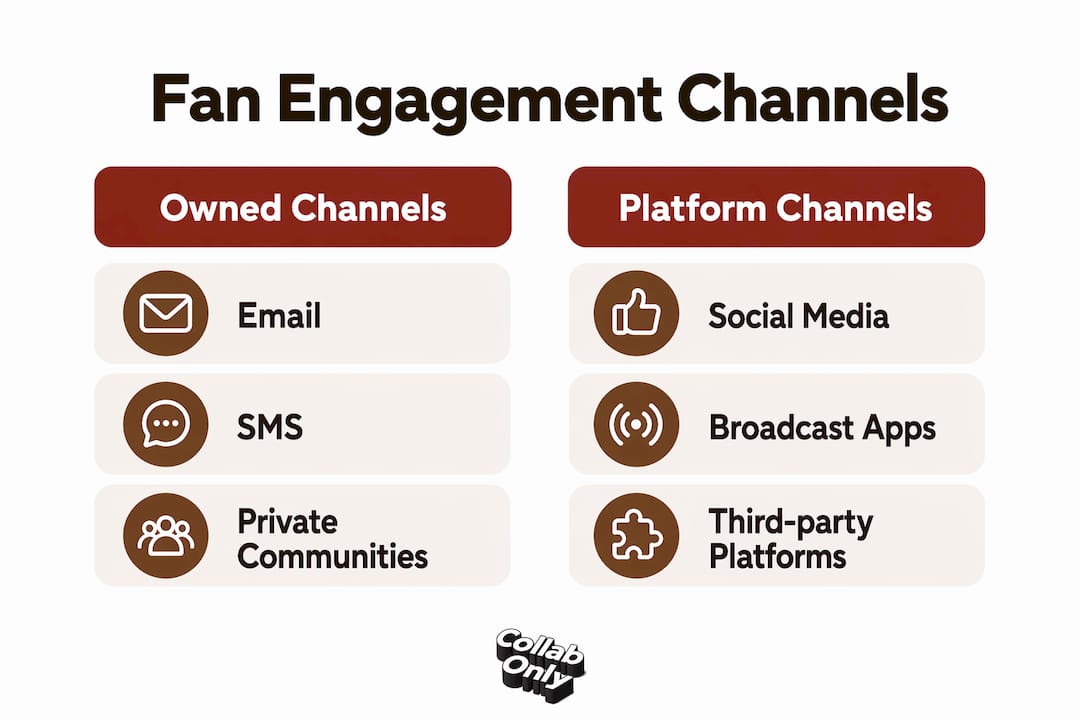
| Channel | Ownership | Algorithm Risk | Engagement Depth |
|---|---|---|---|
| SMS (e.g., Subtext) | Creator-owned | None | High (personal, opt-in) |
| Email (e.g., Beehiiv) | Creator-owned | None | High (direct inbox) |
| Discord | Platform-dependent | Low | High (community-driven) |
| Private membership sites | Creator-owned | None | Very high (paid, committed) |
| Instagram, TikTok, YouTube | Platform-owned | High | Variable (algorithm-gated) |
Direct-to-fan platforms like Subtext enable personalized, two-way SMS conversations that feel personal and carry opt-in trust. SMS reaches fans immediately, without competing against a feed algorithm. That immediacy translates to higher response rates than most social media formats.
Conversational AI and chatbots extend a creator's capacity to sustain dialogue at scale. A creator with 50,000 subscribers cannot personally reply to every message. A well-configured chatbot can answer common questions, route superfans to premium tiers, and collect preference data, all without the creator's direct involvement. The key is configuring these tools to escalate genuinely personal moments to the creator rather than automating every interaction.
For creator audience interaction at scale, the most effective stack combines one owned broadcast channel (email or SMS), one community channel (Discord or a private forum), and one analytics layer to track behavior across both. Adding more channels before mastering these three typically fragments the audience rather than deepening engagement.
Pro Tip: Audit your current channel mix by asking one question: if this platform shut down tomorrow, how many of your fans could you still reach directly? If the answer is fewer than 20 percent, owned channel investment is overdue.
What are the strategies for creating sustainable fan communities?
Sustainable fan communities share one structural feature: fans have a visible role in the community's identity, not just its content consumption. The following sequence builds that structure methodically.
-
Identify your superfans first. Superfans are the fans who comment on every post, share without being asked, and buy before the launch announcement ends. They are typically a small percentage of the total audience but generate a disproportionate share of word-of-mouth and revenue. Identify them through purchase history, comment frequency, and email open rates before designing any community program.
-
Create tiered access based on contribution or tenure. Tiered access structures enhance perceived exclusivity and give fans a progression path that makes continued participation feel rewarding. A fan who reaches "founding member" status after six months of active participation is far less likely to disengage than one who receives the same access as a day-one subscriber.
-
Offer genuine access at scale. Small-group virtual sessions and asynchronous personalized voice messages create more perceived value than large, impersonal webinars. A 20-person Q&A with a creator feels exclusive. A 2,000-person livestream feels like television. Both have their place, but the small-group format builds the kind of relationship that drives renewal and referral.
-
Apply unified fan identity principles. Unified fan identity combines behavioral data, including purchase patterns, content preferences, and sentiment signals, into dynamic fan profiles. These profiles enable predictive, relevant communications rather than generic broadcast messages. A fan who consistently engages with behind-the-scenes content should receive different messaging than one who only responds to product drops.
-
Avoid flashy gimmicks. NFT-gated communities, gamified point systems, and AR experiences attract attention but rarely sustain engagement past the novelty phase. Authentic human contact is the foundation of lasting fan engagement. Technology should reduce friction in human connection, not replace it.
"Consistent, honest, direct human-to-human interaction remains the most effective long-term engagement strategy. High-tech solutions are less impactful than genuine connections over time." — Fan Engagement, Beehiiv
The role of fans in content creation has shifted from passive recipient to active co-creator. Communities that recognize this shift and build contribution structures around it consistently outperform those that treat fans as an audience to be entertained.
How can creators and marketers measure and optimize fan engagement?
Measurement separates creators who grow intentionally from those who grow accidentally. The metrics that matter most are not the ones most platforms surface by default.
The most valuable fan engagement metrics fall into three categories:
- Retention metrics: Membership renewal rates, email list churn, and Discord active member percentage. Membership upgrades and renewal rates indicate true engagement far more accurately than follower counts. A creator with 10,000 email subscribers and a 70 percent renewal rate has a stronger business than one with 500,000 Instagram followers and no owned list.
- Participation metrics: Poll response rates, fan-submitted content volume, and reply rates to direct messages. These measure whether fans are active contributors or passive consumers.
- Conversion metrics: The percentage of free community members who upgrade to paid tiers, and the percentage of social followers who join owned channels. These track the movement from rented to owned audience.
Growth engineering applies directly to optimization. Audit each digital touchpoint, identify the one with the largest gap between traffic and conversion, and redesign it as a conversational experience. Repeat the cycle quarterly. Platforms like Beehiiv provide open rate and click-through data for email. Discord offers server analytics showing active member trends. Subtext surfaces SMS reply rates and opt-out signals.
For influencer marketing strategies that connect brand goals to fan behavior, the most effective approach pairs qualitative fan feedback with quantitative retention data. Fan surveys run every 90 days reveal sentiment shifts before they show up in churn numbers.
Key takeaways
Creator-fan engagement is defined by owned channel depth, structured fan contribution, and retention metrics, not by follower count or viral reach.
| Point | Details |
|---|---|
| Owned channels are non-negotiable | SMS, email, and private communities protect creator-fan relationships from algorithm disruption. |
| Superfans drive disproportionate value | Identify and structure tiered access for your most active fans before scaling broad community programs. |
| Growth engineering improves conversion | Audit one high-value digital touchpoint at a time and redesign it as a conversational experience. |
| Retention beats reach | Membership renewal rates and participation metrics are stronger engagement indicators than follower counts. |
| Authenticity outperforms automation | Small-group sessions and direct creator contact build loyalty that chatbots and gimmicks cannot replicate. |
The metric most creators are measuring wrong
Most creators I observe closely are optimizing for the wrong number. They celebrate follower milestones on TikTok or Instagram while their email list sits at 800 people with a 60 percent open rate. That email list is worth more. It is owned, it is opted-in, and it responds.
The shift I find most underappreciated is the move from broadcast to conversation. Creators who send a weekly SMS asking one specific question, not "what do you think?" but "which of these two topics should I cover next?", consistently report that their fans feel more connected than those receiving polished weekly newsletters. The question is the engagement. The answer is the data.
Agentic AI is entering this space fast. Tools that can maintain personalized fan conversations at scale, remember past interactions, and surface the right content at the right moment will change what "engagement at scale" means. But the creators who will use these tools well are the ones who already understand what genuine connection feels like. Automation amplifies existing relationship quality. It does not create it from scratch.
My practical advice: before adding any new channel or tool, ask whether your current superfans feel seen. If the answer is uncertain, the next investment is not a new platform. It is a 20-person virtual session with your most active community members.
— Samuel
How Collabonly connects creators with the right fans and brands
Creators who understand fan engagement still need the right partnerships to grow their owned communities efficiently. Collabonly is built for exactly that connection.
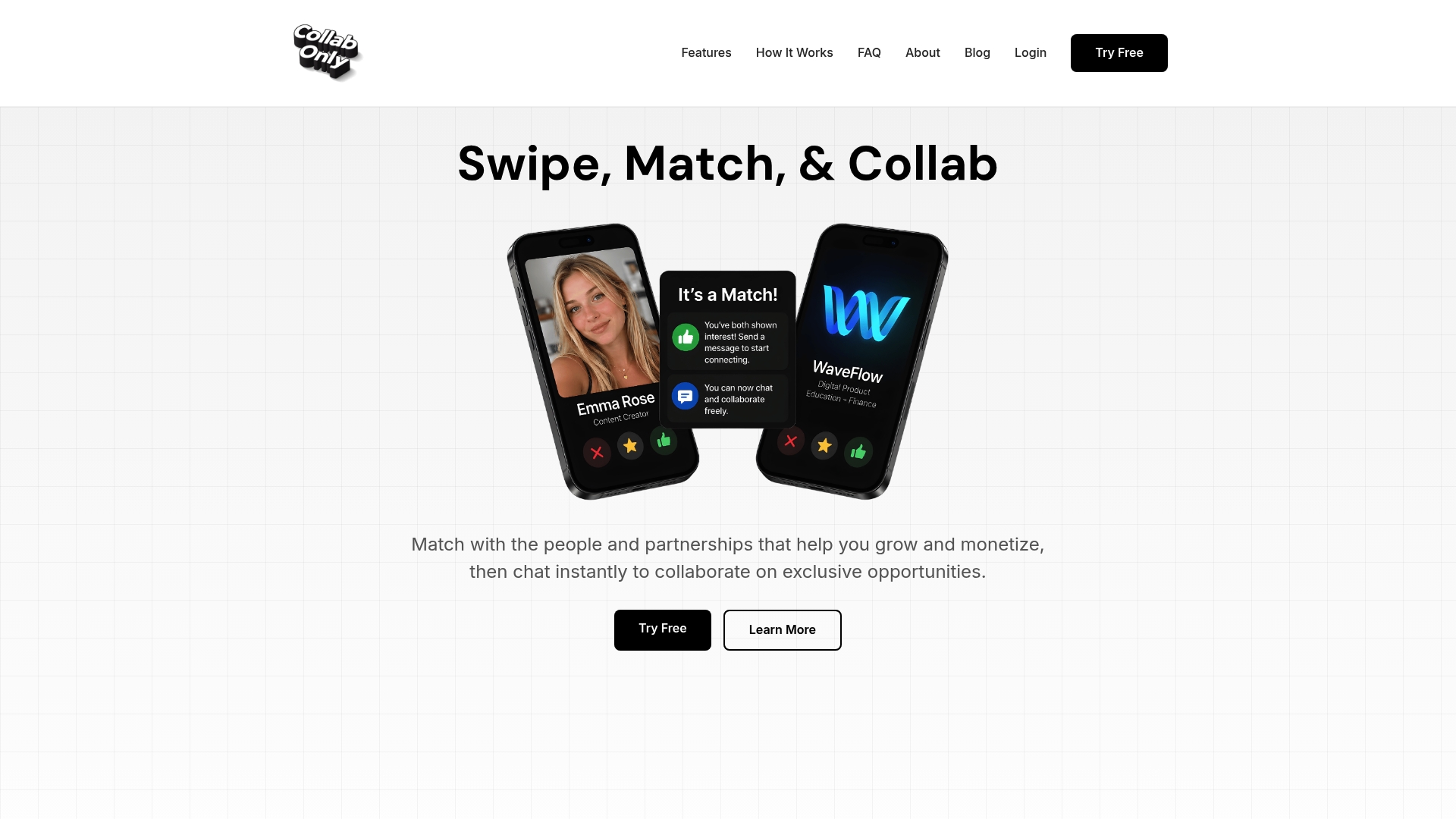
Collabonly's influencer marketplace matches brands with nano and micro influencers whose audiences are already engaged, opted-in, and community-oriented. The platform's swipe-to-match interface eliminates the slow back-and-forth of cold outreach, replacing it with instant chat between matched parties on TikTok, Instagram, and YouTube. For creators building direct-to-fan relationships, Collabonly provides access to brand partnerships that align with community values rather than disrupting them. Brands gain authentic reach. Creators gain revenue without compromising audience trust.
FAQ
What is the simplest definition of creator-fan engagement?
Creator-fan engagement is the two-way interactive process through which creators build direct relationships with fans using owned channels like SMS, email, and private communities. It moves fans from passive viewers to active participants.
How do owned channels differ from social media for fan engagement?
Owned channels like email and SMS are not subject to algorithm changes, meaning creators retain direct access to their audience regardless of platform policy shifts. Social media reach is platform-controlled and can drop without warning.
What metrics best measure fan engagement quality?
Membership renewal rates, email open rates, and poll participation rates are stronger indicators of engagement quality than follower counts or total reach. High follower counts with low renewal rates signal visibility, not loyalty.
How can small creators build fan communities without large budgets?
Small-group virtual sessions, personalized voice messages, and structured weekly polls require minimal budget but create high perceived value. Tiered access based on tenure or contribution costs nothing to implement and significantly increases retention.
What role does conversational AI play in creator-fan engagement?
Conversational AI handles routine fan interactions at scale, such as answering common questions and routing superfans to premium tiers, freeing creators to focus on high-value personal interactions. It amplifies existing relationship quality rather than replacing human connection.