

The role of fans in content creation has shifted from passive spectatorship to active participation in ways that most creators and marketers still underestimate. Fans today write narratives, produce edits, manage communities, and generate social proof that no paid campaign can replicate. They invest time, creative labor, and emotional energy into content they did not make, and in doing so, they reshape it. Understanding how this participation functions, and how to work with it rather than around it, is now a core competency for anyone building an audience-driven content operation.
Table of Contents
- Key takeaways
- The role of fans in content creation: economic and engagement impact
- Psychological ownership and why fans create
- Types of fan-generated content and how it shapes creator strategy
- Practical strategies for engaging fans as co-creators
- Balancing creator control and fan autonomy
- My perspective on fans as genuine content partners
- How Collabonly connects creators with fan communities
- FAQ
Key takeaways
| Point | Details |
|---|---|
| Fans are active economic contributors | Fans spend 27% more than non-fans on streaming and consume 51 more minutes of entertainment daily. |
| Psychological ownership drives co-creation | Self-investment in content produces a sense of ownership that motivates fans to create, not just consume. |
| Fan content builds measurable trust | 63% of consumers cite user-generated content as a top source of authenticity, directly influencing purchase decisions. |
| Studios now plan for fan remixes | Major film studios integrate fan edits into official marketing campaigns, treating them as native creative assets. |
| Engagement metrics need recalibration | Retention KPIs and sustained engagement data capture fan impact more accurately than likes or comment counts alone. |
The role of fans in content creation: economic and engagement impact
The economic case for prioritizing fan engagement in media is no longer theoretical. Fans spend $71 monthly on streaming services compared to $56 for non-fans, and they spend 51 more minutes per day consuming entertainment. That is not a marginal difference. It represents a structurally distinct audience segment whose loyalty translates directly into subscription revenue, merchandise spending, and platform time.
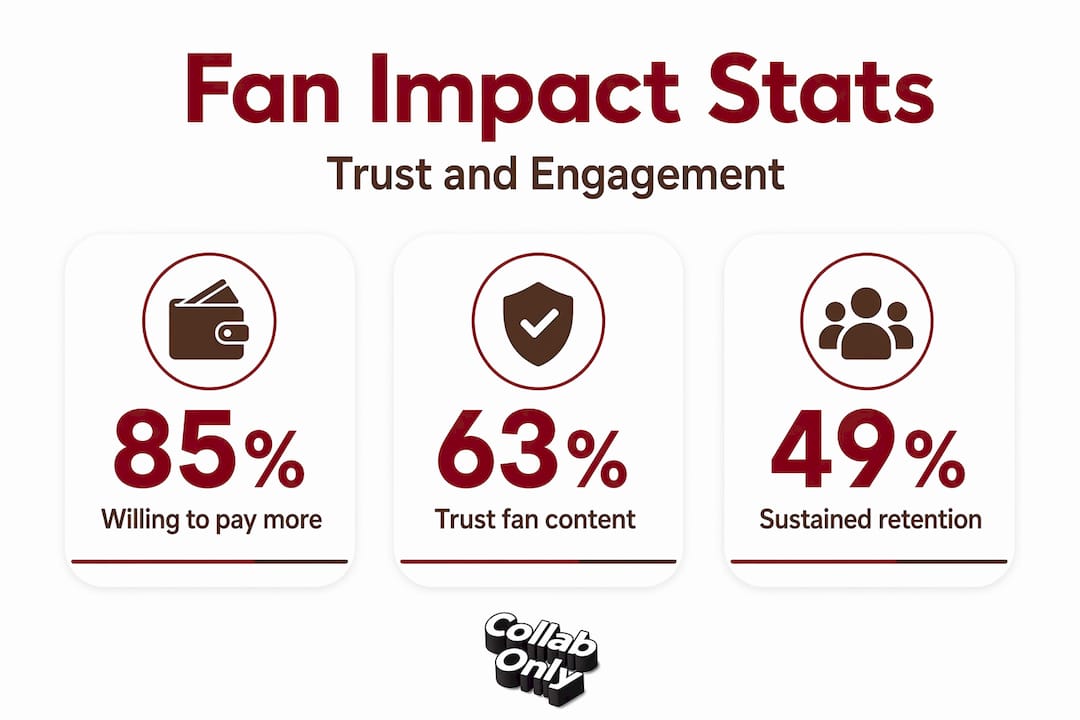
The data also points to something more strategically significant than raw spending: retention. 49% of fans report sustained engagement throughout their lives with the content they care about, making them far more reliable than general audiences who churn when novelty fades. In fragmented media environments where platform switching is frictionless, this kind of sustained loyalty reduces investment risk for creators and brands alike.
Fan participation also extends content reach across platforms in ways that paid distribution cannot match. A single fan edit on TikTok can accumulate more views than the original trailer it references, functioning as earned media with credibility that sponsored posts lack. The impact of fans on creators therefore operates on two levels simultaneously: the economic layer of spending and retention, and the distribution layer of organic amplification.
| Fan vs. non-fan behavior | Fans | Non-fans |
|---|---|---|
| Monthly streaming spend | $71 | $56 |
| Additional daily entertainment time | +51 minutes | Baseline |
| Lifetime engagement likelihood | High (49% lifelong) | Variable |
| Content amplification behavior | Active (edits, shares, communities) | Passive (views, occasional shares) |
- Fans maintain multi-platform interaction that extends content visibility beyond the creator's owned channels
- AI personalization tools now allow creators to tailor content experiences that deepen fan investment at scale
- Fan engagement signals (saves, community posts, remixes) are often stronger predictors of retention than standard engagement rates
Pro Tip: Track fan-driven content metrics separately from general audience metrics. This segmentation reveals the true retention and revenue value fans contribute, and it changes how you allocate production resources.
Psychological ownership and why fans create
The motivational engine behind fan co-creation is psychological ownership. When fans invest time, creativity, and identity into content, they begin to experience a sense of ownership over it, even without any legal claim. Research on fan psychological ownership confirms that self-investment positively influences both individual ownership feelings toward a creator or idol and collective ownership within fan communities.

This ownership dynamic explains behaviors that otherwise seem economically irrational. Why would someone spend 40 hours creating a fan edit of a film they did not make? Because the act of creation generates a perceived stake in the outcome. The fan becomes, in their own cognitive framing, a contributor. That cognitive shift is the foundation of all sustained fan participation.
Platform architecture amplifies or suppresses this effect. When platforms make fan contributions visible and publicly attributed, those contributions become social capital. Other fans see them, respond to them, and build on them. The individual fan's creative work is recognized as shaping the public image of the content, which deepens motivation and invites further participation. Platforms that bury fan content in algorithmic obscurity undermine this cycle.
Fan communities also solve a genuine coordination problem through internal social structures. Co-production by fans is inherently costly for individuals since the benefits accrue largely to the community and the creator, not the individual contributor. Successful fan communities overcome this by establishing norms, repeat interaction patterns, and private benefits like status and belonging that make contribution worthwhile on a personal level.
- Established community norms reduce free-rider behavior and sustain contribution over time
- Status mechanisms (featured creator spotlights, community rankings) translate creative effort into recognized social currency
- Emotional bonds formed through shared participation create communities that persist even when original content output slows
Pro Tip: Recognize top fan contributors publicly and specifically. Generic acknowledgment ("thanks to the community") produces less motivational impact than naming individual contributors and describing what they created.
Types of fan-generated content and how it shapes creator strategy
Fan engagement in media produces a remarkably diverse output. Fan art, written narratives, video edits, reaction content, analytical breakdowns, memes, and social campaigns all constitute distinct content types with different distribution mechanics and strategic uses. Each type signals a different level of creative investment and reaches different sub-audiences within a fandom.
The most strategically significant development in recent years is the rise of fan edits as a formal marketing asset. Lionsgate's motion picture group has stated publicly that fans are the best creators of native, fan-first content. Studios now plan marketing campaigns with the expectation that fan remixes will generate conversational loops across social platforms, treating this content as integral to the campaign architecture rather than an afterthought. This is a fundamental reversal of how studios traditionally protected their intellectual property.
The trust implications of fan content are equally significant. 85% of consumers are willing to pay more for brands perceived as authentic, and 63% identify user-generated content as their primary source of that authenticity. Fan content functions as independently verifiable social proof in a way that branded content cannot. A fan who creates content unprompted is, by definition, not on payroll, and audiences understand this distinction clearly.
| Fan content type | Primary platform | Strategic use for creators |
|---|---|---|
| Fan edits and remixes | TikTok, YouTube | Organic distribution, native marketing amplification |
| Fan art and illustrations | Instagram, X, DeviantArt | Community celebration, merchandise inspiration |
| Written narratives and fan fiction | Archive of Our Own, Tumblr | Narrative extension, audience retention between releases |
| Reaction and analysis content | YouTube, Twitch | Audience education, algorithmic discovery |
| Social campaigns and hashtags | X, Instagram, TikTok | Trending visibility, peer-credibility signals |
Understanding the role of audience in storytelling means recognizing that fans do not just consume narratives. They extend them, critique them, and sometimes redirect them. Creators who treat this activity as a threat rather than a data signal miss a critical feedback channel that market research budgets cannot replicate. The importance of fan feedback in this context is not sentimental. It is operational.
Practical strategies for engaging fans as co-creators
Translating the theory of fan co-creation into operational practice requires deliberate system design. The following approach moves from structural enablement through community management to measurement.
-
Create legible, visible channels for fan content. Dedicated hashtags, community tabs, and featured submission formats give fans a clear pathway for contribution. Without visible structure, fan creation remains diffuse and its impact on content-driven growth goes unmeasured.
-
Establish community norms explicitly. Document what kinds of contributions are welcomed, how attribution works, and what conduct standards apply. Communities that develop norms organically often develop them inconsistently, creating friction that discourages new participants from contributing.
-
Deploy AI personalization to scale co-creation opportunities. The USC Annenberg report on fan participation evolution notes that effective fan engagement requires monitoring narratives and amplifying through authentic influencers across micro-platforms. AI tools enable creators to identify which fan contributions are gaining traction before they peak, allowing timely amplification.
-
Integrate fan content into official pipelines with appropriate attribution. This means featuring fan art in creator newsletters, reposting fan edits with credit, and incorporating fan feedback into content decisions transparently. Attribution is not just ethical. It reinforces the psychological ownership loop that motivates continued participation.
-
Measure engagement with retention-oriented KPIs rather than surface metrics. Tracking whether fan-engaged audiences sustain their engagement over 90 or 180-day windows reveals the actual community-building impact of co-creation strategies. Likes and comments measure moment-to-moment reaction. Retention measures whether the community you are building is durable.
Pro Tip: Run a quarterly fan content audit: catalog all fan-created content referencing your work across platforms, categorize it by type, and identify which formats generate the highest secondary reach. This data directly informs your next content cycle.
Balancing creator control and fan autonomy
The most persistent friction point in fan co-creation strategies is the tension between brand control and community authenticity. Creators who over-regulate fan expression risk alienating the creative contributors who generate the most valuable content. Those who under-regulate face inconsistent quality representation and, in some cases, content that conflicts with brand positioning.
Several principles help manage this tension constructively:
- Define what you will amplify, not just what you will prohibit. Positive framing around the types of fan content you will feature gives creators clear parameters without feeling restrictive.
- Address conflicts directly and specifically. When fan content crosses a line, respond with specificity about what the issue is rather than issuing broad policy statements that feel punitive to the wider community.
- Distinguish between quality variation and brand misalignment. Not every fan edit will be polished. Quality variation is normal and should not trigger the same response as content that genuinely conflicts with values or legal parameters.
- Build feedback loops between creator teams and fan community moderators. Communities that have their own moderation infrastructure and a direct channel to the creator often self-regulate more effectively than those managed unilaterally from the top.
The authenticity in branding that builds sustained trust with audiences depends significantly on how creators handle these moments. Fans observe how their community is managed. Transparent, respectful handling of disputes reinforces the kind of peer-credibility that no sponsored post can manufacture.
My perspective on fans as genuine content partners
I have spent enough time studying fan ecosystems to form a view that runs counter to how most content strategy conversations frame this topic. The standard framing treats fans as an engagement metric. Something to grow, to optimize, to convert. That framing is not wrong exactly. It is just incomplete, and the incompleteness is costly.
What I have learned is that the fans who create content are not just your most engaged audience members. They are your most honest signal about whether what you are building actually matters. A fan who spends 40 hours producing a narrative extension of your content is telling you something no survey can capture: that what you made opened a space worth inhabiting.
The unexpected challenge in working with fan-generated content is not quality control. It is reciprocity. Fans who contribute creatively are implicitly entering a relationship. When creators extract value from fan creativity without acknowledgment, the community notices, and it corrodes the social contract that makes co-creation sustainable.
My recommendation is to treat fan engagement not as a channel to manage but as a relationship to maintain. That means consistent acknowledgment, transparent communication about how fan input influences decisions, and a genuine willingness to let the audience shape certain aspects of what you build. The types of social media content that drive real engagement are almost always those where the audience feels like a participant, not a target. The creators who understand this in 2026 are building communities that will outlast any algorithm change.
— Samuel
How Collabonly connects creators with fan communities
Understanding the role of fans in content growth is one thing. Building the infrastructure to act on it is another. Collabonly provides a matching platform that connects content creators, brands, and fan-adjacent influencers through a swipe-based system that removes the friction of cold outreach and unanswered DMs.
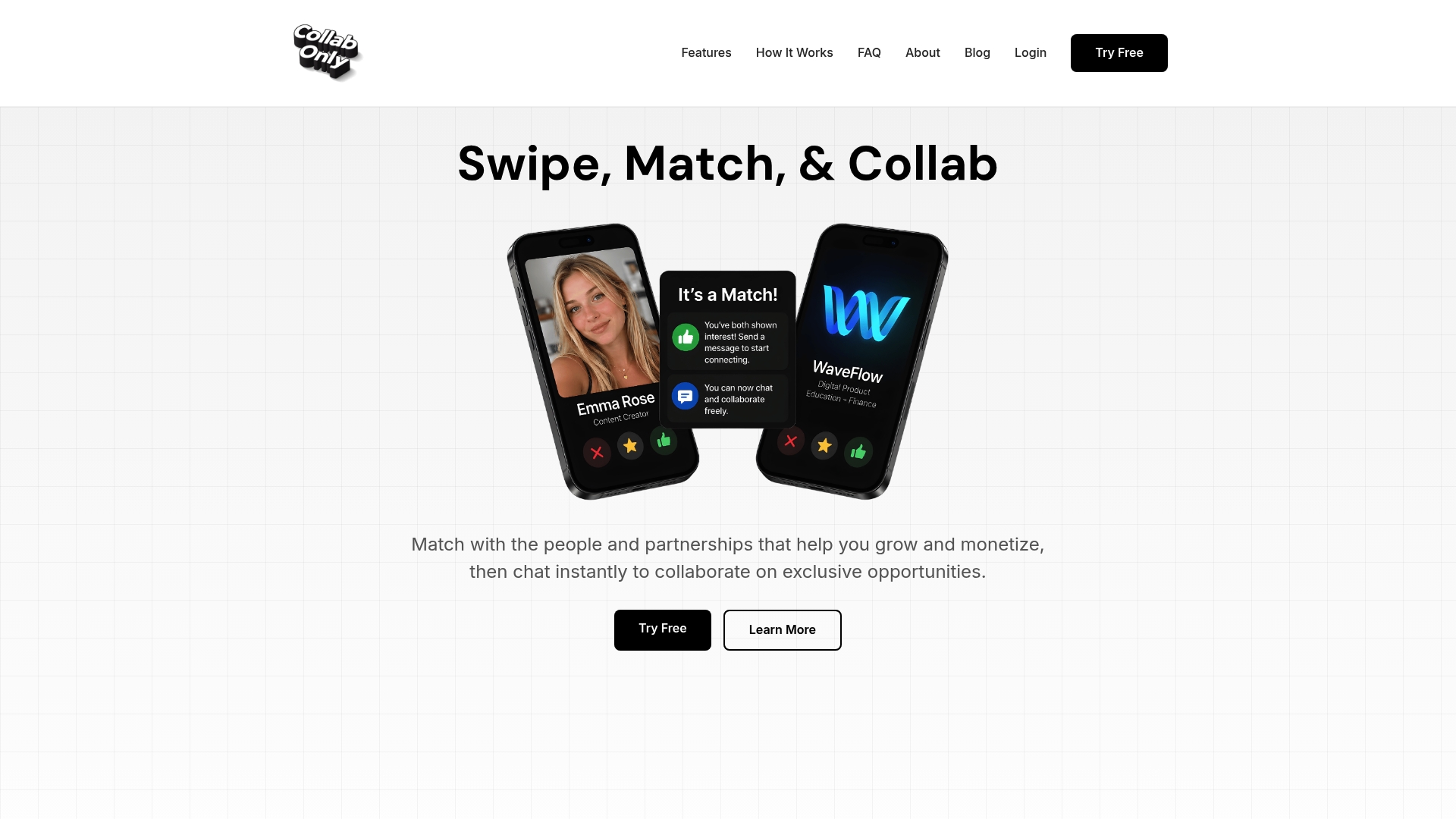
Creators looking to identify and collaborate with nano or micro-influencers who already function as fan community connectors can use Collabonly to find nano influencers for authentic campaigns or hire micro-influencers who act as peer-credibility bridges within their niche communities. The platform supports instant messaging upon match, enabling goal-aligned partnerships with speed that traditional outreach cannot match. For brands and creators ready to turn fan engagement into structured collaboration, Collabonly is where that process starts.
FAQ
What is the role of fans in content creation?
Fans contribute directly to content creation through fan art, edits, narratives, and community management, extending original content and generating authentic social proof that paid campaigns cannot replicate.
How do fans influence content strategy for creators?
Fan feedback and fan-generated content serve as real-time signals about what resonates, and creators who monitor these outputs can incorporate them into content planning, narrative decisions, and distribution strategy.
Why does fan-generated content build more trust than branded content?
63% of consumers cite user-generated content as their primary source of brand authenticity because fans are perceived as independent, unpaid voices whose endorsement carries peer-credibility that sponsored content structurally cannot match.
How can creators measure the impact of fan engagement?
Retention KPIs tracked over 90 to 180-day windows reveal whether fan-engaged audiences sustain their connection over time, providing a more accurate picture of community durability than likes, comments, or short-term follower growth.
What motivates fans to create content for free?
Psychological ownership is the primary driver. When fans invest creative effort, they develop a perceived stake in the content, and platform visibility mechanisms translate that effort into recognized social capital within their community.