

Offer exclusive updates because they convert passive subscribers into high-value customers by creating scarcity, signaling status, and generating measurable lifts in engagement, retention, and revenue. Three mechanisms drive this outcome: scarcity and status pressure accelerate purchase decisions; early access shifts the value exchange away from discounting; and gated feedback loops surface higher-quality product intelligence from your most invested audience segment.
- Scarcity and status: limited access creates urgency and social proof simultaneously.
- Early access as a purchase trigger: subscribers who receive first-look content convert at higher rates than general-list recipients.
- Gated feedback: insider cohorts provide more actionable product input than broad surveys.
To start today, create a single gated "early access" update for a VIP segment of 500–1,000 subscribers and measure open rate and conversion against your general list over 30 days.
Key Takeaways
Exclusive updates drive measurable engagement, loyalty, and revenue when the value exchange is clear, the segment is defined, and the rollout is staged against a control group.
| Point | Details |
|---|---|
| Define the format first | Match gating method to your infrastructure: email, in-app push, or paid subscription tier. |
| Start with 5–10% of your list | Pilot with a small VIP cohort and expand only after open rate and conversion metrics hold. |
| Track open rate and conversion | Target 15–25 percentage points above your general list open rate within the first 14 days. |
| Protect margin with access, not discounts | Exclusivity compels signups and purchases without price reductions, preserving LTV. |
| Collabonly accelerates launch | Collabonly's creator-matching platform connects brands with nano and micro influencers to drive subscriber acquisition for gated programs. |
Table of Contents
- What counts as an exclusive update, and what formats should you use?
- How Nike SNKRS and creator platforms use exclusives effectively
- How exclusive updates drive engagement, loyalty, and sales
- How to run an exclusive-updates pilot
- What to measure and when to expect results
- Best practices and common pitfalls
- Why exclusivity is a long-term asset, not a campaign tactic
- Collabonly makes exclusive-update campaigns faster to launch
- Sources
- FAQ
What counts as an exclusive update, and what formats should you use?
An exclusive update is any piece of brand communication deliberately restricted to a defined subscriber group, whether by invitation, subscription tier, app membership, or paid access. The restriction itself is the value signal. Formats vary significantly by delivery channel, effort required, and perceived value to the recipient.
Common formats include:
- Subscriber-only email or SMS drops (gated by list segment or opt-in tier)
- In-app push notifications restricted to registered or premium users
- Paid subscription posts on creator platforms (subscriber-only threads, paywalled newsletters)
- Private community announcements (closed Slack groups, Discord channels, or Facebook Groups)
- Invite-only product announcements sent to a curated VIP cohort
WhatsApp channel subscriptions illustrate how mainstream platforms implement this: paying subscribers access subscriber-only updates immediately after purchase, can view the past 30 days of gated content, and see those posts labeled distinctly from public channel content. That labeling is not cosmetic. It reinforces the perceived value of the subscription with every notification.
Format selection should follow a simple decision rule: low-friction formats (segmented email, app push) suit frequent operational updates and early-access drops; high-effort, paywalled formats (paid newsletter tiers, private community posts) suit content with standalone value that justifies a recurring fee. Mailchimp's guidance on exclusive content reinforces this distinction, noting that scarcity and tiered membership work best when the content quality is consistently high and the benefits are communicated clearly upfront.
How Nike SNKRS and creator platforms use exclusives effectively
Nike's SNKRS app is the most cited brand-side case study in exclusive-access marketing, and for good reason. Nike's Inside SNKRS documentation describes Exclusive Access as an invite-only or member-prioritized mechanism that grants certain members early access to high-demand product drops. The program rewards loyalty, creates scarcity-driven desirability, and drives app adoption as a prerequisite for participation. Members who want access must be in the app. That single requirement has made SNKRS one of the most downloaded retail apps in the United States.
The mechanics are worth examining closely. SNKRS does not simply offer a discount to loyal buyers. It offers priority access, a non-financial benefit that preserves margin while generating FOMO-driven urgency among non-members. This can create a cycle where app installs increase, engagement grows, and scarcity drives demand for future drops.
On the creator side, X (formerly Twitter) has moved in the same direction. X revamped its Creator Subscriptions to include exclusive threads, a refreshed paywall, a new subscriber dashboard, and shareable subscription cards. Critically, subscriber-only posts now appear inside the creator's main profile feed rather than a hidden tab, which raises their visibility and normalizes the concept of gated content for general audiences. Creators monetize loyal fans; brands can model the same mechanic for product announcements, beta access, and community content.
These examples map to three distinct brand goals: SNKRS targets revenue and app adoption; creator subscriptions target monetization and retention; private community drops target feedback quality and brand advocacy. Knowing which goal you are optimizing for determines which mechanic to copy. For more on how exclusive content supports fan retention, the dynamics apply equally to brand-managed communities.
How exclusive updates drive engagement, loyalty, and sales
The behavioral mechanisms behind exclusive updates are well-documented and compound over time when the program is run consistently.
Mechanism 1: Scarcity and status. Restricting access creates urgency. When subscribers know that an offer or announcement is available only to a defined group, the psychological pressure to act increases. Status signaling amplifies this: receiving an exclusive invite communicates to the recipient that they are valued, which strengthens brand affinity independent of the content itself.

Mechanism 2: Prioritized attention. Exclusive recipients open more and click more because the communication feels earned rather than broadcast. RetentionEdge's analysis of exclusivity marketing argues that exclusivity drives higher lifetime value by exchanging access or experiences rather than discounts, and cites early access, app-only offers, and VIP communities as the primary vehicles. Subscribers who receive these signals tend to become more profitable customers without requiring margin-eroding promotions.
Mechanism 3: Feedback loop quality. Insider cohorts, by definition, are your most engaged audience segment. Their product feedback is more specific, more actionable, and more representative of your highest-LTV customers than broad survey responses. Gating a beta announcement to this group and soliciting structured feedback before a public launch produces intelligence that general-list surveys rarely match.
The margin protection point deserves emphasis. Exclusivity marketing compels signups and drives purchase behavior without the margin erosion that discount-led campaigns produce. Access is the currency, not price reduction. Over time, this shifts the brand's value exchange toward a premium positioning that is difficult for competitors to replicate through price alone. For a deeper look at how exclusive offers influence purchase behavior, the loyalty mechanics follow the same logic.
Statistic callout: RetentionEdge notes that exclusivity marketing can increase app adoption and produce more loyal, profitable customers without requiring discounts, preserving margin while lifting LTV.
How to run an exclusive-updates pilot
A structured pilot reduces risk and generates the signal needed to justify a full rollout. Follow these six steps:
- Set one measurable goal. Choose a single KPI: lift open rate by 15 percentage points among the VIP segment, or increase repeat-purchase rate by 10% within 60 days. One goal prevents diluted measurement.
- Pick the format and gating method. Match the format to your infrastructure. Segmented email is lowest friction; in-app push requires an installed base; paid subscription tiers require a monetization layer. Choose the channel your audience already uses.
- Design the value exchange. Define what the subscriber receives that the general audience does not. Early access to a product drop, a behind-the-scenes update, a first-look at a campaign, or a private Q&A all qualify. The value must be self-evident to the recipient without explanation.
- Segment the audience and set sample size. Start with 5–10% of your total list or a named VIP cohort of 500–2,000 contacts. Expo's production playbook recommends limiting initial exposure and expanding only after metrics remain healthy, a principle that applies directly to subscriber-segment rollouts.
- Run a timed rollout with monitoring windows. Set a 30-day observation window. Define rollback criteria upfront: if unsubscribe rate exceeds a set threshold or conversion falls below the control group, pause and diagnose before expanding.
- Collect qualitative feedback and measure leading indicators. Survey the pilot cohort at day 14 and day 30. Ask what they valued, what felt missing, and whether they would recommend the program. Use this input to refine the value exchange before scaling.
Sample timeline: Days 1–7: segment build and content production. Days 8–14: pilot send and initial open/click monitoring. Days 15–30: conversion tracking and qualitative feedback collection. Days 31–45: analysis and go/no-go decision for broader rollout.
Pro Tip: Set your rollback threshold before the pilot launches, not after. Deciding what "bad" looks like in advance prevents confirmation bias from keeping a failing pilot alive longer than it should run.
What to measure and when to expect results
Tracking the right KPIs at the right intervals separates signal from noise in an exclusive-updates program.
| KPI | Common target | Signal window |
|---|---|---|
| Open rate (exclusive segment) | Ideally higher than general list | 1-2 weeks |
| Click-through rate | Higher than general | 1-2 weeks |
| Conversion rate (purchase/action) | Noticeable lift vs. control | 2-4 weeks |
| Repeat-purchase rate | Improvement expected over time | 1-2 months |
| Churn/unsubscribe rate | Should not exceed general list | First month |
| List growth (exclusive opt-ins) | Moderate subscriber uptake over months | Up to 3 months |
Secondary metrics worth tracking: app installs driven by exclusive-access requirements (as SNKRS demonstrates), NPS scores from the insider cohort, and volume and specificity of UGC or product feedback generated.
Attribution requires a control group. Run the pilot against a matched segment that receives standard communications. Measure incremental lift, not absolute performance, to isolate the effect of exclusivity from seasonal or campaign-level variance. Qualitative signals, such as unsolicited social mentions or direct replies to exclusive emails, often appear before conversion data matures and serve as early confirmation that the value exchange is landing.
Best practices and common pitfalls
Executing an exclusive-updates program well requires discipline on both the delivery and the operational side.
Do:
- Deliver on every promise made at the point of opt-in. Under-promising and over-delivering builds the trust that sustains long-term subscriber retention.
- Communicate the benefit clearly at signup. Subscribers who understand what they are getting stay longer and engage more consistently, per Mailchimp's exclusive content guidance.
- Maintain list hygiene and obtain explicit consent before adding contacts to gated segments, particularly for SMS, where CAN-SPAM and TCPA compliance is non-negotiable.
- Use a cadence of a few exclusive updates per month for most programs. More frequent sends risk fatigue; less frequent sends reduce the perceived value of the subscription.
Don't:
- Over-gate content to the point of alienating your general audience. A public funnel must remain active to replenish the exclusive segment with new subscribers.
- Treat exclusivity as a discount mechanism. Price reductions can be replicated by any competitor. Access, status, and early information cannot be easily copied.
- Launch without a rollback plan. Define unsubscribe-rate thresholds and conversion floors before the first send, not after a poor result forces the conversation.
One compliance note: any gated SMS or email program operating in the United States must comply with CAN-SPAM, TCPA, and applicable state privacy laws. Confirm consent documentation and suppression list management before scaling.
Why exclusivity is a long-term asset, not a campaign tactic
Most marketing teams treat exclusive updates as a promotional lever: run a drop, generate a spike, move on. That framing misses the compounding effect that makes exclusivity genuinely valuable over time.
When a brand consistently delivers on the promise of privileged access, it builds a cohort of subscribers who self-identify as insiders. That identity is stickier than any discount-driven loyalty program because it is social and status-based rather than purely transactional. Insiders refer more, churn less, and provide feedback that improves the product for the broader market. The LTV differential between an insider cohort and a general-list subscriber tends to widen with each program cycle, not narrow.

The tension worth managing is between scarcity and inclusivity. A program that is too restrictive fails to grow. One that is too permissive loses its status signal. The sustainable path is a tiered structure. A public funnel feeds a mid-tier subscriber segment, which in turn feeds a smaller VIP cohort. Each tier has its own value exchange, and movement between tiers is earned through engagement rather than purchased through discounts. Brands that build this architecture treat exclusivity as a retention asset sitting alongside CRM, loyalty programs, and content marketing, not as a one-off campaign mechanic. Influencer marketing strategies that incorporate creator-led exclusives can accelerate the growth of each tier by reaching targeted communities with peer-credible endorsements.
Collabonly makes exclusive-update campaigns faster to launch
Brands that want to run early-access and exclusive-update programs without building the creator-outreach infrastructure from scratch have a direct route through Collabonly's nano influencer network. Collabonly connects growth, CRM, and product marketing teams with vetted creators across TikTok, Instagram, and YouTube through a swipe-based matching system that eliminates the slow email cycles and lost DMs that typically delay campaign launches.
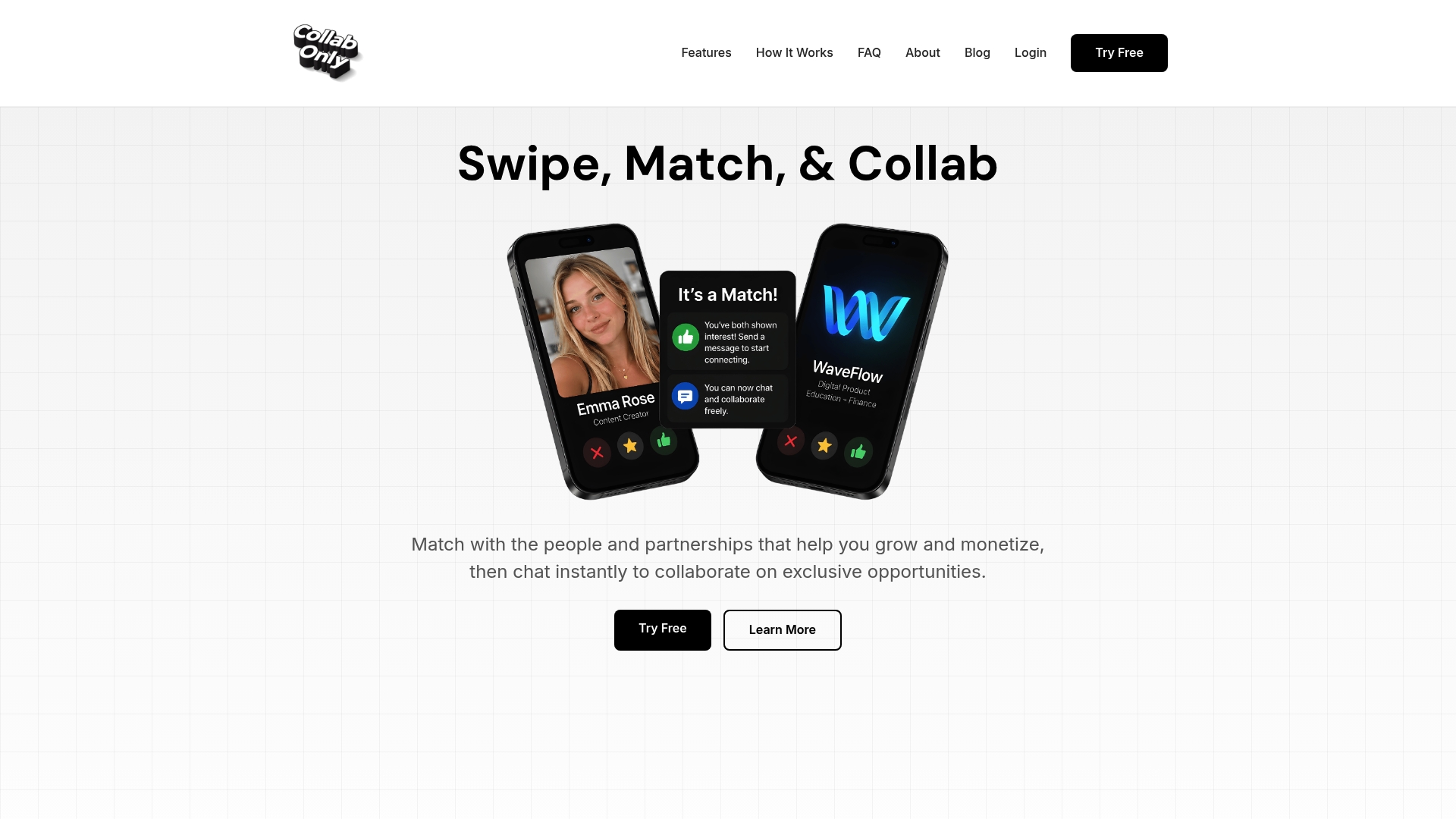
The platform is built for brands that need to move quickly: match with a creator, align on the exclusive-access mechanic, and push the campaign through the creator's subscriber base within days rather than weeks. For teams scaling beyond a pilot, micro influencer campaigns through Collabonly extend reach to targeted communities while preserving the peer-credibility signal that makes exclusive-access promotions convert. Growth and CRM teams benefit most, particularly when the goal is subscriber acquisition for a gated program or app-install growth tied to an exclusive drop. To see which creator tier fits your next exclusive campaign, visit Collabonly and start matching.
Sources
The following sources map directly to the sections above and serve as templates for building your own measurement and rollout plans:
- X revamps Creator Subscriptions with new features, like exclusive threads and shareable cards | TechCrunch
- Exclusivity marketing
- Exclusive content: strategies to maximize engagement | Mailchimp
- The production playbook for OTA updates | Expo
- About channel subscriptions | WhatsApp Help Center
FAQ
What does exclusive access mean on the SNKRS app?
Nike's SNKRS Exclusive Access is an invite-only or member-prioritized mechanism that grants certain members early access to high-demand product drops, rewarding loyalty and creating scarcity-driven demand without discounting.
Does SNKRS have exclusive releases?
Yes. SNKRS uses invite-only drops and member-prioritized early access as its primary exclusivity mechanic, requiring app membership as a prerequisite and driving app installs as a direct outcome.
How does SNKRS determine winners for exclusive drops?
Nike selects members for Exclusive Access based on membership status and engagement signals within the SNKRS app; the program rewards loyalty rather than operating as a random lottery.
How do you get exclusive Nike releases?
Membership in the Nike SNKRS app is the primary requirement. Members who engage consistently with the app are prioritized for invite-only and early-access drops over general-public release windows.
Why offer exclusive updates instead of running a standard promotion?
Exclusive updates preserve margin by exchanging access rather than price reductions, generate higher open and conversion rates among the gated segment, and build a high-LTV insider cohort that compounds retention value over time.