

TL;DR:
- Exclusive offers create a sense of access scarcity that boosts customer loyalty and engagement.
- Marketers should use them strategically to reinforce loyalty and build long-term brand value.
Exclusive offers are defined as special deals, access privileges, or discounts available only to a select group of customers, such as subscribers, loyalty members, or early adopters. The role of exclusive offers extends far beyond a simple price reduction. They activate psychological drivers like fear of missing out (FOMO), status desire, and community belonging, all of which translate directly into higher conversion rates and stronger customer retention. Programs like Hilton Honors bonus point promotions and TPG subscriber bonus offers demonstrate how well-structured exclusives create perceived value that generic discounts cannot replicate. For marketing professionals and business owners, understanding how to deploy these tools with precision separates brands that build lasting loyalty from those that compete on price alone.
What is the role of exclusive offers in consumer psychology?
Exclusive offers work because they tap into three core psychological motivators: FOMO, status, and belonging. When a customer receives an offer unavailable to the general public, the purchase stops feeling transactional. It becomes a signal of membership in a preferred group. That shift in perception is what separates exclusivity marketing from standard promotional activity.

Exclusivity marketing triggers FOMO, status desire, and belonging, leading to increased customer lifetime value and brand advocacy. The practical implication is significant. Customers who feel recognized and rewarded are more likely to repeat purchases, refer others, and resist competitor offers.
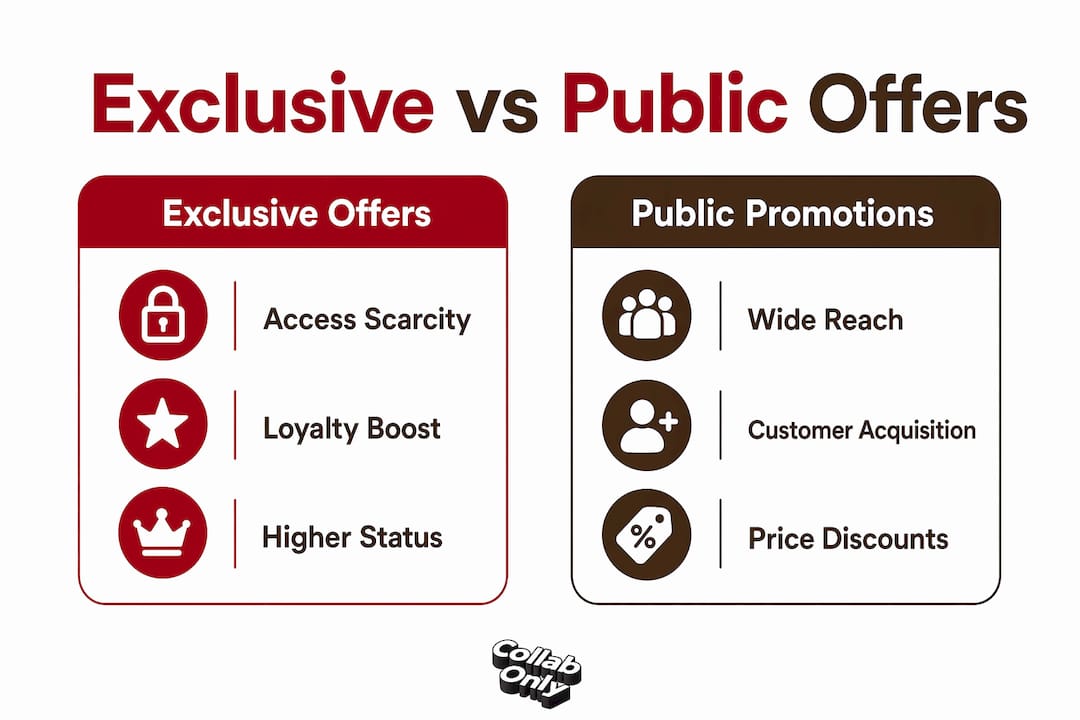
Exclusive deals also reframe the purchase decision. A standard 20% discount signals that a product may be overpriced or underperforming. An exclusive 20% discount for loyalty members signals that the customer has earned a privilege. The product's perceived value stays intact while the customer's emotional investment increases.
Key psychological mechanisms at work include:
- FOMO activation: Scarcity and limited access create urgency without requiring a price war.
- Status signaling: Exclusive access positions the customer as valued, not just targeted.
- Community reinforcement: Receiving an exclusive deal ties the customer to a brand community, increasing switching costs emotionally.
- Personalization perception: Even a broad subscriber offer feels personal when framed as exclusive to a defined group.
Pro Tip: Frame exclusive offers around identity, not just savings. "As a founding member, you get early access" outperforms "Save 15% this week" because it tells the customer who they are, not just what they save.
What strategic types of exclusive offers should marketers use?
Not all exclusive offers function the same way. The format, timing, and audience segment determine whether an exclusive drives a one-time conversion or builds long-term loyalty. Marketers who treat all exclusives as interchangeable miss the structural differences that make each type effective in distinct contexts.
-
Subscriber-only deals: Offers tied to email lists, newsletters, or paid subscriptions. The TPG model of 125% bonus point offers for subscribers illustrates how this format dramatically increases conversion by providing value unavailable through any other channel.
-
Exclusive distribution agreements: Brands that limit product availability to select retail partners achieve higher per-unit margins and stronger retailer commitment. Exclusive distribution strategies avoid local competition and deepen retailer investment in the brand's success.
-
Tiered membership exclusives: Loyalty programs structured around tiers (bronze, silver, gold) create aspirational pathways. Each tier unlocks progressively better offers, which motivates customers to increase spend to reach the next level.
-
Launch-window exclusives: Offers available only during a product launch or pre-order period. These capture early adopters and generate social proof before a product reaches the mass market.
-
Partner or co-branded exclusives: Offers available only through a specific brand partnership. These expand reach while maintaining the perception of limited access. Reviewing brand partnership best practices helps marketers structure these agreements for maximum mutual benefit.
Pro Tip: Align exclusive offer windows with peak demand events. The value of exclusive deals peaks during high-demand moments and declines rapidly afterward. A launch-window exclusive captures maximum attention; the same offer one month later generates a fraction of the response.
Two pitfalls marketers must avoid: exclusivity fatigue (offering too many "exclusive" deals until the label loses meaning) and poorly timed campaigns that arrive after audience interest has peaked. Both errors erode the perceived value that makes exclusivity effective in the first place.
How do exclusive offers compare with limited-time or public promotions?
The distinction between exclusive offers and limited-time offers (LTOs) matters for both margin management and brand equity. LTOs create urgency through time scarcity. Exclusive offers create urgency through access scarcity. Both drive conversions, but through different mechanisms and with different long-term effects.
| Dimension | Exclusive offers | Limited-time offers | Public promotions |
|---|---|---|---|
| Primary driver | Access scarcity | Time scarcity | Price reduction |
| Brand equity impact | Positive (reinforces premium) | Neutral to slight negative | Negative if overused |
| Customer lifetime value | High | Moderate | Low |
| Margin pressure | Low to moderate | Moderate | High |
| Retention effect | Strong | Weak to moderate | Weak |
| Best use case | Loyalty programs, launches | Seasonal sales, clearance | Acquisition campaigns |
Differentiation through exclusivity increases switching costs and reduces churn more effectively than discount value alone. This is the critical distinction. A public 30% off sale attracts price-sensitive customers who will leave for the next competitor offering 35% off. An exclusive member discount attracts customers who value their status within the brand's ecosystem and are less likely to defect.
Public promotions serve a clear purpose in customer acquisition. They cast a wide net and bring new customers into the funnel. The problem arises when brands rely on public discounts for retention. That approach trains customers to wait for sales rather than purchase at full price.
Exclusive offers, by contrast, build community and heightened audience loyalty over time. The customer who receives a members-only deal feels recognized. That recognition compounds with each subsequent exclusive interaction, creating a relationship that price alone cannot disrupt.
How can businesses implement exclusive offers to maximize ROI?
Effective implementation of exclusive offers requires more than creating a discount code and emailing it to a list. The mechanics of segmentation, timing, communication, and measurement determine whether an exclusive generates a short-term spike or a sustained lift in customer lifetime value.
Segmentation and targeting:
Identify which customer segments respond most strongly to exclusivity signals. High-frequency buyers, loyalty program members, and early adopters are the most receptive. Sending an exclusive offer to a customer who purchased once two years ago dilutes the perceived value for your active base.
Integration with loyalty structures:
Exclusivity marketing integrated into loyalty structures maximizes long-term engagement and ROI far more effectively than standalone promotions. Tie exclusive offers to loyalty tiers so that the offer itself reinforces the customer's investment in the program. Each exclusive interaction becomes a reason to stay, not just a reason to buy once.
Agreement and partnership management:
For brands using exclusive distribution or co-branded partnerships, exclusivity agreements require careful drafting of scope and exclusions to maintain commercial flexibility. Regular reviews of these agreements prevent situations where exclusivity becomes a constraint rather than an advantage.
Timing and communication:
Exclusive offers hold the greatest value when aligned with peak demand events such as product launches or sales seasons. Communicate the offer's exclusivity explicitly in every touchpoint. Subject lines, push notifications, and landing pages should all reinforce that this offer is not available to everyone.
Measurement metrics to track:
- Redemption rate by segment (identifies which audiences respond most)
- Customer lifetime value change post-exclusive campaign
- Churn rate comparison between exclusive offer recipients and non-recipients
- Margin impact per exclusive campaign
- Net Promoter Score shifts among exclusive offer recipients
Pro Tip: Run a control group on every exclusive campaign. Send the exclusive offer to 80% of your target segment and withhold it from 20%. The comparison in purchase behavior and retention over 90 days gives you clean data on the offer's actual impact.
Key Takeaways
Exclusive offers drive customer loyalty and sales by creating access scarcity, not just price reductions, making them structurally superior to public discounts for retention and brand equity.
| Point | Details |
|---|---|
| Psychology drives performance | FOMO, status, and belonging make exclusive offers more persuasive than standard discounts. |
| Format determines outcome | Subscriber deals, tiered memberships, and launch exclusives each serve distinct strategic purposes. |
| Exclusives outperform LTOs for retention | Exclusive offers reduce churn more effectively than limited-time or public promotions. |
| Timing is critical | Exclusive deals peak in value during high-demand windows and lose impact rapidly afterward. |
| Measure with control groups | Comparing exclusive recipients to a withheld group produces clean ROI data for future campaigns. |
Exclusivity as a brand moat, not a promotional tactic
The most common mistake I see marketing professionals make with exclusive offers is treating them as a promotional lever rather than a structural asset. A flash sale is a lever. An exclusive membership tier is a moat. The difference in long-term business impact is substantial.
Brands that deploy exclusives sporadically, without connecting them to a loyalty architecture, generate short-term spikes that leave no residual value. The customer redeems the offer, feels no deeper connection to the brand, and moves on. The brand has spent margin without building equity.
The brands that get this right, whether in travel, media, or consumer goods, treat exclusivity as a relationship signal. Every exclusive offer says: "You are in a group we value." When that message is consistent and credible, customers internalize it. They become advocates, not just buyers. Exclusive negotiation periods and agreements require the same discipline. Timing and clarity are not administrative details. They are the conditions that determine whether exclusivity creates trust or resentment.
The warning I would give any brand building an exclusivity program is this: overuse destroys the mechanism. When every email subject line reads "exclusive offer inside," none of them are exclusive. Guard the label. Reserve it for offers that genuinely deliver access or value unavailable elsewhere. The scarcity of the word "exclusive" is part of what makes it work.
— Samuel
How Collabonly connects brands with influencers for exclusive campaigns
Exclusive offer campaigns perform best when they reach the right audience through trusted voices. Nano and micro influencers, with their tightly defined communities and high engagement rates, are the most effective channel for distributing exclusive deals to receptive audiences.
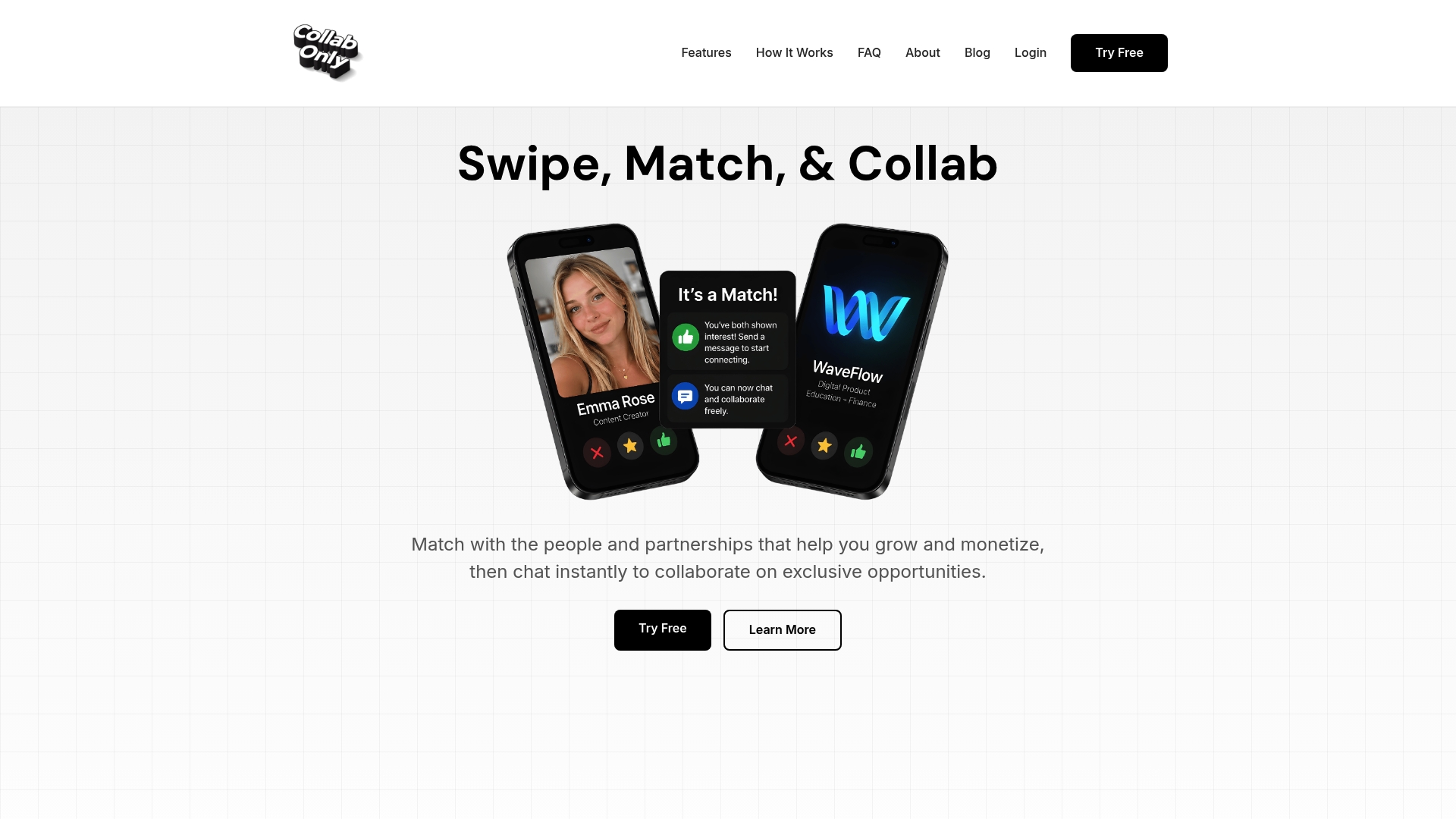
Collabonly's platform connects brands directly with nano influencers and micro influencers who can deliver exclusive promotions to audiences that are already primed to engage. The swipe-and-match system eliminates the friction of cold outreach, so brands spend less time finding the right creator and more time running campaigns that convert. For marketing professionals who want to pair the psychological power of exclusivity with the reach of creator communities, Collabonly provides the infrastructure to do both efficiently.
FAQ
What is the primary role of exclusive offers in marketing?
Exclusive offers create access scarcity that activates FOMO, status desire, and community belonging, driving higher conversion rates and customer lifetime value than standard public promotions.
How do exclusive offers drive customer loyalty differently than discounts?
Exclusive offers signal that the customer belongs to a valued group, which raises emotional switching costs. Standard discounts attract price-sensitive buyers who leave for the next lower price.
When should a brand use exclusive offers vs. limited-time offers?
Use exclusive offers for retention and loyalty program reinforcement. Use limited-time offers for seasonal acquisition campaigns where broad reach matters more than long-term relationship building.
How can businesses access exclusive offer strategies for influencer campaigns?
Platforms like Collabonly match brands with nano and micro influencers who distribute exclusive deals to targeted, high-engagement audiences, combining access scarcity with trusted creator reach.
What metrics should marketers track for exclusive offer campaigns?
Track redemption rate by segment, customer lifetime value change, churn rate comparison between recipients and non-recipients, and Net Promoter Score shifts following each exclusive campaign.