

TL;DR:
- Marketing platforms function as orchestration engines, analytics consolidators, and governance frameworks supporting cross-channel customer experiences. They enable real-time decisioning, accurate revenue attribution, and enforce compliance through shared data layers and aligned lead scoring. Effective implementation depends on understanding orchestration logic, ensuring governance, and integrating data across the entire marketing stack.
Marketing professionals frequently treat marketing platforms as sophisticated scheduling or distribution tools. That framing understates the role of marketing platforms by a wide margin. In practice, these systems function as orchestration engines, analytics consolidators, governance frameworks, and integration layers, all operating simultaneously beneath the surface of every campaign you run. Understanding what they actually do, as opposed to what their feature lists advertise, is the difference between a platform that generates measurable revenue impact and one that produces dashboards nobody trusts.
Table of Contents
- Key Takeaways
- The role of marketing platforms as orchestration engines
- Analytics platforms and revenue attribution
- Governance and compliance within platform operations
- Lead management and scoring in the platform layer
- Marketing platforms as connectivity and intelligence layers
- My take on what marketing platforms actually get wrong
- Amplify your campaigns with Collabonly
- FAQ
Key Takeaways
| Point | Details |
|---|---|
| Orchestration over automation | Marketing platforms coordinate cross-channel workflows using triggers and logic, not just scheduled sends. |
| Unified analytics drives decisions | Platforms that consolidate paid, web, CRM, and ecommerce data produce trustworthy attribution and budget clarity. |
| Governance is non-negotiable | Consent management, access controls, and audit trails protect both compliance and reporting accuracy. |
| Lead scoring requires alignment | Marketing and sales must share lead definitions or scoring models produce stale, misleading signals. |
| Integration is a strategic layer | Platforms that act as shared data layers reduce fragmentation, security risk, and long-term operational complexity. |
The role of marketing platforms as orchestration engines
The industry term for what most people call "marketing automation" is marketing orchestration, and the distinction is worth understanding precisely. Automation handles repetitive tasks. Orchestration coordinates the timing, sequencing, and conditional logic that connects those tasks into a coherent customer experience across channels.
Marketing orchestration platforms reduce manual coordination, decrease time-to-launch, lower error rates, and improve conversion and revenue metrics. The mechanism behind those gains is specific: platforms use triggers, branching conditions, timing rules, and goal exits to determine what happens next for each individual contact, based on their behavior and profile data.
Consider a practical example. A prospect downloads a product comparison guide. The platform registers that trigger, checks the contact's lead score, and branches accordingly. High-score contacts receive a direct sales follow-up sequence. Lower-score contacts enter a nurturing track with educational content. Neither sequence is manually assigned. The orchestration logic handles routing in real time.
Key capabilities that define genuine orchestration, as distinct from basic automation, include:
- Cross-channel coordination: email, paid media, SMS, CRM tasks, and web personalization all respond to shared data
- Real-time decisioning: contact behavior updates trigger immediate workflow adjustments, not batch processing
- Goal exits: contacts leave sequences automatically when they convert, preventing over-communication
- Branching logic: conditional paths route contacts based on profile attributes and engagement signals
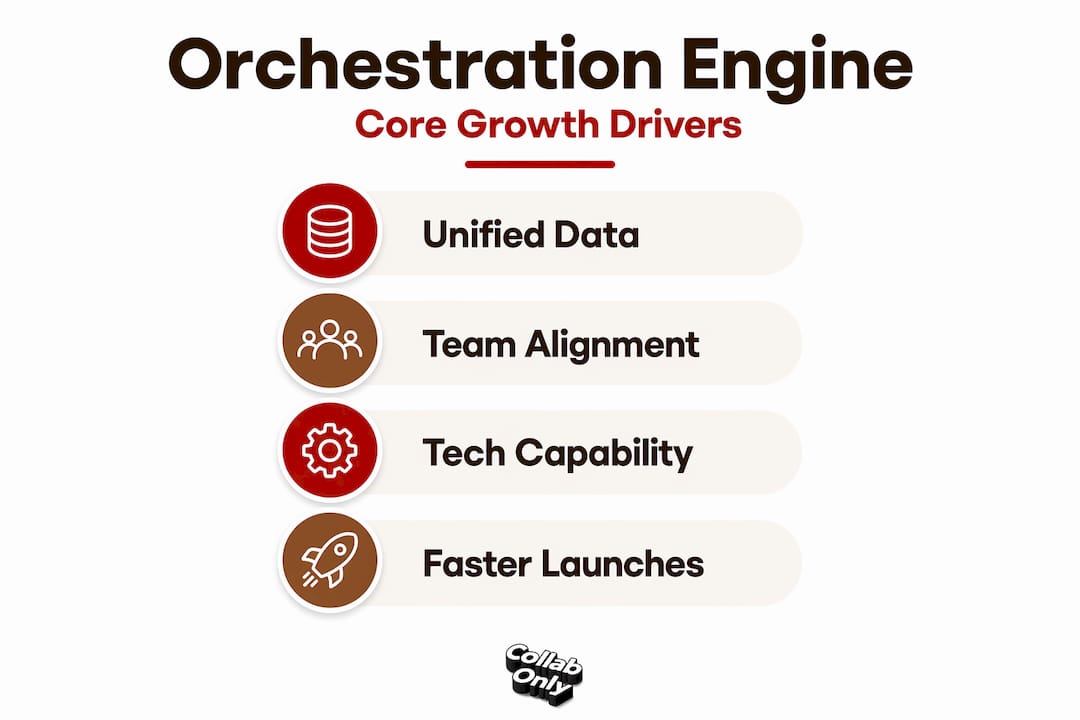
Successful orchestration requires unified real-time customer data, cross-functional team alignment, and technology capable of coordinating actions across platforms simultaneously. Without those three conditions, orchestration degrades into disconnected automation that produces limited improvements and unreliable reporting.
Pro Tip: Before evaluating any marketing platform on features, define your orchestration logic first. Map your triggers, branching conditions, and goal exits on paper. Then test whether the platform can execute that logic under realistic data volumes. Feature demos rarely reveal orchestration gaps.
Analytics platforms and revenue attribution
Fragmented reporting is the most common cause of misinformed marketing budget decisions. When paid media, web analytics, CRM, and ecommerce data live in separate systems with inconsistent customer identifiers, every channel appears to perform well in isolation while total revenue impact remains unclear.

Marketing analytics platforms address this by ingesting data from all those sources, resolving customer identity across touchpoints, and attributing revenue accurately across the full path to purchase. The result replaces patchwork reporting with a single, trustworthy data foundation.
The table below contrasts last-click attribution, which most teams default to, with multi-touch attribution models that analytics platforms support.
| Attribution model | What it measures | Primary limitation |
|---|---|---|
| Last-click | Credits the final touchpoint before conversion | Ignores all prior awareness and nurturing interactions |
| First-click | Credits the initial discovery channel | Ignores all mid-funnel and conversion-stage activity |
| Linear | Distributes credit equally across all touchpoints | Treats all interactions as equally influential |
| Data-driven | Weights touchpoints by actual conversion probability | Requires sufficient conversion volume to model accurately |
Identity resolution is the technical function that makes multi-touch attribution reliable. Platforms match behavior across devices and sessions using deterministic signals (email addresses, login events) and probabilistic modeling. Without identity resolution, the same person appears as multiple contacts, and attribution counts inflate artificially.
Marketing platforms link marketers and consumers by personalizing messaging and building engagement, which directly affects relevance perception and conversion rates. Analytics functions make that personalization possible by surfacing which messages, channels, and sequences actually drive results, rather than which ones generate the most activity.
Pro Tip: Audit your current attribution setup before selecting an analytics platform. If your CRM contact IDs do not match your web analytics user IDs, identity resolution will be your first and most important implementation task. Platforms that handle this natively save months of custom engineering.
Governance and compliance within platform operations
Governance is the function most organizations underestimate until something breaks. The governance layer of a marketing platform encompasses regulatory compliance (GDPR, CAN-SPAM, CCPA), consent management, user access controls, and audit trails that record what changed, when, and by whom.
Governance functions within marketing platforms ensure reliable automation and trustworthy reporting. When governance is absent or poorly configured, platforms produce inaccurate audience segments (because opted-out contacts remain in active lists), unreliable performance data (because suppressed contacts skew open and click rates), and GDPR exposure (because consent records are incomplete or inaccessible).
Common failure modes when governance is skipped or underestimated:
- Consent records stored outside the platform, making suppression synchronization manual and error-prone
- No role-based access controls, meaning any team member can modify active campaigns or export contact data
- Audit trails disabled or limited, making it impossible to diagnose data changes after the fact
- Compliance documentation generated manually rather than pulled from platform logs
Practical governance features to evaluate in any platform include consent preference centers with API access, field-level access controls by user role, automated suppression list synchronization, and exportable audit logs in formats acceptable to legal and privacy teams.
Pro Tip: Treat governance configuration as a launch prerequisite, not a post-launch task. A platform that goes live without consent management and access controls is a liability. Configuring these after campaigns are already running is significantly more complex and disruptive.
Lead management and scoring in the platform layer
Lead scoring translates engagement and profile data into a ranked signal that guides sales follow-up timing and prioritization. The function of this within marketing platforms is to remove subjective judgment from lead qualification and replace it with an objective, consistently applied model.
Lead scoring ranks prospects using profile criteria (job title, company size, industry) and engagement criteria (email opens, page visits, content downloads, webinar attendance). Platforms like Oracle Eloqua use grading systems that assign combined scores, with grades ranging from A1 (the most qualified, highest-priority leads) to D4 (the least qualified), each mapped to a specific sales action or nurture track.
To implement effective lead scoring within a marketing platform:
- Define the ideal customer profile jointly with sales, specifying the demographic and firmographic attributes that indicate fit.
- Assign point values to engagement behaviors based on their historical correlation with purchase intent, not just activity volume.
- Set score thresholds that trigger CRM tasks, sales alerts, or handoff notifications automatically.
- Build score decay rules that reduce scores when contacts go inactive, preventing stale high-score contacts from flooding sales queues.
- Schedule quarterly reviews with sales to recalibrate thresholds based on actual conversion outcomes.
Effective lead scoring depends on marketing and sales sharing lead definitions and agreed actions. When that alignment is absent, scores become theoretical constructs that sales teams ignore. The platform can execute the model perfectly and still produce zero revenue impact if the definitions underlying the model are not validated against real sales outcomes. Read more about lead nurturing strategies that complement scoring models to improve conversion rates at each pipeline stage.
Marketing platforms as connectivity and intelligence layers
Beyond individual functions, the highest-level role of a marketing platform is to serve as the connective intelligence layer across a sprawling technology stack. Most organizations operate 20 to 80 marketing tools simultaneously. Without a coordination layer, each tool operates on its own data definitions, its own contact records, and its own reporting logic.
Fragmented martech stacks create integration debt and security risks. High tool churn in specific categories, particularly in analytics and social management, increases maintenance burdens and erodes data consistency over time.
The emerging architecture that addresses this problem is the universal data layer. Composable platforms operating on a shared data plane allow apps and AI agents to work from consistent semantics and governance structures rather than maintaining separate data models. Google's Gemini system demonstrates this at scale, coordinating campaigns, measurement, engagement, and transactions across multiple products in near real time.
| Architecture type | Data model | Governance | AI readiness |
|---|---|---|---|
| Siloed point solutions | Separate, inconsistent | Fragmented | Low |
| Integrated platform suite | Partially unified | Centralized | Moderate |
| Composable with universal data layer | Unified, consistent semantics | Platform-enforced | High |
The strategic advice for marketing leaders is to evaluate platforms not only on their native features but on their capacity to serve as a platform-based collaboration hub for the entire stack. Adding tools without integration planning accumulates technical debt that compounds as the organization scales.
My take on what marketing platforms actually get wrong
I have spent years watching marketing platform implementations succeed and fail, and the pattern is consistent. The failures almost never come from the platform itself. They come from organizations evaluating platforms on feature checklists rather than testing orchestration logic under realistic conditions.
A platform can have every feature on your requirements list and still fail to coordinate a three-step nurture sequence reliably if the trigger logic is misconfigured. Many automation issues stem from orchestration and measurement mismatches, not tool defects. That is an uncomfortable finding because it shifts accountability from vendor to implementation team.
What I have learned about governance is equally uncomfortable. Organizations treat it as an IT concern and schedule it after the "real" launch work is done. Then a GDPR audit surfaces incomplete consent records, or a campaign fires to suppressed contacts, and the cleanup costs more than the governance configuration would have. Governance is not optional infrastructure. It is the foundation that determines whether your automation is trustworthy.
On the question of AI and universal data layers: I think we are two to three years from most organizations having the data maturity to benefit from AI-native orchestration at scale. The technology is available. The data governance foundations are not, in most stacks I have seen. Intelligent application of automation combined with governance and optimization layers creates sustainable advantage. The platforms that build those layers into their architecture now will compound that advantage significantly.
My practical advice: when assessing platforms, bring your most complex orchestration scenario to the demo. Not a use case the vendor suggests. Yours. Watch how the platform handles branching logic, goal exits, and real-time data updates in that scenario. That test reveals more about platform fit than any feature comparison document.
— Samuel
Amplify your campaigns with Collabonly
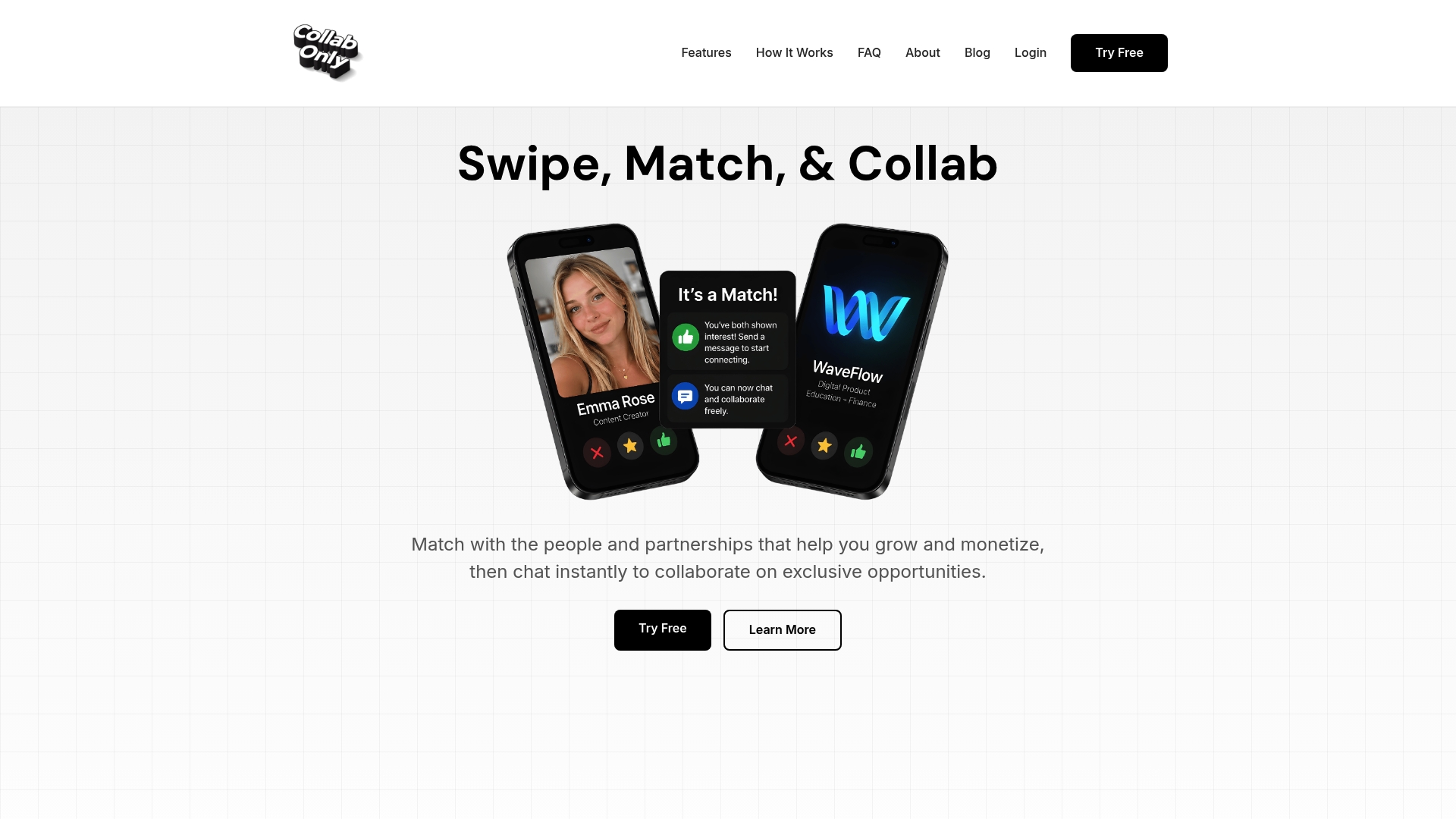
Orchestration and analytics platforms define how you coordinate campaigns internally. Collabonly addresses a different but equally critical gap: how you connect your brand with the right external voices to amplify reach and build credibility at scale.
Collabonly's swipe-based matching system eliminates the outreach friction that slows influencer and brand ambassador campaigns, specifically the slow email threads and unanswered DMs that derail timelines. Brands are matched with creators across TikTok, Instagram, and YouTube based on goal alignment, then move to instant chat to coordinate campaign details without delays. For teams running coordinated influencer programs alongside their core marketing stack, explore brand ambassador opportunities or access nano influencer campaigns through Collabonly to extend your platform-driven outreach into authentic creator partnerships.
FAQ
What is the primary role of marketing platforms?
Marketing platforms serve as orchestration and analytics systems that coordinate campaigns across channels, consolidate performance data, manage lead qualification, and enforce governance. Their core function goes beyond task automation to include real-time decisioning, revenue attribution, and cross-stack integration.
How do marketing platforms improve attribution accuracy?
They ingest data from paid channels, web analytics, CRM, and ecommerce, then apply identity resolution to produce unified customer profiles. Multi-touch attribution models replace last-click defaults, distributing revenue credit across all touchpoints that influenced a conversion.
Why does governance matter in marketing automation systems?
Governance controls (consent management, access controls, audit trails) determine whether automation is legally compliant and operationally reliable. Without them, suppressed contacts enter active campaigns, reporting data becomes untrustworthy, and organizations face GDPR exposure.
How does lead scoring connect marketing platforms to sales outcomes?
Lead scoring assigns point values to profile and engagement data, producing ranked signals that trigger CRM tasks and sales alerts automatically. The model works when marketing and sales share lead definitions and validate score thresholds against actual conversion outcomes on a recurring basis.
What is a universal data layer in marketing platform architecture?
A universal data layer is a shared data infrastructure where all tools in a marketing stack operate on consistent data definitions, governance rules, and semantics. It reduces fragmentation, supports AI-native orchestration, and eliminates the integration debt that accumulates in siloed point-solution stacks.