

TL;DR:
- Building a strong public presence and using AI research tools help creators attract aligned partners more effectively.
- Personalized, small-step outreach with clear value and micro-collaborations fosters trust and long-term relationships.
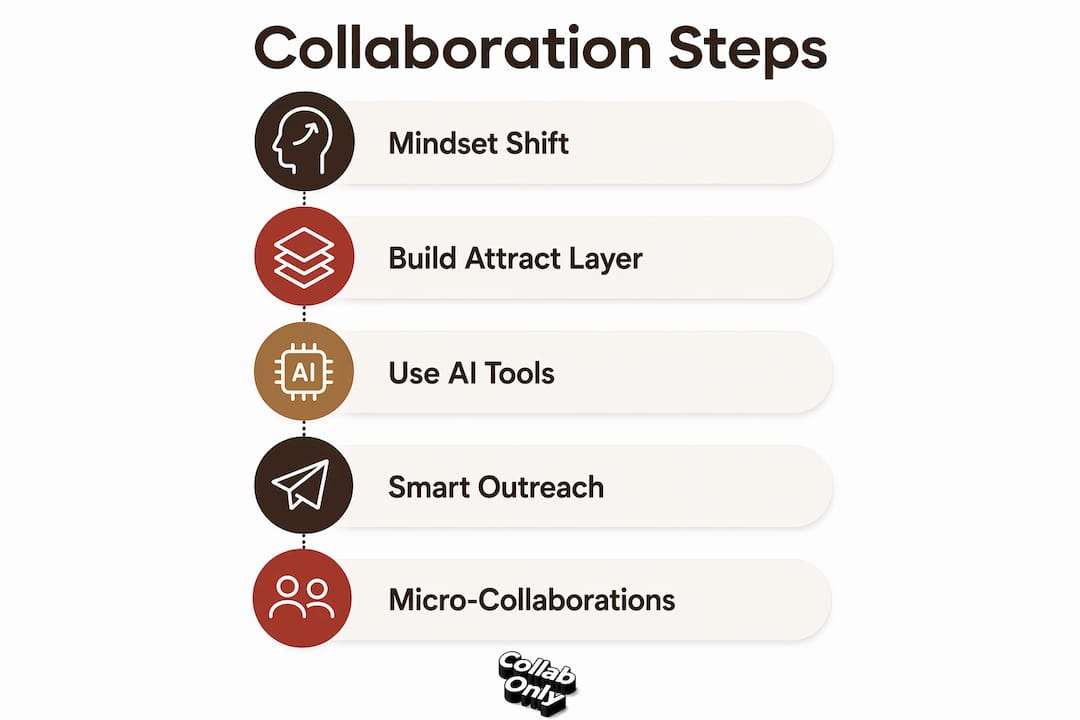
Attracting collaborators is defined as building a magnetic, visible presence that draws aligned partners to you, rather than chasing volume through cold outreach. The most effective creators, brands, and marketers in 2026 do not win partnerships by sending hundreds of DMs. They win by making themselves worth finding. This article covers the mindset shifts, public presence tactics, AI-powered research methods, and outreach execution steps that convert interest into real partnerships. Collabonly's matching platform is built on exactly this principle: alignment first, friction last.
How to attract collaborators through the right mindset
The single most important shift in attracting collaborators is moving from "what can I get?" to "what can we build together?" That reframe changes everything about how you present yourself, what you ask for, and who responds. Being clear about your vision and specific collaboration intentions attracts genuinely aligned partners, while vague or self-serving requests repel them.
Emotional security is the most attractive collaborator quality. A settled identity, consistent values, and a clear sense of what you offer signal to potential partners that working with you will be low-drama and high-value. Desperation reads immediately. Clarity reads as confidence.
Common mindset pitfalls that stall collaboration attraction:
- Vague requests ("I'd love to work together sometime") with no specifics
- Focusing on your own goals before establishing mutual benefit
- Treating every potential partner as a transaction rather than a relationship
- Projecting urgency that signals you need the partnership more than it needs you
- Skipping the relationship-building phase and jumping straight to large asks
Pro Tip: Write a one-sentence collaboration statement before any outreach: "I help [type of partner] achieve [specific outcome] by contributing [specific skill or asset]." If you cannot complete that sentence clearly, your messaging will not land.
Performing as the collaborator you seek means demonstrating reliability, follow-through, and quality contribution before a formal partnership even begins. Partners look for people who reduce their workload, not add to it. That reputation is built in public, over time, through consistent behavior.
How do you build a public attract layer that draws partners organically?
The "Attract Layer" is a compounding public system that makes you discoverable and qualified without requiring permission or high outreach volume. It works through three core components: a public "who I'd love to work with" list, credited collaborations, and ongoing notes that reference and celebrate peers. Creators who use a public, searchable wish list of ideal partners significantly increase inbound collaboration inquiries.

This approach shifts qualification to the partner's timeline. Instead of interrupting someone with a cold pitch, you create a trail of signals that lets the right person find you when they are ready. That is a fundamentally different dynamic, and it compounds over time.
The three components of an effective Attract Layer:
- Public wish list. Publish a visible list of the types of collaborators you want to work with. This can live on your website, LinkedIn, or a newsletter. Be specific about the niche, audience size, or content format you are seeking.
- Credited collaborations. Every time you work with someone, tag them publicly, credit their contribution specifically, and link to their work. This signals that you are a generous, reliable partner.
- Notes engine. Regularly mention peers, reference their work in your content, and celebrate their wins publicly. This builds peer-credibility and keeps you visible in their network.
The Attract Layer shifts qualification to the partner's timeline instead of pushing cold messages that start from zero credibility. Public crediting and clear intentions outperform high-volume DM outreach as a partnership growth method.
Pro Tip: Dedicate 15 minutes per week to publicly crediting one peer's work. Over 12 months, that practice creates a visible record of 50+ credited relationships, which functions as social proof for every future collaboration pitch.
The notes engine is the most underused tactic. When you consistently reference other creators' work in your content, those creators notice. They share your content. They remember you. When a collaboration opportunity arises, you are already a known quantity rather than a cold name in their inbox.
What tools and research methods help you find the right collaborators?
AI-powered research tools have changed how creators and marketers identify high-fit partners. Using AI citation-mapping tools accelerates finding potential collaborators within 48 hours, a process that previously took weeks of manual searching. The principle applies equally to academic co-authors and marketing partners.
The core three-tool loop combines Elicit, Connected Papers, and ResearchRabbit to map networks, identify active contributors, and surface recent work. Each tool serves a distinct function:
| Tool | Primary function | Best use case |
|---|---|---|
| Elicit | AI-assisted literature and author search | Finding active contributors in a specific niche |
| Connected Papers | Visual citation and network mapping | Identifying clusters of related creators or researchers |
| ResearchRabbit | Ongoing monitoring of new work by tracked authors | Staying current on collaborator output for personalized outreach |
AI assistants return ranked relevant authors with recent work, enabling efficient and personalized outreach. That ranking matters because it lets you prioritize the highest-fit partners rather than working through an undifferentiated list.
For marketers and content creators, the same logic applies using social listening tools, hashtag analysis, and platform-native search. Pair these with AI content research methods to build a vetted shortlist of potential partners before writing a single outreach message.
The practical workflow:
- Define your collaboration criteria: niche, audience size, content format, geographic focus
- Use AI tools to generate an initial list of 20–30 candidates
- Filter by recent activity, audience engagement, and value alignment
- Rank by fit, then prioritize the top 10 for personalized outreach
- Document your shortlist in a simple tracker with notes on each candidate's recent work
This process produces a shortlist that is specific enough to write genuinely personal messages. Generic outreach fails because it is generic. A message that references a collaborator's specific recent post, project, or stated goal signals that you did the work.
How to execute outreach that converts interest into partnership
Effective collaboration outreach leads with value, not vague interest. Sending specific, small-ask offers referencing a collaborator's latest work increases positive response rates. The message should make it easy to say yes by reducing uncertainty and risk for the recipient.
The five-step outreach sequence:
- Reference something specific. Name a recent piece of their work and say exactly what you found valuable. This proves you are not sending a template.
- State your offer clearly. Lead with what you bring to the partnership, not what you want from it.
- Make a small, concrete ask. A one-page outline or small deliverable reduces friction and makes it easy for partners to say yes.
- Set a clear next step. Propose a 20-minute call or a specific deliverable exchange. Vague "let's connect" requests go nowhere.
- Follow up once, then pause. A single follow-up after 7–10 days is professional. More than that signals desperation.
Collaboration grows by starting small with micro-tasks before escalating to full projects. Sharing a dataset, co-writing a single section, or cross-promoting one post are all low-risk ways to build trust and test compatibility before committing to a larger project.
Pro Tip: Write your outreach message, then cut it by 30%. Long messages signal that you have not respected the recipient's time. The best collaboration pitches are under 150 words.
Review partnership outreach strategies that avoid the most common mistakes: large upfront asks, generic subject lines, and messages that focus entirely on your goals. Every element of the message should reduce the perceived risk of saying yes.
What are the common pitfalls in attracting collaborators?
Most collaboration attraction efforts stall for predictable, fixable reasons. Identifying the specific failure point is the first step to correcting course.
- Over-reliance on cold volume outreach. Sending 100 generic DMs produces fewer results than sending 10 personalized messages to well-researched candidates. Magnetism through public crediting outperforms volume every time.
- Lack of clarity in messaging. If a potential partner cannot understand what you offer and what you want within 30 seconds, they will not respond. Clarity is not optional.
- No public credit trail. Without a visible record of past collaborations, you have no social proof. Every credited partnership adds to a compounding credibility asset.
- Ignoring relationship momentum. Collaboration is not a single transaction. It requires consistent, low-pressure contact over time before a formal ask lands well.
- Skipping the follow-up. One professional follow-up after 7–10 days is standard practice. Skipping it entirely leaves real opportunities on the table.
The fix for most of these pitfalls is the same: slow down, get specific, and build in public. Quantity of outreach is not the constraint. Quality of signal is. Explore ways to find brand collaborations that reduce uncertainty and start with low-barrier requests.
Key Takeaways
The most effective method for attracting collaborators combines a visible public presence, AI-assisted partner research, and personalized low-friction outreach that leads with clear value.
| Point | Details |
|---|---|
| Build an Attract Layer | Publish a public wish list, credit collaborators openly, and reference peers regularly to signal partnership openness. |
| Lead with value in outreach | Reference specific work, state your offer first, and make a small concrete ask to reduce partner risk. |
| Use AI research tools | Tools like Elicit, Connected Papers, and ResearchRabbit help build a vetted, ranked collaborator shortlist fast. |
| Start with micro-collaborations | Small, low-risk tasks build trust and compatibility before committing to larger joint projects. |
| Clarity attracts alignment | A settled identity, specific intentions, and consistent follow-through signal reliability to potential partners. |
What I have learned about attracting collaborators that most guides miss
The conventional advice on finding collaborators focuses almost entirely on outreach mechanics: how to write the email, when to follow up, which platform to use. That framing misses the deeper issue. The creators and brands that consistently attract strong partners are not better at outreach. They are better at being worth finding.
I have watched creators with modest audiences land partnerships with major brands, not because they pitched perfectly, but because their public presence made the partnership feel obvious. Their credited collaborations, their public wish lists, and their consistent acknowledgment of peers created a signal that was impossible to ignore. The pitch was almost a formality.
The patience required for this approach is real. The Attract Layer takes months to build meaningful momentum. Most people abandon it after a few weeks because they do not see immediate results. That is exactly why it works for the people who stick with it. The compounding effect of consistent public crediting and clear intentions creates a network effect that cold outreach simply cannot replicate.
My practical advice: start with the credit trail today. Pick three people in your niche whose work you genuinely respect. Reference their work in your next piece of content. Tag them. Be specific about what you valued. Do that consistently for 90 days and watch what happens to your inbound collaboration inquiries. The results are not instant, but they are durable. That durability is what separates attraction from outreach.
— Samuel
Collabonly: where attraction meets opportunity
Collabonly is built on the same principles this article covers. The platform's swipe-based matching system connects brands, creators, and fans based on goal alignment rather than cold volume, removing the friction of unanswered DMs and slow email chains.
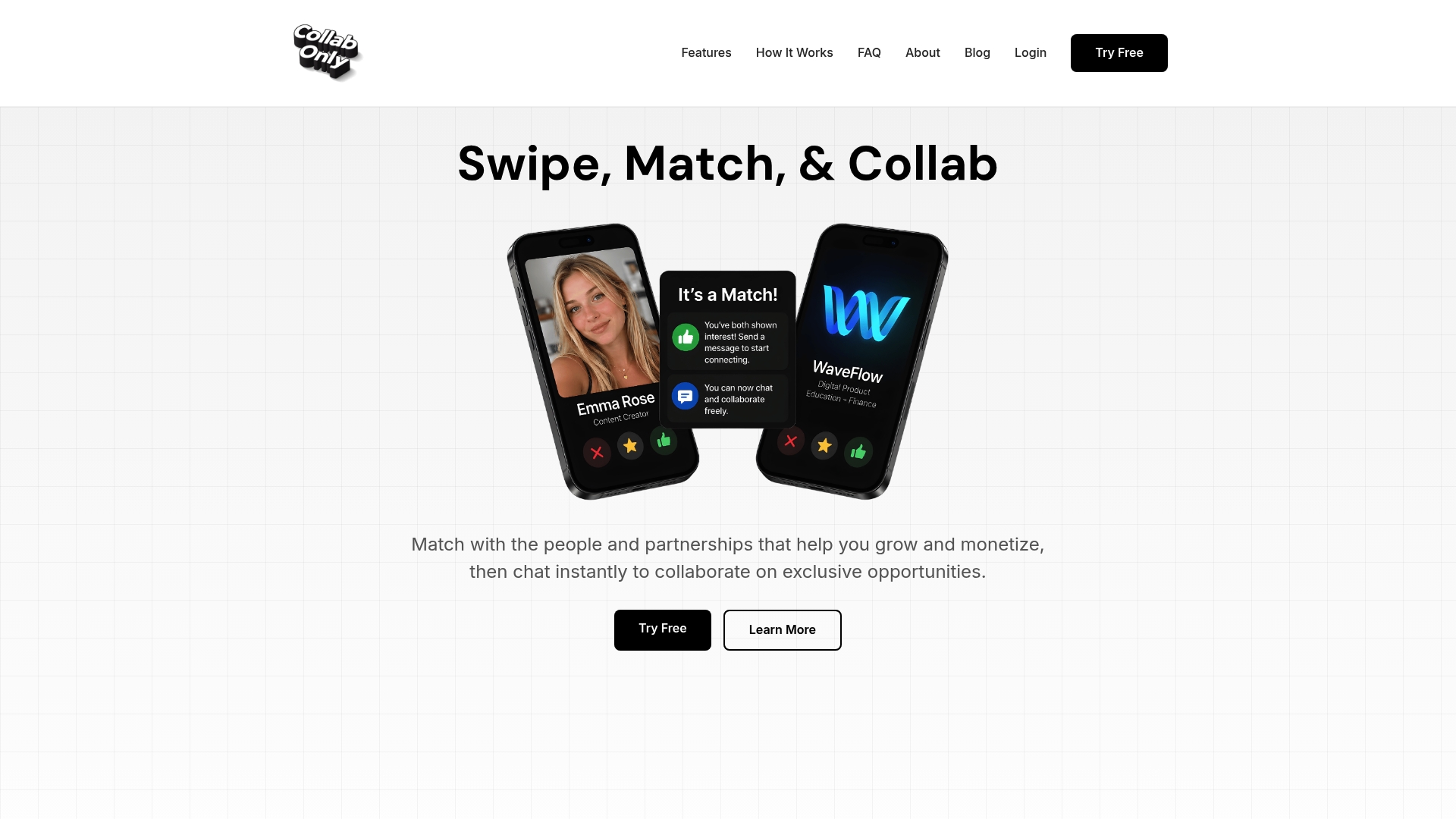
Brands seeking launch campaign creators can browse a vetted pool of creators filtered by niche, platform, and audience fit. Creators looking for brand deals get matched with partners whose goals align with their content. The instant chat feature activates on match, so momentum starts immediately rather than stalling in an inbox. Collabonly's ecosystem spans TikTok, Instagram, and YouTube, making it the practical next step for anyone ready to move from attraction strategy to active partnership.
FAQ
What is the Attract Layer method for finding collaborators?
The Attract Layer is a public system combining a "who I'd love to work with" list, credited collaborations, and ongoing peer references that make you discoverable without cold outreach. It shifts qualification to the partner's timeline rather than requiring you to interrupt them with a pitch.
How do AI tools help you find the right collaborators faster?
Tools like Elicit, Connected Papers, and ResearchRabbit map citation networks and surface active contributors in a specific niche, enabling a vetted shortlist within 48 hours. That shortlist makes personalized outreach possible at scale.
What makes a collaboration outreach message effective?
An effective message references the recipient's specific recent work, leads with a clear value offer, and makes a small, concrete ask that reduces friction. Messages under 150 words with a defined next step consistently outperform longer, vague pitches.
How do you build trust with a new collaborator before a big project?
Start with a micro-collaboration: share a dataset, co-write a single section, or cross-promote one post. These low-risk steps test compatibility and build trust before either party commits to a larger joint project.
Why does cold volume outreach fail to attract strong collaborators?
Cold volume outreach signals that you have not done the research to identify a genuine fit, which reduces the perceived value of the partnership before it begins. Personalized, research-backed outreach to a shortlist of 10 high-fit candidates consistently outperforms 100 generic messages.