

TL;DR:
- Effective partnership outreach depends on qualifying partners with aligned customer overlap, strategic goals, and execution readiness. Personalizing messages around mutual value, using structured multi-touch cadences, and timing outreach within 48 to 72 hours of trigger events significantly increase response rates and success. Sustaining momentum relies on continuous review processes, measuring pipeline influence, and ensuring internal operational preparedness.
Partnership outreach strategies are targeted, multi-touch approaches designed to connect your business with ideal partners by delivering clear mutual value and simplifying the decision process from first contact to activation. The industry term for this practice is strategic partnership outreach, and it differs from generic sales prospecting in one critical way: both parties must win for the relationship to hold. Value-first outreach personalized for mutual relevance outperforms ask-first approaches by 5 to 10 times in response rates, which means the framing of your message matters as much as the target list. Frameworks from practitioners like Angad Dhaliwal, River, and Gangly confirm that most partnership deals close through structured follow-up sequences, not the initial email. This guide covers how to qualify partners, write messages that generate replies, execute multi-channel cadences, and sustain momentum through operational reviews.
What are the best partnership outreach strategies for 2026?
Effective partnership outreach strategies begin with a clear partner profile, not a contact list. Before writing a single message, you need to define what a qualified partner looks like in terms of customer overlap, strategic alignment, and execution readiness. Validating partner fit using customer overlap and execution readiness before initiating contact is more predictive of success than measuring interest alone. A prospect who is enthusiastic but lacks the internal ownership to move a partnership forward will consume your time without producing results.

Defining your partner qualification criteria
The most reliable qualification framework evaluates three dimensions before outreach begins:
- Customer overlap: Does the partner serve the same buyer persona or adjacent segment? A SaaS company targeting mid-market HR teams should prioritize partners whose customers face the same hiring and onboarding challenges.
- Strategic alignment: Does the partnership advance both organizations' stated goals? Co-marketing only works when both sides have something to promote and a reason to promote it together.
- Execution readiness: Does the partner have a named owner for partnerships, a history of completing co-marketing or referral programs, and the bandwidth to act within 30 to 60 days?
Tools like Crossbeam allow you to map account overlap with potential partners before outreach, which removes guesswork from the qualification step. CRM integration with your existing pipeline data adds another filter: if a prospect already appears in your sales funnel as a customer or referral source, the outreach context changes entirely. Warm introductions via mutual connections increase response rates by 5 to 10 times compared to cold outreach, so LinkedIn research to identify shared connections should precede any direct message.
Pro Tip: Before sending your first message, check whether the target company has a dedicated partnerships page, a listed partner manager on LinkedIn, or an existing partner program. These three signals confirm execution readiness faster than any discovery call.
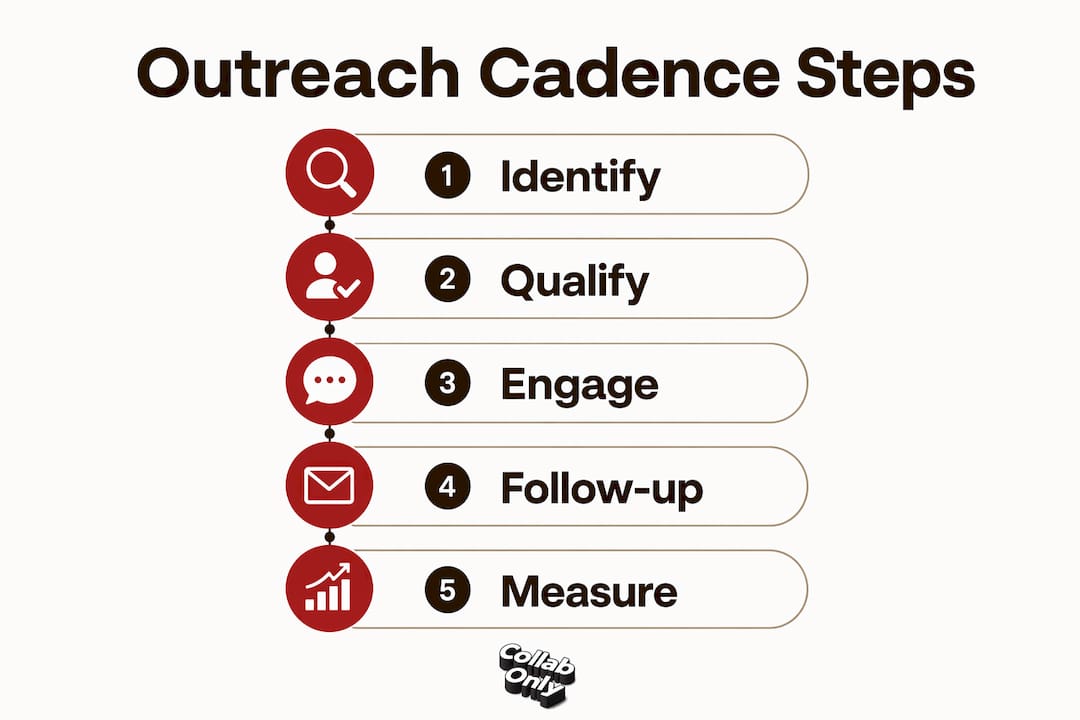
Filtering your list to high-fit partners before outreach is not a time-saving shortcut. It is the primary driver of conversion rate. Sending 20 well-qualified outreach messages consistently outperforms sending 200 generic ones, as confirmed by top brand partnership examples that share one common trait: both parties entered the relationship with aligned objectives and the capacity to act.
How do you write partnership outreach messages that get responses?
A partnership outreach email that generates replies contains four specific elements, each serving a distinct function. Effective outreach emails require a relevance hook, a mutual value statement, social proof, and a single low-commitment call to action, all within 150 words. Exceeding that length reduces reply rates because it signals that the sender has not done the work of distilling the ask.
The four elements work as follows:
- Relevance hook: Open with a specific observation about the recipient's business, a recent announcement, or a shared customer challenge. "I noticed your team just launched a referral program for HR software buyers" is a relevance hook. "I wanted to reach out about a potential partnership" is not.
- Mutual value statement: Articulate what both sides gain. Avoid framing the partnership as a favor or a sales opportunity. State the concrete outcome: "Our customers regularly ask for payroll integrations, and your platform is the one they name most often."
- Social proof: Reference one existing partnership or co-marketing result that demonstrates you execute, not just propose. A single data point ("we drove 340 qualified referrals to a similar partner last quarter") carries more weight than a paragraph of claims.
- Single CTA: Close with a closed question that requires a yes or no answer. "Are you open to a 20-minute call this week?" converts better than "Let me know if you'd like to connect sometime."
The table below contrasts high-performing and low-performing outreach message patterns across three partner types:
| Partner type | High-performing approach | Low-performing approach |
|---|---|---|
| Referral partner | Specific shared customer segment + referral volume data | Generic "mutual benefit" language with no numbers |
| Co-marketing partner | Named campaign idea + audience size proof | Open-ended "explore opportunities" framing |
| Integration partner | Named use case + existing customer demand signal | Feature list with no user context |
Pro Tip: Multi-channel outreach should vary the message per touch, not just the channel. Your LinkedIn connection request should not repeat the email you sent 48 hours earlier. Add one new piece of context or value with each contact point.
Reviewing email marketing best practices alongside partnership-specific templates gives you a structural foundation that applies across both cold and warm outreach scenarios. The core principle is identical: lead with relevance, not with your own agenda.
What does an effective multi-touch outreach cadence look like?
A practical outreach cadence involves 8 to 12 touches over 14 to 21 business days across at least three channels, with 62% of cold email responses coming from follow-ups rather than the initial message. Reply rates improve by up to 49% after the first follow-up alone. This data reframes follow-up from an awkward necessity into the primary mechanism of conversion.
A well-structured cadence assigns a specific role to each touch:
- Touch 1 (Day 1): Initial email with relevance hook, mutual value, and closed-question CTA.
- Touch 2 (Day 3): LinkedIn connection request with a brief, context-specific note.
- Touch 3 (Day 5): Follow-up email adding one new piece of value, such as a relevant case study or shared customer insight.
- Touch 4 (Day 8): Phone call or voicemail referencing the prior emails.
- Touch 5 (Day 11): LinkedIn message with a short video or personalized note.
- Touch 6 (Day 14): Email adding urgency or a time-sensitive angle, such as an upcoming event or product launch.
- Touch 7 (Day 17): Final value-add email with a "breakup" framing: "If this isn't a priority right now, I completely understand. I'll close out my outreach here."
The table below maps channel roles across the cadence:
| Touch | Channel | Primary role |
|---|---|---|
| 1, 3, 6, 7 | Core value delivery and CTA | |
| 2, 5 | Relationship signal and visibility | |
| 4 | Phone | Pattern interrupt and human contact |
| 5 | Video message | Differentiation and personalization |
Trigger-based timing amplifies every touch in this sequence. Outreach within 48 to 72 hours of a relevant trigger event, such as a funding announcement, a leadership hire, or a LinkedIn post about a shared challenge, can multiply reply rates by up to 5 times compared to untimed outreach. Monitoring prospects on LinkedIn and setting Google Alerts for target company names gives you the signal layer that most partnership teams skip entirely.
Common challenges in partnership outreach and how to fix them
The most frequent failure mode in collaborative outreach methods is not a bad message. It is a misaligned target list combined with a single-touch approach. Prospects who do not reply to one email are not disinterested; they are busy, and your message did not yet reach them at the right moment or with the right frame.
Specific challenges and their solutions:
- No response after multiple touches: Verify that you are reaching the correct decision-maker. A partnership manager and a VP of Business Development require different message frames. If the contact is correct, switch channels before concluding the prospect is unresponsive.
- "Not right now" objections: Treat this as a timing signal, not a rejection. Ask for a specific future date to reconnect and set a calendar reminder. Separating meeting acquisition from terms negotiation reduces friction and keeps the initial ask small enough to say yes to.
- Overly broad targeting: If your reply rate is below 5%, the issue is almost always targeting, not copy. Narrow the partner profile by adding one more qualification criterion before resuming outreach.
- Vague mutual value: If you cannot state in one sentence what the partner gains from the relationship, the outreach will fail regardless of how well it is written. Return to the value proposition before contacting additional prospects.
Pro Tip: When a prospect responds with "send me more information," treat it as a soft yes, not a request for a brochure. Reply with a single paragraph restating the mutual value and a direct calendar link using a tool like Calendly. Remove every barrier between their interest and a scheduled meeting.
Maintaining professionalism across a 7 to 12 touch cadence requires discipline. The breakup email is not a manipulation tactic. It is a genuine signal that you respect the prospect's time, and it consistently generates replies from prospects who had been silently tracking the conversation.
How do you sustain partnership momentum after the first contact?
Outreach that generates a meeting is only the beginning of the partnership promotion strategy. Converting that meeting into an active, revenue-generating partnership requires an operational cadence that connects outreach-generated pipeline into structured review processes.
The minimum viable partnership operating cadence, as defined by David Shadrake's partnership playbook, includes four recurring review types:
- Weekly pipeline reviews: Track partner-sourced and partner-influenced opportunities by stage, owner, and expected close date.
- Monthly joint business reviews: Align on shared targets, review co-marketing performance, and identify blockers to activation.
- Quarterly executive reviews: Present ROI data to senior stakeholders on both sides to maintain organizational commitment.
- Annual kickoffs: Reset goals, introduce new program tiers, and recognize top-performing partners.
Measurement within this cadence must go beyond counting partnerships. Measuring partnership ROI requires pipeline influence metrics, win rates, deal quality, and average sales cycle impact. Distinguishing partner-sourced pipeline (deals the partner originated) from partner-influenced pipeline (deals the partner accelerated) gives you the data to scale what works and retire what does not.
Scaling outreach based on partner quality means allocating your highest-touch cadence to Tier 1 partners with proven execution history, while using lighter automated sequences for Tier 2 and Tier 3 prospects. This tiering approach, combined with structured attribution fields in your CRM, transforms partnership outreach from a one-time activity into a repeatable growth channel. For a detailed look at how to structure the ongoing relationship after outreach, the creator partnership process guide provides a practical framework applicable across brand and creator partnership models.
Key takeaways
Effective partnership outreach strategies require qualified targeting, value-first personalized messaging, and a structured multi-touch cadence to convert prospects into active, revenue-generating partners.
| Point | Details |
|---|---|
| Qualify before outreach | Confirm customer overlap and execution readiness before contacting any prospect. |
| Lead with mutual value | Every message must answer the partner's "what's in it for me?" before making any ask. |
| Follow up systematically | 62% of replies come from follow-ups; a 7 to 12 touch cadence is the standard, not the exception. |
| Use trigger-based timing | Outreach within 48 to 72 hours of a trigger event multiplies reply rates by up to 5 times. |
| Measure pipeline quality | Track partner-sourced vs. partner-influenced pipeline to scale what drives revenue, not just activity. |
Why most partnership outreach fails before the first reply
The uncomfortable truth about partnership outreach is that most teams invest their effort in the wrong place. They spend hours perfecting subject lines and message copy while skipping the harder work: defining what makes a partner genuinely qualified and building the internal case for why the partnership is worth approving on both sides.
The most impactful shift in my experience is moving from personalizing copy to personalizing the decision context. A message that explains exactly how the partner's internal team will approve, resource, and benefit from the relationship removes the friction that kills most deals before they start. Framing the offer around internal approval ease is the single highest-leverage change most partnership teams can make.
Persistent follow-up is not aggressive. It is the rational response to the data: most deals close at touches 5 through 9, not touch 1. Teams that stop after two emails are not being respectful of the prospect's time. They are leaving the majority of their potential pipeline unrealized.
Operational readiness on both sides also matters more than most outreach guides acknowledge. A partnership that closes quickly but has no named owner, no onboarding kit, and no agreed review cadence will stall within 60 days. The outreach strategy and the partnership operating model must be designed together, not sequentially.
— Samuel
How Collabonly accelerates your partnership outreach
Collabonly is built for exactly the friction points this article describes: finding qualified partners, initiating contact without cold-email delays, and activating relationships at scale. The platform's matching system connects brands, creators, and business partners based on goal alignment, removing the targeting guesswork that consumes most outreach budgets.
For brands scaling influencer partnerships, Collabonly's nano influencer marketing service provides access to a curated network of high-engagement creators matched to your specific campaign objectives. For teams building SEO and content partnerships, the link building platform connects you with vetted partners ready to collaborate. Both services replace the cold outreach cycle with a structured, match-first process that gets to activation faster. Explore partnership marketing strategies on the Collabonly blog to build the strategic foundation before your next outreach campaign.
FAQ
What is the ideal length for a partnership outreach email?
A partnership outreach email should be under 150 words and contain four elements: a relevance hook, mutual value statement, social proof, and a single closed-question CTA. Shorter messages signal preparation and respect for the recipient's time.
How many follow-ups should you send to a potential partner?
A standard outreach cadence runs 8 to 12 touches over 14 to 21 business days, with 62% of replies coming from follow-ups rather than the initial message. Stop only after a definitive no or a completed breakup email.
How do you qualify a partner before reaching out?
Confirm customer overlap, strategic alignment, and execution readiness before initiating contact. A prospect with enthusiasm but no named partnership owner or program history is unlikely to convert regardless of message quality.
When is the best time to send a partnership outreach message?
Outreach sent within 48 to 72 hours of a trigger event, such as a funding round, leadership hire, or relevant LinkedIn post, generates up to 5 times more replies than untimed outreach. Monitor target companies on LinkedIn and via Google Alerts to identify these windows.
How do you measure whether your partnership outreach is working?
Track partner-sourced pipeline, partner-influenced pipeline, win rates, and average sales cycle impact rather than counting meetings or signed agreements. Distinguishing between sourced and influenced deals reveals which outreach approaches drive revenue versus activity.