

TL;DR:
- Growing a brand audience requires disciplined systems, content pillars, and strategic collaborations. Building a community through rituals and weekly metric reviews sustains long-term engagement and growth. Focusing on audience borrowing and reliable metrics accelerates organic reach and retention.
Growing a brand audience is the process of deploying structured content strategies, audience collaborations, and community-building tactics to expand and engage your following at scale. Brand managers who reach 10,000 followers within 6–12 months do so through disciplined systems, not sporadic posting. The industry term for this discipline is audience development, and it covers everything from content pillar selection to feedback loop design. This guide gives marketing professionals a clear, sequenced framework to increase brand following, build lasting community, and measure what actually drives growth.
How to grow brand audience with content pillars and posting schedules
Content pillars are the three core themes a brand publishes around consistently. Selecting pillars based on brand expertise and documented audience needs prevents the scatter-shot posting that kills early momentum. A fitness equipment brand, for example, might anchor on workout tutorials, nutrition science, and customer transformation stories. Each pillar serves a distinct audience need while reinforcing a unified brand identity.

Posting frequency matters as much as content quality. High-growth accounts in 2026 publish 3–5 posts per week on LinkedIn, 1–3 posts per day on X (Twitter), and 5–7 videos per week on TikTok during the early growth phase. That cadence signals consistency to platform algorithms and keeps the brand visible during the critical first 90 days when follower momentum is most fragile.
Batch content creation is the operational method that makes those frequencies sustainable. Building a content bank of 20–30 posts before publishing eliminates blank-page paralysis and prevents the reactive posting that produces inconsistent quality. Reactive posting is exhausting and produces content that has not been properly edited or aligned with pillar strategy. Batching frees time for the engagement work that actually converts viewers into followers.
Tactical execution within each post also compounds growth. Responding to every comment within the first hour signals to algorithms that the content is generating genuine interaction. Tagging relevant creators, industry voices, or partner brands in appropriate posts extends organic reach into adjacent audiences without paid spend.
- Select 3 content pillars aligned to brand expertise and documented audience interests.
- Match posting frequency to platform norms: LinkedIn (3–5 per week), TikTok (5–7 per week), X (1–3 per day).
- Build a 20–30 post content bank before launching to maintain consistency.
- Engage comments within the first hour of each post to boost algorithmic distribution.
- Tag relevant users and partners to extend organic reach into adjacent communities.
Pro Tip: Audit your top 10 performing posts every month and identify which content pillar they belong to. Double your output in that pillar for the following 30 days and measure the compounding effect on reach.
How can strategic collaborations and audience borrowing boost brand reach?
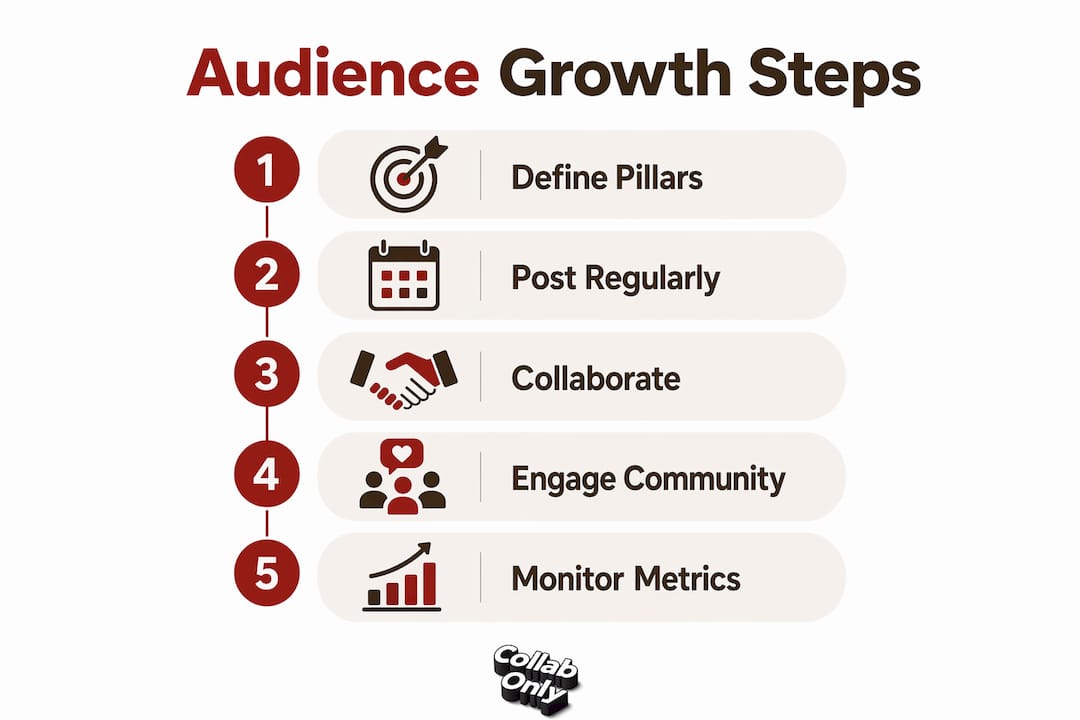
Audience borrowing is the fastest legitimate method to expand reach organically. The concept is direct: a brand partners with a creator or adjacent brand whose audience overlaps in interest but does not yet follow the brand. That established trust transfers partially to the new brand through the collaboration. Strategic collaborations via shout-outs, co-created content, and joint live sessions are the primary formats that produce this effect.
Selecting the right collaboration partner is the most critical decision in this process. The ideal partner operates in an adjacent sub-niche, not a competing one. A skincare brand collaborating with a wellness coach reaches an audience that cares about health and self-care but may not yet follow skincare-specific accounts. That gap is where audience growth happens. Partners with audiences that are too similar produce minimal net new reach; partners with audiences that are too different produce low conversion rates.
Effective collaboration formats for brand managers include:
- Shout-out exchanges: Each brand features the other in a dedicated post or story, with a direct call to follow.
- Co-created content: Both parties produce a single piece of content together, such as a joint tutorial, interview, or challenge video, published on both channels.
- Joint live sessions: Real-time conversations or Q&A sessions on Instagram Live or TikTok Live expose each brand to the other's active audience simultaneously.
- Guest newsletter features: For brands with email lists, a featured section in a partner's newsletter drives high-intent traffic from an already-engaged subscriber base.
Collaborations accelerate trust because the endorsement comes from a voice the audience already respects. Paid advertising can generate impressions, but it cannot replicate the peer-credibility that a genuine creator recommendation carries. Brands that build creator collaborations into their quarterly planning consistently outperform those that treat partnerships as one-off experiments.
Why building an engaged brand community drives long-term retention
An audience and a community are not the same thing. An audience consumes content passively. A community participates, contributes, and advocates. The distinction matters because purpose-driven brand communities can increase customer lifetime value by up to 306% by converting buyers into active advocates. That figure reflects the compounding effect of members who refer others, generate user content, and remain loyal through product changes or price increases.
Building that level of engagement requires deliberate structure. The following sequence produces communities that sustain themselves:
- Establish a dedicated space. A private group, forum, or Discord server gives members a place that belongs to the community, separate from the brand's public social channels.
- Introduce recurring rituals. Weekly discussions and monthly challenges create rhythm and a sense of belonging that sustains long-term engagement. Rituals give members a reason to return even when no new product or campaign is active.
- Recognize visible contributors. Communities with layered member recognition and authentic status mechanisms experience deeper, sustained advocacy. Spotlighting top contributors in a weekly post or granting them early access to new products signals that participation has real value.
- Resist early commercialization. Premature sales pushes damage nascent brand communities before trust is established. The first 90 days of a community should prioritize connection and value delivery, not conversion.
"Follower count is a lagging indicator. Community health is better measured by recurring engagement rituals that build belonging and advocacy."
The brands that build the most durable communities treat them as products in their own right, with dedicated moderation, content calendars, and member feedback loops. Brands that treat communities as free advertising channels lose members quickly. The ROI of creator communities compounds over time precisely because the investment is in relationships, not impressions.
What metrics and feedback loops should brands monitor to sustain growth?
Tracking the right metrics separates brands that grow consistently from those that plateau. Follower count is a lagging indicator. The leading indicators that predict future growth are reach growth rate, save rate, and profile visits per post. Tracking these weekly enables rapid content strategy adjustments before a plateau becomes entrenched.
| Metric | What it measures | Review cadence |
|---|---|---|
| Reach growth rate | Week-over-week increase in unique accounts reached | Weekly |
| Save rate | Percentage of viewers who save a post for later | Weekly |
| Profile visits per post | How many viewers click through to the brand profile | Weekly |
| Engagement rate | Likes, comments, and shares as a percentage of reach | Weekly |
| Follower conversion rate | Profile visits that result in a new follow | Monthly |
The weekly review cadence is non-negotiable for brands in active growth phases. A single week of data reveals which content pillar is generating saves and profile visits. Two weeks of consistent data confirms a pattern. That pattern is the signal to double output in the winning pillar and reduce investment in underperforming formats.
Feedback loops also include qualitative signals: comment sentiment, direct message volume, and the types of questions followers ask. These signals reveal what the audience wants next and inform both content planning and product development. Brands that build systematic weekly reviews into their marketing operations grow faster than those that check metrics monthly or reactively.
Pro Tip: Create a simple weekly scorecard in a spreadsheet with five columns: date, reach growth rate, save rate, profile visits, and top-performing post. After eight weeks, patterns emerge that no single-week snapshot can reveal.
Key takeaways
Sustainable audience growth requires structured content systems, trust-based collaborations, community rituals, and weekly metric reviews working together as a single integrated discipline.
| Point | Details |
|---|---|
| Use 3 content pillars | Anchor all posts to three core themes aligned with brand expertise and audience needs. |
| Match posting frequency to platform | Publish 3–5 times per week on LinkedIn and 5–7 videos per week on TikTok during early growth. |
| Borrow audiences through collaborations | Partner with adjacent-niche creators for co-created content, shout-outs, and joint live sessions. |
| Build community rituals | Introduce weekly discussions and monthly challenges to create belonging and sustained engagement. |
| Track leading indicators weekly | Monitor reach growth rate, save rate, and profile visits every week to catch and amplify winning content. |
What I have learned about audience growth that most guides skip
The most common mistake I see brand managers make is treating audience growth as a content volume problem. They post more, spend more on ads, and wonder why engagement rates keep falling. The real constraint is almost never output frequency. It is the absence of a clear reason for a specific person to follow and stay.
Patience is not a soft skill in this context. It is a structural requirement. Brands that reach meaningful audience milestones do so because they maintained a consistent system for long enough to generate compounding returns, not because they found a viral shortcut. The brands I have watched plateau fastest are the ones that abandoned their content pillars after six weeks because the numbers were not yet impressive.
Collaboration quality matters far more than collaboration quantity. One well-matched partnership with a creator whose audience genuinely overlaps with your brand's ideal follower profile outperforms five generic shout-out exchanges. The selection criteria for partners should be as rigorous as the criteria for hiring. Audience demographics, engagement rates, and content alignment all warrant review before committing to a co-created project.
The metric that most brands ignore is the save rate. Saves indicate that a viewer found the content valuable enough to return to it. That intent signal predicts follower conversion and long-term retention far better than likes. If your save rate is low, your content is entertaining but not useful. Useful content builds audiences. Entertaining content builds moments.
— Samuel
Collabonly's platform for accelerating brand audience growth
Brand managers who want to put collaboration strategy into practice immediately have a direct path through Collabonly's influencer marketplace.
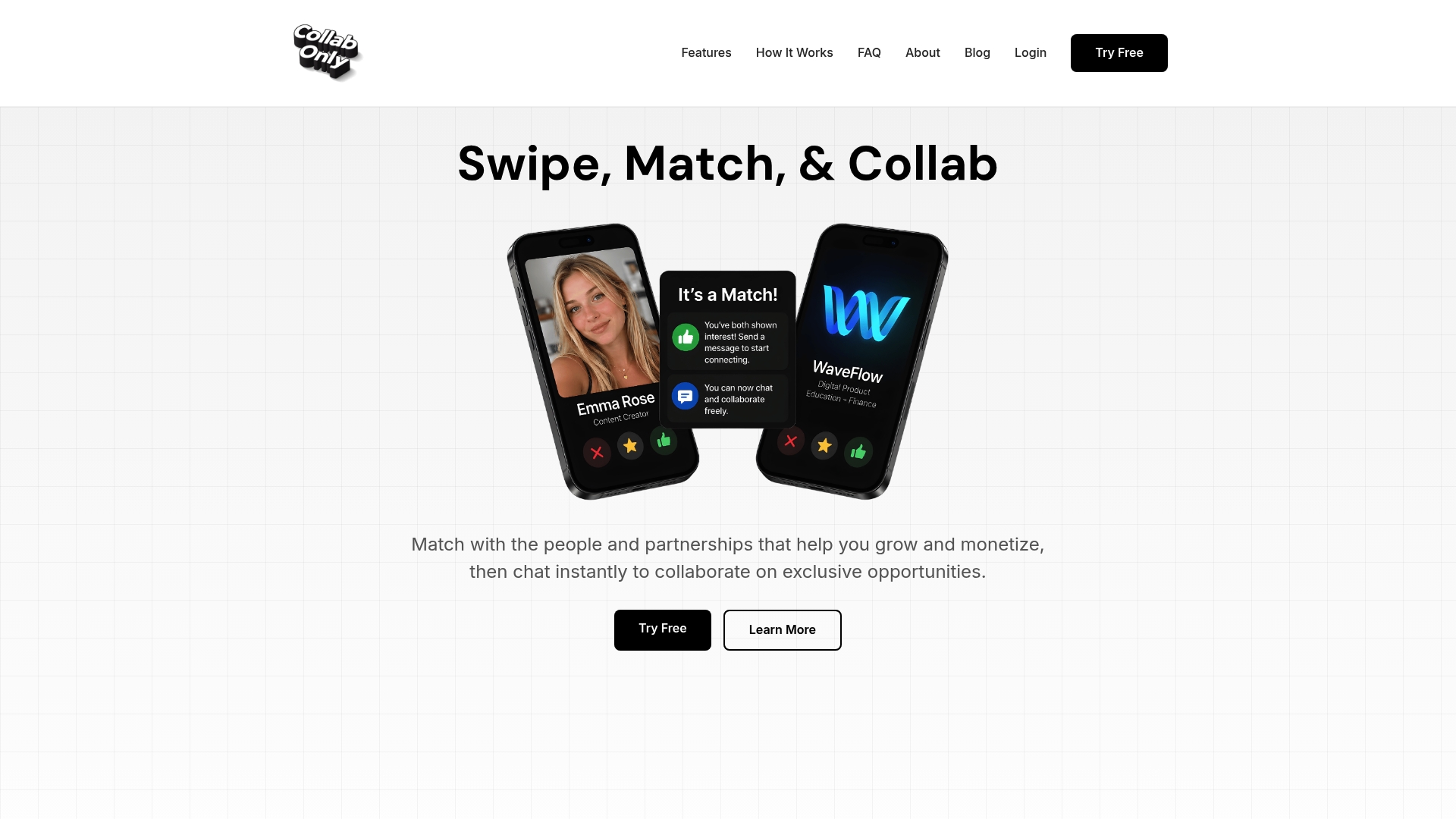
Collabonly connects brands with nano and micro influencers across TikTok, Instagram, and YouTube through a match-based system that eliminates the slow email outreach and lost DMs that stall most partnership efforts. Brands can hire nano influencers for geo-concentrated, high-trust campaigns or hire micro influencers for broader reach with strong engagement rates. The platform's instant chat upon match means collaboration timelines compress from weeks to days. For brand managers ready to move from strategy to execution, Collabonly provides the infrastructure to make audience borrowing a repeatable, measurable growth channel.
FAQ
How long does it take to grow a brand audience to 10,000 followers?
Brands using structured content pillars and targeted feedback loops can reach 10,000 followers within 6–12 months. Inconsistent posting without a system significantly extends that timeline.
What is the fastest way to expand brand reach organically?
Audience borrowing through strategic collaborations, including shout-outs, co-created content, and joint live sessions with adjacent-niche creators, is the fastest organic growth method available to brands.
How often should a brand post on social media to grow its following?
Recommended frequencies for high-growth accounts are 3–5 posts per week on LinkedIn, 1–3 posts per day on X, and 5–7 videos per week on TikTok during the early growth phase.
What is the difference between a brand audience and a brand community?
An audience consumes content passively, while a community participates, contributes, and advocates. Purpose-driven brand communities can increase customer lifetime value by up to 306% through sustained member engagement.
Which metrics best predict sustained audience growth?
Reach growth rate, save rate, and profile visits per post are the leading indicators that predict future audience expansion. Tracking these weekly allows brands to identify and amplify high-performing content before growth stalls.