

Influencer campaign costs run from roughly $20 per post for a nano creator to five figures or more for a mega-tier launch, and the single rule that governs every budget in between is separation: fund creator fees and paid amplification as two distinct line items, rather than one blended number. Brands that test small with nano and micro talent before scaling winners with paid media consistently spend less per outcome than those who commit large flat fees upfront.
TL;DR:
- Creator fees vary widely, with nano influencers charging $20 to $500 per post and micro influencers $200 to $5,000, primarily based on engagement rate.
- Platform choice influences costs, with YouTube typically being more expensive and short-form content like Reels or Stories costing less than static posts on the same platform.
- Using hybrid or performance-based pricing models reduces brand risk during testing phases, especially when combined with clear KPIs and reliable tracking methods.
- Additional costs from licensing, amplification, exclusivity, production, travel, and management fees can add 20% to 60% or more on top of base creator rates.
- Testing nano and micro creators in early campaigns with minimal paid amplification provides better insights and cost-efficiency than starting with high-tier influencers.
Table of Contents
- What Do Influencer Campaign Costs Look Like by Tier and Platform?
- Which Pricing Model Fits Your Campaign Goal?
- What Add-Ons Push Influencer Campaign Costs Higher?
- How Much Should You Budget for Each Campaign Stage?
- How Do You Measure ROI and Tie Pay to Results?
- What Contract Terms Protect Your Influencer Budget?
- The Collabonly Approach to Cutting Management Overhead
- Why Most Budgeting Advice Gets the Sequencing Wrong
- Build a Budget-Friendly Creator Roster Faster
- Sources
- FAQ
What Do Influencer Campaign Costs Look Like by Tier and Platform?
Creator pricing splits into four working tiers, and each one carries a wide internal range because engagement rate, not follower count, ultimately sets the price. Nano creators (1,000 to 10,000 followers) typically charge $20 to $500 per post. Micro creators (10,000 to 100,000) run $200 to $5,000. Mid-tier creators (100,000 to 500,000) typically charge rates ranging from several thousand to tens of thousands of dollars, and macro and mega creators (500,000 and above) can command high five-figure rates or more per deliverable depending on platform and rights included, according to Hootsuite's 2026 pricing benchmarks.
Platform choice significantly influences rates; YouTube integrations often command higher rates due to greater production demands and content longevity. TikTok content often prices somewhat below Instagram for an equivalent audience size, and within a single platform, a Story costs less than a static feed post, which costs less than a Reel or short-form video, according to Modash's platform breakdown.
| Tier | Follower Range | Typical Per-Post Range |
|---|---|---|
| Nano | 1,000–10,000 | $20–$500 |
| Micro | 10,000–100,000 | $200–$5,000 |
| Mid-tier | 100,000–500,000 | Low thousands to mid five figures |
| Macro/Mega | 500,000+ | Tens of thousands or more |
The spread inside each tier is not noise. A nano creator with a high engagement rate in a tight regional niche can command higher rates than a mid-tier creator with passive followers, because engagement remains a stronger pricing signal than raw follower count across the industry data marketers rely on for benchmarking. Treat the ranges above as a starting negotiation point, not a fixed rate card.
Which Pricing Model Fits Your Campaign Goal?
Five pricing structures dominate influencer contracts, and the right one depends on how much risk you want the brand to carry versus the creator.
- Flat fee: A fixed payment per deliverable regardless of performance. Simplest to budget, but it puts all performance risk on the brand.
- CPM or reach-based: Price calculated as (estimated impressions ÷ 1,000) × target CPM. If a creator reaches 50,000 people and your target CPM is $15, expect a quote near $750.
- Engagement-based: Rate scales with (likes + comments + shares) ÷ followers. A creator with 40,000 followers and 3,200 total engagements has an 8% engagement rate, which typically commands a premium over the tier average.
- Conversion or affiliate: Payment tied to tracked sales, usually a percentage commission plus a smaller flat fee to secure priority placement.
- Hybrid: A reduced base fee plus a performance bonus or affiliate cut, splitting the risk between brand and creator.
Flat fees work best once a creator has a proven track record with your brand. For early tests, hybrid and performance models reduce downside risk while still giving the creator upside if the content performs. Conversion-based deals align incentives most tightly but require reliable tracking infrastructure before you commit spend.
What Add-Ons Push Influencer Campaign Costs Higher?
The quoted per-post rate rarely covers everything a campaign needs. Several add-ons routinely stack on top of base fees, and skipping the conversation before signing is how budgets blow past projections.
- Usage rights: Licensing content for paid ads or website use commonly adds 20% to 60% on top of the base fee, according to industry budget breakdowns.
- Whitelisting or paid amplification: Running ads through the creator's handle adds a similar 20% to 60% uplift, since it extends your reach beyond their organic audience.
- Exclusivity: Locking a creator out of competitor deals for a set window typically carries its own separate fee, negotiated by category and duration.
- Production: Multi-location shoots, professional editing, or scripted concepts raise costs beyond a simple phone-shot post.
- Travel and rush fees: On-location work or compressed deadlines both carry standard markups.
- Agency or platform management fees: Managed influencer services commonly add 15% to 30% on top of creator fees for sourcing, negotiation, and campaign execution, per one influencer cost guide.
Pro Tip: *Bundling multiple deliverables like Reels, Stories, and static posts in one contract often helps secure discounts compared to separate negotiations.
Before you negotiate usage rights, run the math on the alternative: sometimes licensing a creator's content for paid ads costs less than commissioning separate ad creative from scratch, especially when the creator's organic engagement already proves the content resonates.
How Much Should You Budget for Each Campaign Stage?
Budget allocation depends less on company size than on what stage of the influencer program you're running. Four scenarios cover most brand objectives.
- Early-stage test ($2,000 to $5,000): A mix of user-generated content and a handful of nano or micro creators, run without paid amplification, to see which content angles and creators resonate before committing more spend.
- Growth and learning ($5,000 to $20,000): Multiple creators across two or three tiers, paired with a modest paid amplification budget to test which organic posts justify a media push.
- Product launch ($30,000 to $150,000): A mixed-tier roster spanning nano through macro creators, usage rights secured upfront, and a dedicated paid media pool to extend the best-performing content.
- Always-on program ($5,000 to $25,000 per month): Ongoing retainers or recurring micro-influencer partnerships that keep content flowing between larger campaign pushes.
Gifting and affiliate-first approaches work well inside the test scenario specifically, since product seeding generates real conversion data at minimal upfront cost before you decide which creators earn a flat-fee relationship. The nano influencer stage is where this logic pays off fastest, and a complete nano influencer marketing guide walks through the operational details.
How Do You Measure ROI and Tie Pay to Results?
KPIs should map directly to campaign objectives, not to whatever metric is easiest to pull. Awareness campaigns track impressions and CPM. Community-building campaigns track engagement rate. Performance campaigns track clicks, conversions, and return on ad spend through UTM codes, unique promo codes, or whitelisted ad accounts.
A brand spending $10,000 across ten micro creators at an average 4% engagement rate, tracked through unique promo codes, can attribute revenue per creator directly and identify which two or three creators justify a retainer for the next quarter.
Structuring bonuses around tracked outcomes, rather than paying every creator the same flat rate regardless of results, rewards the creators actually driving revenue. Collab Only's measurement framework outlines three concrete steps for making that attribution defendable to finance teams, and a campaign tracking guide covers the UTM setup mechanics in more depth.
What Contract Terms Protect Your Influencer Budget?
Every influencer contract should specify deliverables, revision limits, usage rights duration, exclusivity terms, payment schedule, and a kill fee in case content falls through late.
- Lock deliverable counts and formats in writing before any fee is discussed.
- Cap revisions at two rounds to prevent scope creep from eating margin.
- Negotiate multi-post discounts for bundled deliverables and volume discounts for repeat quarterly bookings.
- Attach performance bonuses to tracked outcomes instead of paying them as a blanket add-on.
- Cap amplification fees at a fixed percentage rather than an open-ended rate.
Pro Tip: Insist on a written usage-rights matrix that specifies exactly which channels, formats, and time windows the content can run in. A rate card template built for 2026 negotiations makes this easier to standardize across every creator you work with.
The Collabonly Approach to Cutting Management Overhead
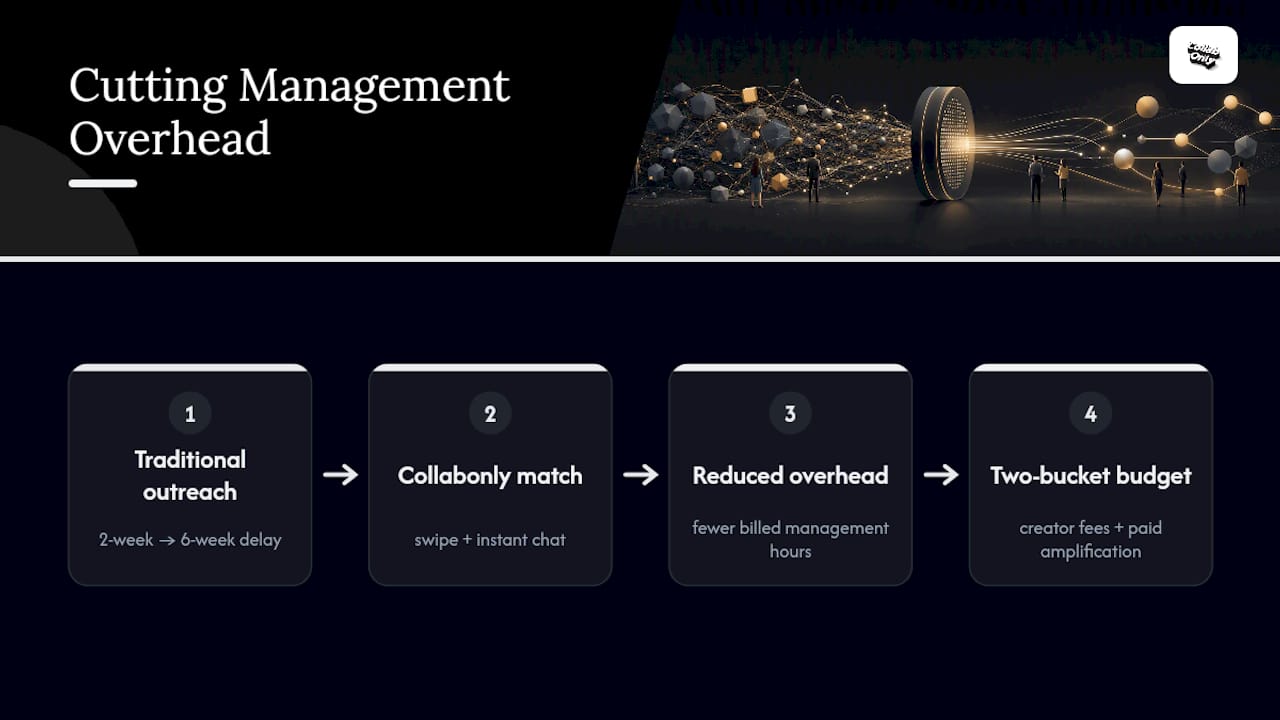
Most influencer budgets lose money to time, not just fees. Slow email threads and buried DMs stretch a two-week outreach cycle into six. A swipe-based matching and instant chat system can reduce lag by connecting brands directly with creators who fit the brief, which can trim management hours that agencies typically bill for separately.
The two-bucket budgeting principle from earlier in this guide works the same way inside the platform: allocate one pool for creator content fees, a second for paid amplification, and let match data show which creators earn a spot in the amplification pool. For deeper formulas on pricing individual deals, the creator rate guide and tier comparison breakdown both cover next steps.
Why Most Budgeting Advice Gets the Sequencing Wrong
The conventional advice tells brands to pick a tier, pick a price, and sign. That sequencing is backwards. The benchmarks in this guide matter less as fixed numbers and more as a sanity check against quotes that come in in isolation, disconnected from what a comparable creator on a comparable platform actually charges elsewhere.
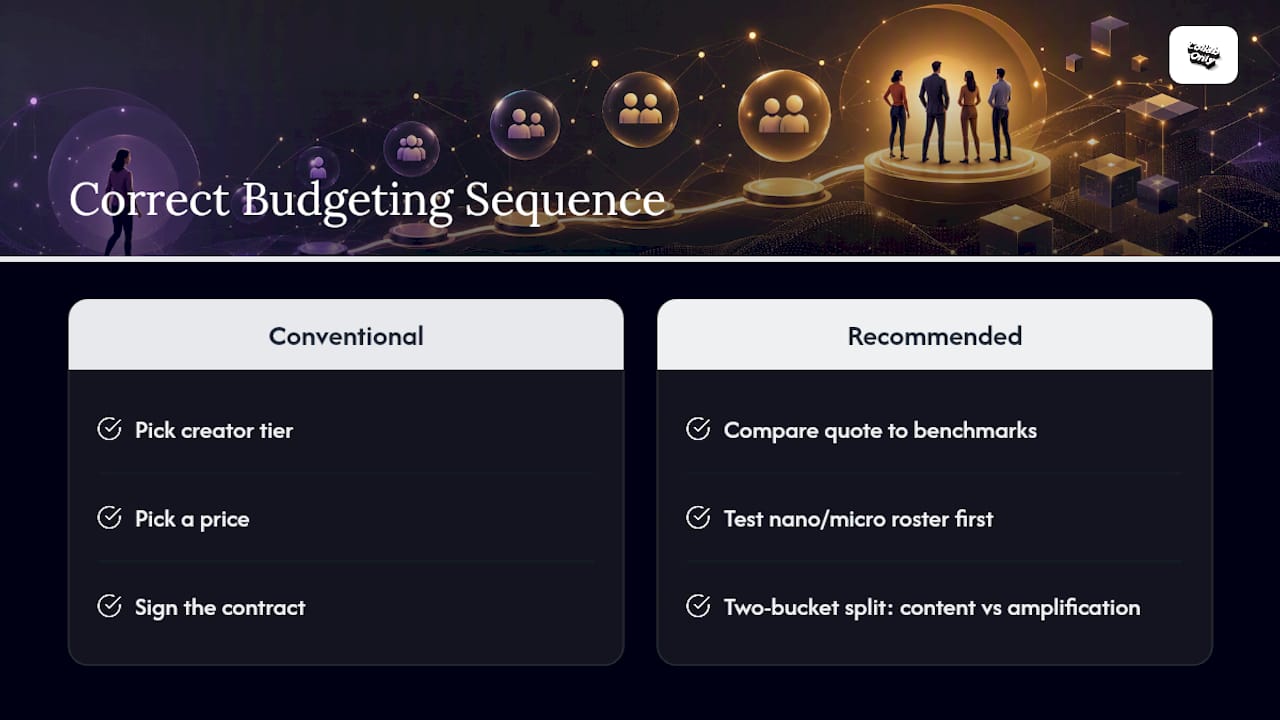
What's overrated: chasing macro and mega creators for a first campaign. The data on engagement as the real pricing driver suggests a well-matched nano or micro roster, tested cheaply and refined with tracked conversions, teaches a brand more about its own audience than one expensive mega placement ever will.
What the reader should prioritize first is the two-bucket split, content fees separate from amplification, because it's the one structural decision that keeps every later negotiation honest. Get that wrong and every subsequent rate you negotiate is built on a shaky foundation, no matter how good the benchmark data looks on paper.
— Samuel
Build a Budget-Friendly Creator Roster Faster
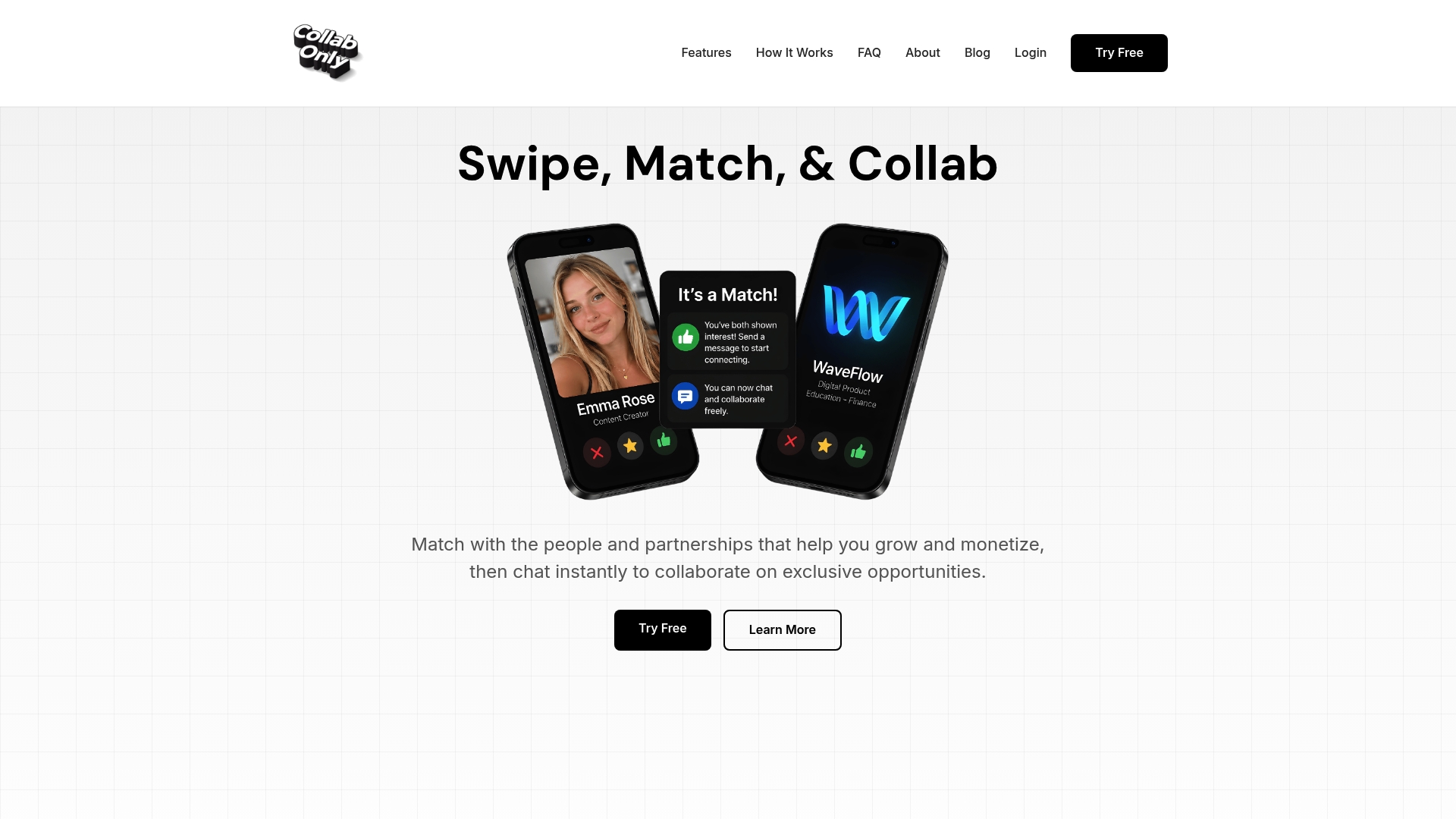
A platform can give brands direct access to nano and micro creators without multi-week outreach cycles that eat into campaign timelines and budgets. The swipe-based matching system can surface creators aligned to a niche and goals, and instant chat can replace slow email back-and-forth that stalls many first-time influencer campaigns.
That speed matters for the budgeting approach this guide recommends: testing cheap, tracking results, and scaling only the creators who prove their worth. Such platforms may support the cycle across TikTok, Instagram, and YouTube, allowing the same roster-building process to work regardless of which platform a paid amplification budget ends up favoring. If you're ready to put the nano-tier test scenario into practice, start building your creator roster and see which matches fit your next campaign brief.
Sources
- Influencer rates: How to maximize your budget in 2026
- Influencer Pricing: The Cost of Influencers in 2026
FAQ
How much do influencers get paid for a campaign?
Payment varies by tier and platform, ranging from $20 to $500 per post for nano creators up to tens of thousands for macro and mega creators, with engagement rate often mattering more than follower count in setting the final price.
How much does a campaign with a 50,000-follower creator cost?
A creator with 50,000 followers typically falls in the micro tier, where per-post rates commonly land between $200 and $5,000 depending on platform, engagement rate, and whether usage rights or amplification are included.
How much do 1,000 followers cost on Instagram?
There's no fixed per-follower price; instead, nano creators with follower counts in that range typically charge $20 to $500 per post based on niche relevance and engagement rate rather than audience size alone.
How many influencers earn over $100,000 from campaign work?
A relatively small share of creators reach that income level, generally concentrated among macro and mega-tier influencers who combine high reach with usage rights and paid amplification deals across multiple brand partnerships.
Does Collabonly help control influencer campaign costs?
Collabonly's matching system connects brands directly with nano and micro creators, reducing the outreach time that often adds hidden management cost to smaller campaign budgets.