

TL;DR:
- Content monetization involves generating revenue from digital content through multiple streams like advertising, sponsorships, and digital sales. Success relies more on audience engagement and diversifying income sources than solely on audience size, especially in mobile-first markets. Building owned digital assets and stacking revenue streams creates more stable and scalable income for creators and businesses.
Content monetization is defined as the process of generating revenue from digital content, including videos, articles, podcasts, and social media posts, by converting audience attention into income through advertising, subscriptions, affiliate marketing, and digital product sales. The global creator economy reached an estimated $250 billion in 2025, signaling that content monetization is no longer a side pursuit for hobbyists. Creators and businesses that treat their content as a revenue engine, rather than a marketing cost, consistently outperform those who rely on a single income channel. Understanding what is content monetization, and which models fit your audience and content type, is the first step toward building a durable income structure.
What is content monetization and which models drive the most revenue?
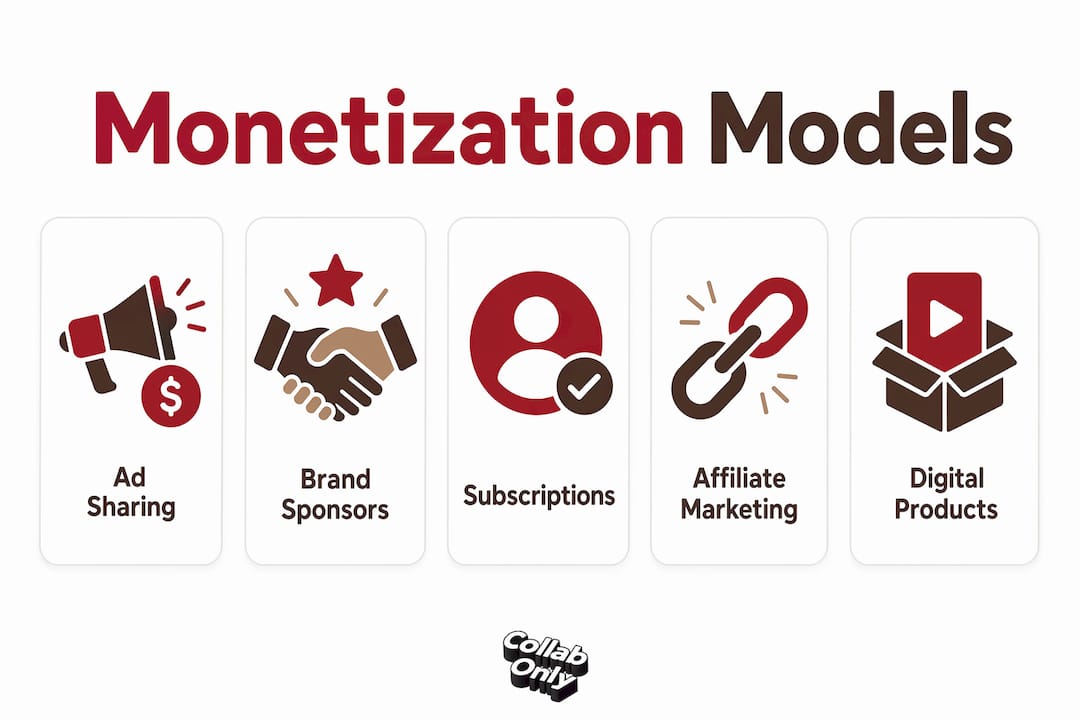
Content monetization operates through six primary models, each with distinct mechanics, audience requirements, and revenue ceilings. Choosing the right model depends on your audience size, content format, and how much time you can invest in each channel.
Advertising revenue sharing
Ad revenue is the most familiar model. Platforms pay creators based on views, typically $3–$5 per 1,000 views, which means meaningful income requires large, consistent traffic volumes. This model works best for creators with established audiences on platforms like YouTube, where ad revenue sharing programs have clear eligibility thresholds.
Brand sponsorships and partnerships
Sponsorships pay significantly more per piece of content than ads. 46% of creators with over 1 million followers earn $100,000 or more annually, primarily through brand deals. That figure illustrates both the ceiling and the barrier: sponsorships scale with audience size, but they also require consistent negotiation and relationship management.
Subscription and membership models
Subscriptions generate predictable, recurring revenue independent of platform algorithm changes. Creators who build paid communities or offer exclusive content tiers insulate their income from ad market fluctuations. This model rewards audience loyalty over raw reach.
Affiliate marketing
Affiliate marketing commissions range from 1% to 50% depending on the product category and audience trust level. Industry experts identify affiliate marketing as the fastest way to begin earning from content, because it requires no follower minimum and no platform approval process. A creator with 500 engaged subscribers can generate meaningful affiliate income if the product recommendation is well matched to audience needs.
Digital products and content licensing
Selling digital products, such as templates, courses, presets, or e-books, gives creators full margin control. Licensing content to brands is a related path: UGC creators earn from brand-owned content without needing a social media following at all, monetizing based on production skill rather than audience size.
Pro Tip: Start with affiliate marketing or UGC if your audience is under 5,000. Both generate income without platform thresholds or minimum follower counts.
| Model | Audience requirement | Revenue scalability |
|---|---|---|
| Ad revenue sharing | High (large volume needed) | Scales with traffic |
| Brand sponsorships | Medium to high | High at scale |
| Subscriptions | Low to medium | Predictable and recurring |
| Affiliate marketing | Low (any size) | Moderate, commission-based |
| Digital products | Low to medium | High margin, owner-controlled |
| UGC licensing | None required | Skill-based, project-by-project |
How can creators and businesses realistically earn from content in 2026?
Realistic income from content monetization depends less on audience size than most creators assume. The most effective approach stacks multiple revenue streams rather than relying on a single channel.

Creators who combine paid 1:1 calls, workshops, and digital product sales can earn $3,000–$5,000 monthly without a single sponsorship deal. That figure is significant because it proves that mid-size audiences with high engagement outperform large audiences with low trust. A creator with 8,000 loyal subscribers who buys a $97 course from you generates more revenue than 100,000 passive followers who skip your ads.
The staged monetization ladder provides a practical framework for scaling income over time:
- Start with affiliate marketing and UGC contracts. Both require no platform approval and generate income from day one based on skill and content quality.
- Add a digital product once you understand what your audience needs most. A single well-positioned template or guide can generate recurring passive income.
- Introduce paid community access or a subscription tier when your audience demonstrates consistent engagement. Platforms like Patreon and Substack support this model directly.
- Layer in brand sponsorships as your audience grows past platform thresholds. At this stage, revenue generation strategies shift from time-intensive to scalable.
- License your content or develop a course once you have validated demand through your existing audience interactions.
Pro Tip: Track which revenue stream generates the highest income per hour of work. Redirect time toward that channel before adding new ones.
A creator with 1,000 engaged followers can generate $10,000 monthly through a combination of digital products, paid calls, and affiliate commissions. Audience quality, not audience size, determines income ceiling.
The income diversification principle also applies to businesses. A brand that publishes educational content can monetize through affiliate partnerships, sponsored placements, and gated premium content simultaneously, reducing dependence on any single revenue source.
What factors influence the success of content monetization strategies?
Several variables determine which monetization methods work and which ones underperform for a given creator or business. Matching strategy to situation is the core discipline of effective content monetization.
- Audience engagement over size. A small, highly engaged audience consistently outperforms a large, passive one. Engagement signals trust, and trust converts to purchases, subscriptions, and affiliate clicks at a far higher rate than passive viewership.
- Content type and format. Educational content, such as tutorials, how-to guides, and explainer videos, converts well for digital products and affiliate marketing. Lifestyle content performs better for brand sponsorships and subscription communities where personality drives loyalty.
- Time investment and resource allocation. Paid calls and live workshops generate high revenue per hour but do not scale without your direct time. Digital products and subscriptions require upfront effort but generate income passively. Creators must match their available time to the model they choose.
- Trust and authenticity. Affiliate marketing and sponsorships both depend on audience trust. Recommending products that misalign with your content niche erodes credibility quickly and reduces conversion rates over time.
- Platform rules and eligibility thresholds. YouTube requires 1,000 subscribers and 4,000 watch hours before enabling ad revenue. Instagram and TikTok have their own monetization program requirements. Creators who rely solely on platform-native monetization are subject to policy changes outside their control.
- Localization and payment preferences. Localization and payment diversity are critical for creators and businesses operating in mobile-first markets. Offering local payment methods and region-specific pricing increases conversion rates significantly in markets where credit card penetration is low.
How is content monetization evolving in 2026?
The dominant shift in 2026 is the move away from display advertising as a primary revenue source. Display ads carry click-through rates between 0.22% and 0.52%, and ad blockers continue to reduce that already narrow window. Publishers and creators who built their income on display ads are actively rebuilding around diversified revenue engines.
The trends reshaping digital content monetization this year include:
- Subscription and community models are growing fastest. Paid newsletters, Discord communities, and membership tiers give creators direct relationships with their most valuable audience members, bypassing platform algorithms entirely.
- Live experiences command premium pricing. Live Q&A sessions, virtual workshops, and in-person events generate revenue that recorded content cannot replicate. Audiences pay for access and interaction, not just information.
- Diversified revenue builds audience trust. Creators who earn from multiple sources, rather than pushing a single sponsor repeatedly, appear more credible. Audiences recognize when a creator is financially dependent on one brand, and it affects how they receive recommendations.
- Mobile-first markets require localized monetization. Creators targeting audiences in Southeast Asia, Latin America, or Sub-Saharan Africa must adapt payment flows, pricing, and content delivery to local infrastructure. One-size-fits-all monetization fails in these markets.
- UGC and brand content partnerships are expanding. Brands increasingly commission content from skilled creators regardless of follower count, creating a parallel monetization path that rewards production quality over distribution reach.
The creator economy's evolution points toward a model where the most financially stable creators own their audience relationships directly, rather than renting attention through platform algorithms.
Key Takeaways
Content monetization succeeds when creators stack multiple revenue streams, prioritize audience engagement over size, and match each method to their current audience scale and content type.
| Point | Details |
|---|---|
| Define your model first | Choose from ads, affiliates, subscriptions, sponsorships, or digital products based on your audience size and content format. |
| Stack revenue streams | Combining affiliate marketing, digital products, and paid calls can generate $3,000–$5,000 monthly without sponsorships. |
| Engagement beats size | 1,000 highly engaged followers can generate $10,000 monthly; passive large audiences rarely convert at comparable rates. |
| Start with affiliate or UGC | Both require no follower minimum and generate income based on content quality and skill. |
| Localize for mobile markets | Payment method diversity and regional pricing are non-negotiable for creators targeting mobile-first audiences. |
Why audience quality is the variable most creators underestimate
Most creators I have observed spend the first two years of their content career chasing follower counts. The logic feels sound: more followers should mean more revenue. The data says otherwise.
A creator with 1,000 deeply engaged subscribers who trusts their recommendations will outperform a creator with 100,000 followers who treats content as background noise. The income gap between these two scenarios is not marginal. It is the difference between a side income and a full-time business. The creators who figure this out early build their monetization strategy around serving a specific, well-defined audience rather than broadcasting to the widest possible one.
The staged monetization ladder matters here. Starting with affiliate marketing and UGC forces creators to understand what their audience actually values before investing time in building courses or subscription tiers. That sequence is not accidental. It is the most capital-efficient path from zero to sustainable income. Creators who skip stages and launch a $500 course to 300 followers consistently underperform those who spend six months building affiliate trust first.
Owning your income stream is the final principle worth emphasizing. Platform-dependent revenue, whether ad shares or native monetization programs, can disappear with a policy update. Creators who build email lists, sell direct, and develop owned digital products retain their income regardless of what any single platform decides next quarter. That ownership is the real benefit of content monetization done correctly.
— Samuel
How Collabonly connects creators to monetization opportunities
Collabonly gives creators and brands a direct path to the partnerships that drive real revenue. The platform's matching system connects brands with creators across TikTok, Instagram, and YouTube, removing the friction of cold outreach and unanswered DMs.
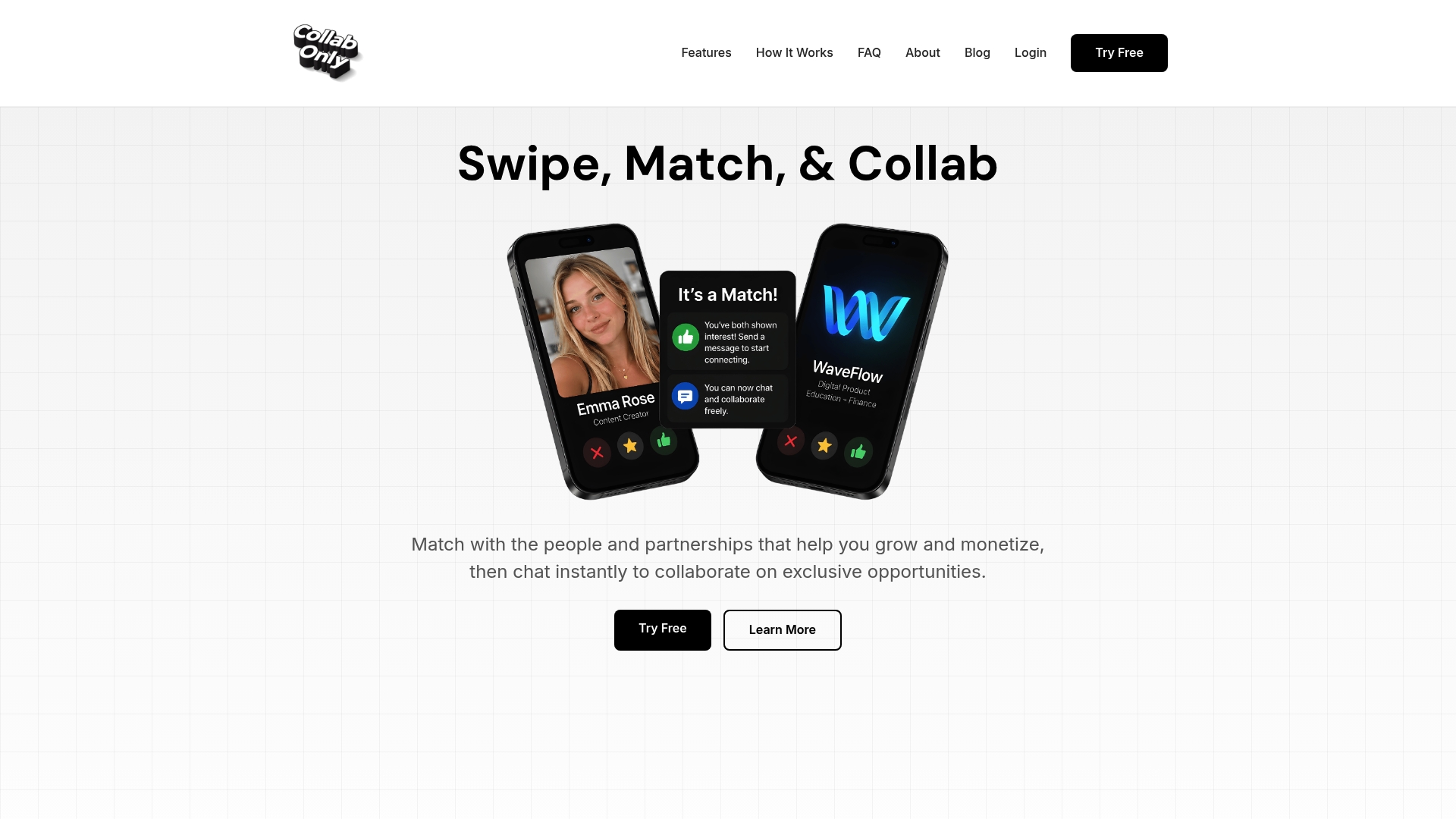
For creators ready to monetize through brand partnerships, Collabonly's influencer product launch network connects you with brands actively seeking creators for paid campaigns. Businesses looking to reach engaged niche audiences can access Collabonly's nano influencer programs, where smaller creators with high trust levels consistently deliver stronger conversion rates than mass-reach alternatives. The platform's instant-match chat removes the weeks-long negotiation cycle, so creators and brands move from match to campaign faster.
FAQ
What is content monetization in simple terms?
Content monetization is the process of earning money from digital content, such as videos, articles, or podcasts, through revenue streams including advertising, affiliate marketing, subscriptions, and digital product sales.
How much can a creator earn from content monetization?
Earnings vary widely by model and audience size. Creators stacking non-sponsorship revenue streams like paid calls, workshops, and digital products can earn $3,000–$5,000 monthly, while creators with over 1 million followers often exceed $100,000 annually through sponsorships.
What is the fastest way to start monetizing content?
Affiliate marketing is the fastest starting point because it requires no follower minimum and no platform approval. UGC brand contracts offer a similar entry point for creators who want to earn from production skills rather than audience size.
Does audience size determine monetization success?
Audience size matters less than engagement quality. A highly engaged audience of 1,000 followers can generate $10,000 monthly through digital products and affiliate commissions, while large unengaged followings frequently fail to produce comparable revenue.
What is digital content monetization for businesses?
Digital content monetization for businesses means generating revenue from owned content assets through channels such as gated premium content, affiliate partnerships, sponsored placements, and subscription-based knowledge products, reducing dependence on paid advertising alone.