

TL;DR:
- Creators earn more by diversifying their income streams across platforms, brand deals, and digital products. Building an owned email list and sequencing monetization as audiences grow ensures financial stability and resilience. Relying heavily on brand partnerships creates risks, so balanced revenue architecture is essential for sustainable creator income.
Revenue generation for creators is defined as the practice of building multiple, concurrent income streams from content, audience relationships, and brand partnerships. The average creator earns $61,980 annually, but that number masks a wide gap between those relying on a single source and those who diversify. Creators with three or more income streams earn 2.3x more than those dependent on one. The difference is not audience size. It is income architecture.
What are the primary revenue streams available to creators in 2026?
Creator monetization, the recognized industry term for revenue generation for creators, covers six core income categories. Each carries a different risk profile, margin, and audience size requirement.
- Brand partnerships represent approximately 70% of average creator income. That concentration is a structural risk, not a sign of strength.
- Platform ad revenue requires meeting eligibility thresholds. The YouTube Partner Program, for example, requires 1,000 subscribers and 4,000 watch hours before a creator can earn from ads.
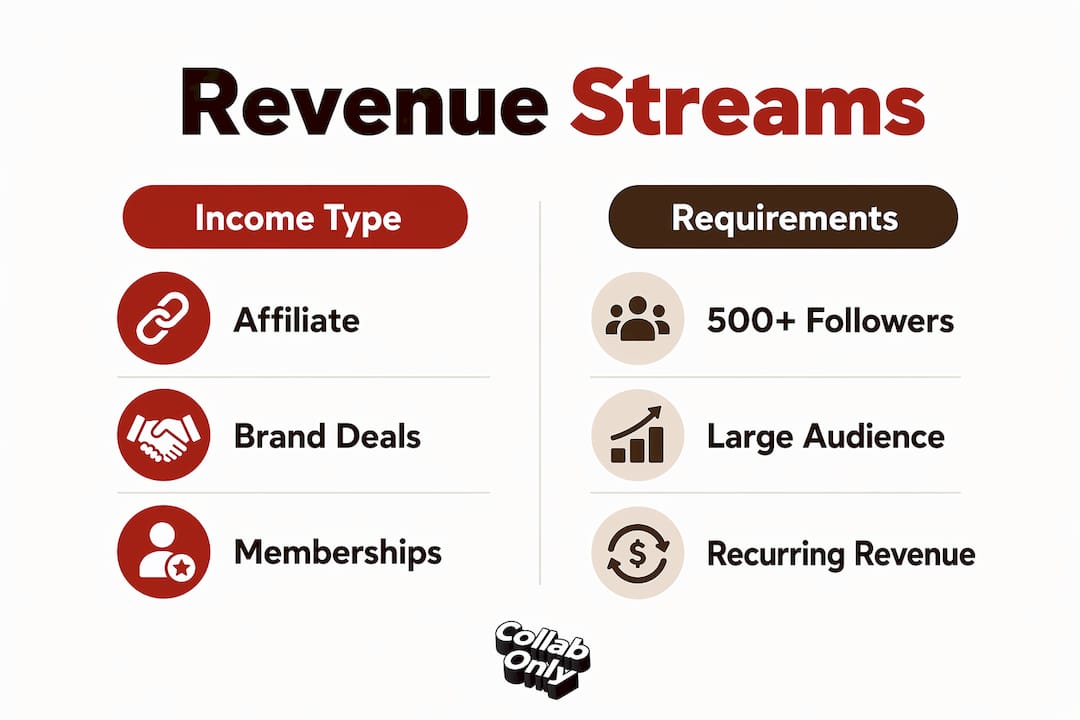
- Affiliate marketing activates at virtually any audience size. A creator with 500 subscribers can monetize through affiliate links before qualifying for any platform program.
- Digital products (courses, templates, presets, ebooks) carry the highest margins of any creator income type. There are no platform fees, no minimum follower counts, and no revenue share with a third party.
- Memberships and subscriptions provide recurring income, which is the most financially stable structure available to creators. Predictable monthly revenue reduces the feast-or-famine cycle that affects ad-dependent creators.
- User-generated content (UGC) is an emerging paid category where brands commission creators to produce content for brand-owned channels, independent of the creator's follower count.
Pro Tip: Treat UGC as a B2B service. Brands pay for production quality and creative skill, not reach. A creator with 2,000 followers can command the same UGC rate as one with 200,000.
The current trend in brand deals also reflects a structural shift. 60% of new influencer deals now combine upfront flat fees with performance commissions. This hybrid model aligns brand and creator incentives, and it increases total deal value when content performs well.
| Revenue stream | Audience required | Margin level |
|---|---|---|
| Affiliate marketing | 500+ followers | Medium |
| Platform ad revenue | 1,000–10,000+ | Low to medium |
| Brand partnerships | 10,000+ (sponsorships) | Medium to high |
| Digital products | None | High |
| Memberships | 1,000+ engaged | High |
| UGC contracts | None | High |
How to sequence monetization streams as your audience grows
The most common mistake creators make is trying to activate all revenue streams at once. Income stacking works best when streams are introduced in sequence, matched to audience size and engagement depth.
-
Under 10,000 followers. Start with affiliate marketing and, if eligible, platform ad revenue. Both require minimal setup and generate income without requiring a large or highly engaged audience. Nano and micro-influencers can monetize earlier through affiliate links and small brand partnerships than most creators realize.
-
10,000 to 50,000 followers. Introduce digital products and pursue brand deals. At this stage, audience trust is established enough to support a purchase decision. A single digital product, priced between $27 and $97, can generate meaningful monthly revenue with a small but engaged list.
-
Above 50,000 followers. Add memberships, consulting, and email monetization. These streams require a creator to own the relationship with their audience, not just reach them through an algorithm. Email lists become the primary asset at this stage.
Pro Tip: Do not add a new revenue stream until the current one generates consistent monthly income. Layering too fast splits your attention and dilutes execution quality across every stream.
| Follower range | Priority streams | Secondary streams |
|---|---|---|
| Under 10,000 | Affiliate marketing, ad revenue | UGC contracts |
| 10,000–50,000 | Digital products, brand deals | Email list building |
| 50,000+ | Memberships, consulting | Email monetization, licensing |

The sequencing logic is straightforward. Each new stream builds on the trust and audience relationship established by the previous one. Skipping stages produces weak conversion rates and audience confusion about what the creator is selling.
What tools and strategies help creators maximize income?
Audience trust is the prerequisite for every monetization strategy. Creators who prioritize trust-building before introducing income streams see higher conversion rates and longer audience retention. This is not a soft principle. It is a measurable conversion driver.
The most reliable structure for maximizing creator income is the content funnel. Free content builds reach, email builds trust, and high-margin products convert that trust into revenue. Each layer serves a specific function, and removing any one of them weakens the whole system.
"Email lists are creators' most valuable owned asset. Unlike social followers, email subscribers are not subject to algorithm changes, platform policy shifts, or account suspensions. An email list of 5,000 engaged subscribers consistently outperforms a social following of 50,000 passive ones in direct revenue terms."
Email as an owned asset protects creators from the single greatest risk in the creator economy: platform dependency. A creator whose income depends entirely on TikTok reach or YouTube ad rates is one algorithm update away from a significant income drop.
For brand partnership pitches, specificity wins. A pitch that includes audience demographics, past campaign performance data, and a clear content concept converts at a higher rate than a generic media kit. Creators who understand why brands invest in creators can frame their value in terms brands recognize, not just follower counts.
Affiliate link placement follows the same logic. Links embedded in high-intent content, such as tutorials, product reviews, and comparison posts, convert at higher rates than links placed in general lifestyle content. The multi-channel funnel approach routes viewers from discovery content into email, then from email into affiliate or product offers, compounding conversion at each stage.
For digital products and memberships, the tool category matters less than the pricing and positioning. A well-positioned $49 template pack sold to 200 buyers generates $9,800. That same effort spent chasing ad revenue at standard CPM rates would require millions of views to match that figure.
What common mistakes should creators avoid when building revenue streams?
The five most damaging mistakes in creator monetization share a common root: prioritizing short-term income signals over long-term income architecture.
-
Premature monetization. Introducing paid offers before the audience trusts the creator's recommendations produces low conversion and high unsubscribe rates. Trust precedes transaction.
-
Chasing virality. Creators who chase virality struggle financially compared to those building recurring income through memberships and diversified streams. Viral content generates attention. Recurring income generates financial stability.
-
Single-source dependency. Brand partnerships make up 70% of average creator income. That figure represents a concentration risk. No single income source should exceed 50% of total creator revenue. Maintaining income balance across streams reduces volatility and builds financial resilience.
-
Neglecting email. Social platforms own the relationship between a creator and their followers. Email is the only channel where the creator owns that relationship outright. Creators who skip email list building sacrifice their most durable monetization asset.
-
Overextension. Attempting to run affiliate programs, sell digital products, manage memberships, and pursue brand deals simultaneously without a support system produces burnout. The result is poor execution across all streams rather than strong performance in any one.
Creators who treat content creation as a business with defined revenue goals and income targets build sustainable, predictable earnings. Those who treat it as a content output exercise with monetization as an afterthought face income volatility regardless of audience size.
Key Takeaways
Creators with three or more diversified income streams earn 2.3x more than those relying on a single source, making income architecture the primary driver of creator earning potential.
| Point | Details |
|---|---|
| Diversification multiplies income | Three or more revenue streams produce 2.3x higher earnings than a single-source model. |
| Sequence streams by audience size | Start with affiliate marketing, then add digital products and brand deals as your audience grows. |
| Email is the most durable asset | An owned email list protects creator income from platform algorithm changes and policy shifts. |
| Brand deals carry concentration risk | At 70% of average creator income, brand partnerships alone create financial instability. |
| Trust precedes monetization | Introducing paid offers before building audience trust produces low conversion and high churn. |
The income architecture most creators overlook
Most creator advice focuses on which revenue streams to add. The more useful question is which streams to add first, and why the order matters as much as the selection.
I have seen creators with 8,000 followers outperform creators with 80,000 in monthly income. The difference was not content quality or posting frequency. It was that the smaller creator had built an email list of 1,200 engaged subscribers, launched a $67 digital product, and secured two small brand deals through creator-brand matching. The larger creator was still waiting for ad revenue to scale.
The income architecture principle I return to consistently is this: own the relationship before you monetize it. Social reach is rented. Email is owned. A creator who builds their email list from day one is building a monetization asset that compounds over time, independent of any platform's algorithm decisions.
The other trap I see repeatedly is the 70% problem. When brand partnerships represent the majority of creator income, a single lost deal or a brand budget cut can eliminate most of a creator's monthly revenue overnight. The creators who weather market shifts are those who have capped any single income source below 50% of total revenue and built the rest through digital products, memberships, and affiliate income.
Treating content creation as a business means setting revenue targets, tracking income by stream, and making deliberate decisions about where to invest time. The audience engagement strategies that drive email growth and community depth are the same ones that make every other monetization stream more effective. They are not separate activities. They are the foundation.
— Samuel
How Collabonly connects creators to brand revenue
Creators who want to grow brand partnership income without cold outreach or unanswered DMs have a direct path through Collabonly. The platform matches creators with brands using a swipe interface, eliminating the friction that makes traditional outreach slow and unpredictable.
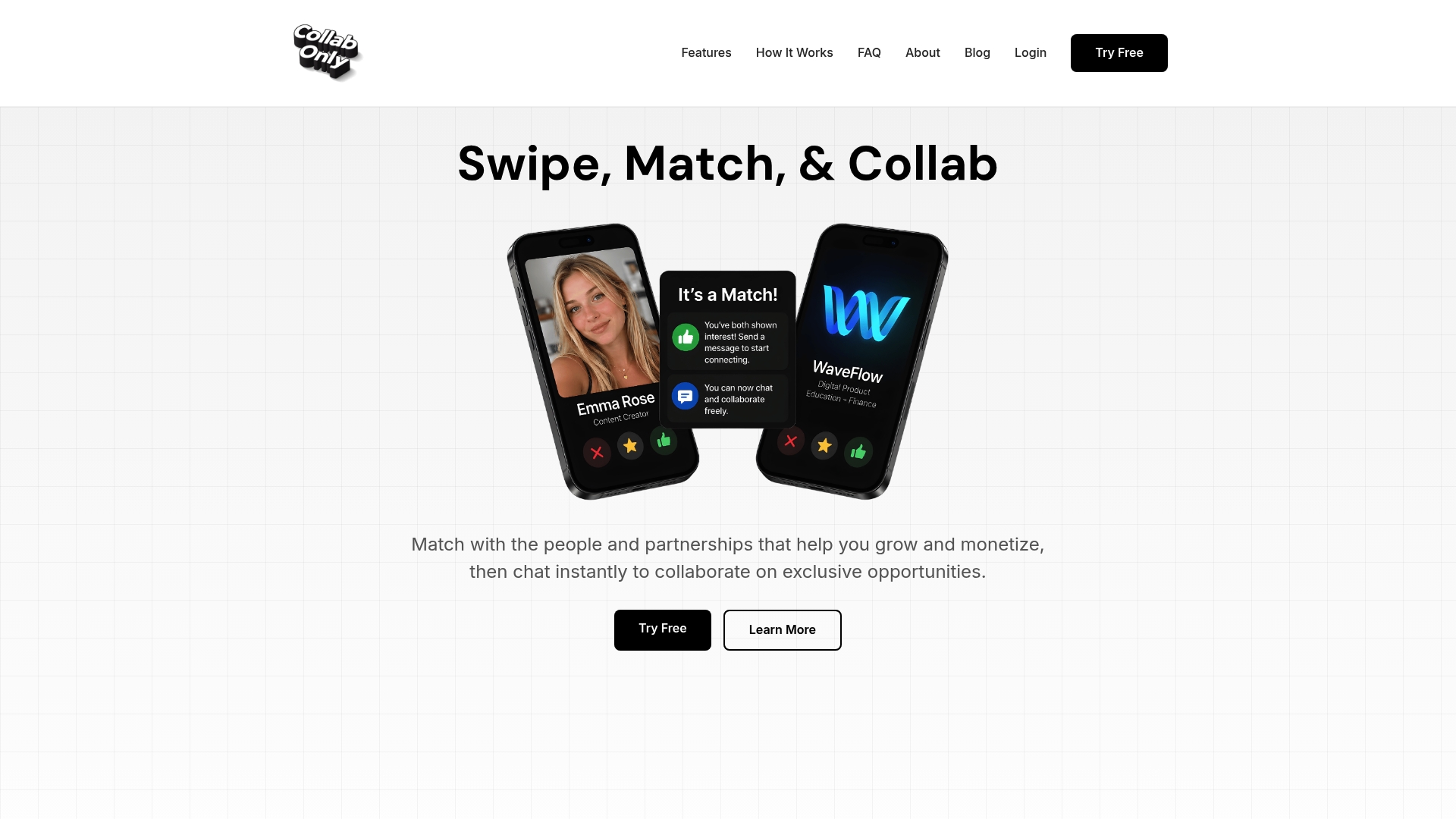
Collabonly is built for creators at every audience stage. Nano-influencer brand deals are accessible to creators with smaller but highly engaged audiences, and micro-influencer opportunities connect mid-tier creators with brands actively seeking their niche. Instant chat upon matching means deals move faster, and the platform's goal-aligned matching means creators connect with brands whose campaigns fit their content, not just their follower count. For creators building a diversified income stack, brand partnerships sourced through Collabonly represent one of the highest-value streams available.
FAQ
What is the average income for a content creator?
The average content creator earns $61,980 annually, though top creators reach six and seven-figure revenues by combining multiple income streams and centralizing their business operations.
How many revenue streams should a creator have?
Creators with three or more revenue streams earn 2.3x more than those relying on a single source. No single stream should exceed 50% of total income to maintain financial stability.
Can creators monetize with a small audience?
Affiliate marketing and UGC contracts activate at 500 followers or fewer. Digital products have no follower minimum. Sponsorships typically require 10,000 or more followers to attract brand interest.
What is the most stable creator revenue stream?
Memberships and subscriptions provide the most financially stable income because they generate predictable recurring revenue, independent of content virality or platform algorithm performance.
Why do creators need an email list?
Email lists are owned assets that protect creator income from platform changes. Unlike social followers, email subscribers remain accessible regardless of algorithm shifts or account policy updates.