

TL;DR:
- Creator marketing has evolved into a primary growth channel focused on measurable ROI and authentic content. It emphasizes long-term partnerships, creator-brand fit, and performance metrics, unlike traditional influencer marketing. Using creator platforms streamlines discovery, vetting, and compliance, enabling brands to build sustainable, performance-driven creator collaborations.
Creator marketing is no longer a supplemental budget line. It has become a primary growth channel for brands that understand the difference between exposure and measurable impact. What is creator marketing, exactly? At its core, it is a structured approach to partnering with content creators whose audiences, creative voice, and subject matter expertise align with specific brand objectives. 66% of marketers currently use it, with another 10% planning to start in 2026. This guide covers the definition, mechanics, platform strategy, and best practices you need to deploy creator marketing with precision.
Table of Contents
- Key takeaways
- What is creator marketing: definition, evolution, and distinctions
- Why brands use creator platforms
- How creator marketing drives audience engagement
- Best practices for managing creator partnerships
- Compliance, transparency, and platform dynamics
- My perspective on creator marketing's strategic value
- Start building creator partnerships with Collabonly
- FAQ
Key takeaways
| Point | Details |
|---|---|
| Creator marketing is performance-driven | It focuses on measurable ROI and authentic content, not just follower reach or brand awareness. |
| Proof partners replace one-off campaigns | Long-term creator relationships built on shared goals and structured experiments deliver greater business impact. |
| Platform tools are operationally critical | Creator platforms reduce friction in discovery, vetting, compliance, and performance tracking. |
| Creator-brand fit multiplies results | Campaigns with strong creator alignment convert at 3x the rate of poorly matched partnerships. |
| Measurement requires longer windows | 40% of creator content views occur after 30 days, so short attribution windows systematically undervalue results. |
What is creator marketing: definition, evolution, and distinctions
Creator marketing is the practice of forming strategic partnerships between brands and content creators to produce audience-relevant content that supports specific marketing objectives. Those objectives range from demand generation and product education to trust-building and direct conversion. The creator's existing audience relationship, credibility, and content format are the primary assets in the exchange.
This definition matters because creator marketing is frequently conflated with influencer marketing, but the two operate on different strategic logic. Influencer marketing, as it was originally practiced, prioritized audience size and reach above almost all other variables. The implicit assumption was that a larger following translated to proportionally greater brand impact. Creator marketing inverts that assumption.
The distinguishing characteristics of modern creator marketing include:
- Content quality and platform-specific relevance over raw follower counts
- Long-term, collaborative partnerships rather than transactional, one-off placements
- Shared creative ownership where the creator's voice and format remain intact
- Integration with paid, owned, and earned media channels rather than isolated organic posts
- Measurable performance benchmarks tied to business outcomes, not just engagement vanity metrics
The most strategically significant development in creator marketing is what researchers describe as the proof partner model. Under this framework, creators function not as distribution vehicles but as collaborators in structured marketing experiments. They co-create assets, participate in performance reporting, and contribute content across multiple channels simultaneously. This model represents a fundamental shift in how brands and creators define success together.
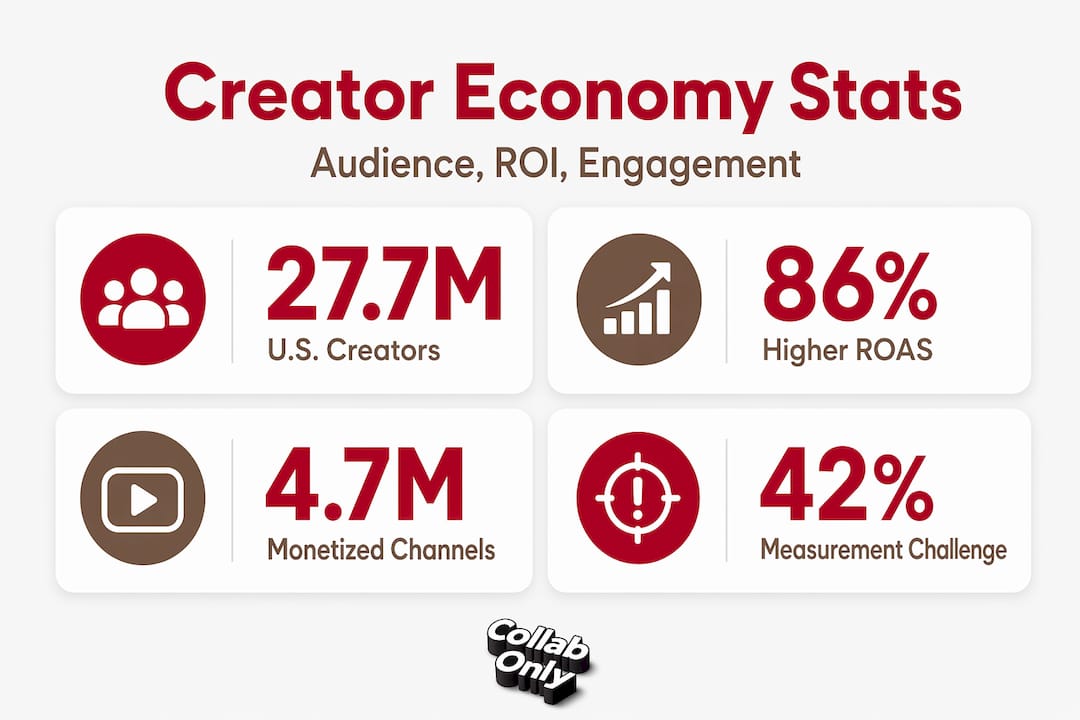
The creator economy now includes 27.7 million full-time independent workers in the United States alone, with 4.7 million earning over $100,000 annually. That professional scale reflects a creator workforce that increasingly demands and delivers the rigor of a proof partner relationship rather than the transactional logic of a sponsored post.
Why brands use creator platforms
A creator platform is a purpose-built tool that connects brands with creators, facilitates campaign execution, and provides the infrastructure for tracking performance and managing relationships at scale. Understanding why to use a creator platform requires looking at what the alternative actually costs: hours of manual outreach, inconsistent vetting, missed disclosures, and partnerships that stall because communication broke down in a DM thread.
Creator platforms eliminate those operational bottlenecks. The strategic case for using one rests on several compounding advantages:
- Discovery precision: Platforms index creators by niche, audience demographics, platform activity, engagement rate, and content style, allowing brands to filter for genuine creator-brand fit rather than reach alone.
- Vetting at scale: Brands can assess past campaign performance, content quality, and audience authenticity without conducting manual audits for each prospective partner.
- Relationship management: CRM-like tools inside creator platforms track communication history, contract status, deliverable timelines, and payment records in a centralized workspace.
- Performance visibility: Brands can access organic content metrics alongside paid amplification data, creating a full picture of campaign performance.
- Compliance support: Built-in disclosure tagging and content approval workflows reduce regulatory exposure under the FTC's updated guidelines for sponsored content.
YouTube creator partnerships deliver 86% higher long-term incremental ROAS compared to traditional paid social media. That figure only becomes actionable when brands have the measurement infrastructure in place to capture it, which is precisely what creator marketplace tools are designed to provide.
Pro Tip: When evaluating a creator platform, test whether it grants access to co-branded ad formats and organic metric visibility simultaneously. Platforms that only surface paid data are leaving a significant portion of creator content value unmeasured.

How creator marketing drives audience engagement
The mechanism by which creator marketing generates audience engagement is not mysterious. It operates on the same principle as a trusted peer recommendation. When a creator whose judgment an audience has verified over months or years says a product solved a specific problem, that statement carries a weight that no brand-produced advertisement can replicate. Creator content that uses human-centric storytelling and plain language generates deeper trust because it mirrors how audiences already communicate with each other.
Content formats that perform across the funnel
The most effective creator content formats map to different stages of the purchase decision:
- Product reviews and unboxings: High relevance at the consideration stage, where audiences are evaluating specific options
- Tutorials and how-to content: Particularly effective at reducing purchase anxiety by demonstrating product use in realistic contexts
- Day-in-the-life storytelling: Embeds brand mentions naturally into relatable narratives, building brand familiarity without overt selling
- Creator-led challenges and community participation: Drives mid-funnel engagement by activating audiences around shared experiences
Campaigns with strong creator-brand fit and relatable storytelling convert at roughly 3x the rate of campaigns where creator and brand are misaligned. That differential is not primarily about content quality in isolation. It is about whether the audience perceives the partnership as credible given what they know about the creator's values, interests, and expertise.
"Creator-led marketing succeeds because recommendations from trusted peers with relatable storytelling outperform traditional sales pitches." Salesforce
Measurement presents the most persistent operational challenge in this channel. 42% of marketing teams cite measurement as the biggest barrier to scaling creator programs. The attribution problem is compounded by the fact that 40% of views on creator content occur after the first 30 days post-publication. Standard 30-day attribution windows therefore systematically undercount the revenue contribution of creator content, leading brands to underinvest in a channel that is actually delivering more than the data suggests.
Understanding how creator communities build sustainable ROI requires moving beyond click-based attribution toward models that account for search lift, branded query volume, and assisted conversions across longer time horizons.
Best practices for managing creator partnerships
The operational quality of a creator partnership determines whether the strategy delivers on its potential. Brands that grow through strategic partnerships consistently follow a disciplined process from creator selection through post-campaign analysis.
- Define partnership objectives before selecting creators. Identify whether the campaign is designed for upper-funnel awareness, mid-funnel consideration, or direct response, because the creator profile and content brief differ substantially across those objectives.
- Prioritize creator-brand fit over audience size. Evaluate topical relevance, audience demographic alignment, and historical content quality as primary selection criteria.
- Build data-driven briefs that preserve creative freedom. Provide clear KPIs, product context, and any mandatory compliance elements, but allow the creator to determine format, tone, and narrative structure.
- Structure partnerships as ongoing relationships, not single activations. The proof partner model requires iterative collaboration where creators participate in performance reviews and help refine campaign hypotheses over time.
- Integrate creator content across channels. Repurpose organic creator content into paid social amplification, email campaigns, and landing page assets to extend its commercial reach.
- Track both direct response and secondary authority metrics. Direct response includes promo code redemptions, affiliate link clicks, and tracked URL conversions. Secondary authority metrics include branded search volume lift, organic share of voice, and audience sentiment analysis.
Pro Tip: Avoid the common mistake of measuring creator campaigns against the same ROAS benchmarks used for paid search. Creator content operates on a different value curve. It builds durable brand authority that compounds over quarters, not days.
The following comparison illustrates the operational difference between legacy influencer campaigns and modern creator marketing partnerships:
| Dimension | Legacy influencer campaigns | Creator marketing partnerships |
|---|---|---|
| Selection criteria | Follower count and reach | Creator-brand fit and content quality |
| Partnership structure | One-off placements | Long-term, iterative collaboration |
| Creative control | Brand-dictated scripts | Creator-led with brand guardrails |
| Success metrics | Impressions and engagement rate | Revenue attribution and search lift |
| Channel integration | Isolated organic posts | Paid, owned, and earned media |
| Compliance | Ad hoc disclosure | Systematic disclosure and approval workflows |
Authentic storytelling in branding is not a creative preference. It is a structural requirement for creator campaigns that generate the peer-credibility effect brands are paying for.
Compliance, transparency, and platform dynamics
Creator marketing in 2026 operates under intensifying regulatory scrutiny. The FTC has expanded its guidance on sponsored content disclosure to cover a broader range of creator formats, including short-form video, audio content, and AI-generated assets. Brands that fail to comply face reputational and legal exposure that far exceeds any campaign budget.
The key compliance and platform requirements every marketing team should address include:
- Mandatory disclosure labeling on all sponsored posts across TikTok, Instagram, and YouTube using platform-native tools in addition to verbal or on-screen disclosures
- Brand partner access configuration on each platform to unlock co-branded ad formats and gain access to organic content performance data
- Content approval workflows that document brand review without compromising creator voice or publication timelines
- AI content disclosure practices, as platforms and regulators increasingly require identification of AI-generated or AI-assisted material within creator content
Creators and brands alike face heightened pressure to demonstrate ROI and maintain compliance with disclosure laws. Compliance and authentic storytelling are not competing priorities. Audiences that know a piece of content is sponsored still respond favorably when the creator's authentic perspective comes through, because the power of peer-credible storytelling rests on the creator's established trustworthiness, not the absence of commercial intent.
Brands must also complete technical platform partner access steps to access the full range of co-branded ad formats and organic metric visibility. Without this setup, measurement data is incomplete and campaign optimization is operating on partial information.
My perspective on creator marketing's strategic value
I have worked through enough creator campaigns to have developed some strong opinions about where brands consistently go wrong, and the most common error is treating creator marketing as a distribution channel rather than a collaborative operating system.
When I evaluate a brand's creator program, the first thing I look for is whether the relationship ends at delivery of the content asset. If it does, the brand is leaving most of the value on the table. The proof partner model works not because it adds process overhead, but because it forces brands and creators to align on what success actually means before a single piece of content is produced. That alignment is where the strategic value lives.
What I have found actually works: sharing real performance data with creators after each campaign cycle, inviting them into the brief development process rather than handing them a finished script, and building in explicit review conversations where the creator's audience insight informs the next campaign hypothesis. Creators who understand your business goals produce content that moves business metrics. That is not a coincidence.
The brands that will sustain creator marketing as a competitive advantage are those that stop measuring it against the same benchmarks as paid search and start treating it as a long-cycle authority asset. AI-powered tools will accelerate content production and distribution. But the underlying mechanism, which is a trusted human voice speaking to an engaged audience, will remain the core of what makes this channel work.
— Samuel
Start building creator partnerships with Collabonly
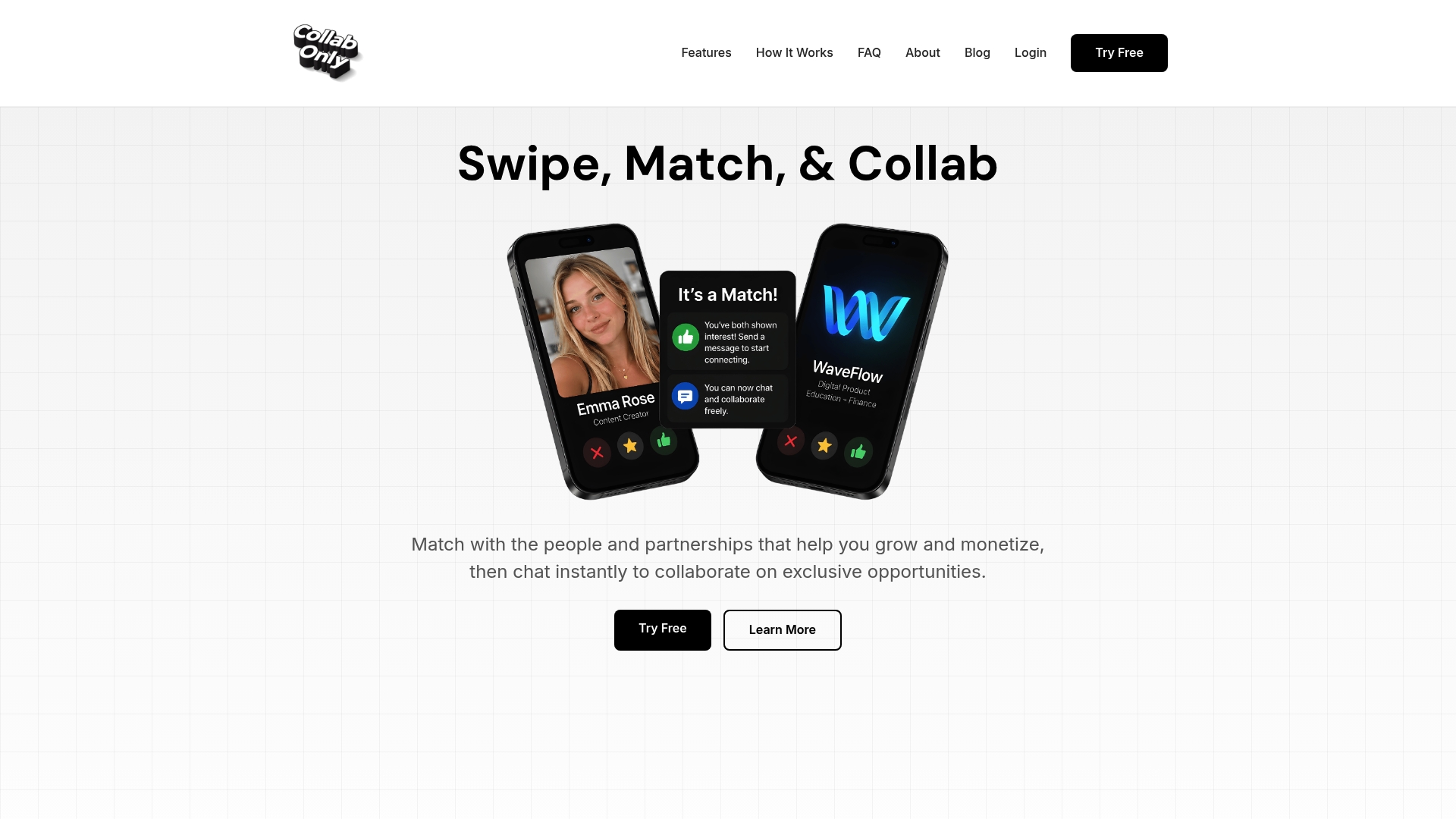
Collabonly is built for exactly the kind of goal-aligned creator partnerships this guide describes. The platform's swipe-and-match interface removes the friction from creator discovery, replacing slow email outreach and lost DMs with instant chat upon matching. Brands can connect directly with YouTube productivity creators whose audiences align with entrepreneurial and professional demographics, or work with nano influencers who consistently deliver higher engagement rates than macro accounts. For brands ready to move from one-off placements to structured, measurable creator partnerships, Collabonly provides the infrastructure to match, communicate, and collaborate at scale across TikTok, Instagram, and YouTube.
FAQ
What is creator marketing?
Creator marketing is the practice of partnering with content creators to produce audience-relevant content that supports specific brand objectives, including awareness, consideration, and conversion. It prioritizes creator-brand fit, content authenticity, and measurable business outcomes over raw follower reach.
How does creator marketing differ from influencer marketing?
Influencer marketing traditionally focuses on audience size and impressions, while creator marketing focuses on content quality, creator-brand alignment, and measurable ROI. Modern creator marketing uses long-term proof partner relationships rather than one-off paid placements.
What are creator campaigns?
Creator campaigns are coordinated marketing activations where brands partner with one or more creators to produce and distribute content across social platforms. Effective campaigns integrate creator content into paid, owned, and earned media channels and define clear performance KPIs before production begins.
Why use a creator platform?
Creator platforms reduce the operational cost of discovery, vetting, contracting, and performance tracking at scale. They also provide compliance infrastructure and CRM-like tools that make long-term creator relationship management practical for marketing teams managing multiple partnerships simultaneously.
What is the creator economy?
The creator economy refers to the ecosystem of independent content creators who produce platform-native content as a primary professional activity. It includes 27.7 million full-time independent workers in the United States, with 4.7 million earning over $100,000 annually, reflecting a mature professional labor market rather than a hobbyist community.