

TL;DR:
- Creator matchmaking connects brands with content creators based on audience, style, and values to ensure effective campaigns. It uses data-backed profiles, filters, and AI tools to streamline selection, improve efficiency, and measure results. Prioritizing audience quality, authenticity, and clear usage rights leads to higher ROI and sustainable partnerships.
Creator matchmaking is defined as the systematic process of connecting brands with content creators whose audience demographics, content style, and values align with specific marketing objectives. The industry term for this practice is "influencer partnership matching," though creator matchmaking has become the widely used operational label across platforms like TikTok, YouTube, and Instagram. Platforms such as TikTok's Creator Marketplace and YouTube Creator Partnerships have formalized this process, building algorithmic tools that replace cold outreach with data-backed selection. FTC disclosure requirements add a compliance layer that makes systematic matching, rather than ad hoc deals, the professional standard. Understanding creator matchmaking gives brands a repeatable framework for creator partnerships that generate measurable returns rather than one-off content transactions.
What is creator matchmaking and how does it work?
Creator matchmaking platforms operate through three core mechanics: structured creator profiles, brand-side search filters, and algorithmic or AI-driven matching logic. A creator profile typically includes audience demographics, engagement rates, platform reach, content category, and historical brand collaboration data. Brands apply filters such as niche, geography, follower range, and engagement quality to surface relevant candidates. Centralized creator marketplaces eliminate the manual outreach chaos that defined early influencer marketing, providing pre-vetted pools and algorithmic matching to fast-track collaborations.

The efficiency gain over manual outreach is significant. Cold DMs and email pitches produce low response rates and no performance data before commitment. Platform-based matching gives brands access to verified metrics before a single conversation begins. YouTube Creator Partnerships, for example, integrates tools directly in YouTube Studio and Google Ads, allowing brands to find creators, manage collaborations, and measure results within a single workflow. Advertisers who promoted creator-led videos on YouTube Shorts saw an average 30% increase in conversion lift. That figure reflects the compounding effect of audience trust combined with platform-native distribution.
Creator matchmaking platforms increasingly integrate AI and APIs for automated discovery and real-time campaign performance measurement, replacing manual account management at scale. This shift means brands can run parallel creator campaigns across dozens of creators simultaneously, with performance data feeding back into the matching algorithm to refine future selections.
- Profile completeness drives discoverability. Creators who share detailed channel insights appear 60% more in brand searches via platform search tools.
- Filter precision reduces mismatches. Brands can filter by engagement rate, not just follower count, which surfaces creators with genuinely active audiences.
- Performance-based models shift risk. TikTok's Creator Matchmaking enables sellers to scale partnerships efficiently through agencies following performance metrics, meaning brands pay for results rather than reach alone.
- AI-driven discovery accelerates timelines. What once took weeks of manual research now takes hours on a well-structured platform.
Pro Tip: Complete every field in your creator profile or brand brief. Platforms weight profile completeness heavily in their matching algorithms, and incomplete profiles consistently rank lower in brand search results.
What criteria do brands use to match with the right creators?
Effective creator matching goes well beyond follower count. Brands that treat reach as the primary filter consistently underperform compared to those who prioritize audience quality and content alignment. The following criteria define a high-quality match.
-
Audience demographics and engagement quality. A creator with 50,000 highly engaged followers in a specific age and geographic segment often outperforms a creator with 500,000 passive followers. Engagement rate, comment sentiment, and audience authenticity scores are the metrics that matter.
-
Content style and platform fit. A creator whose natural format is long-form YouTube reviews is a poor fit for a brand that needs 15-second TikTok content. Platform fit is a structural requirement, not a preference.
-
Trust and authenticity. Successful influencer partnerships require alignment of the creator's creative ability, distribution network, and the trust they hold with their audience. Trust is the hardest factor to replicate and the most valuable asset a creator brings to a brand deal.
-
Brand voice alignment. A creator's existing content tone, vocabulary, and visual style should map naturally to the brand's identity. Forced alignment produces content that audiences recognize as inauthentic, which erodes the trust transfer that makes creator campaigns effective.
-
Usage rights and licensing terms. Creators earn significantly more by separating fees: a base creative fee for content production and a higher licensing fee for ad usage rights. Brands that overlook usage rights pricing often face renegotiation or content restrictions mid-campaign.
-
Compliance readiness. FTC guidelines require disclosure of material connections because trust influences how audiences evaluate endorsements. Brands should confirm that a creator has a documented history of proper disclosure before signing any agreement.
Pro Tip: Request a creator's media kit and at least three examples of past brand integrations before initiating formal negotiations. This single step filters out creators who lack professional collaboration experience.
The mismatch cost is real. A brand that partners with a creator whose audience skews to the wrong demographic wastes the entire campaign budget. Systematic matching criteria prevent this outcome by making selection a data-driven decision rather than a judgment call.
Best practices for optimizing creator matchmaking outcomes
Both brands and creators can take specific steps to improve the quality and durability of their matched partnerships. The following practices apply across platform types and campaign sizes.
-
Prioritize long-term partnerships over one-off transactions. Treating creators as ongoing partners rather than single-use content vendors builds the kind of repeated audience exposure that drives brand recall. Audiences notice when a creator consistently endorses a brand across multiple pieces of content, and that consistency signals genuine endorsement rather than a paid placement.
-
Set shared strategic goals from the start. Brands and creators should align on campaign KPIs, content approval timelines, and creative latitude before any content is produced. Ambiguity at the brief stage is the leading cause of revision cycles that delay campaigns and frustrate both parties.
-
Negotiate usage rights as a separate line item. Usage rights represent a largely underpriced asset in brand-creator deals. Fair pricing for ad usage rights can significantly boost creator earnings and gives brands full control over content assets for paid amplification. Brands that bundle creative and usage fees into a single flat rate often lose content access rights when the contract expires.
-
Use analytics to refine future selections. Every completed campaign generates data: click-through rates, conversion attribution, audience retention, and sentiment analysis. Feeding that data back into the matching criteria for the next campaign is the fastest way to improve selection accuracy over time.
-
Comply with FTC disclosure requirements on every activation. Disclosure is not optional. Brands are responsible for ensuring that creators they partner with label sponsored content correctly across all platforms. Non-compliance creates legal exposure for the brand, not just the creator.
-
Involve legal and finance teams early in contract negotiations. Brand deals involve multiple stakeholders, including creators' agents and the brand's legal, finance, and purchasing teams, to negotiate timelines, licensing, and fees that protect both parties. Bringing these teams in after a verbal agreement is reached creates delays and sometimes kills deals entirely.
Understanding why brands need creators at a structural level makes these practices easier to implement because the investment in process becomes clearly justified by the return.
How do creator matchmaking models compare in 2026?
The creator matchmaking space now operates across three distinct models, each with different cost structures, control levels, and performance characteristics.
| Model | How it works | Best for | Key limitation |
|---|---|---|---|
| Direct brand-creator matching | Brand contacts creator directly via platform tools or outreach | Small campaigns, niche creators | Time-intensive; no performance guarantee |
| Agency-led matchmaking | Agency manages creator sourcing, vetting, and campaign execution | Mid-to-large brands needing scale | Higher fees; less direct brand-creator relationship |
| Platform-led algorithmic matching | Platform matches brand and creator based on data filters and AI | Brands prioritizing speed and data-backed selection | Platform dependency; limited to creators on that platform |
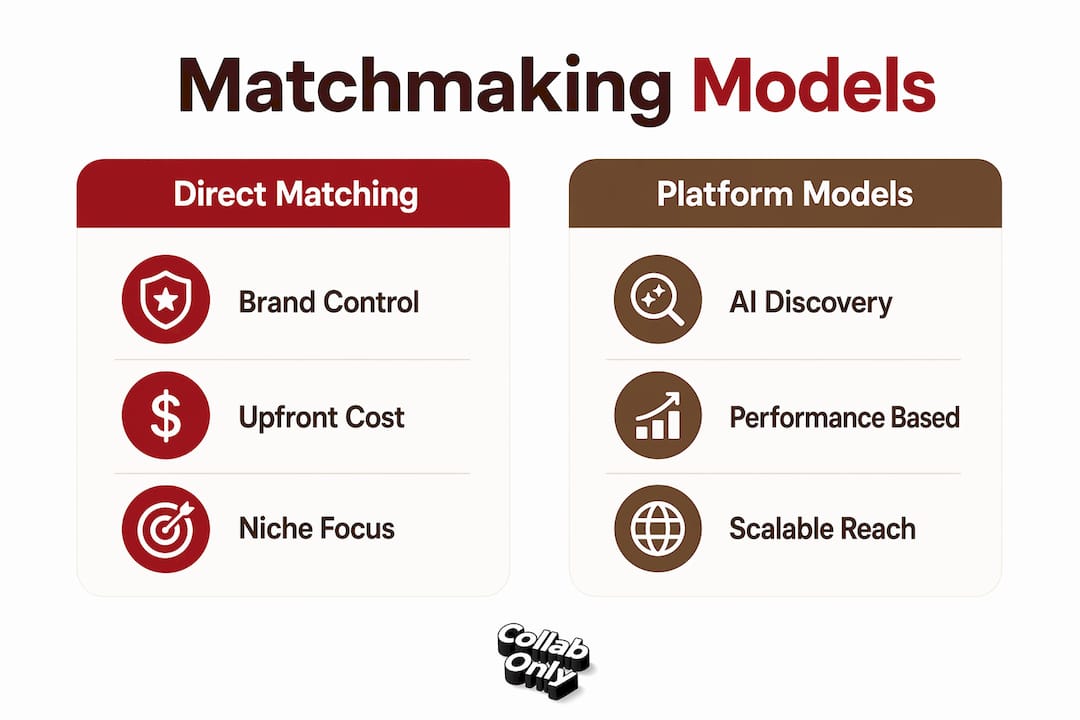
Performance-based models are gaining ground across all three categories. TikTok's approach, where sellers scale creator partnerships through agencies on a performance metric basis, signals a broader industry shift toward accountability. Brands pay for outcomes, not just access.
The rise of centralized platforms integrating AI-driven discovery is the most significant structural trend in 2026. These platforms combine creator discovery, contract management, content approval workflows, and campaign analytics in a single interface. That integration reduces the coordination overhead that historically made creator campaigns expensive to manage at scale.
Storytelling and long-term alignment are also reshaping how brands evaluate creator fit. Strong personal brand positioning and creator reputation dramatically increase brand willingness to pay premiums for collaborations, due to higher trust transfer and engagement rates. Brands that match creators strategically rather than opportunistically are building content asset libraries that retain value well beyond the initial campaign window.
Key Takeaways
Creator matchmaking delivers the highest ROI when brands treat it as a data-driven, ongoing process rather than a one-time vendor search.
| Point | Details |
|---|---|
| Definition matters | Creator matchmaking is the systematic process of aligning brands with creators based on audience, content fit, and values. |
| Platform tools accelerate results | YouTube Creator Partnerships and TikTok Creator Marketplace provide algorithmic matching that outperforms manual outreach. |
| Trust is the primary asset | Audience trust in a creator is the hardest factor to replicate and the most valuable driver of campaign performance. |
| Usage rights need separate pricing | Brands should negotiate creative fees and ad usage rights as distinct line items to avoid mid-campaign content restrictions. |
| Long-term partnerships outperform one-offs | Repeated creator-brand associations build audience recall and signal authentic endorsement over time. |
The metric brands keep getting wrong
After years of watching brand-creator deals succeed and fail, one pattern stands out clearly. Brands that fixate on follower count as their primary matching criterion consistently underperform compared to those who lead with engagement quality and audience trust. A creator with 20,000 deeply loyal followers in a specific sub-niche will almost always outperform a creator with 2 million passive followers for a brand that needs genuine purchase intent, not just impressions.
The second mistake is treating usage rights as an afterthought. Usage rights represent a largely underpriced asset in most brand-creator deals. When brands bundle creative and usage fees into a single flat rate, they often lose content access the moment the contract term ends. That means a brand can spend significant budget producing content it cannot legally use in paid media after the campaign closes. Negotiating usage rights as a separate, clearly scoped line item protects the brand's content investment and compensates creators fairly for the extended value their work generates.
The deeper issue is that many brands still approach creator matchmaking as a procurement exercise rather than a partnership process. Treating creators like partners rather than content vending machines yields more sustainable ROI because shared vision builds authentic engagement that audiences can sense. The brands winning in creator marketing right now are the ones who invest in understanding a creator's audience as deeply as they understand their own customer segments. That level of diligence is what separates a campaign that generates measurable lift from one that generates impressions and nothing else.
— Samuel
How Collabonly connects brands with the right creators
Collabonly is built for brands and creators who want goal-aligned partnerships without the friction of cold outreach and lost DMs.
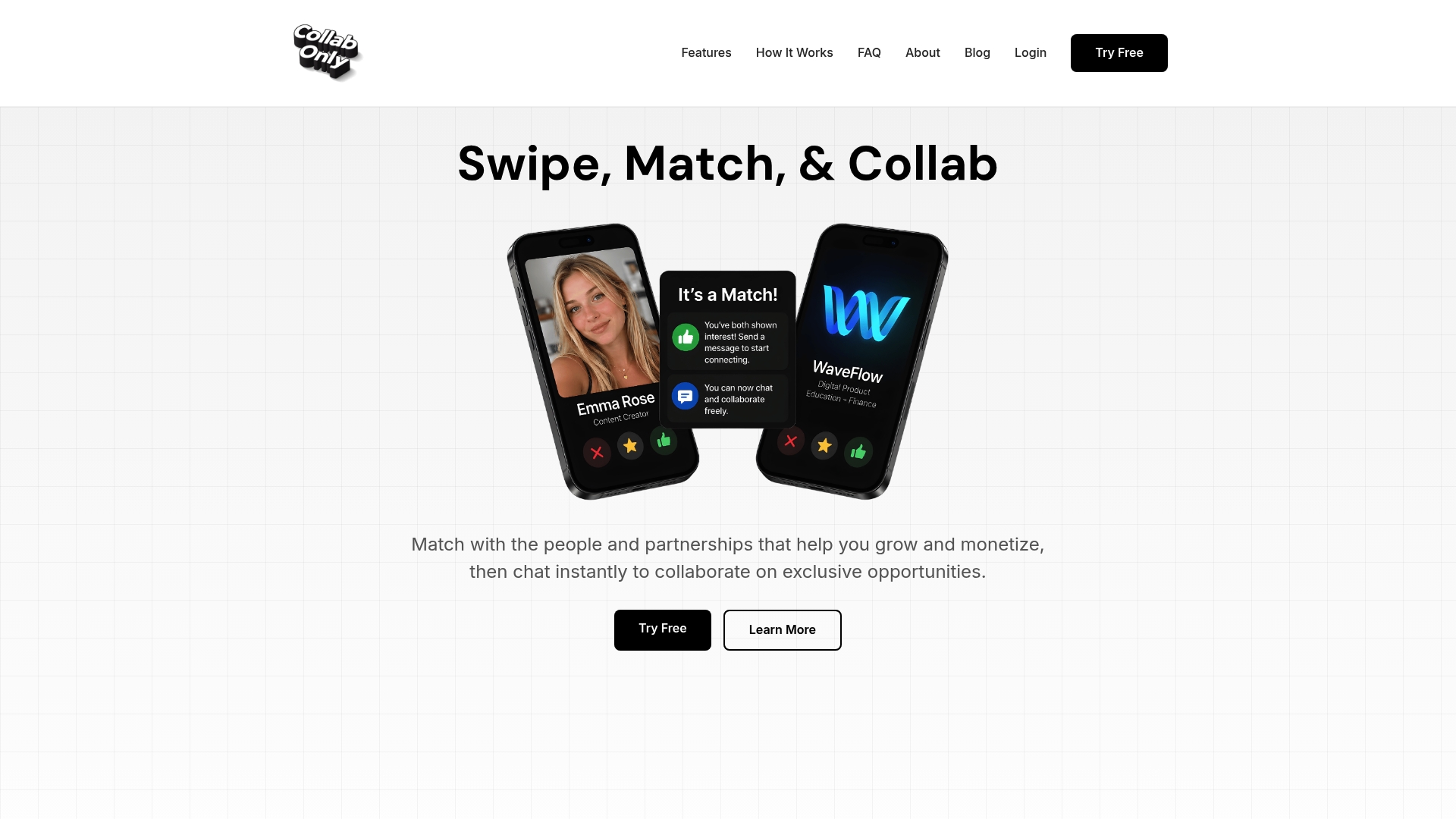
The platform's swipe-based matching system connects brands with nano influencers and micro influencers who bring genuine audience engagement across TikTok, Instagram, and YouTube. Brands can filter by niche, platform, and audience profile, then move directly to instant chat upon a match. Collabonly's influencer marketplace covers creators at every scale, from highly targeted nano creators to broader micro-tier partnerships, giving brands the flexibility to match campaign goals with the right creator tier. For brands ready to move beyond manual outreach, Collabonly provides the infrastructure to find, connect, and collaborate efficiently.
FAQ
What is creator matchmaking in simple terms?
Creator matchmaking is the process of connecting brands with content creators whose audience, content style, and values align with the brand's marketing goals. It replaces manual outreach with data-driven selection through platform tools or dedicated marketplaces.
How does a creator matchmaking platform work?
A creator matchmaking platform uses filters such as niche, engagement rate, and audience demographics to surface relevant creators for a brand's campaign brief. Algorithmic matching and AI-driven discovery tools then rank and recommend creators based on fit scores.
What is the difference between creator matchmaking and influencer marketing?
Influencer marketing is the broader practice of using creators to promote a brand. Creator matchmaking is the specific process of identifying and selecting the right creator for a campaign, which is the foundational step that determines whether an influencer marketing effort succeeds or fails.
Why do brands use creator matchmaking platforms instead of direct outreach?
Direct outreach produces low response rates and provides no verified performance data before commitment. Creator matchmaking platforms give brands access to pre-vetted creator profiles, engagement metrics, and audience data before any negotiation begins, which reduces selection risk significantly.
How important are usage rights in creator matchmaking deals?
Usage rights are a critical and frequently underpriced component of brand-creator agreements. Brands that do not negotiate usage rights as a separate line item risk losing the ability to run the creator's content in paid media once the initial contract term expires.