

TL;DR:
- Mastering concise, personalized pitches that highlight creative integration and clear deliverables helps creators secure consistent brand partnerships. Authentic collaborations focus on narrative and creator involvement, building longer-term value rather than just exposure. Organized outreach and disciplined follow-up processes are crucial for successful, sustained brand relationships.
Knowing how to pitch to brands is the single skill that separates creators who land consistent partnerships from those who stay stuck in the DMs. A brand partnership proposal is not a fan letter. It is a concise, business-grade communication that demonstrates creative alignment, states clear deliverables, and makes the brand manager's decision easy. This guide covers every component of a strong pitch, from the opening line to the follow-up cadence, using real-world examples from Calvin Klein, Tiffany & Co., and Nike to show what genuine creative integration looks like in practice.
What are the essential components of a successful brand pitch?
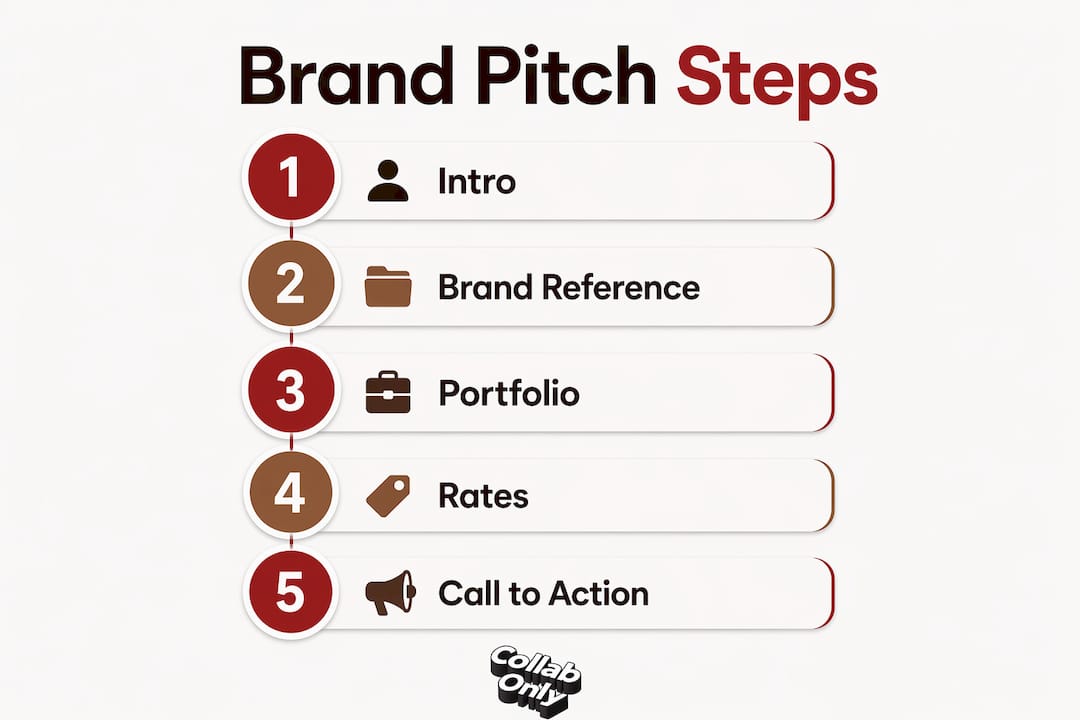
A strong pitch contains five specific elements, and missing even one reduces your response rate significantly. According to Femfounded's cold pitching framework, the most effective pitch emails stay under 150 words and include each of the following:
- A brief personal introduction. State your name, your niche, and your platform in one sentence. "I'm a food creator on Instagram with 42,000 followers focused on weeknight meal prep" is more useful than a paragraph about your creative journey.
- A specific brand reference. Name a product, a recent campaign, or a gap you noticed in their content strategy. Generic phrases like "I love your brand" signal to brand managers that you sent the same email to 50 companies.
- Two to three portfolio links. Link directly to relevant content samples rather than attaching a large media kit. Avoid large attachments entirely; they create inbox friction and often go unopened.
- Rates and deliverables. Including rates in your pitch removes an extra step for brand managers and speeds up decision-making. State what you will deliver, how many posts or videos, and on which platforms.
- A direct call to action. Close with a specific ask: "Would you be open to a 15-minute call this week?" or "I'd love your approval to send a full proposal." Vague closings produce vague responses.
Pro Tip: Write your pitch in a notes app first and count the words before you send. If it exceeds 150 words, cut the least specific sentence until it fits.
The discipline of brevity signals professionalism. Brand managers receive dozens of pitches weekly, and a concise, well-structured message communicates that you respect their time and understand how business communication works.
How do authentic, integrated partnerships differ from sponsorship pitches?
The biggest misconception in creator marketing is that partnerships are just about exposure. Authentic, integrated collaborations produce measurably stronger engagement and longer-term brand value because the creator's identity becomes part of the product or campaign narrative itself.
Three principles define this approach:
-
Creative involvement from concept to execution. Jung Kook's collaboration with Calvin Klein succeeded because he was deeply involved creatively, from concept development through product details, rather than simply appearing in an ad. When you pitch a brand, propose a specific creative angle that only you could execute, not a format any creator could replicate.
-
Narrative integration, not product placement. Tiffany & Co.'s collaboration with Netflix worked because the jewelry was woven into the film's narrative and creative process rather than placed on a table in a scene. When writing a pitch for brands, describe how the product fits your content world naturally, not how you will "feature" it.
-
Personal story as the campaign engine. Nike, McDonald's, and Devin Booker created a cultural moment by embedding personal story elements into a sneaker drop, turning it into a desert scavenger hunt rooted in Booker's biography. Marketing strategists consistently advise that campaigns rooted in creator personality outperform product-first sponsorships on engagement and recall.
"Collaborations feel authentic when rooted in the creator's personality and story rather than being layered on top of their content."
When you approach brands with a co-creation angle, you shift the conversation from "how much does a sponsored post cost" to "what can we build together." That shift changes your negotiating position and the quality of the partnership. For more on proven collaboration formats, Collabonly's resource library covers structures that appeal to both creators and brand decision-makers.
What are best practices for outreach and follow-up scheduling?
Finding the right contact is the first variable most creators get wrong. LinkedIn is the most reliable channel for locating marketing managers or founders at small-to-mid-size brands. For larger brands, the press or partnerships page on their website often lists a dedicated contact. Sending a pitch to a generic "info@" address is the equivalent of mailing a letter to "Occupant."
Once you have the right contact, the following outreach structure produces the most consistent results:
- Keep pitch emails under 150 words and DMs even shorter, ideally under 80 words.
- Use a subject line that names the brand and your specific angle: "Partnership Idea: [Brand Name] x [Your Name] for Q3 TikTok Campaign" outperforms "Collaboration Opportunity" every time.
- Personalize each follow-up with a new angle or a reference to something the brand published recently.
Pro Tip: Create a simple spreadsheet with columns for brand name, contact name, date sent, response status, and next follow-up date. Review it every two weeks to avoid missing re-engagement windows.
Follow-up cadence is where most creators lose deals they could have won. Treat pitching as a sales funnel with scheduled touchpoints rather than a one-time send. The table below outlines the recommended schedule based on response type.

| Response Type | Follow-Up Frequency | Recommended Approach |
|---|---|---|
| No response (ghosted) | Every 60–90 days | Re-pitch with a fresh angle or new content sample |
| "Maybe" or "not right now" | Every 6–8 weeks | Share a relevant content win or new audience stat |
| Positive but stalled | Every 2–3 weeks | Send a short check-in with a specific next step |
| Declined | Every 4–6 months | Re-engage after a major content milestone |
Declined or ghosted brands are not lost. They are leads in a longer pipeline. A brand that said no in January may have a new campaign budget in April and a new marketing manager who responds to your style.
What common mistakes should creators avoid when pitching?
The most frequent errors in brand pitching are structural, not creative. Fixing them requires no additional talent, only discipline and attention to detail.
- Attaching large media kits. A PDF attachment signals inexperience and creates friction. Link selectively to portfolio pieces that match the brand's category and visual style instead.
- Sending generic openers. "I've been a fan of your brand for years" tells a brand manager nothing useful. Replace it with a specific observation: "Your recent campaign on sustainable packaging aligns directly with my audience's purchasing behavior."
- Omitting rates. Leaving out pricing forces an extra round of communication and signals uncertainty about your own value. State your rates clearly in the initial pitch.
- Pitching product placement instead of integration. Proposing to "feature" a product in a post is the lowest-value offer you can make. Propose a creative concept that makes the brand's product central to a story only you can tell.
- Skipping follow-up tracking. Without a system to log contacts and schedule re-engagement, you will lose deals to inaction rather than rejection.
Pro Tip: Before sending any pitch, ask yourself: "Could any creator send this exact email?" If the answer is yes, rewrite it until the answer is no.
Understanding why brands need creators gives you a stronger negotiating frame. Brands are not doing you a favor by partnering with you. They need your audience, your credibility, and your creative output to reach people their own channels cannot.
Which tools can organize and strengthen your pitching process?
A consistent pitching process requires the right infrastructure. The tools below address the three core operational needs: tracking, communication, and presentation.
- Pitch tracking. Google Sheets or Airtable work well for maintaining a detailed pitch tracker with contact dates, response statuses, and scheduled follow-ups. Creators who treat outreach as a managed pipeline close more deals than those who pitch reactively.
- Email templates. Build a library of three to five pitch templates tailored to brand size: one for direct-to-consumer startups, one for mid-size brands with marketing teams, and one for enterprise brands with formal partnership programs. Personalize the specific reference and portfolio links for each send.
- Media kit hosting. Host your media kit on a platform like Canva, Notion, or a personal website so you can share a clean link rather than an attachment. Update it quarterly with new metrics and content samples.
The table below compares the primary functions of tools commonly used in the pitching workflow.
| Tool | Primary Function | Best For |
|---|---|---|
| Google Sheets / Airtable | Lead tracking and follow-up scheduling | Managing a high-volume outreach pipeline |
| Canva / Notion | Media kit creation and hosting | Presenting metrics and portfolio cleanly |
| Contact research and direct outreach | Finding marketing managers at target brands | |
| Collabonly | Brand discovery and match-based outreach | Connecting with brands actively seeking creators |
For creators who want a broader view of the top collaboration platforms available in 2026, Collabonly's comparison resource covers the functional differences across the major options. The right tool combination reduces time spent on administrative tasks and keeps your focus on the quality of the pitch itself.
Key takeaways
A successful brand pitch is a concise, personalized, business-grade proposal that demonstrates creative integration, states clear deliverables, and follows a disciplined outreach and re-engagement schedule.
| Point | Details |
|---|---|
| Keep pitches under 150 words | Include a brief intro, brand reference, portfolio links, rates, and a direct ask. |
| Propose integration, not placement | Pitch creative concepts rooted in your personality, not generic product features. |
| Follow a structured follow-up cadence | Re-engage ghosted brands every 60–90 days and "maybe" leads every 6–8 weeks. |
| Use tools to track every lead | Log contacts, response statuses, and next follow-up dates in a dedicated tracker. |
| Link your media kit, never attach it | Direct links reduce inbox friction and increase the chance your work gets reviewed. |
What the pitch process reveals about your brand as a creator
The pitch itself is a content sample. Brand managers read your email and immediately form a judgment about your communication style, your strategic thinking, and your professionalism. Most creators underestimate this. They focus entirely on their follower count and engagement rate while sending a pitch that reads like a casual DM.
The shift I see consistently among creators who land quality deals is a move away from "here is what I have" toward "here is what we can build." That reframe changes everything. It positions you as a creative partner rather than a media buy. It also forces you to do the research required to make a specific, credible proposal, which is exactly the kind of preparation that impresses brand managers.
Patience matters more than most guides acknowledge. The matching creators and brands process in 2026 is not a single touchpoint. It is a relationship that develops across multiple interactions, sometimes over months. The creators who build the strongest brand portfolios are the ones who maintain professionalism through every follow-up, treat every "not right now" as a future opportunity, and invest in the quality of their outreach the same way they invest in their content.
The power of storytelling in brand pitches is not a soft skill. It is the mechanism that converts a brand manager's interest into a signed agreement. If your pitch cannot tell a clear story about why this partnership makes sense for both parties, no amount of follower count will close the deal.
— Samuel
How Collabonly helps creators connect with the right brands
Collabonly removes the most time-consuming part of the pitching process: finding brands that are actively looking for creators like you.
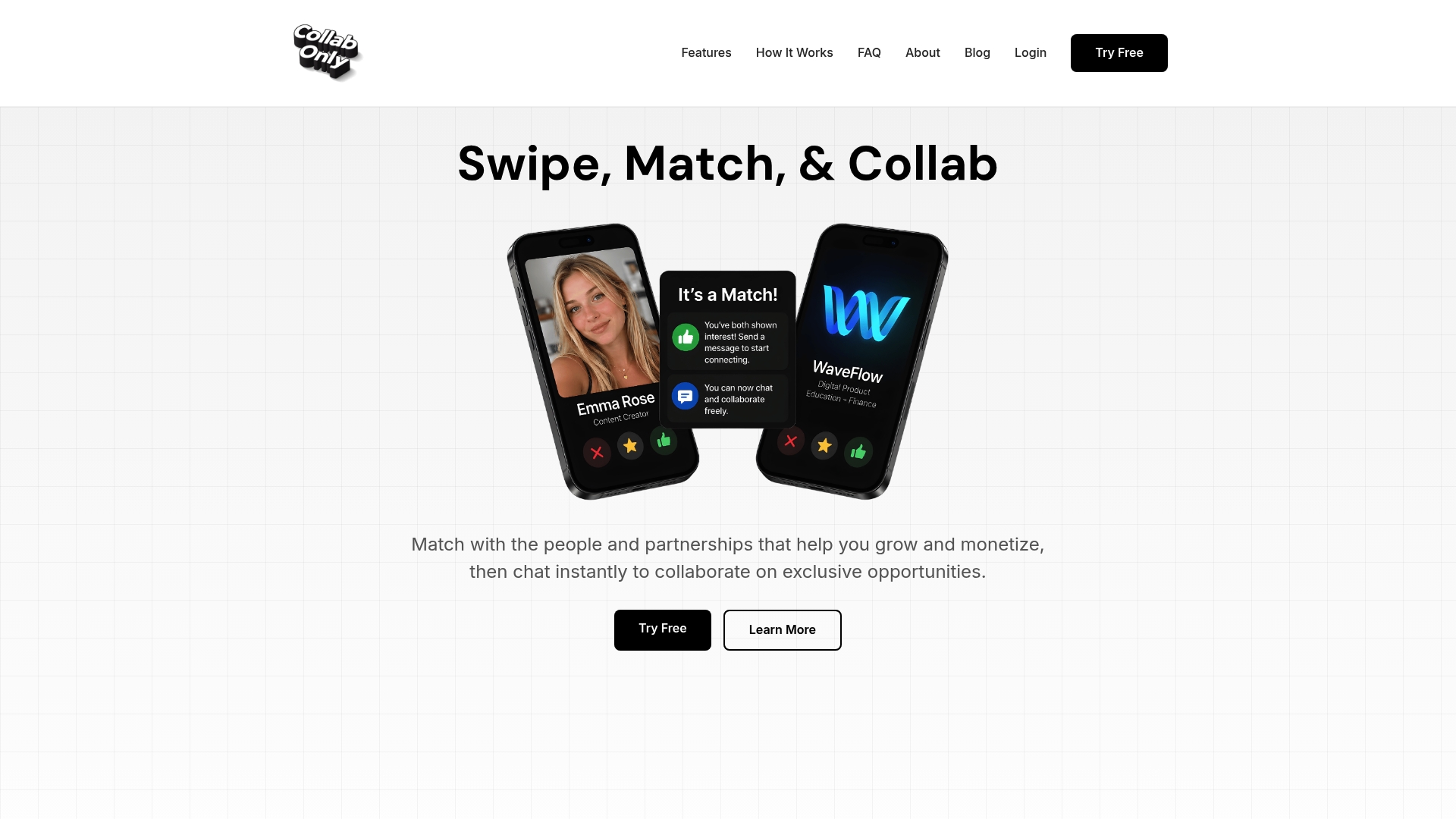
The platform uses a swipe-based matching system that connects creators with brands based on niche, platform, and campaign goals. When a match is made, instant chat opens immediately, eliminating the slow email cycles and lost DMs that derail most outreach efforts. Whether you are a nano influencer building your first brand portfolio or a micro influencer scaling an existing one, Collabonly surfaces opportunities aligned with your creative profile. Start building your brand partnership pipeline at Collabonly.
FAQ
What should a brand pitch email include?
A strong pitch includes a brief personal introduction, a specific brand reference, two to three portfolio links, your rates with deliverables, and a direct call to action, all in under 150 words.
How do you approach brands as a small creator?
Use LinkedIn to identify the marketing manager or founder, then send a concise, personalized pitch that proposes a specific creative concept rather than a generic sponsored post. Niche relevance matters more than follower count at the early stage.
How often should you follow up after pitching a brand?
Follow up with ghosted brands every 60–90 days and with "maybe" responses every 6–8 weeks, using a fresh angle or a new content milestone each time.
What is the difference between a sponsorship and a brand collaboration?
A sponsorship pays a creator to feature a product. A collaboration integrates the creator's identity and creative input into the campaign or product itself, producing stronger audience engagement and longer-term brand value.
Should you include your rates in the first pitch?
Yes. Including rates upfront removes an extra communication step and signals confidence in your value, which speeds up the brand manager's decision-making process.