

TL;DR:
- Marketing campaign types are divided into awareness, acquisition, and retention, each with specific objectives and KPIs. Combining 2-3 aligned campaign types consistently yields better results and higher ROI.
Marketing campaign types are the categorized strategies companies use to increase brand visibility, acquire customers, and retain loyalty. Campaigns fall into three functional stages: awareness, acquisition, and retention. Each stage serves a distinct business objective, and selecting the wrong type for your goal wastes budget and dilutes results. This guide breaks down the most effective promotional methods available, explains when to deploy each, and shows how to combine them for maximum impact.
What are the main marketing campaign types and their objectives?
Marketing campaigns divide into three core categories, each with a defined purpose and measurable output. Understanding these categories is the foundation of any sound campaign planning process.

| Category | Primary Objective | Key KPIs |
|---|---|---|
| Awareness | Reach new audiences and build brand recognition | Impressions, reach, brand recall, share of voice |
| Acquisition | Convert prospects into leads or paying customers | Conversion rate, cost per acquisition, click-through rate |
| Retention | Maximize customer lifetime value and loyalty | Repeat purchase rate, churn rate, net promoter score |
Awareness campaigns prioritize reach over conversion. They appear on channels with broad audiences, such as display advertising, social media, and video platforms, where the goal is frequency of exposure rather than immediate action.
Acquisition campaigns target prospects who already know the brand or have expressed intent. Pay-per-click (PPC) search ads, landing page campaigns, and promotional email sequences fall into this category. The KPI is always a measurable conversion event.
Retention campaigns address existing customers. Loyalty programs, re-engagement email flows, and exclusive content access all serve this function. Retention is often the most cost-efficient category because acquiring a new customer costs significantly more than keeping an existing one.
1. Social media marketing campaigns
Social media advertising is the second largest market in digital ads, offering interactive features that no other channel replicates at scale. Polls, stories, live video, and comment threads create two-way engagement that static display ads cannot match.
Social media campaigns work best for awareness and community building. Brands use platform-specific formats, such as Instagram Reels, TikTok short-form video, and YouTube pre-roll, to reach audiences where they already spend time. The interactive nature of these platforms also generates first-party data through engagement signals.
- Best for: brand awareness, product launches, community engagement
- Primary KPIs: reach, engagement rate, follower growth, video views
- Typical budget range: flexible, from micro-campaigns to large-scale paid amplification
2. Email marketing campaigns
Email marketing generates among the highest ROI of any digital channel, particularly for e-commerce businesses. That performance comes from the direct, permission-based relationship between brand and recipient.
Email campaigns serve both acquisition and retention objectives. Welcome sequences convert new subscribers into first-time buyers. Post-purchase flows build loyalty and drive repeat orders. Segmented promotional campaigns re-engage dormant customers with personalized offers. The channel's strength is precision: you control the message, the timing, and the audience segment.
- Best for: lead nurturing, customer retention, promotional offers, abandoned cart recovery
- Primary KPIs: open rate, click-through rate, revenue per email, unsubscribe rate
3. Content marketing campaigns
Content marketing builds authority and organic traffic over time. Blog posts, white papers, case studies, and video series educate the audience rather than sell directly. This education creates trust, and trust converts at a higher rate than cold outreach.
Content campaigns align with awareness and acquisition objectives. A well-ranked blog post attracts organic search traffic for months or years without additional spend. Content creator growth strategies show that consistent, audience-focused publishing compounds in value, unlike paid campaigns that stop the moment the budget runs out.
- Best for: organic growth, thought leadership, long-term lead generation
- Primary KPIs: organic sessions, time on page, backlinks earned, lead form completions
4. Search engine marketing campaigns (SEO and PPC)
Search engine marketing splits into two distinct approaches with different timelines and cost structures. SEO builds lasting authority; PPC delivers immediate traffic that stops the moment spending stops. Both serve acquisition objectives but operate on fundamentally different economics.
PPC campaigns on Google Ads or Microsoft Advertising capture high-intent searchers at the exact moment they are ready to buy. SEO campaigns invest in content and technical optimization to earn organic rankings that generate traffic without per-click costs. Most brands benefit from running both simultaneously: PPC for immediate revenue, SEO for compounding long-term returns.
- Best for PPC: product launches, seasonal promotions, competitive keyword capture
- Best for SEO: long-term traffic growth, brand authority, cost reduction over time
- Primary KPIs: cost per click, quality score, organic ranking position, organic click-through rate
5. Influencer marketing campaigns
Influencer campaigns transfer peer credibility from a trusted creator to a brand. This credibility transfer is the mechanism that makes influencer marketing effective, not the reach alone. A nano influencer with 5,000 highly engaged followers in a specific sub-niche often outperforms a celebrity with millions of passive followers.
Influencer campaigns serve awareness and acquisition objectives. They work across TikTok, Instagram, and YouTube, with each platform favoring different content formats and creator styles. The key selection criterion is audience alignment, not follower count. Collabonly's matching system connects brands with creators whose audiences match the brand's customer profile, removing the guesswork from outreach and partnership selection.
- Best for: brand awareness, product credibility, new audience acquisition
- Primary KPIs: earned media value, engagement rate, referral traffic, promo code redemptions
Pro Tip: Selecting 2–3 campaign types aligned with your audience, budget, and goals produces better results than spreading budget across every available channel. Focus creates measurable outcomes; diffusion creates noise.
6. Traditional marketing campaigns
Traditional marketing uses print, TV, and radio to reach broad audiences. These channels remain effective for brands targeting demographics with lower digital engagement, or for campaigns requiring geographic concentration, such as local retail promotions.
The primary limitation of traditional campaigns is attribution. Print and radio impressions are difficult to tie directly to revenue events, which makes optimization harder. Cost per thousand impressions is also higher than most digital alternatives. Traditional campaigns work best as awareness vehicles that complement digital acquisition efforts rather than replace them.
- Best for: local brand awareness, broad demographic reach, brand legitimacy signaling
- Primary KPIs: estimated reach, brand recall surveys, foot traffic lift
7. Inbound vs. outbound campaign integration
Outbound campaigns generate quick leads but risk being intrusive. Inbound campaigns build long-term relationships through education and engagement. The most effective marketing programs combine both approaches, using outbound for immediate pipeline and inbound for sustainable growth.
A practical integration model pairs PPC and social media advertising (outbound) with content marketing and SEO (inbound). The outbound campaigns capture demand that exists now. The inbound campaigns create demand for the future. Audience growth strategies that blend both approaches consistently outperform single-channel programs.
| Approach | Pros | Cons |
|---|---|---|
| Outbound only | Fast results, predictable volume | High cost, stops when budget stops |
| Inbound only | Compounds over time, lower cost per lead | Slow to start, requires consistent content production |
| Integrated | Balances short and long-term returns | Requires coordination across channels and teams |
Pro Tip: Automation tools for email, analytics, and social media greatly improve campaign sustainability. Standardized workflows reduce manual effort and allow teams to manage more campaigns without proportional headcount increases.
8. Measuring success across different campaign types
Effective campaigns follow a defined lifecycle: define objectives, identify the audience, set the budget, select channels, create content, and measure results. Skipping any step in this sequence produces campaigns that cannot be evaluated or improved.
Measurement frameworks differ by campaign category. Awareness campaigns rely on reach and frequency data. Acquisition campaigns require conversion tracking and cost-per-acquisition analysis. Retention campaigns track behavioral metrics like repeat purchase rate and churn. Applying the wrong KPI framework to a campaign type produces misleading conclusions.
Key measurement practices for each campaign type:
- Awareness: track impressions, unique reach, and brand lift surveys
- Acquisition: install conversion pixels, set up goal tracking in Google Analytics 4, and calculate cost per acquisition weekly
- Retention: monitor customer lifetime value, net promoter score, and email re-engagement rates
- All campaigns: establish a baseline before launch so post-campaign data has a reference point for comparison
Overcoming digital marketing challenges in measurement often comes down to data infrastructure. Brands that invest in proper tracking setup before a campaign launches make better optimization decisions during the campaign's active period.
Key takeaways
The most effective marketing programs align campaign type to a specific stage: awareness, acquisition, or retention, and measure each stage with the KPIs that match its objective.
| Point | Details |
|---|---|
| Three core categories | Every campaign serves awareness, acquisition, or retention. Match the type to the goal before selecting channels. |
| Focus over breadth | Selecting 2–3 campaign types aligned with your audience outperforms spreading budget across every channel. |
| Inbound and outbound balance | Outbound drives immediate leads; inbound builds compounding authority. Run both for sustainable growth. |
| Measurement by category | Apply awareness KPIs to awareness campaigns and conversion KPIs to acquisition campaigns. Mixing them produces bad data. |
| Automation extends capacity | Standardized workflows and automation tools allow teams to manage more campaigns without proportional cost increases. |
What I have learned about choosing campaign types
The most common mistake I see from marketing teams is treating channels as independent tasks rather than coordinated levers. A brand runs a social media campaign in one quarter, an email campaign in the next, and a PPC push before a product launch, with no connective tissue between them. Successful campaigns leverage emotional connection to create deeper engagement, not just product features. That emotional thread needs to run consistently across every channel, not just the one with the biggest budget that month.
The second pattern I consistently observe is over-investment in acquisition and under-investment in retention. Acquisition campaigns are visible and exciting. Retention campaigns feel administrative. But the economics favor retention every time. A customer who buys twice is worth more than two customers who each buy once, because the second purchase carries no acquisition cost.
My practical advice: map your campaigns to the three-stage framework before you select a single channel. Know which stage you are funding, what KPI defines success for that stage, and how the campaign connects to the stages before and after it. That discipline separates programs that build compounding value from programs that simply spend budget.
— Samuel
Collabonly connects your campaigns to the right creators
Influencer marketing is one of the fastest ways to extend the reach of any campaign type, whether you are running a product launch, a seasonal promotion, or a long-term brand awareness program.
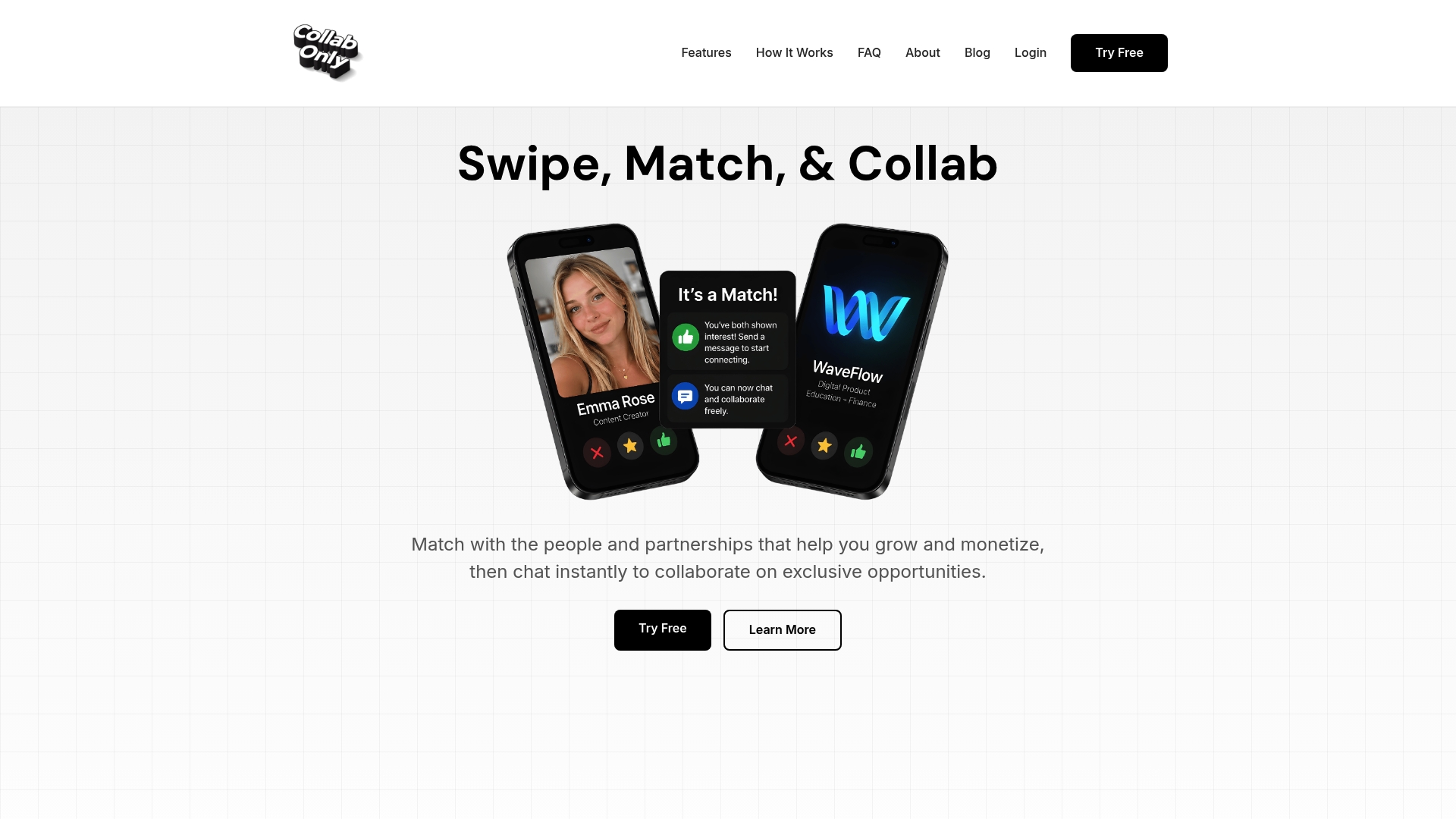
Collabonly connects brands with nano influencers and micro influencers whose audiences match your customer profile. The platform's swipe-based matching system removes the friction of cold outreach, replacing slow email threads and lost DMs with instant chat upon match. Brands on TikTok, Instagram, and YouTube use Collabonly to find creators who deliver peer-credibility at scale, turning influencer campaigns into a repeatable, measurable part of their broader marketing program. Explore content creators for brand awareness to see how the matching process works.
FAQ
What are the three main marketing campaign types?
Marketing campaigns divide into three functional stages: awareness, acquisition, and retention. Each stage has distinct objectives and KPIs that define success.
Which campaign type delivers the highest ROI?
Email marketing consistently delivers among the highest ROI of any digital channel, particularly for e-commerce brands. Influencer campaigns with nano and micro creators also produce strong returns when audience alignment is precise.
How many campaign types should a brand run at once?
Focusing on 2–3 campaign types aligned with your audience, budget, and goals produces better results than running campaigns across every available channel simultaneously.
What is the difference between inbound and outbound campaigns?
Outbound campaigns push messages to audiences through paid ads, cold email, and direct mail. Inbound campaigns attract audiences through content, SEO, and organic social media. Outbound generates faster leads; inbound builds longer-term authority.
How do you measure the success of different marketing campaigns?
Awareness campaigns use reach and impression data. Acquisition campaigns track conversion rate and cost per acquisition. Retention campaigns monitor repeat purchase rate and churn. Applying the correct KPI framework to each campaign type is the foundation of accurate measurement.