

TL;DR:
- Content co-creation involves active collaboration between brands and creators from the earliest idea stage, producing shared and authentic content. It differs from user-generated content by requiring joint influence on content development, leading to higher engagement and SEO benefits. Successful partnerships depend on clear goals, aligned audiences, documented agreements, and ongoing relationships rather than one-time projects.
Content co-creation is defined as a structured collaboration between brands and content creators to jointly produce content that delivers value to both parties and their shared audiences. Unlike passive feedback loops or simple content briefs, co-creation requires active, early-stage involvement from all partners, covering ideation, production, and distribution. The process follows two core stages: contribution, where partners submit ideas or creative work, and selection, where the brand curates and refines those contributions into final content. This distinction matters because it separates co-creation from looser concepts like user-generated content or market research. Brands and creators who understand this structure build partnerships that generate higher engagement, stronger credibility, and organic audience growth.
What is content co-creation and how does it work?
Content co-creation is the practice of joint design and problem-solving from the earliest stages of content development, not just feedback on a finished draft. The contribution stage invites partners to submit raw ideas, creative angles, or draft assets. The selection stage applies editorial judgment to identify which contributions align with the brand's goals and the audience's expectations. Both stages require transparent communication and a shared understanding of what success looks like.
The process works across multiple formats. Co-authored blog posts, joint webinars, co-branded eBooks, and branded social content all qualify as collaborative content when both parties shape the output from the start. Each format serves a different purpose: webinars build real-time authority, eBooks generate long-form lead assets, and co-authored posts distribute expertise across two audiences simultaneously.
Successful co-creation also depends on multi-stakeholder alignment. When a brand and a creator agree on audience, tone, and distribution before a single word is written, the final content reflects genuine shared intent. That alignment is what separates co-creation from a standard content brief handed to a freelancer.
Pro Tip: Document the contribution and selection criteria in writing before the project begins. Undocumented expectations are the leading cause of friction in collaborative content projects.
How does co-creation differ from user-generated content?
The distinction between co-creation and user-generated content (UGC) is structural, not cosmetic. Understanding the difference prevents brands from mislabeling their content programs and setting the wrong expectations with partners.
- User-generated content is created independently by customers or fans, then curated by the brand after the fact. The brand plays no role in shaping the content before it is produced.
- Co-creation requires the brand and partner to collaborate before and during production. Both parties influence the direction, format, and messaging from the start.
- Market research and feedback collection gather audience opinions on existing concepts. Co-creation goes further by inviting stakeholders to help design the concept itself.
- Traditional influencer briefs assign creative direction to a creator without genuine back-and-forth. Co-creation treats the creator as a co-author with shared decision-making authority.
- Value sharing is a defining feature of true co-creation. Both parties gain from the content's performance, whether through audience reach, backlinks, leads, or brand equity.
The practical implication is significant. A brand that reposts customer photos is running a UGC program. A brand that sits down with a creator to develop a content series, agrees on topics together, and co-promotes the result is practicing structured co-creation. The second approach produces content with deeper authenticity because both parties have genuine ownership of the outcome.
What are effective strategies for starting co-creation partnerships?
Building a productive co-creation partnership requires deliberate setup. The most common failure point is not creative mismatch. It is the absence of documented agreements on goals, roles, and benefit sharing before work begins.
The following framework applies whether the collaboration is a single co-authored post or a six-month content series:
- Define shared objectives. Both parties must agree on what the content is meant to achieve: lead generation, brand awareness, SEO authority, or audience growth. Misaligned objectives produce content that serves neither party well.
- Align on audience. Confirm that the creator's audience and the brand's target audience overlap meaningfully. Content that reaches the wrong readers delivers weak results regardless of quality.
- Establish contribution channels. Accessible channels such as shared documents, project management workspaces, or dedicated collaboration platforms reduce communication breakdowns and keep contributions organized.
- Agree on benefit sharing upfront. Determine how each party will promote the final content, who owns the intellectual property, and how performance data will be shared. Ambiguity here creates disputes after publication.
- Plan the content formats together. Co-authored blogs, joint webinars, and co-branded eBooks each require different production timelines and promotional commitments. Align on format before assigning tasks.
- Build for continuity. One-off collaborations rarely generate compounding value. Structure the partnership to produce a series or recurring content cadence that builds audience familiarity over time.
Brands and creators looking for practical collaboration formats will find that the most effective ones share a common trait: both parties contribute expertise the other does not have. That complementary dynamic is what makes co-created content more credible than content produced by either party alone.
Pro Tip: Use a dedicated collaboration workspace, such as a shared project board or a structured brief document, for every partnership. Keeping all communication in one place prevents the version-control chaos that derails otherwise strong collaborations.
What are the measurable benefits of content co-creation?
Co-creation delivers advantages that single-party content production cannot replicate. The benefits operate across four distinct dimensions: lead quality, SEO performance, brand loyalty, and creative output.

| Benefit | Mechanism | Outcome |
|---|---|---|
| Higher lead quality | Co-authored blogs and webinars reach partner audiences with high purchase intent | More qualified leads at lower acquisition cost |
| Organic backlink growth | Partners naturally link to content they helped create | Sustained SEO authority without paid link building |
| Brand loyalty | Authentic partnerships signal shared values to audiences | Stronger long-term audience retention |
| Creative diversity | Multiple perspectives produce content angles one party would not generate alone | Higher content relevance and originality |
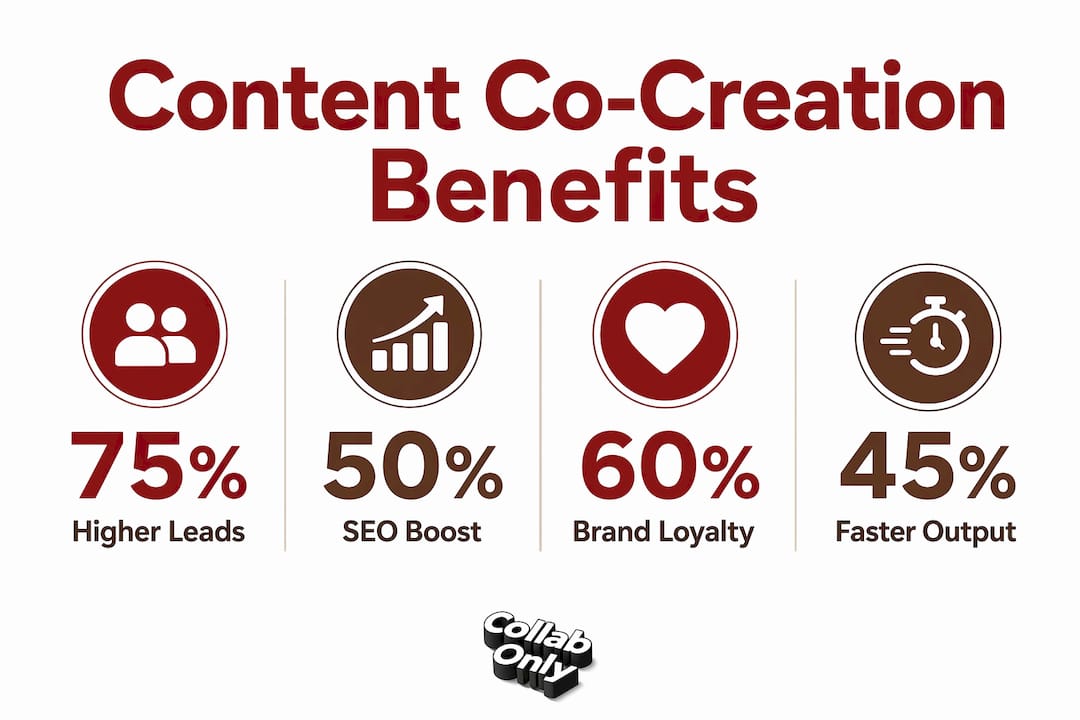
The SEO case for co-creation is particularly strong. Collaborative content attracts organic backlinks by distributing across two or more audiences simultaneously. Each partner's existing audience encounters the content through a trusted source, which increases the likelihood of organic sharing and third-party linking. That distribution effect compounds over time in ways that paid promotion does not.
Brand loyalty follows a similar compounding logic. When a creator's audience sees that creator genuinely involved in shaping a brand's content, the endorsement carries more weight than a standard sponsored post. The audience recognizes authentic co-ownership. That recognition builds the kind of trust that converts followers into customers and customers into repeat buyers.
Co-creation also accelerates creative output. Two parties with different audience knowledge and content expertise generate more viable ideas per session than either would alone. That collaborative ideation effect is especially valuable for brands entering new content categories or creators expanding into new formats.
Key takeaways
Content co-creation is the most durable content strategy available to brands and creators because it produces authentic, jointly owned content that compounds in SEO value, audience trust, and lead quality over time.
| Point | Details |
|---|---|
| Two-stage structure | Every co-creation project requires a contribution stage and a selection stage to produce aligned content. |
| Not the same as UGC | Co-creation demands active partner involvement from the start, not post-production curation of independent content. |
| Document everything upfront | Undocumented goals, roles, and benefit-sharing agreements are the primary cause of partnership breakdowns. |
| SEO compounds over time | Collaborative content generates organic backlinks through dual-audience distribution, building authority without paid promotion. |
| Build for continuity | Recurring co-creation series outperform one-off projects by building audience familiarity and compounding reach. |
The case for treating co-creation as a core discipline, not a tactic
The brands that get the most out of co-creation are not the ones with the biggest budgets. They are the ones that treat collaboration as a discipline with its own standards, not a one-off tactic to fill a content calendar gap.
What I have observed consistently is that most brands approach co-creation the way they approach freelance assignments: they hand over a brief, wait for a deliverable, and call it collaboration. That model misses the entire point. The value in co-creation comes from the friction of two different perspectives negotiating a shared output. That negotiation is where the originality lives.
The shift from a product-centric to a service-centric model is not just a theoretical reframe. It has practical consequences for how brands structure their content teams and how creators position their services. A brand that builds ongoing co-creation relationships with three or four creators develops a content operation that is genuinely hard to replicate. A creator who positions themselves as a co-creation partner rather than a content vendor commands higher fees and longer contracts.
The technology side has improved significantly. Platforms that match brands and creators based on audience alignment and content goals have removed the friction that used to make finding the right partner a months-long process. That reduction in setup time means more energy goes into the actual collaboration. Brands and creators who build long-term partnerships rather than transactional one-offs are the ones generating compounding returns from their content investments.
The mindset shift required is simple but not easy: stop thinking about content as an asset to be produced and start thinking about it as a relationship to be built. The content is the byproduct. The relationship is the strategy.
— Samuel
How Collabonly supports brand and creator co-creation
Collabonly is built for the exact problem that derails most co-creation efforts: finding the right partner fast and communicating without friction from the first match.
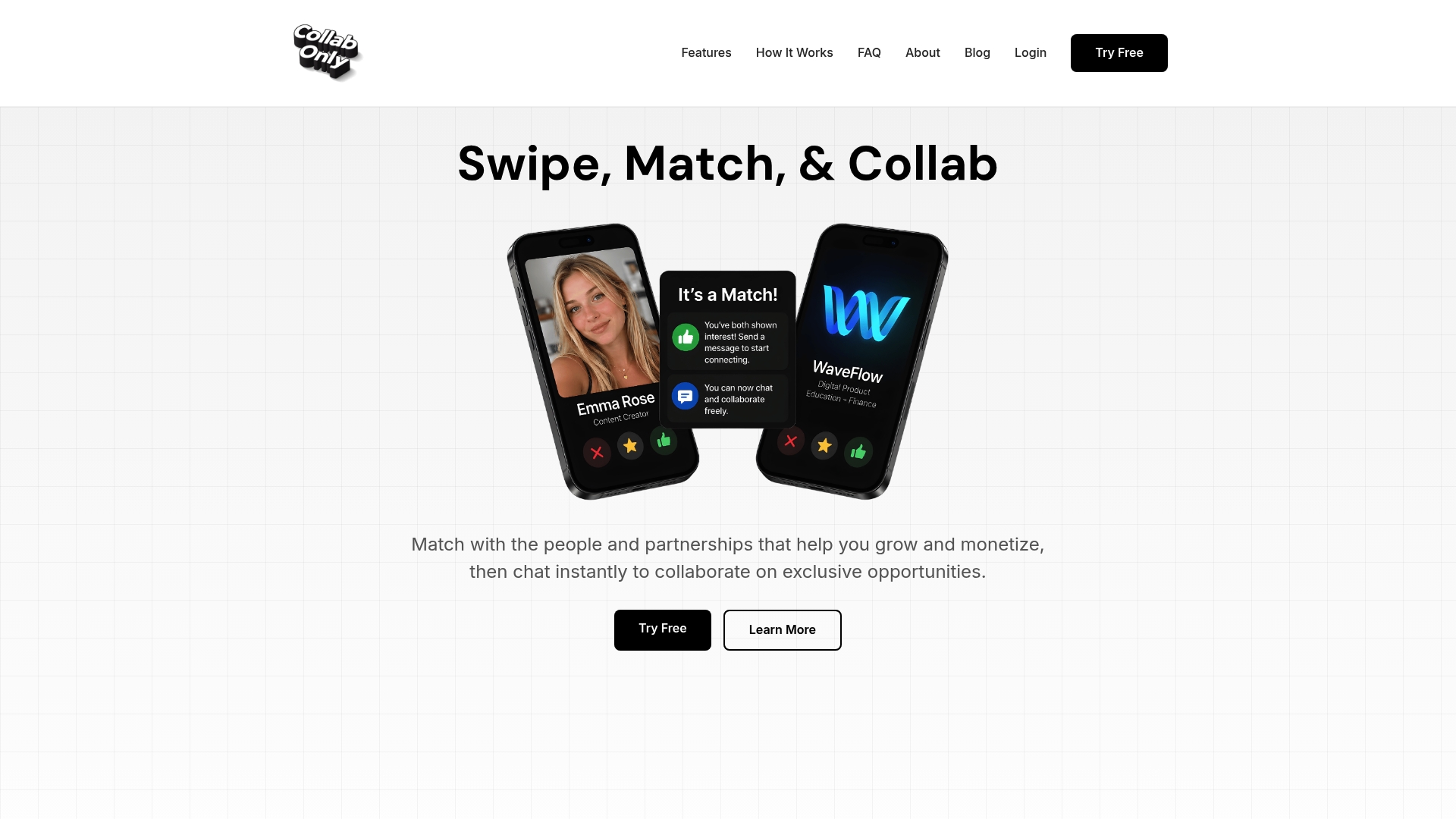
The platform's swipe-based matching system connects brands with nano influencers and micro influencers whose audiences align with specific campaign goals, eliminating the cold outreach and unanswered DMs that slow traditional partnership development. Once matched, instant chat replaces the slow email threads that typically delay project kickoff. Brands gain access to creators across TikTok, Instagram, and YouTube, making it practical to build co-creation partnerships at the format and platform level that fits the campaign. For brands and creators ready to move from theory to execution, Collabonly removes the setup friction so the collaboration can start immediately.
FAQ
What is the content co-creation meaning in marketing?
Content co-creation in marketing is a structured process where brands and creators jointly develop content from ideation through distribution, with both parties contributing to and sharing the value of the final output.
How does co-creation differ from a standard influencer brief?
A standard influencer brief assigns creative direction to a creator. Co-creation gives the creator shared input on the concept, format, and messaging from the start, producing content with genuine dual ownership.
What formats work best for collaborative content?
Co-authored blog posts, joint webinars, and co-branded eBooks are the most effective formats because they leverage partner audiences and deliver higher-intent leads than single-party content.
Why does co-created content perform better in SEO?
Co-created content attracts organic backlinks because both parties distribute it to their own audiences, increasing the likelihood of third-party linking without paid promotion.
How do brands and creators start a co-creation partnership?
The first step is aligning on shared objectives, audience overlap, and benefit sharing before any content is produced. Documented collaboration plans and dedicated communication channels prevent the breakdowns that commonly end partnerships early.