

TL;DR:
- Digital collaboration involves using digital tools and platforms to enable remote teams to communicate, coordinate, and complete tasks efficiently. Its widespread adoption has led to significant productivity improvements by centralizing communication, document sharing, and task management within unified environments. Success depends on combining effective technology with clear cultural norms, ownership, and ongoing process design.
Digital collaboration is the practice of working together through digital tools and platforms, enabling teams to communicate, coordinate, and complete tasks from any location. Platforms like Slack, Microsoft Teams, and Google Workspace have made this practice the default operating model for modern organizations. Nearly 80% of workers use digital collaboration tools as of 2026, up from just over 50% in 2019. That shift reflects a fundamental change in how work gets done, not just where. Teams that understand both the tools and the strategy behind them consistently outperform those that treat collaboration software as a simple IT deployment.
What is digital collaboration and why does it matter?
Digital collaboration is defined as the coordinated use of technology to enable joint work, communication, and decision-making across distributed teams. The industry also refers to this as "computer-supported cooperative work" or, more broadly, online collaboration. Both terms describe the same core function: replacing physical proximity with digital infrastructure so that geography stops being a constraint.

The scale of adoption tells the story clearly. Knowledge workers spend about 50% of their work week on collaborative activities including meetings, messaging, and document coordination. That figure means collaboration is not a peripheral function. It is the primary activity for most professional roles, which makes the quality of the tools and processes involved a direct driver of organizational performance.
Three capabilities define effective online collaboration:
- Real-time communication: Instant messaging, video calls, and threaded discussions replace slow email chains with faster, more contextual exchanges.
- Shared workspaces: Cloud-based documents and project boards give every team member access to the same information at the same time.
- Transparent accountability: Task assignments, deadlines, and progress updates are visible to the full team rather than buried in individual inboxes.
What are the essential digital collaboration tools and how do they work?
Digital collaboration tools fall into four primary categories, each addressing a distinct coordination need. Understanding the categories prevents the common mistake of selecting tools by brand recognition rather than function.
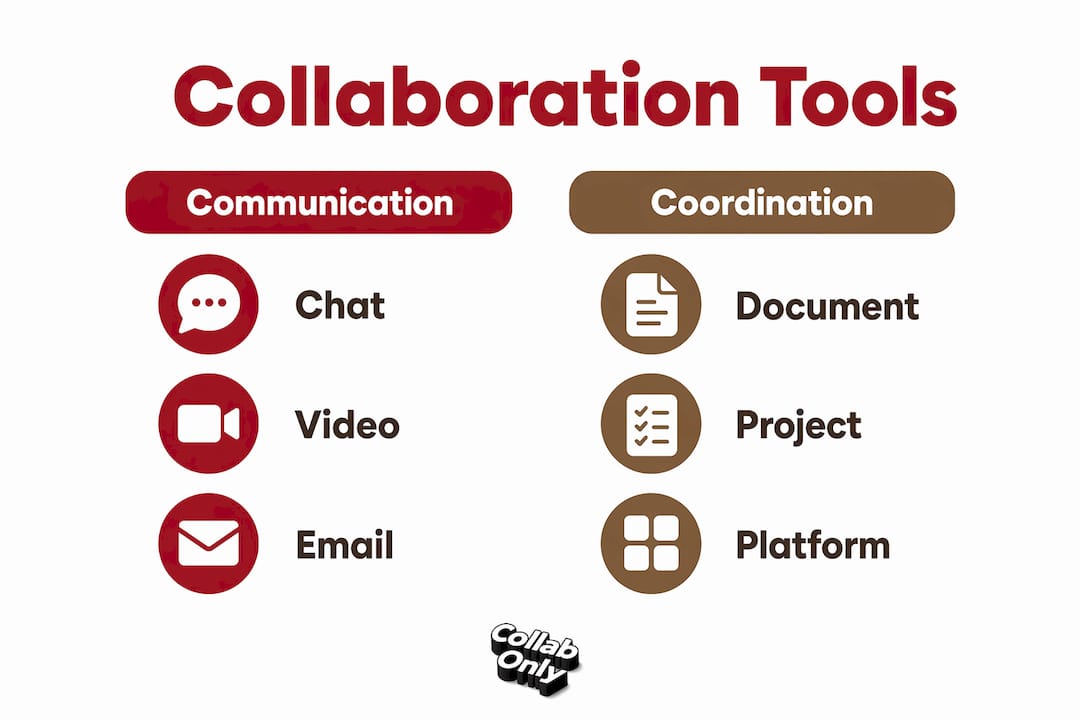
| Category | Example Platforms | Key Features |
|---|---|---|
| Messaging and chat | Slack, Microsoft Teams | Threaded channels, direct messaging, file sharing, integrations |
| Cloud document editing | Google Workspace, Microsoft OneDrive | Real-time co-authoring, version history, commenting |
| Project management | Asana, Trello, Jira | Task assignment, deadlines, status tracking, dependency mapping |
| Knowledge management | Notion, Confluence | Searchable wikis, documentation, team handbooks |
Platforms like Slack and Microsoft Teams replace email as the primary communication hub, centralizing conversations by project, team, or topic. That centralization reduces the time teams waste searching for context buried across multiple email threads.
Google Workspace and Microsoft OneDrive address the document layer. Both allow multiple users to edit the same file simultaneously, with changes tracked in real time. This eliminates the version confusion that plagues teams still emailing attachments back and forth.
Project management platforms like Asana, Trello, and Jira operate at the workflow layer. They convert verbal agreements into documented tasks with owners, due dates, and status indicators. Jira is particularly common in software development teams because it maps directly to sprint-based workflows. Asana and Trello serve broader use cases across marketing, operations, and product teams.
Digital collaboration platforms integrate chat, document editing, project management, and intranet functions into unified environments. Microsoft Teams, for example, combines messaging, video conferencing, file storage via SharePoint, and third-party app integrations in a single interface. That consolidation reduces the number of platforms a team must switch between during a single workday.
Pro Tip: Before selecting tools, map your team's actual workflow first. Identify where communication breaks down, where files get lost, and where task ownership becomes unclear. Then select tools that address those specific gaps rather than adopting platforms based on popularity alone.
Why does effective digital collaboration require more than just tools?
Technology is the infrastructure of digital collaboration, not the strategy. Simply deploying software fails without a supporting strategy that defines communication norms, accountability expectations, and adoption practices. Organizations that treat collaboration platforms as plug-and-play solutions consistently underperform those that invest in the cultural layer.
The most common cultural failure is the absence of communication norms. Teams that adopt Slack without defining how it should be used quickly develop the same problems they had with email: missed messages, unclear urgency signals, and information scattered across dozens of channels. The tool changes; the dysfunction persists.
Radical transparency in digital collaboration increases accountability by making project status and individual contributions visible to all team members. This principle, applied through tools like Asana or Notion, eliminates the ambiguity that causes duplicated work and missed deadlines. When every team member can see who owns what and where it stands, accountability becomes structural rather than managerial.
Three cultural norms that high-performing digital teams consistently apply:
- Use chat platforms for urgent, time-sensitive requests only. Route non-urgent updates to project boards.
- Document decisions in shared spaces immediately after they are made. Verbal agreements that never reach a shared document effectively do not exist.
- Assign a single owner to every task. Shared ownership without a named lead is the primary cause of tasks falling through the gaps.
Pro Tip: Run a 30-minute team session at the start of any new collaboration tool rollout. Define three to five explicit norms for how the tool will be used. Write them in a shared document and revisit them after 30 days. Teams that do this report faster adoption and fewer communication breakdowns.
Tool sprawl is the second major cultural risk. Adopting too many disconnected platforms reduces productivity through constant interface switching and cognitive load. A team using Slack for chat, Zoom for video, Dropbox for files, Trello for tasks, and Notion for documentation is managing five separate systems. Each switch costs time and attention. Consolidating to two or three integrated platforms almost always improves output.
How does digital collaboration improve productivity and business outcomes?
The productivity case for digital teamwork strategies is well-documented. Companies adopting centralized collaborative platforms report a 20–25% increase in team productivity. That gain comes from three sources: reduced time spent searching for information, faster decision-making, and fewer coordination errors.
The concept of a "single source of truth" explains much of that gain. A single source of truth replaces invisible work hidden in personal email folders and local files with transparent, shared documentation accessible to the full team. When everyone references the same document, the same project board, and the same communication thread, the number of alignment meetings drops and the speed of execution increases.
Beyond productivity, the strategic benefits of digital collaboration extend to organizational agility. Deploying digital collaboration platforms transforms companies into agile organizations capable of hiring globally, pivoting quickly, and focusing resources on innovation rather than coordination overhead. A marketing team using Google Workspace and Asana can onboard a contractor in Singapore with the same efficiency as a local hire. That geographic flexibility is a direct competitive advantage.
"When done right, digital collaboration accelerates innovation, improves employee experience, and leads to faster time-to-market for products and services." — Happeo, Workplace Collaboration in 2026
The employee experience dimension is often underweighted in productivity discussions. Teams with clear digital workflows report higher job satisfaction because they spend less time in status meetings and more time on substantive work. Reduced coordination friction translates directly into reduced frustration. For organizations competing for skilled talent, that distinction matters in retention as much as compensation.
For teams working in influencer marketing and content creation, understanding platform-based collaboration adds another layer of strategic value, particularly when coordinating campaigns across multiple creators and channels simultaneously.
What common challenges arise in digital collaboration and how can teams overcome them?
Every team that scales digital collaboration encounters predictable obstacles. Recognizing them early reduces the cost of correction.
- Tool sprawl. The average knowledge worker switches between applications dozens of times per day. Consolidate to a core stack of two or three integrated platforms and enforce that standard across the team.
- Information silos. When teams use different platforms without integration, critical context stays trapped in one system. Audit your tool stack quarterly and identify where information fails to flow between platforms.
- Poor permissions management. Managing user permissions effectively is essential to secure and orderly collaboration. Applying "can view," "can edit," and "cannot download" controls prevents data breaches and version confusion on shared documents.
- Unclear ownership. Tasks without a named owner are tasks that do not get completed. Every item on a project board requires a single assigned individual, not a team or department label.
- Neglecting informal knowledge. Hallway conversations and ad hoc questions carry real project context. Transitioning informal knowledge sharing into documented digital communication keeps remote and hybrid teams aligned on decisions that would otherwise exist only in someone's memory.
Pro Tip: Conduct a monthly "tool audit" with your team. List every platform currently in use, identify which ones overlap in function, and eliminate or consolidate the redundant ones. Most teams discover they can reduce their active tool count by 30% without losing any capability.
For teams managing brand partnerships and influencer campaigns, the challenge of coordinating across multiple creators and platforms adds complexity. Reviewing proven collaboration strategies specific to brand and creator relationships provides a practical framework for that context.
Key takeaways
Digital collaboration succeeds when technology, clear communication norms, and defined ownership structures operate together as a unified system rather than independent components.
| Point | Details |
|---|---|
| Definition and scope | Digital collaboration uses platforms like Slack, Google Workspace, and Asana to enable coordinated work across distributed teams. |
| Adoption is near-universal | Nearly 80% of workers use digital collaboration tools in 2026, making tool literacy a baseline professional skill. |
| Culture drives outcomes | Deploying software without communication norms and accountability structures produces the same dysfunction in a new interface. |
| Productivity gains are measurable | Centralized platforms deliver a 20–25% productivity increase by reducing search time and accelerating decision-making. |
| Permissions and ownership matter | Assigning clear task owners and applying document permission controls prevents the two most common collaboration failures. |
What I have learned about digital collaboration after years of watching teams get it wrong
Samuel here. After observing dozens of teams adopt collaboration platforms, the pattern that stands out most is not which tools they choose. It is how quickly they abandon the cultural work once the software is installed.
The assumption is that the tool will create the behavior. It does not. Slack does not make a team communicate clearly. Asana does not make a team accountable. Those outcomes require deliberate decisions about how the team will operate, and those decisions need to be written down, shared, and revisited. The teams I have seen get the most out of digital collaboration are the ones that spent as much time designing their workflows as they did evaluating their software options.
The other observation worth sharing: the teams that resist adding new tools are often the most productive. There is a real temptation to solve every friction point with a new platform. The discipline of asking "can our existing stack handle this?" before adopting anything new is underrated. Fewer tools, used well, consistently outperform larger stacks used inconsistently.
The future of digital collaboration is not more features. It is better adoption of the capabilities teams already have. The organizations that will lead in the next five years are the ones building genuine digital fluency across every role, not just their technical staff.
— Samuel
How Collabonly supports your collaboration and partnership goals
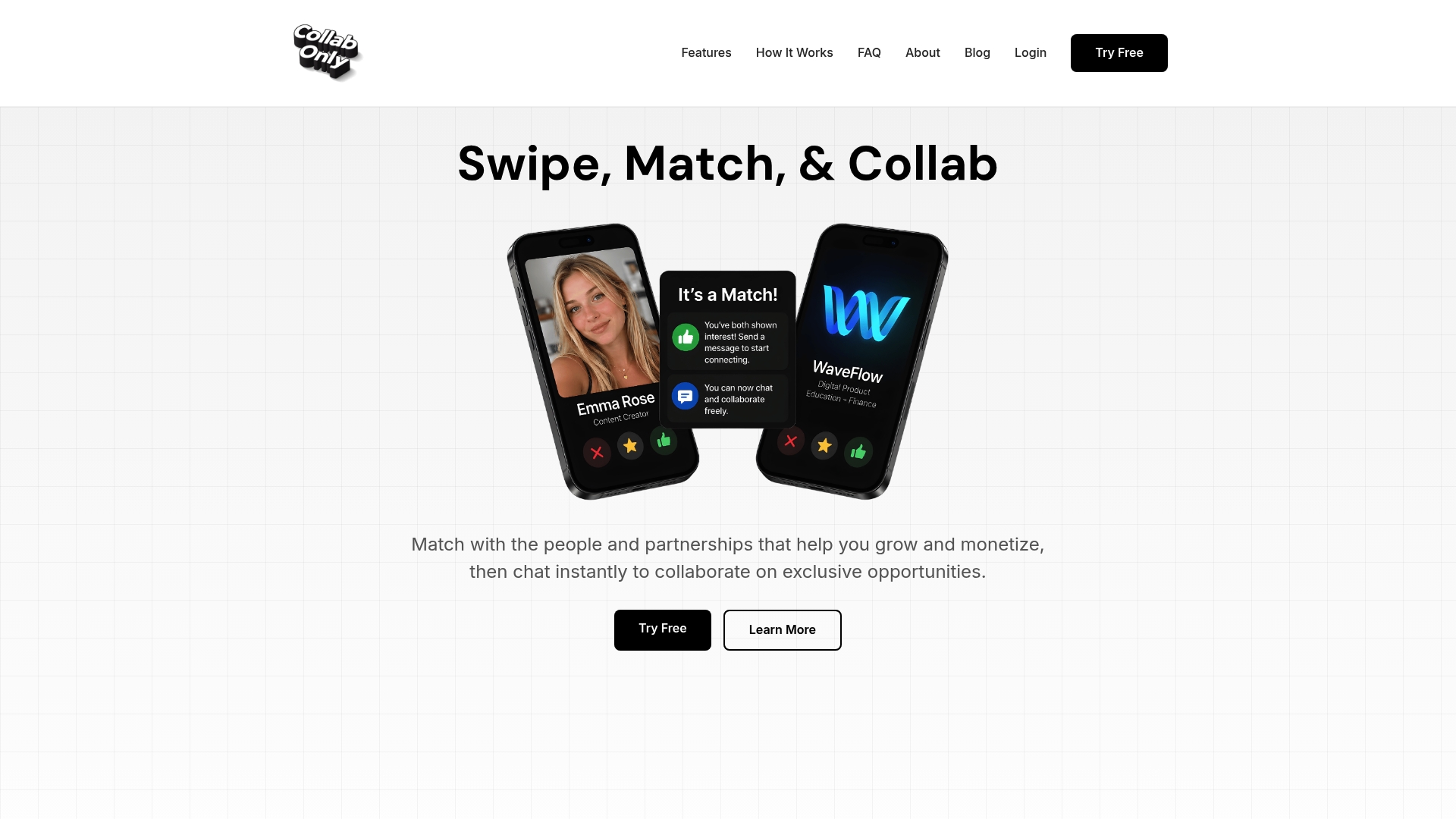
Collabonly is built for the specific collaboration challenges that brands, creators, and marketing teams face when coordinating campaigns across TikTok, Instagram, and YouTube. The platform eliminates the friction of cold outreach by matching brands with aligned creators through a swipe-based interface, with instant chat available upon match. For teams looking to extend their digital collaboration into influencer marketing, Collabonly's influencer marketplace connects brands with creators across every platform and audience size. Teams focused on cost-efficient campaigns can also explore nano influencer partnerships to reach highly engaged niche audiences with minimal coordination overhead.
FAQ
What is digital collaboration in simple terms?
Digital collaboration is the use of online tools and platforms to allow teams to communicate, share files, and complete work together regardless of physical location. Common examples include using Slack for messaging, Google Docs for shared editing, and Asana for task management.
What are the main benefits of digital collaboration?
The primary benefits include a 20–25% increase in team productivity, faster decision-making through centralized information, and the ability to hire and coordinate talent globally without geographic constraints.
What are examples of digital collaboration tools?
Examples include Slack and Microsoft Teams for messaging, Google Workspace and OneDrive for document collaboration, Asana, Trello, and Jira for project management, and Notion for knowledge management and documentation.
Why do digital collaboration efforts fail?
Most failures trace back to the absence of communication norms rather than tool limitations. Teams that deploy platforms without defining how they will be used replicate existing dysfunction in a new interface. Tool sprawl and unclear task ownership are the two most common contributing factors.
How do you collaborate online effectively?
Effective online collaboration requires three elements: a consolidated tool stack, written communication norms that define how each platform is used, and named ownership for every task and decision. Teams that document these norms and review them regularly outperform those that rely on informal understanding.