

TL;DR:
- Connecting with brands involves building relationships based on shared values and trust rather than simple transactions. Strong emotional connections increase customer loyalty, lifetime value, and business resilience, making them a vital growth strategy regardless of size. Authentic engagement, personalized outreach, and modern AI tools facilitate meaningful partnerships that can drive long-term success.
Most people assume that connecting with brands is something reserved for major corporations or influencers with millions of followers. That assumption is one of the most expensive misconceptions in modern marketing. Whether you are a solo creator, a growing business, or a consumer with purchasing influence, understanding why connect with brands matters can redefine how you approach collaboration, loyalty, and revenue. This guide covers the psychological mechanics behind brand connection, the measurable business advantages it produces, and practical strategies for building those relationships at any scale.
Table of Contents
- Key takeaways
- Why connecting with brands matters more than you think
- Business benefits of strong brand relationships
- How to build meaningful brand connections
- Technology's role in modern brand connections
- My perspective on brand connection as a growth strategy
- Build real brand partnerships with Collabonly
- FAQ
Key takeaways
| Point | Details |
|---|---|
| Emotional connection drives loyalty | Emotionally connected customers stay loyal 5.1 years on average, generating 306% higher lifetime value. |
| Loyalty programs accelerate retention | 91% of shoppers say loyalty program membership directly influences repeat purchases from the same brand. |
| Connection protects revenue | Brands scoring above median on connection metrics show stronger revenue growth and greater resilience in market downturns. |
| Authenticity is non-negotiable | Forced co-creation and inauthentic AI content damage trust quickly, especially with younger audiences. |
| Technology amplifies human connection | AI-enabled matching accelerates discovery, but lasting brand partnerships still require human-centric relationship building. |
Why connecting with brands matters more than you think
The phrase "brand connection" gets used frequently in marketing circles, but its meaning is often reduced to social media follows or loyalty card sign-ups. The actual mechanism at work is far more consequential. Brand connection describes the degree to which a person feels that a brand understands, represents, or aligns with their identity, values, or aspirations. That is categorically different from a transactional relationship where someone simply buys a product because it is available and affordable.
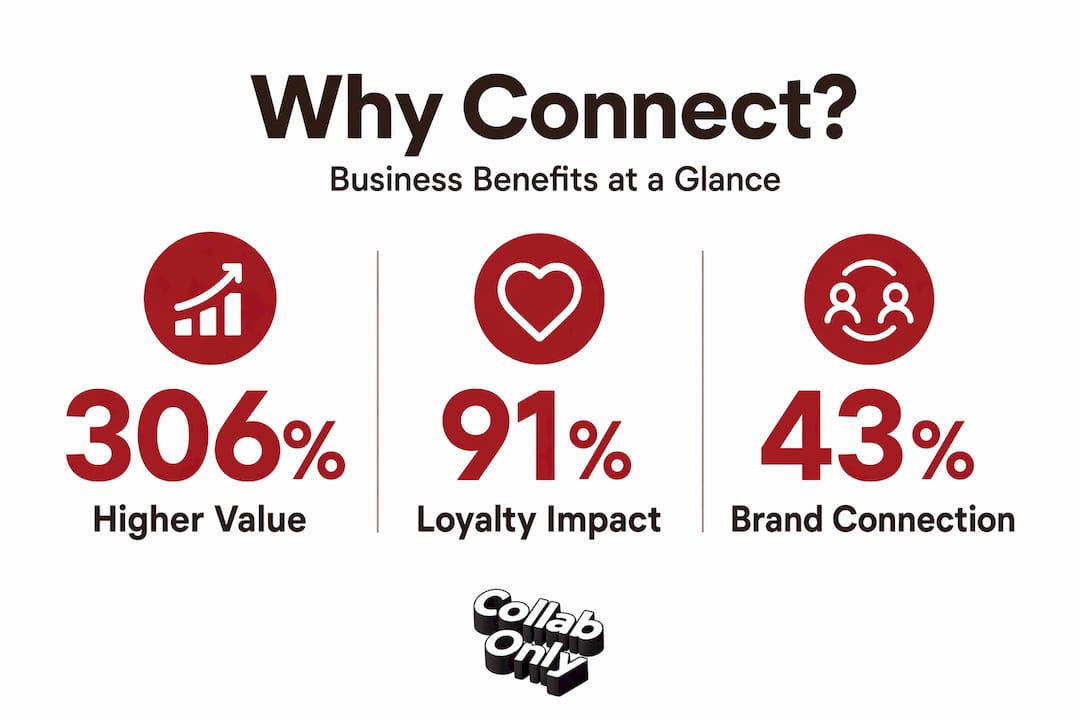
The data on this distinction is striking. Emotionally connected customers deliver 306% higher lifetime value than customers who are merely satisfied. They stay loyal for an average of 5.1 years compared to 3.4 years for satisfied customers. That difference in duration and depth translates directly into compounding revenue that no discount campaign can replicate.
The psychology behind this is straightforward. When a brand consistently communicates values that align with a customer's self-concept, it reduces cognitive friction in the decision-making process. The customer stops evaluating alternatives on every purchase cycle because the brand has already earned a default position in their mind. Consistent brand storytelling builds this position through repeated exposure to authentic messaging, reducing uncertainty and increasing confidence over time.
"Emotional attachment to a brand is not a soft metric. It accounts for approximately 43% of business value, surpassing product features, which account for only 20%."
This finding, drawn from a survey of over 19,000 customers, reframes where brands should concentrate their investment. Product improvements matter, but the emotional architecture surrounding a product determines whether customers stay, refer others, and actively defend the brand against competitors. For businesses and creators evaluating the importance of brand connection, this is the foundational data point.
Business benefits of strong brand relationships
Understanding why engage with brands is one thing. Mapping those reasons to concrete business outcomes is where strategy becomes credible.
Brand collaboration expands market reach by combining the audiences, capabilities, and credibility of two or more entities. A creator partnering with a niche tool brand gains access to that brand's customer base while the brand gains access to the creator's sub-niche audience, which it likely could not reach through paid advertising alone. Neither party achieves this outcome alone, and the combined visibility creates a market presence neither had before.
Loyalty infrastructure is another measurable benefit. 91% of shoppers say loyalty program membership influences their repeated purchases from the same brand. This means loyalty programs are not supplementary marketing tools. They are core purchase drivers embedded in consumer behavior. Businesses that invest in structured loyalty mechanics connected to authentic brand relationships are not just rewarding customers; they are engineering retention.
| Driver | Impact on business value | Sustained over time |
|---|---|---|
| Emotional brand connection | 43% of total business value | 5.1 years average customer tenure |
| Product features and quality | 20% of total business value | Dependent on continued innovation |
| Loyalty program participation | Drives repeat purchase for 91% of enrolled shoppers | Ongoing, contingent on program relevance |
| Authentic partnerships | Higher advocacy and word-of-mouth referral rates | Compounds with relationship depth |
Perhaps the most underappreciated benefit is economic resilience. Brands scoring above median on connection and progress metrics show greater revenue growth and greater business resilience than those competing primarily on price or product specification. In practical terms, this means that connecting with brands for growth is not just a marketing strategy. It is a financial risk management approach that protects revenue during market downturns.
Pro Tip: When evaluating the value of brand partnerships, measure emotional connection metrics alongside conversion rates. A partnership that generates low immediate sales but high sentiment and audience trust often delivers more long-term revenue than one optimized purely for short-term click-through performance.
How to build meaningful brand connections
Knowing the benefits does not automatically translate into knowing how to build brand relationships that deliver them. The process requires specificity, consistency, and a realistic understanding of what authentic connection requires from both sides.
-
Audit your existing brand alignment. Before reaching out to any brand for collaboration, identify where genuine value alignment exists. Forced partnerships built on financial incentive alone rarely produce advocacy. Map your content, values, and audience interests against the brands you intend to approach, and prioritize those where overlap is substantive rather than superficial.
-
Build a documented communication narrative. Brands receive enormous volumes of collaboration inquiries. A personalized pitch that demonstrates specific knowledge of the brand's positioning, audience, and recent campaigns performs significantly better than a generic partnership request. Reference specific campaigns, explain exactly what your audience shares with theirs, and make the mutual benefit explicit.
-
Use branded insight communities for ongoing engagement. Branded insight communities enable brands to engage deeply with loyal audiences, generating ongoing feedback that builds customer investment in the brand's evolution. For businesses seeking to understand their most connected customers, these communities provide data quality and relationship depth that one-off surveys cannot match.
-
Prioritize personalized outreach over mass contact. The difference between a successful brand collaboration and one that stalls is usually specificity. Generic outreach signals that the sender has not invested enough to understand the brand. Personalized approaches signal peer-credibility, which is the precise quality that brand decision-makers respond to.
-
Maintain relationship consistency after the initial connection. The most common pitfall in brand relationship building is treating connection as a one-time transaction. Brands that invest in ongoing communication, regular content collaboration, and mutual support across channels generate compounding returns from their partnerships, while those that approach collaboration as a campaign-based tactic reset to zero after each activation.
Pro Tip: Avoid using AI-generated outreach messages without personalization. Forcing inauthentic content damages perceived authenticity and trust, particularly with younger audiences who identify and reject it quickly. Use AI tools to research and organize, but write the actual communication in your own voice.
For individuals building brand relationships as part of a broader creator partnership strategy, the same principles apply. Authenticity, specificity, and sustained engagement are what separate creators who build lasting brand deals from those who secure one campaign and disappear from the brand's radar.
Technology's role in modern brand connections
The infrastructure for connecting with brands has changed materially in the past five years. Collaboration platforms, AI-enabled matching tools, and creator marketplaces have reduced the friction that previously made brand relationships accessible only to well-connected insiders or large agencies.

AI's most practical contribution to the brand connection process is matchmaking efficiency. Where traditional outreach could take weeks of email exchanges and cold DMs with low response rates, AI-driven platforms identify alignment between brand goals and creator or business attributes in seconds. However, speed of matching does not guarantee quality of relationship. AI-enabled matchmaking combined with authentic, human-centric relationship building produces the most successful collaborations, because the technology creates the introduction while the humans determine whether a lasting partnership forms.
Key features that distinguish high-quality brand connection platforms from basic directories include:
- Goal-aligned matching based on audience demographics, content category, and campaign objectives rather than follower count alone
- Instant communication channels that activate upon a mutual match, eliminating the lag that kills collaboration momentum in traditional outreach
- Support for multiple platform ecosystems including TikTok, Instagram, and YouTube, allowing brands to identify creators whose audiences span the platforms most relevant to their campaigns
- Transparent campaign metrics and performance tracking that allow both brands and creators to evaluate partnership ROI in real time
- Community features that extend the relationship beyond individual campaigns into ongoing co-creation and audience engagement
The top collaboration platforms for influencer campaigns have demonstrated that when technology reduces logistical barriers, both brands and creators invest more energy into the relationship quality itself. The result is a higher rate of authentic advocacy production, which outperforms paid promotion in nearly every engagement and conversion metric.
Understanding brand influence in this context means recognizing that technology does not replace relationship depth. It accelerates access to it. Brands that use platforms to make initial connections, then invest in genuine communication and shared objectives, see materially better outcomes than those that treat platform matching as a complete strategy in itself. For a deeper look at how authentic partnerships convert to measurable outcomes, the brand partnership examples that consistently drive results share one characteristic: both parties treated the relationship as ongoing, not transactional.
My perspective on brand connection as a growth strategy
I've spent years observing how brands and creators approach partnerships, and the pattern that stands out most clearly is this: the businesses that treat brand connection as a marketing tactic tend to plateau, while those that treat it as a relationship investment compound their growth in ways that surprise even them.
What I've seen consistently is that most organizations underestimate the power of emotional brand connection because it is harder to attribute in a last-click analytics model. A customer who becomes emotionally invested in a brand rarely arrives through a single touchpoint that a dashboard can cleanly credit. They accumulate impressions, trust signals, and shared values over months before converting, which makes the ROI invisible to teams optimizing for short-cycle metrics.
The uncomfortable truth I've learned from watching this play out across industries is that brands competing on features and price alone are always one product update away from losing their customer base. Brands that have built genuine connection have customers who rationalize staying even when a competitor offers something technically superior. That is not irrational consumer behavior. That is the measurable output of discovering brand loyalty at its deepest level.
My take on practical application is this: do not wait until you have scale to start building brand relationships. The businesses I've seen grow most effectively through partnerships started connecting with brands when they were small, investing in authenticity and consistency long before they had audience numbers that looked impressive on a media kit. Connection built at small scale compounds into defensible competitive advantage at large scale.
— Samuel
Build real brand partnerships with Collabonly
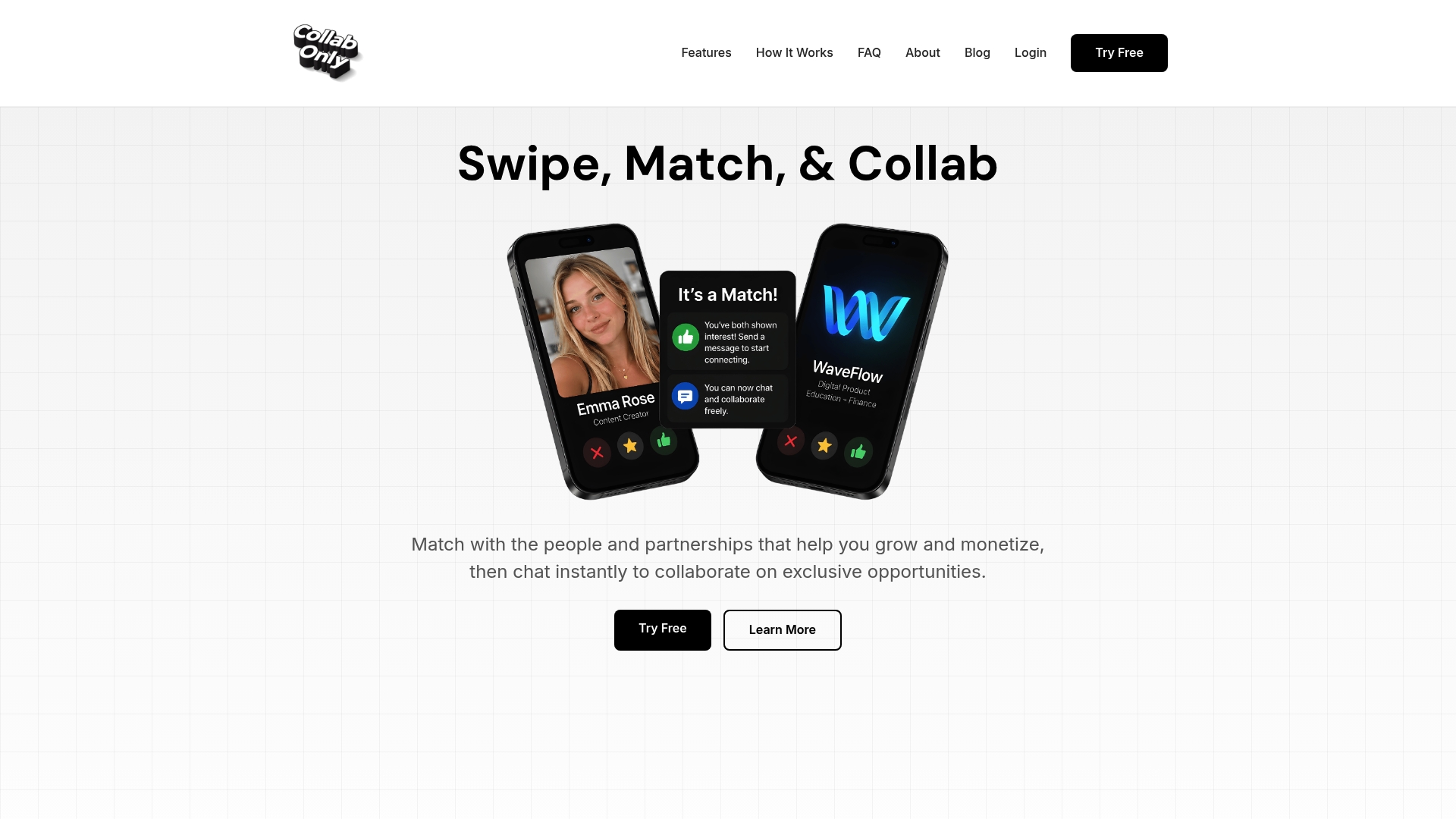
Collabonly is built specifically to eliminate the friction that prevents meaningful brand connections from forming. The platform's swipe-and-match interface connects brands, creators, and businesses based on goal alignment rather than follower count, making authentic brand collaboration accessible at every scale. Whether you are a brand looking to work with nano influencers for geo-concentrated authenticity, a creator seeking consistent brand deals, or a business exploring the value of brand partnerships through targeted campaigns, Collabonly provides the matching infrastructure, instant communication tools, and multi-platform reach to make those connections real. You can also hire micro influencers for scalable, high-engagement campaigns that maintain the peer-credibility modern audiences respond to. The platform removes the slow email cycles and lost DMs that stall most collaboration efforts before they begin.
FAQ
What does it mean to connect with a brand?
Connecting with a brand means forming a relationship built on shared values, trust, and consistent engagement rather than purely transactional interactions. This connection can exist between a consumer and a brand, a creator and a brand, or two businesses pursuing a co-marketing partnership.
Why is emotional brand connection important for business growth?
Emotionally connected customers deliver 306% higher lifetime value than satisfied customers and remain loyal significantly longer, making emotional connection one of the highest-return investments a brand can make.
How do loyalty programs relate to brand connection?
Loyalty programs reinforce brand connection by creating structured, ongoing touchpoints that reward continued engagement. Research shows that 91% of shoppers say loyalty program membership directly influences their repeat purchase decisions.
What are the biggest mistakes when trying to connect with brands?
The two most common pitfalls are generic outreach that fails to demonstrate specific brand knowledge, and over-reliance on AI-generated content that audiences recognize as inauthentic. Both reduce trust and signal low investment in the relationship.
Can small businesses and individual creators benefit from brand connections?
Yes. Brand connection compounds regardless of scale. Small businesses and individual creators who build authentic partnerships early develop audience trust and peer-credibility that scales with their growth, making early investment in brand relationships one of the highest-leverage activities available to them.