

An influencer referral program pays creators for tracked sales, not exposure: a follower clicks a link or enters a code, buys something, and the creator earns a commission. The first move for any brand testing this model is choosing a tracking platform and a simple, defensible reward. Everything else, recruiting, tiering, fraud checks, comes after that decision, not before it.
TL;DR:
- Referral programs are most effective for direct-to-consumer brands with clear checkout flows and repeat purchase cycles, emphasizing conversions over reach.
- Accurate sales tracking, appropriate attribution windows, and well-structured rewards are critical for maintaining program integrity and measuring true ROI.
- Launching requires selecting a tracking platform upfront, testing with a small creator cohort, and building a foundation of authentic advocates, often existing customers.
- Scaling depends on automating processes, tiering rewards, and fostering ongoing creator relationships rather than relying on one-off campaigns.
- Fraud prevention measures, like IP checks and manual review thresholds, are essential to ensure accurate attribution and prevent abuse as the program grows.
Table of Contents
- What Is an Influencer Referral Program?
- Why Brands Run Pay-for-Performance Referral Programs
- How Tracking, Attribution, and Rewards Actually Work
- Setting Up an Influencer Referral Program: A Launch Checklist
- Where to Find and Onboard Creators
- Structuring Rewards Without Wrecking Your Margin
- Measuring Performance and Proving ROI
- Preventing Fraud and Keeping Attribution Honest
- Scaling a Pilot Into a Real Channel
- A Practitioner's Playbook for Running These Programs
- The Real Lesson Behind Performance-Based Influencer Marketing
- Run Your Referral Program Through Collab Only
- Sources
- FAQ
What Is an Influencer Referral Program?
An influencer referral program compensates a creator only when their audience takes a measurable action, usually a purchase, tied to a specific link or code. That distinguishes it from a traditional affiliate program, which typically recruits from a broad pool of publishers and bloggers with looser brand alignment, and from a one-off influencer deal, which pays a flat fee for a post regardless of what happens after it goes live.
The mechanics are simple: a creator signs up, receives a trackable link or code, promotes it to their audience, and gets paid when a sale is attributed to that code. Referral programs prioritize conversions over reach. A creator with 8,000 followers who consistently drive purchases can outearn one with 200,000 followers who drives clicks nobody converts.
This model fits certain business types better than others:
- Direct-to-consumer brands with a clear, trackable checkout flow.
- Subscription businesses where referred customers show measurable retention over time.
- Repeat-purchase categories (beauty, food, supplements) where a single referred customer generates several transactions.
- Any brand already running creator marketing that wants to shift part of its spend from flat fees to performance.
Why Brands Run Pay-for-Performance Referral Programs
The case for referral programs rests on three measurable outcomes: lower acquisition cost, better lifetime value, and cleaner attribution.
Referred customers tend to stick around longer and spend more than customers acquired through paid ads. Industry data compiled by Mention Me shows referred customers post materially higher retention rates and lifetime value than non-referred customers, a pattern consistent enough that several DTC brands now treat referral revenue as a distinct, trackable channel rather than a marketing footnote.
Referral Economics: Because you only pay when a sale closes, cost per acquisition through a referral program moves with actual revenue, not with impressions or clicks that never convert.
The other advantage is scale. Micro-influencer networks are cheaper to build and slower to burn out than a handful of macro deals, and they generate first-party data: every tracked link tells you which creator's audience actually buys, not just who has the biggest following. That data compounds. A brand running a referral program for a year accumulates a performance history it can use to renegotiate terms, cut underperformers, and double down on the creators who consistently convert. Creator partnerships built this way tend to outlast campaign-based spending precisely because the data makes the good relationships obvious.
How Tracking, Attribution, and Rewards Actually Work
Three technical decisions determine whether a referral program runs cleanly or falls apart under scrutiny: how you track sales, how long you credit a creator for influencing one, and what you pay when it happens.
Tracking methods generally fall into three categories:
- Unique referral links, which route through a tracking platform and require no action from the buyer beyond clicking.
- Discount codes, which work well for audio and video content where a clickable link is not always visible, and double as an incentive for the buyer.
- Post-purchase activation, where a customer confirms which creator sent them, often via a dropdown at checkout, useful as a backup when link or code tracking fails.
Attribution windows set how long after a click or code entry a sale still counts. A narrow window (24 to 48 hours) rewards immediate-intent purchases and keeps payouts tightly tied to the creator's specific push. A longer window (7 to 30 days) accounts for buyers who research before purchasing but makes it harder to prove which touchpoint actually drove the sale. Most DTC programs settle somewhere in between, and the choice materially affects your reported ROI: a 30 day window will always show more attributed revenue per creator than a 24 hour one, even with identical underlying sales.
Reward formats vary by goal. Percentage commissions, commonly in the 10% to 15% range for DTC sellers, scale naturally with order value and suit higher-ticket products. Flat fees, often $10 to $15 per new customer, work better for lower-priced, high-volume items where a percentage would pay too little to matter. Tiered structures combine both, a base commission plus a bonus once a creator crosses a volume threshold. Automated platforms handle code generation, tracking, and payout calculation so none of this has to be built from scratch.
Setting Up an Influencer Referral Program: A Launch Checklist
Launching in the wrong order is the most common way these programs stall. Follow this sequence:
- Select a tracking platform and confirm it integrates with your checkout and CRM before recruiting a single creator.
- Define the conversion event precisely (a completed purchase, not an add-to-cart) and set attribution rules and fraud controls in writing.
- Build a creator signup page with clear terms, then assemble a creative asset kit (product shots, key messaging, sample captions) so creators do not start from a blank page.
- Set payout policies, including minimum payout thresholds, payment schedule, and what happens with refunded orders.
- Run a pilot with a small, controlled group of creators, confirm tracking is firing correctly, and check cohort behavior before opening recruitment further.
Pro Tip: Run pilots with 5 to 20 creators and build in a 30 to 90 day cohort check on referred-customer lifetime value before you commit to scaling payouts, a practice recommended in operational referral program guidance precisely because early cohorts often behave differently than later ones.
Skipping the pilot is the single most avoidable mistake in this checklist. Brands that jump straight to open recruitment often discover tracking gaps only after paying out on sales that were never actually influenced by a creator.
Where to Find and Onboard Creators
The best early creators are often already customers. Brand advocates, repeat buyers, and people who left detailed positive reviews convert better as referral creators than cold recruits, because they already believe in the product. One effective tactic is converting post-purchase reviewers into creators by inviting them into the program at the moment they express satisfaction.
Beyond your existing customer base, sourcing expands to UGC creators, niche micro-influencers, and creator marketplaces built for matching brands with creators at scale. Vetting matters more than follower count: look for audience fit, a history of driving action rather than just likes, and content that reads as authentic rather than scripted.
A solid onboarding pack includes:
- A short brief covering brand voice, product positioning, and what not to say.
- Content templates and example captions to speed up creation.
- A clear FAQ covering payout timing, attribution rules, and support contacts.
- A published payout schedule so nobody is guessing when they get paid.
Retention comes from community, not just checks: recognition, early access to new products, and occasional performance bonuses keep good creators active past their first campaign.
Structuring Rewards Without Wrecking Your Margin
Cash is not always the strongest lever. Non-cash incentives can outperform cash by roughly 24% in some referral contexts, particularly with creators who already have income from their audience and value access or recognition more than a marginal cash bump.
Typical structures include:
- Flat commission per sale, commonly 10% to 15% for DTC products.
- Flat fee per new customer, often $10 to $15, suited to lower-priced items.
- Tiered accelerators, where commission rises after a creator crosses a volume threshold, rewarding consistency over one good post.
- Non-cash perks, free products, early access, co-creation opportunities, which build loyalty that a check alone rarely produces.
A library of real referral program examples shows mutual give-and-get structures and tiered rewards performing consistently across unrelated industries, from beauty to software.
Pro Tip: Pair a modest cash commission with one non-cash perk, like early access to new drops, rather than choosing one or the other. The combination tends to hold creator attention longer than either alone.
Measuring Performance and Proving ROI
Five metrics tell you whether a referral program is working: conversion rate per creator, revenue attributed by creator, customer acquisition cost, refund rate on referred orders, and lifetime value of referred customers compared to your baseline.
- Conversion rate flags which creators drive action versus attention.
- Revenue by influencer lets you rank and reward the top performers directly.
- CAC should trend below your paid-media baseline if the program is healthy.
- Refund rate on referred orders is an early fraud or mismatch signal.
- Referred LTV is the number that ultimately justifies the whole program.
Referred customers show notably better retention and lifetime value than non-referred customers according to industry benchmarking data, which is the figure worth putting in front of a CFO skeptical of influencer spend. Dashboard revenue by creator and by cohort, then run small, iterative experiments, testing one reward tweak or one recruitment channel at a time, rather than overhauling the whole program at once.
Preventing Fraud and Keeping Attribution Honest
Referral fraud usually shows up as a pattern: a spike in orders from a single IP address, repeat "new customer" claims from the same account, or a batch of high-value orders that never ship or get refunded within days. Self-referral, where a creator buys through their own link to trigger a payout, is the most common abuse.
Practical controls include:
- Restrict "new customer" bonuses to accounts with no prior purchase history on file.
- Flag orders from matching IP addresses or device fingerprints between buyer and referring creator.
- Require manual review before releasing any payout above a set dollar threshold.
- Reconcile payouts against actual shipped, non-refunded orders on a fixed schedule, not ad hoc.
None of these controls need to be adversarial. Most creators are not trying to game the system, but a program with no checks in place eventually attracts the ones who are.
Scaling a Pilot Into a Real Channel
A pilot is ready to scale when tracking has run clean for a full cohort cycle and referred-customer LTV holds up against your baseline. At that point, manual payout review and creator communication need to become automated, or the program collapses under its own volume.
Scaling typically involves:
- Moving from spreadsheet tracking to a dedicated creator portal with self-serve dashboards.
- Introducing tiers, so top performers get better rates and faster payouts than new recruits.
- Running quarterly performance reviews instead of ad hoc check-ins.
- Building community touches, named ambassador cohorts, private groups, co-creation invites, that turn a transactional relationship into an ongoing one.
Some brands go further and treat their best creators as a standing channel rather than a campaign. Expedia's year-long partnership with creator IShowSpeed illustrates the model at the enterprise end: sustained presence instead of a single sponsored post, built for cultural relevance that a one-off deal cannot replicate.
A Practitioner's Playbook for Running These Programs
Most referral programs stall at recruitment, not at the reward structure. Brands spend weeks designing a tiered commission plan and then struggle to find twenty creators worth onboarding. A matching-based approach to sourcing creators shortens that gap by surfacing creators already interested in your category instead of relying on cold outreach that sits unanswered in a DM inbox.
A basic outreach template should state the reward clearly, name the attribution window, and link directly to the signup page, vague messages ("let's collaborate!") consistently underperform specific ones; leveraging Influencer Marketing Strategies That Drive Real Brand Growth can significantly enhance your approach. Onboarding should confirm tracking works before a creator posts anything, not after.
The most common pitfall is treating referral programs like flat-fee campaigns with better math. They are not. They require ongoing relationship management, not a single negotiated rate, and brands that skip that step see creator drop-off within a few months.
The Real Lesson Behind Performance-Based Influencer Marketing
The conventional advice on influencer referral programs treats them as a set-and-forget mechanism: pick a commission, publish a signup page, wait for sales. That framing undersells the operational work required to keep the program honest and the creators engaged. The evidence points somewhere more specific: programs succeed or fail on attribution hygiene and creator relationship management, not on the cleverness of the reward structure.
The overrated variable is commission size. The underrated variable is the pilot phase. Skipping it, or running it too briefly to catch cohort-level LTV problems, is where most programs quietly lose money before anyone notices.
If there is one priority for a marketer starting today, it is this: build fraud controls and a real pilot before you build a rewards ladder. A well-designed tier system on top of broken attribution just pays creators for sales you cannot actually verify. Get the measurement right first. The incentive structure is the easy part.
— Samuel
Run Your Referral Program Through Collab Only
This platform replaces the slow email-and-DM outreach cycle with a swipe-based matching system and instant chat, so a brand launching a referral program can go from shortlist to signed creator in days instead of weeks. That speed matters most in the recruitment phase, the exact stage where most programs stall before a single link gets shared.
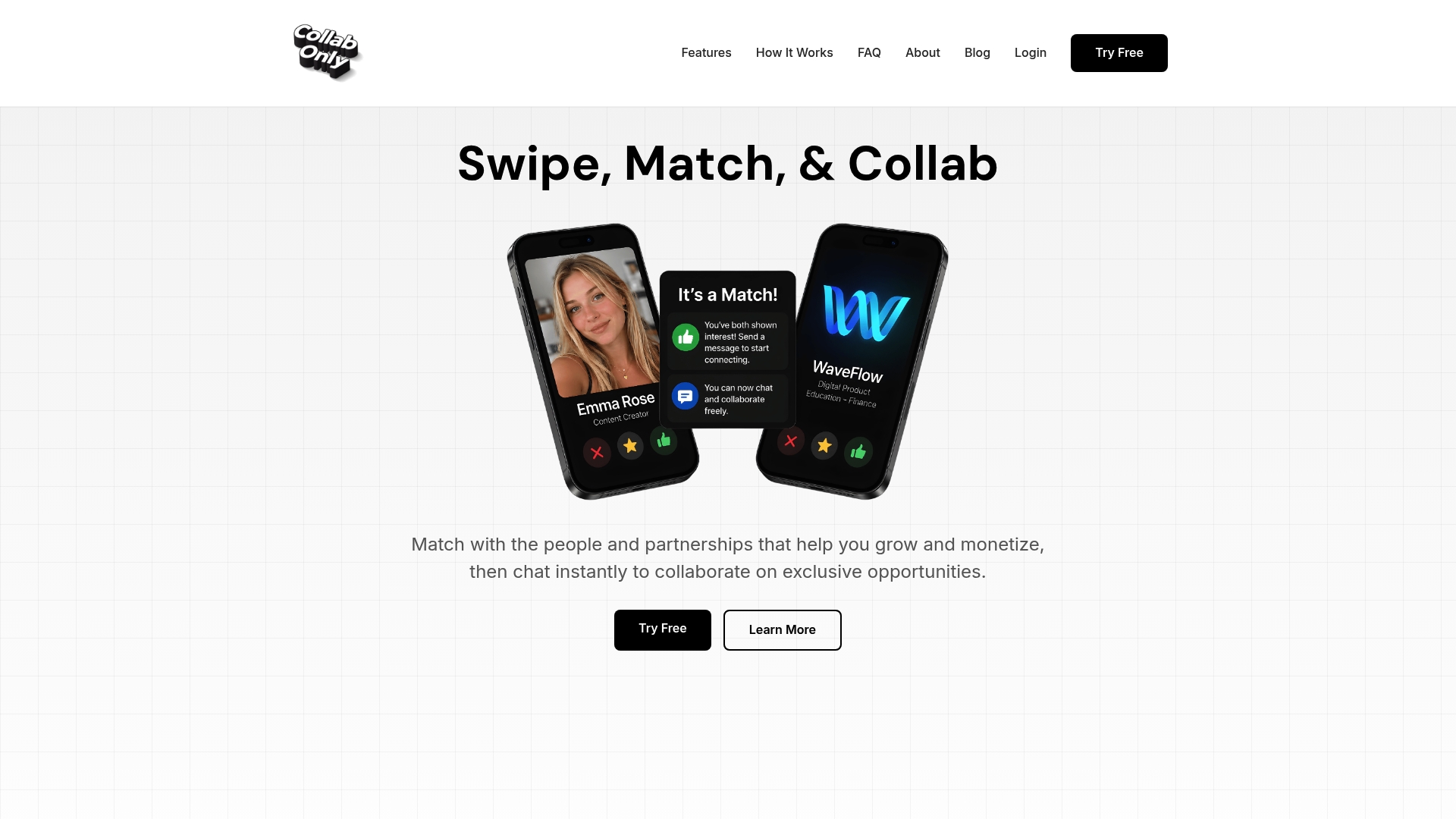
The platform is built for the mechanics this article covers: matching brands with creators by category and audience fit, coordinating campaign details in one thread, and keeping onboarding assets in a single conversation instead of scattered across email threads. If your program depends on volume, hiring nano influencers through Collab Only gives you access to smaller, higher-conversion creators without negotiating each deal from scratch. If you need content alongside referral links, the UGC creator platform matches you directly with creators built for that format.
Start by listing your ideal creator profile and reward structure, then let the matching system surface candidates who already fit. A pilot cohort of five to twenty creators, sourced this way, is a realistic first step toward a referral channel that actually scales.
Sources
- How to Run Influencer Partnerships Using Referral Programs
- 100+ Best Refer-a-Friend Programme Examples to Boost ROI in 2026
- Inside Expedia’s year-long partnership with mega creator IShowSpeed
FAQ
What Are the Top Referral Programs That Actually Work?
The programs that consistently work combine a clear conversion event, a fair commission (typically 10% to 15% or a flat $10 to $15 per new customer), and a short attribution window. Tiered structures with non-cash perks, documented across dozens of real examples, tend to outperform flat, static rates over time.
Can You Earn $10,000 a Month Through Referral or Affiliate Marketing?
It is possible at scale, but it depends entirely on audience size, conversion rate, and product price point. A creator would need either a large, highly engaged audience or a high-ticket product with strong commissions; there is no fixed program that guarantees that outcome for everyone.
Which Apps Pay $100 Per Referral?
Flat per-referral payouts that high are uncommon and typically tied to high-ticket products or services rather than standard DTC retail, where flat fees usually run $10 to $15. Always confirm the specific payout structure directly on a brand's signup page before assuming a rate.
How Do You Become an Influencer and Access Free Products?
Building a niche audience with consistent engagement is the first step; brands running referral or seeding programs look for creators whose followers actually buy, not just follow. Platforms that match creators with brands directly, like Collab Only, shorten the path from applying to receiving product for a collaboration.
How Long Should an Attribution Window Be for a Referral Program?
Most DTC programs use a window between 24 hours and 30 days, with shorter windows better suited to impulse purchases and longer windows better suited to considered purchases. The choice directly affects reported revenue per creator, so it should be set deliberately, not by default.