

Creator-brand collaboration marketplaces define the role of digital communities in modern marketing: they match brands, creators, and fans to run co-created, community-embedded campaigns that convert short-term attention into durable brand assets. Platforms like Collabonly, backed by research from Ogilvy and MDPI, demonstrate that the most effective partnerships are not transactional posts but structured, multi-phase collaborations rooted in genuine community fit.
The primary functions these marketplaces perform:
- Discovery and matching: Connecting brands with creators whose audience composition, niche, and values align with campaign objectives
- Campaign orchestration: Managing multi-phase workflows from brief creation through co-production to post-launch community activation
- Trust-building via community fit: Prioritizing peer-credibility and audience-product alignment over raw follower counts
- Measurement and reporting: Tracking both immediate reach metrics and longer-term community engagement signals
Key Takeaways
Creator-brand collaboration marketplaces are the operational infrastructure behind community-embedded campaigns, and the brands that treat them as relationship engines rather than distribution tools see compounding returns on loyalty, referral traffic, and content value.
| Point | Details |
|---|---|
| Community fit drives loyalty | Ogilvy data shows brands active in private creator communities see a 20% brand loyalty lift. |
| Engagement depth predicts co-creation | MDPI research confirms engagement and identification, not mere membership, are the strongest loyalty drivers. |
| Multi-phase campaigns compound value | Community outputs (referrals, UGC, AI citations) accumulate as owned assets; one-off posts decay. |
| Evaluate on matching quality and compliance | Prioritize fit-first discovery, fraud detection, multi-phase workflow support, and in-platform disclosure tools. |
| Collabonly reduces match friction | Swipe-based matching, instant chat, and community-aware brief templates accelerate brief alignment and protect authenticity. |
Table of Contents
- What do creator-brand collaboration marketplaces actually do?
- Why community-embedded partnerships outperform one-off posts
- How do you evaluate and choose the right marketplace?
- How to structure a community-embedded, co-created campaign
- How Collabonly operationalizes community-embedded partnerships
- What practitioners get wrong about community-embedded campaigns
- Collabonly connects brands, creators, and fans without the friction
- Sources
- FAQ
What do creator-brand collaboration marketplaces actually do?
Influencer marketplaces centralize discovery, vetting, and campaign workflows that brands would otherwise manage across disconnected tools and inboxes. The operational architecture of a well-built marketplace covers five distinct capability layers.
- Discovery and matching: Profile attributes (platform, niche, audience demographics, engagement rate) feed matching algorithms. Swipe-based interfaces, like the one Collabonly uses, let brands and creators signal mutual interest before any brief is shared, reducing cold-outreach friction.
- Vetting and credibility signals: Engagement-to-follower ratios, fraud detection flags, sample content portfolios, and community membership verification separate authentic creators from inflated accounts.
- On-platform messaging and brief alignment: Instant chat activated on match replaces slow email threads. Structured brief templates and NDA workflows keep alignment documented and legally sound.
- Campaign management: Multi-phase workflows (teaser, co-creation, follow-up activation) with asset management and scheduling keep all parties on timeline.
- Analytics: Reach and impression metrics matter at launch; community participation depth (comment sentiment, referral rates, repeat engagement) matters over the campaign's full lifecycle.
Marketplaces also differ by creator onboarding model. Opt-in profile marketplaces (creators self-list) favor fit-first discovery; indexed search models favor reach-first scale. Choosing the right model depends on whether the campaign goal is audience breadth or community depth. For most content collaboration formats, fit-first outperforms reach-first on long-term retention metrics.
Pro Tip: When reviewing a marketplace's brief templates, check whether they include a field for community engagement expectations, not just content deliverables. Briefs that specify how a creator should interact with their community post-publication produce measurably higher comment depth and referral rates than deliverable-only briefs.
Why community-embedded partnerships outperform one-off posts
The evidence for prioritizing community-embedded co-creation over isolated sponsored content is now substantial.
Ogilvy's 2026 Influencer Trends report finds that 55% of users prefer engaging with creators in private, curated online spaces, and brands active in those communities see a 20% lift in brand loyalty. That preference shift reframes the role of social media groups: participation in a creator's private community is now a higher-trust signal than a public feed post.

The MDPI 2021 study of 628 respondents, analyzed with PLS-SEM, found that community engagement increases willingness to co-create and has a positive indirect effect on brand loyalty, with engagement depth and community identification as the strongest predictors. Mere membership does not drive loyalty; active participation does.
Academic analysis by Ha et al. adds that social networking and impression-management activities within brand communities tend to increase brand trust and positive brand impressions, though the magnitude of these effects varies by cultural context. Brands operating across multiple geographies should calibrate community strategy by market rather than applying a single global playbook.
Measurable outcomes brands should plan for:
- Brand loyalty lift from sustained community participation (not from a single campaign)
- Higher conversion rates from community-referred traffic versus cold paid media
- Content diversity across formats and platforms, which reduces cost-per-acquisition over time as organic assets compound
- AI and search citation benefits from long-form co-created content, which community outputs accumulate as owned assets while individual influencer posts decay
One-off influencer spikes still serve a purpose: product launches, seasonal promotions, and awareness campaigns in new markets benefit from reach-first bursts. The mistake is treating spikes as a substitute for community depth, rather than a complement to it.
How do you evaluate and choose the right marketplace?
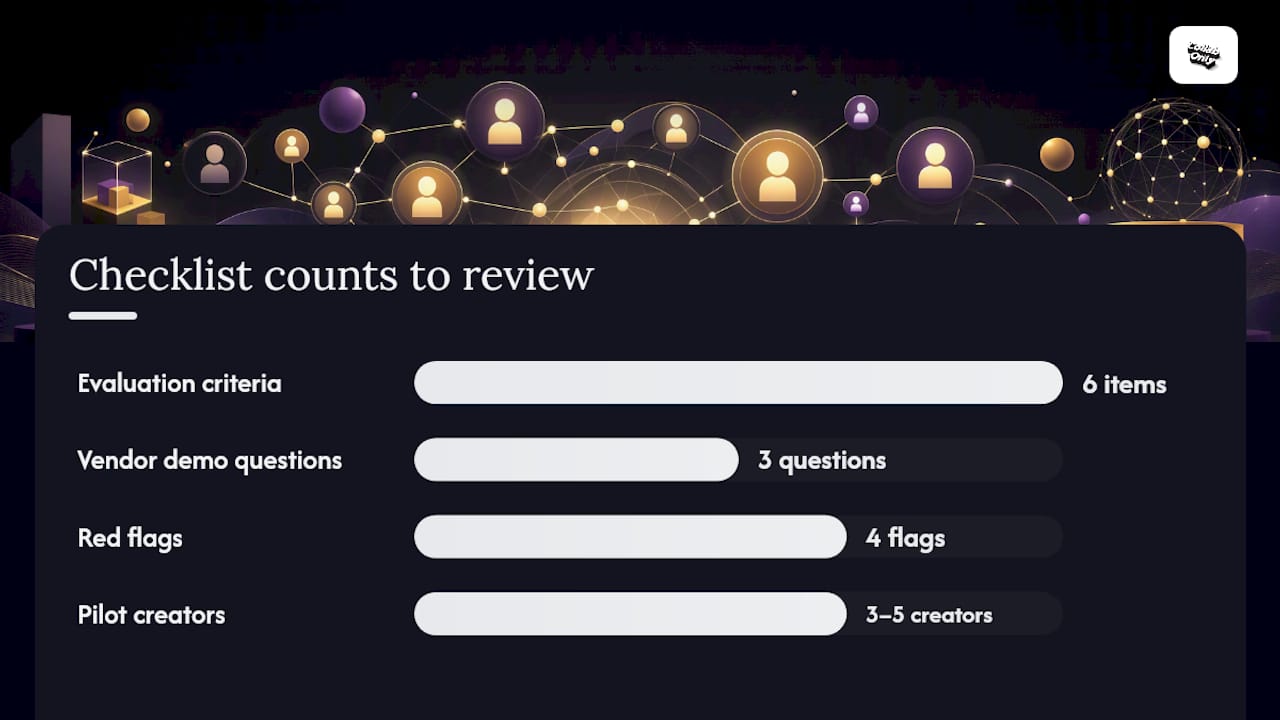
The evaluation framework for a creator-brand marketplace covers six criteria, three vendor questions, and four red flags.
Evaluation criteria:
- Matching quality: does the platform filter by audience overlap, sub-niche, and engagement authenticity, not just follower count?
- Creator verification: are engagement metrics audited, and does the platform flag geo-concentrated or bot-inflated audiences?
- Campaign workflow support: can the platform manage multi-phase campaigns with asset approvals and scheduling?
- Analytics: does reporting include community participation metrics beyond reach and impressions?
- Integrations: does the platform connect to your existing CRM, attribution tools, or social analytics stack?
- Legal and compliance support: are disclosure requirements (FTC guidelines for US-based campaigns), NDA templates, and usage rights handled in-platform?
Vendor questions to ask during demos:
- How does your matching algorithm weight audience-product fit versus follower volume?
- What fraud detection methods do you use, and how often are creator profiles re-audited?
- Can you show a sample multi-phase campaign workflow, including post-launch community activation steps?
Red flags: no access to private community data, vetting limited to follower count, no multi-phase campaign support, opaque measurement (reach only), and no in-platform disclosure or compliance tooling.
Pricing typically follows a freemium-to-premium tier structure. Expect time-to-first-match within days on a well-populated marketplace; measurable community outcomes (loyalty lift, referral rates) generally require 60–90 days of sustained engagement. Investing in creator programs at the pilot stage before committing to enterprise tiers reduces financial risk significantly.
Pro Tip: Run a 30-day pilot with three to five creators before scaling. Measure comment sentiment and referral traffic, not just impressions. If community participation depth is low after 30 days, the issue is usually brief alignment, not creator selection.
How to structure a community-embedded, co-created campaign
A community-embedded campaign runs in four phases, each with distinct activities and KPIs.
| Phase | Activities | KPIs to Measure |
|---|---|---|
| Pilot | Creator matching, brief alignment, test content, community fit assessment | Match quality score, brief revision rounds, initial engagement rate |
| Co-creation and launch | Asset co-development, community teaser, content publication | Content volume, reach, community comment depth, share rate |
| Community follow-up | Creator Q&A, community polls, UGC prompts, referral activation | Referral traffic, UGC submissions, repeat engagement rate |
| Retention and nurture | Ongoing creator participation, exclusive community offers, loyalty content | Repeat purchase rate, community growth rate, AI/SEO citation count |
Roles across the campaign: the brand owns brief quality and approval workflows; the creator owns content voice and community interaction; platform operations (or a dedicated campaign manager) owns scheduling, asset handoffs, and compliance checks.
An operational checklist for running the campaign inside a marketplace:
- Submit a structured brief with community engagement expectations included
- Confirm creator acceptance and NDA sign-off before sharing proprietary assets
- Schedule content publication windows to align with community peak activity times
- Conduct a post-launch community activation (Q&A, poll, or exclusive follow-up content) within 72 hours of publication
- Pull community participation metrics at day 7, day 30, and day 90
Co-creation guides recommend treating the follow-up phase as a distinct campaign moment, not an afterthought. The MDPI findings confirm that engagement depth in the post-publication window is where loyalty effects are strongest.
How Collabonly operationalizes community-embedded partnerships
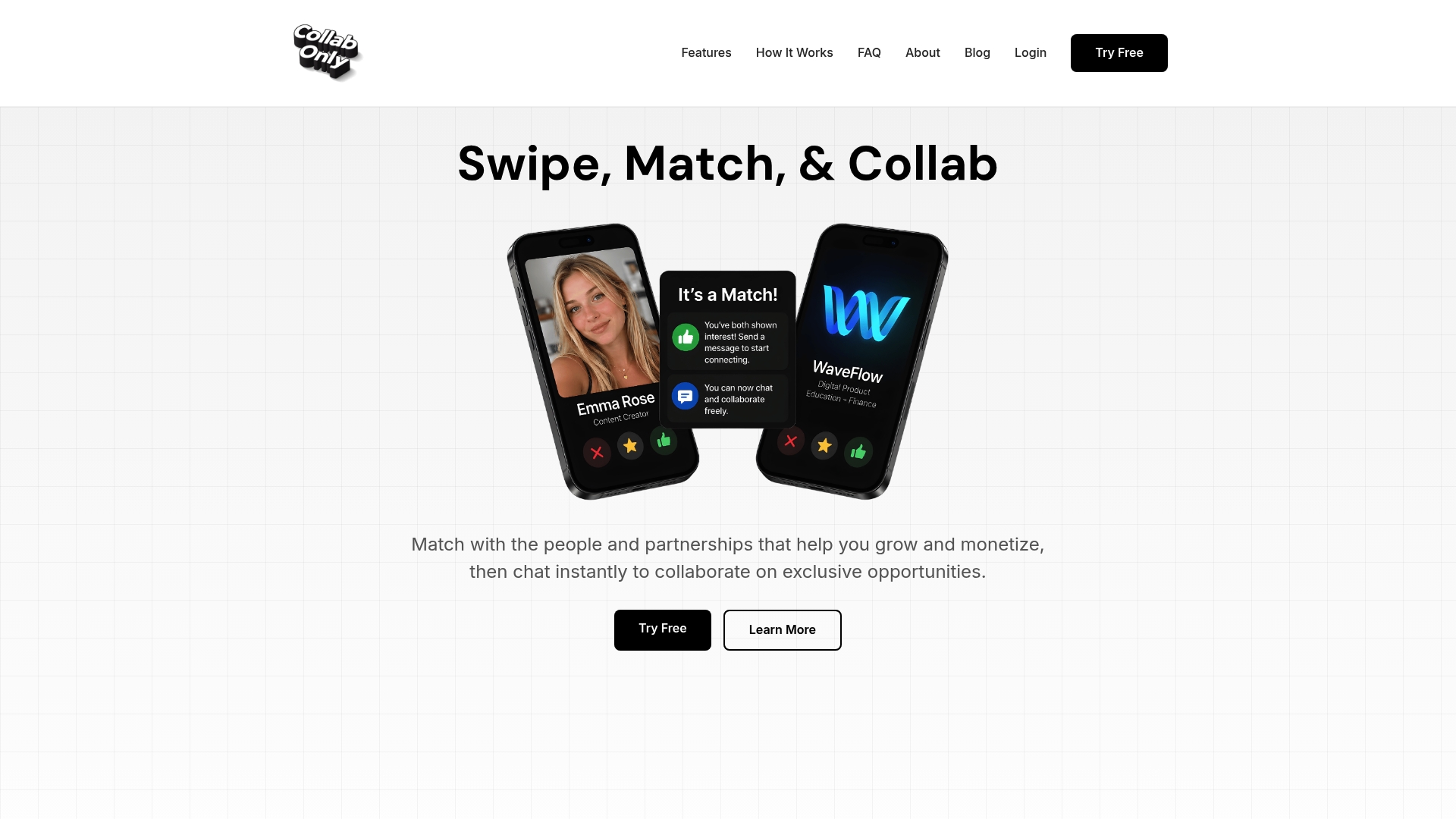
Collabonly's platform architecture directly addresses the workflow gaps that cause community campaigns to underperform. The swipe-based matching interface lets brands and creators signal fit before any brief is exchanged, which preserves the authenticity that private community members expect. Instant chat activates on match, replacing the multi-day email lag that typically erodes brief alignment quality with influencer marketing strategies.
Platform features relevant to community-embedded campaigns:
- Cross-platform profile support covering TikTok, Instagram, and YouTube, enabling multi-platform community activation from a single campaign brief
- Structured brief templates that include community engagement fields, not only content deliverables
- Campaign operations tools for asset management, scheduling, and post-launch activation steps
- Fan-side access for exclusive offers and early content, creating a three-sided community (brand, creator, audience) rather than a two-party transaction
A sample Collabonly workflow: create and submit a brief with community engagement expectations, match with a creator via swipe interface, align on deliverables via instant chat, co-develop assets, publish, then activate the creator's community with a follow-up Q&A or exclusive offer within 72 hours. The creator economy context that Collabonly's editorial team documents shows that relationship-based, multi-phase partnerships consistently outperform one-off posts on loyalty and referral metrics.
Pro Tip: Use Collabonly's instant chat to align on community tone before finalizing the brief. Creators who understand how a brand wants to show up in their community produce content that generates significantly higher comment depth than those briefed only on product messaging.
eMarketer's 2026 creator economy reporting confirms that creator-driven content is reshaping marketing mix decisions at scale, making platforms that reduce match friction and support multi-phase workflows a strategic priority rather than a tactical convenience.
What practitioners get wrong about community-embedded campaigns
The most common failure mode is treating community access as a distribution channel rather than a relationship context. Brands that push product messaging into creator communities without co-creating content with the creator first see engagement collapse within two to three posts. The community reads the shift in tone immediately.
For teams adopting marketplace-driven work in the next 30–90 days: start with brief quality, not creator volume. Three well-aligned creators with genuine community participation will outperform thirty misaligned ones on every metric that compounds over time, including sustainable ROI and advocacy. Staff a dedicated community manager to handle post-launch activation; this role is consistently underfunded relative to its impact on retention metrics.
The rule of thumb for mixing influencer spikes with community work: use spikes for launch moments and awareness in new markets, then immediately follow with community-embedded content that sustains the conversation for 60–90 days.
Collabonly connects brands, creators, and fans without the friction
Most brands lose weeks to cold outreach, misaligned briefs, and creators who look right on paper but do not fit the community. Collabonly eliminates that gap. The swipe-based matching system surfaces creators by audience fit and platform, instant chat activates the moment a match is confirmed, and structured brief templates keep community engagement expectations documented from day one.
For brands ready to run a pilot, Collabonly's nano influencer marketing offering is the lowest-risk entry point: high community trust, geo-targeted reach, and measurable engagement depth without enterprise-level spend. Agencies managing multiple brand accounts can use the platform's campaign operations tools to run parallel briefs across TikTok, Instagram, and YouTube from a single dashboard. Start a pilot on Collabonly today at Collabonly.
Sources
The following sources back the claims in this guide and point to deeper evidence for teams conducting due diligence.
- 2026 Influencer Trends (Ogilvy)
- The Role of Online Brand Community Engagement on the Consumer–Brand Relationship (MDPI, 2021)
- Academic study on online brand communities and value co-creation (Ha et al.)
- Influencer Marketplaces: How They Work, Top Options, and More Things You Need to Know (ManyChat)
- Creator Economy 2026 (eMarketer)
FAQ
What is the role of digital communities in brand marketing?
Creator-brand collaboration marketplaces match brands, creators, and fans to run co-created campaigns that build loyalty and generate compounding content assets. Their primary functions are discovery, campaign orchestration, trust-building via community fit, and measurement.
How do community-embedded campaigns differ from one-off influencer posts?
Community-embedded campaigns run in multiple phases (co-creation, launch, follow-up activation) and generate referral traffic, UGC, and AI citations that accumulate over time. One-off posts produce a reach spike that decays within days.
What does the research say about online brand community engagement?
The MDPI 2021 study found that engagement depth and community identification, not membership alone, drive willingness to co-create and indirectly increase brand loyalty.
How should brands evaluate a creator-brand marketplace?
Prioritize matching quality (fit-first, not reach-first), creator fraud detection, multi-phase campaign workflow support, community participation analytics, and in-platform compliance tooling. Run a 30-day pilot before committing to a full-scale program.
How does Collabonly support community-embedded partnerships?
Collabonly's swipe-based matching, instant chat on match, cross-platform profile support, and community-aware brief templates let brands and creators align on both content deliverables and community engagement expectations before a single asset is produced.